
Why Greenhouse Growers Rely on SOP Fertilizer Uses for Consistent Results
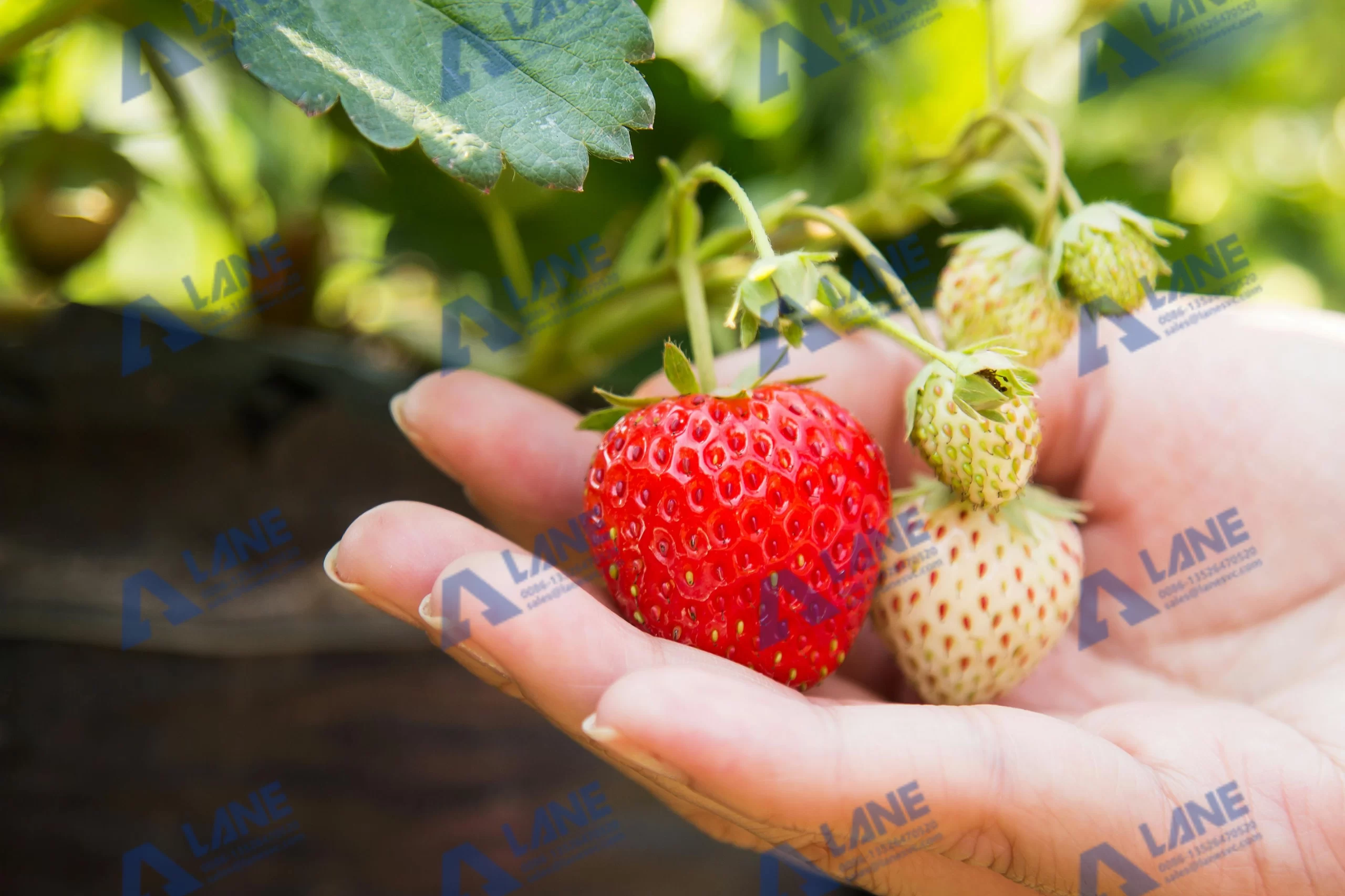
Table of Contents
1.Introduction: The Pursuit of Consistency in Controlled Environments
2.What is SOP Fertilizer? A Brief Primer
3.The Core Advantage: Why SOP is a Greenhouse Perfect Fit
4.Key SOP Fertilizer Uses for Optimizing Greenhouse Production
oManaging Salinity and Chloride Sensitivity
oEnhancing Fruit Quality and Marketability
oSupporting Plant Health and Stress Resistance
oEnabling Precision Fertigation
5.Implementing SOP in Your Greenhouse Program
6.SOP vs. MOP: Making the Informed Choice
7.Conclusion: SOP as a Foundation for Predictable Quality
8.Frequently Asked Questions (FAQ)
Introduction: The Pursuit of Consistency in Controlled Environments
In a greenhouse, every variable—from light and temperature to water and nutrients—is controlled. It plays a vital role in determining crop health and yield. Growers invest in advanced technology to control temperature, humidity, light, and irrigation. The target of a greenhouse is to create the perfect, predictable environment for premium crops.
Among all inputs, fertilizer is still the make-or-break factor. Even advanced climate computers cannot compensate for a flawed nutritional program. This is where standard SOP fertilizer uses form the potassium backbone of the nutrient feeding program.
The reason for SOP fertilizer use is simple. SOP (Sulfate of Potash) delivers the benefit of potassium without the chloride, which can undermine crop quality, soil health, and ultimately, profit. This article explores why SOP fertilizer uses have become popular in greenhouse operations.
What is SOP Fertilizer? A Brief Primer
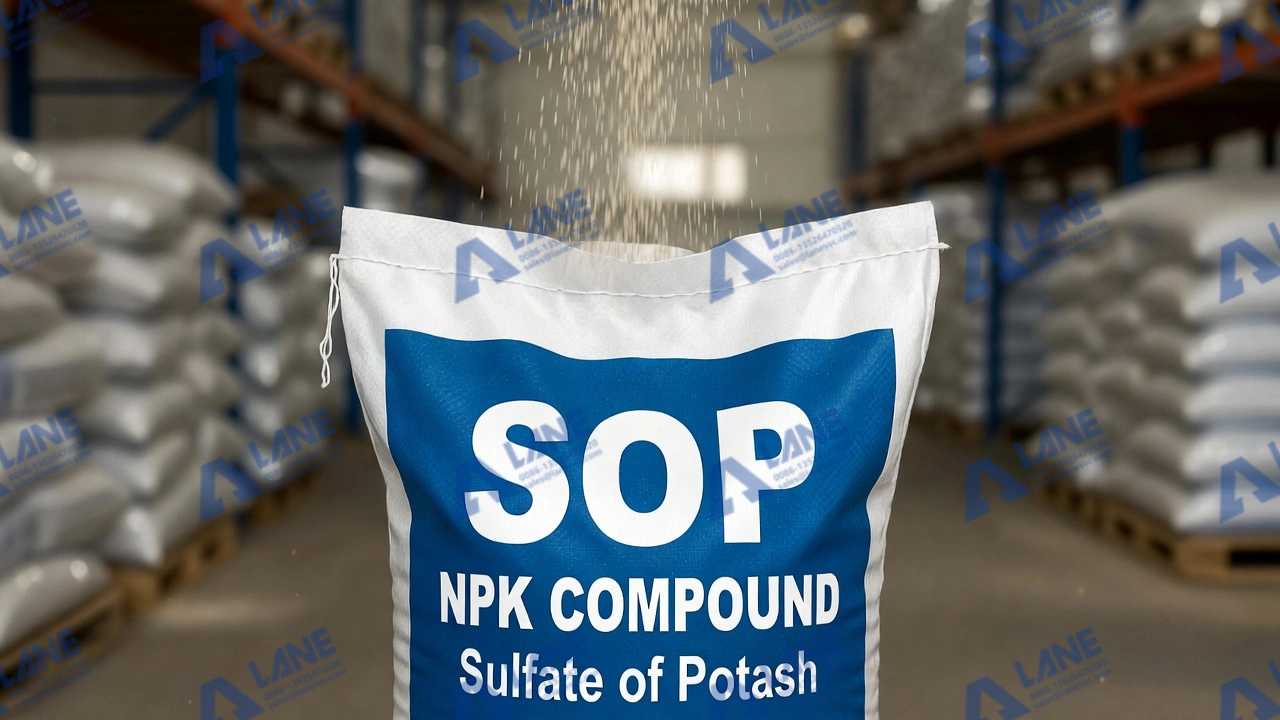
SOP, or Sulfate of Potash, is a premium potassium fertilizer. Its chemical formula is K₂SO₄. It provides two of the most essential nutrients in a highly soluble, chloride-free form:
- Potassium (K):Potassium is important for enzyme activation, photosynthesis, protein synthesis, and plant vigor. It is the primary nutrient that helps with fruit quality, color, and shelf-life.
- Sulfur (S):Sulfur is a primary component of amino acids, proteins, and vitamins. Sulfur is essential for chlorophyll formation and nitrogen metabolism.
Unlike its more common potassium fertilizer counterpart, Muriate of Potash (MOP or KCl), SOP contains minimal chloride. This difference is what makes SOP the superior choice for greenhouse agriculture.
The Core Advantage: Why SOP is a Greenhouse Perfect Fit
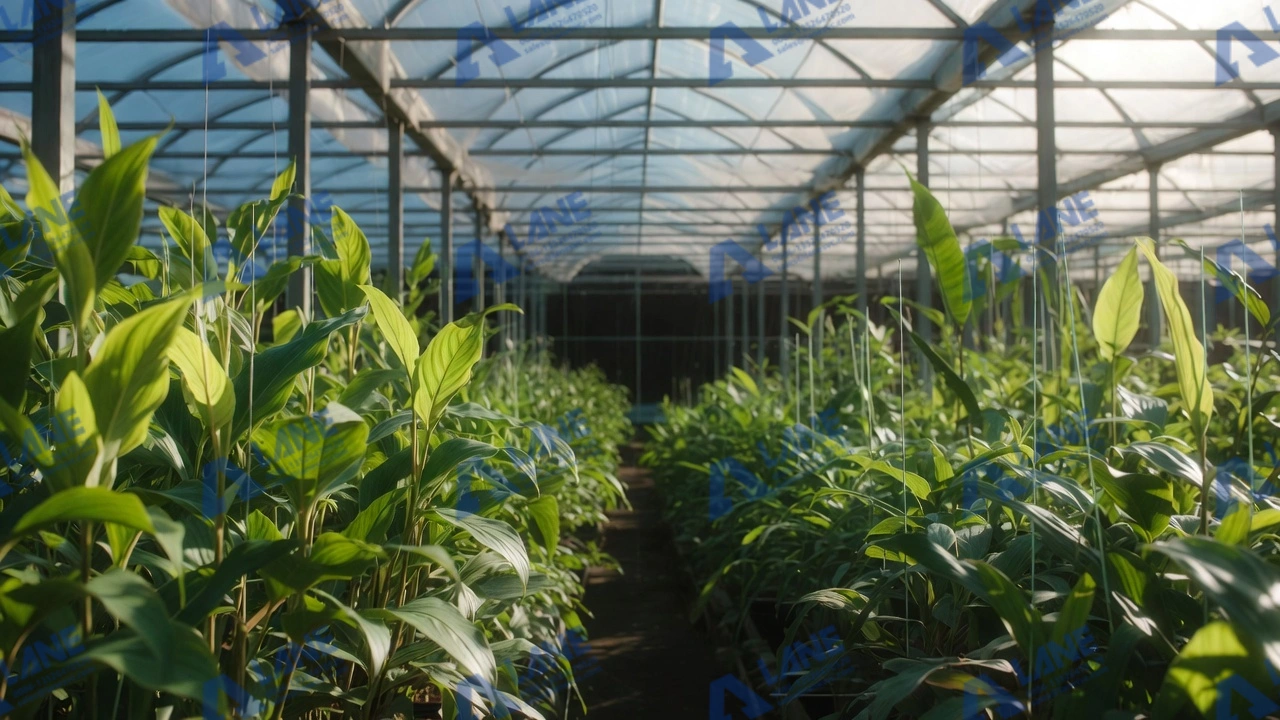
Greenhouse agriculture involves growing high-value, chloride-sensitive crops (like berries, tomatoes, cucumbers, and leafy greens) in a confined, recirculating or limited-leaching soil system. In these systems, salt can easily accumulate and it can be devastating. Chloride from MOP fertilizer can lead to:
- Leaf Burn:Tips and margins will scorch, reducing photosynthetic capacity.
- Stunted Root Growth:High chloride content will compromise water and nutrient uptake.
- Increased Media Salinity:It disrupts the osmotic balance and harms microbial life.
SOP fertilizer doesn’t contain excess chloride; thus it eliminates this entire category of risk. It provides pure potassium and sulfur without the chloride baggage. SOP protects the root zone, ensuring plants can thrive in the intensive, multi-cropping cycles of greenhouse operations.
Key SOP Fertilizer Uses for Optimizing Greenhouse Production
SOP fertilizer uses in a greenhouse lead to consistent results.
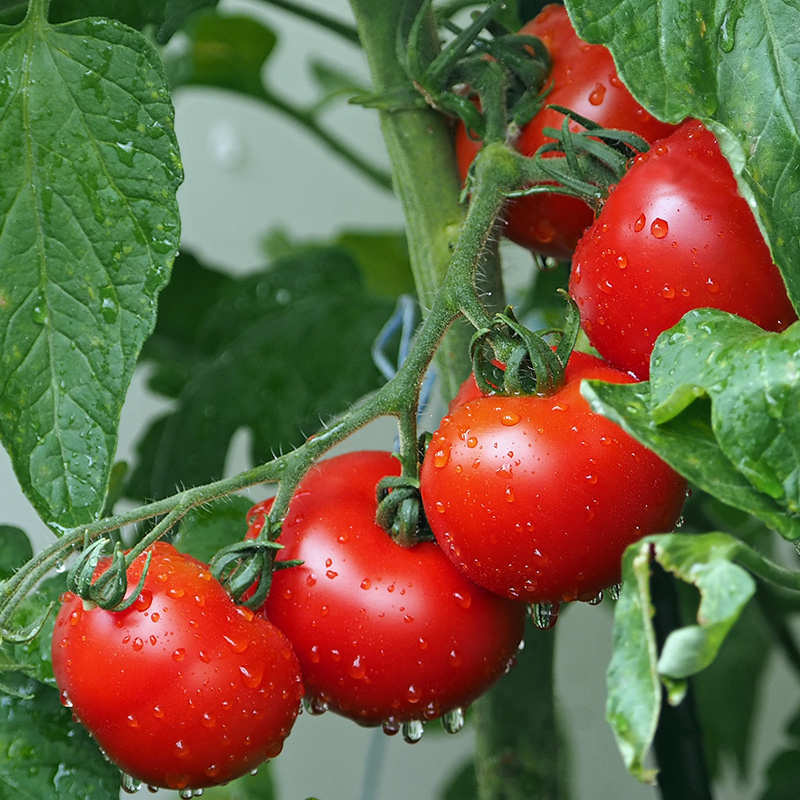
- Managing Salinity and Chloride Sensitivity:This is the primary feature of the SOP fertilizer. SOP is the default potassium source for crops like strawberries, tomatoes, bell peppers, and lettuce, which are highly susceptible to chloride toxicity.
- Enhancing Fruit Quality and Marketability:Potassium is the “quality nutrient.” SOP fertilizer uses are linked to improvements that command higher prices:
- Improved Soluble Solids (Brix):SOP fertilizer increases the sugar content in fruits.
- Enhanced Color Development:SOP fertilizer uses lead to fuller, more uniform reds in tomatoes and peppers, deeper blues in berries.
- Stronger Skin and Firmness:SOP fertilizer reduces bruising and extends post-harvest shelf life.
- Better Aroma and Flavor:SOP optimizes the synthesis of volatile compounds.
- Supporting Plant Health and Stress Resistance:The sulfate sulfur in SOP is immediately available to plants. Sulfur strengthens cell walls and is integral to the production of defense compounds. Greenhouses that use SOP fertilizers have crops that are better equipped to handle environmental stress.
- Enabling Precision Fertigation:SOP is highly soluble and compatible with other common fertilizers. It is particularly suitable with organic fertilizers as they sometimes lack potassium. SOP is easy to use and won’t precipitate out or clog delicate irrigation and dosing systems when mixed correctly.
Implementing SOP in Your Greenhouse Program
SOP can be applied through fertigation systems. The successful SOP fertilizer use method is to integrate it into a balanced nutrient management plan. It should be used with calcium, magnesium, and nitrate-nitrogen sources.
SOP vs. MOP: Making the Informed Choice
While MOP is less expensive than SOP per unit of potassium, this is a case of “false economy” in greenhouse production. The chloride in MOP damages crops, reduces quality, and degrades soil/media, outweighing any savings. For a greenhouse grower, the choice is clear:
SOP is an investment in crop safety, premium quality, and application system longevity. SOP fertilizer uses are not just a nutrient source, but also a risk-mitigation strategy.

Conclusion: SOP as a Foundation for Predictable Quality
In the high-stakes world of greenhouse farming, consistency is the cornerstone of profitability. Greenhouse growers must weigh every input decision against its impact on consistency and premium yield. SOP fertilizer uses provide the structure and precision needed to navigate the unique challenges of controlled-environment fertilization.
SOP fertilizer eliminates chloride toxicity, enhances quality parameters, and integrates seamlessly with precision agriculture.
Frequently Asked Questions (FAQ)
Q1: Isn’t SOP fertilizer more expensive than MOP? Is it worth the cost for greenhouse use?
A1: SOP should be evaluated on its cost-benefit for greenhouse production. It eliminates the chloride toxicity risk that MOP fertilizer has. The consistent premium result of high-quality crops (commanding higher prices), and the protection of your growing media from salt degradation, make SOP a highly profitable investment. The potential losses from a damaged crop far exceed the fertilizer savings from using MOP.
Q2: Can I use SOP for all my greenhouse crops, or just fruits and vegetables?
A2: SOP is beneficial for all chloride-sensitive plants. This includes almost all greenhouse fruiting crops, leafy greens, herbs, and ornamentals. It is safe for non-sensitive crops as well. Many growers simplify their operations by using SOP as their sole potassium source across all crops to avoid any future chloride contamination.
Q3: How often should SOP be applied in a fertigation program?
A3: Most greenhouses use continuous liquid feed programs. SOP is typically included in the base nutrient recipe and applied with every irrigation. The concentration of nutrients is adjusted based on the crop growth cycle (e.g., higher during fruit bulking, lower during early vegetative growth). It is essential to conduct regular soil and media tests.
Q4: Is SOP approved for organic greenhouse production?
A4: Yes. Naturally mined forms of SOP are OMRI-listed and approved for use in certified organic crop production under strict guidelines. Always check the certification of your raw materials and verify with your organic certifier before use in a greenhouse.
Q5: What are the signs that my SOP fertilizer uses need adjustment?
A5: The key indicators include crop visual cues (e.g., yellowing leaf margins from potassium deficiency, stunted growth from sulfur deficiency), abnormal EC or pH levels in the growing media, and reduced yields or quality. If you notice these issues despite following your SOP doses, you should review your monitoring data and adjust your SOP application.
Of course, we also offer other types of products for your different needs, you can click to view.
For more information, please contact us by sending an inquiry today! We can help you!



Write a Reply or Comment