
Maximizing Purity and Yield: Advanced Granulation Techniques for Chloride-Free Potash Fertilizer
The Critical Pursuit of Purity and Efficiency
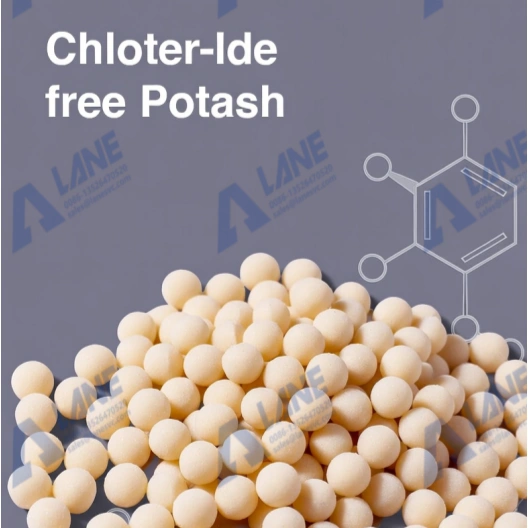
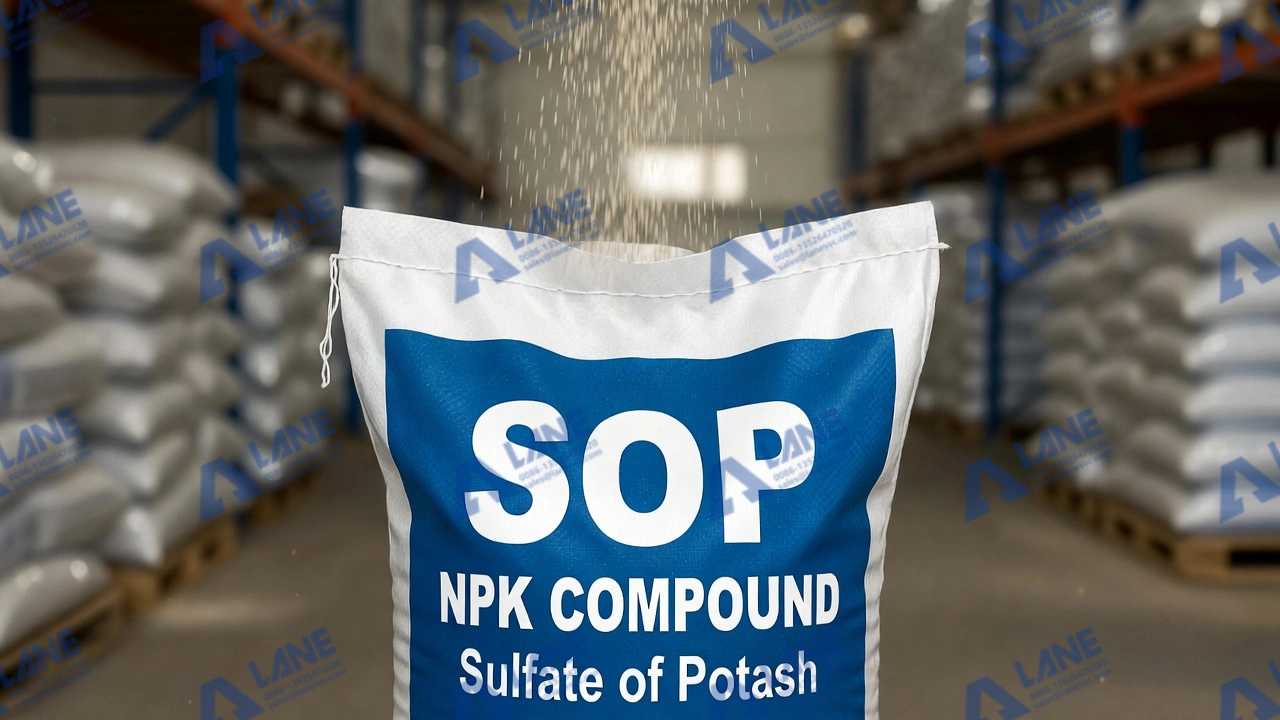
Chloride-free potash fertilizer, represented by sulfate of potash (SOP), is a premium fertilizer. It provides both potassium and sulfur in sulfate form. It is the main potassium source for chloride-sensitive crops like fruits, vegetables, tobacco, and nuts. It enhances the yield, quality, and shelf life of premium agricultural products.
The most common source of potassium is muriate of potash (MOP). But it contains chloride (up to 47%) which is harmful to many sensitive crops. Sulfate of potash has only around 1.5% or less chloride. This makes it effective for sensitive crops. Chloride itself is an essential nutrient for crops. But crops can only intake it in a minimal amount.
The main challenge of an SOP fertilizer production line is maximizing both product purity and process yield. Achieving this balance directly impacts profitability and brand reputation. LANE Heavy Industry, a leading manufacturer of fertilizer machinery, has developed advanced granulation technologies that effectively address these challenges.
Unique Production Challenges in Chloride-Free Potash
Chloride-Free Potash Fertilizer can be made by chemical conversion or can be derived from natural ores. The SOP fertilizer production process presents some challenges. These are:
- Material Characteristics: SOP has a different crystal structure, hardness, and solubility compared to MOP. This affects the fertilizer production process.
- Purity Preservation: The Chloride-Free Potash Fertilizer process must have a contamination protocol. The SOP fertilizer must be free from chloride salts or other impurities.
- Dust Control and Handling: Fine SOP powders are dusty. This leads to product loss and safety hazards. A Chloride-Free Potash Fertilizer production line must address this problem.
- Granule Quality Requirements: The end granules must have the strength to withstand storage and transport. The granules must be uniform with consistent nutrient distribution. Overcoming these challenges requires proper planning and durable granulation production line equipment.
Advanced Granulation Technologies: A Comparative Look
LANE Heavy Industry has granulation solutions for all stages and price points. Those can turn powdered SOP into premium, dust-free granules.
This is a dry granulation process. In this process, powdered SOP crystals are compressed between two counter-rotating rolls under extreme pressure to form dense sheets or flakes. These are then crushed to produce uniform, hard granules.
In this process, there is no need for any liquid binders. It produces low-moisture, highly soluble granules.
Steam Granulation (TVA Process):
This method introduces low-pressure steam into a granulation drum. The steam condenses on the SOP powder, creating a thin layer of solution that acts as a binding agent during tumbling. It produces strong, spherical granules with excellent solubility.
Rotary Drum Granulation:
Here, a liquid binder like SOP solution or water is mixed inside a rotating drum or in a dedicated mixer before transferring to the rotary drum. This forms initial granules through layering and coalescence. This method offers great flexibility in granule size and is excellent for producing blended fertilizers where SOP fertilizer contains added nutrients like magnesium or sulfur.
LANE Heavy Industry’s Engineered Solutions for SOP Excellence
For a Chloride-Free Potash Fertilizer production line, the machine must be durable and corrosion-resistant. LANE Heavy Industry provides an integrated production solution for SOP fertilizer.
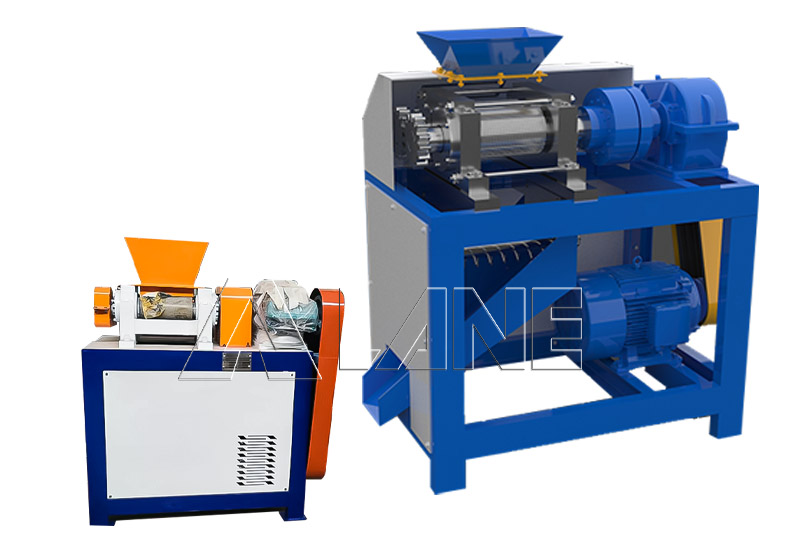
Double Roller Granulator: LANE’s heavy-duty Double Roller Extrusion Granulators are built with wear-resistant rollers. The hydraulic systems allow for pressure adjustment for the granulation. This is a critical
factor for granule density and hardness.
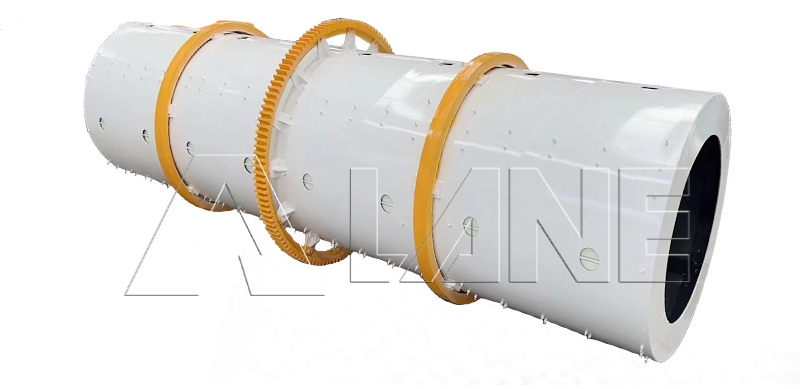
For Agglomeration and Coating: LANE’s Rotary Drum Granulators are designed with an internal spray system. These machines are optimized for even distribution of binders or coatings. When paired with rotary
dryers and coolers, which offer precise temperature and airflow control, producers can achieve perfect granule moisture content and hardness.
Holistic Line Integration: Granulation is just one part of the system. A proper production line has to be in sync with all of its components. LANE’s expertise in belt conveyors, bucket elevators, and screening systems
ensures gentle material handling from raw material intake to finished product storage.
The Direct Benefits of Precision Granulation
Implementing an advanced production line with LANE machinery delivers tangible returns:
- Maximized Yield: LANE’s Chloride-Free Potash Fertilizer is a well-tuned system. It minimizes off-spec material and recycles fines and oversized granules.
- Guaranteed Purity: The whole system is designed with a closed-system policy and dedicated space for each part of the process. This prevents cross-contamination.
- Superior Product Properties: Product size and product nutrient content can be adjusted with the LANE production line.
- Operational Efficiency: Reliable, automated equipment reduces downtime, energy consumption per ton, and labor costs.
Conclusion: Investing in the Right Process
The production of high-quality chloride-free potash fertilizer relies heavily on advanced granulation techniques and reliable machinery. SOP fertilizer is a premium fertilizer which demands a premium approach. It is a must requirement to build trust with customers. A trusted partner like LANE Heavy Industry can help you maximize both purity and yield of your SOP fertilizer.
Frequently Asked Questions (FAQ)
Q1: What is the main advantage of chloride-free potash like SOP over standard potash (MOP)?
A1:Chloride-free potash, such as Sulfate of Potash (SOP), provides potassium without harmful chloride ions. This makes it ideal for chloride-sensitive crops (e.g., berries, potatoes, tobacco), improving yield, quality (e.g., sugar content, color), and storage life. It also supplies valuable sulfur, a secondary macronutrient.
Q2: What exactly does “SOP fertilizer contains” mean for crop nutrition?
A2: When we say “SOP fertilizer contains” we are highlighting its dual-nutrient composition. SOP contains approximately 50% K₂O (potash) and 18% S (sulfur) in the readily available sulfate form. This combination is perfect for crops with high potassium and sulfur demands, supporting protein synthesis, enzyme activity, and overall plant vigor.
Q3: Why is granulation so important for a powdered material like SOP?
A3: Granulation improves the physical properties of SOP dramatically. It reduces dust (improving safety and reducing loss), creates a uniform particle size for even mechanical application, enhances flowability for storage and handling, and improves the product’s marketability and perceived value.
Q4: Is the compaction-granulation process a “dry” process?
A4: Yes, roller press compaction-granulation is essentially a dry process. It uses mechanical pressure alone to form granules, requiring no liquid binders or subsequent thermal drying. This makes it highly energy-efficient and excellent for preserving the exact chemical composition of the feed powder.
Q5: How does LANE Heavy Industry’s machinery specifically address purity concerns?
A5: LANE designs systems with purity as a core principle. This includes features like dedicated equipment for SOP lines to prevent cross-contamination, sealed or enclosed conveyors to protect product from environmental dust, and the use of corrosion-resistant materials and easy-clean designs in critical areas to maintain product integrity.
Of course, we also offer other types of products for your different needs, you can click to view.
For more information, please contact us by sending an inquiry today! We can help you!



Write a Reply or Comment