
Integrating SOP fertilizer additive humic acid into Your Production Line: A Technical Guide
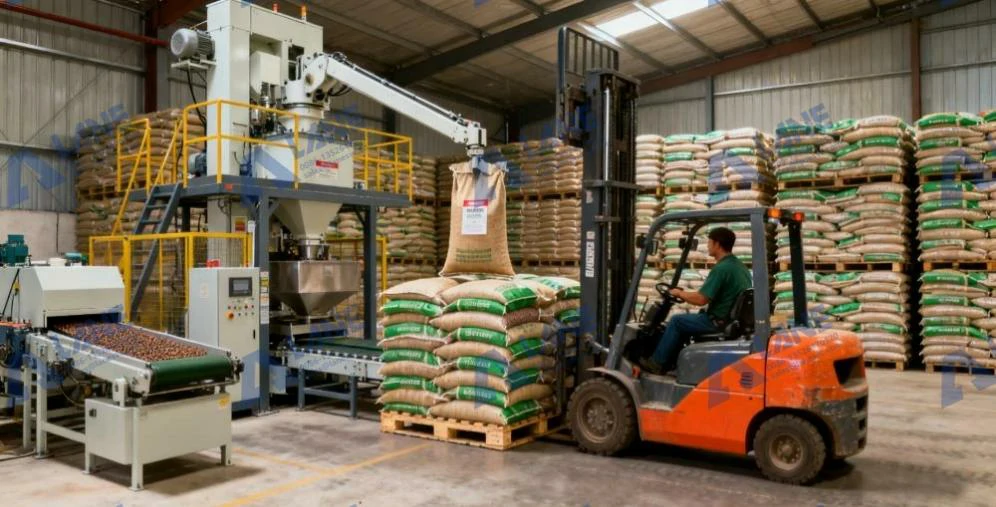
Introduction: The Value-Added SOP Proposition
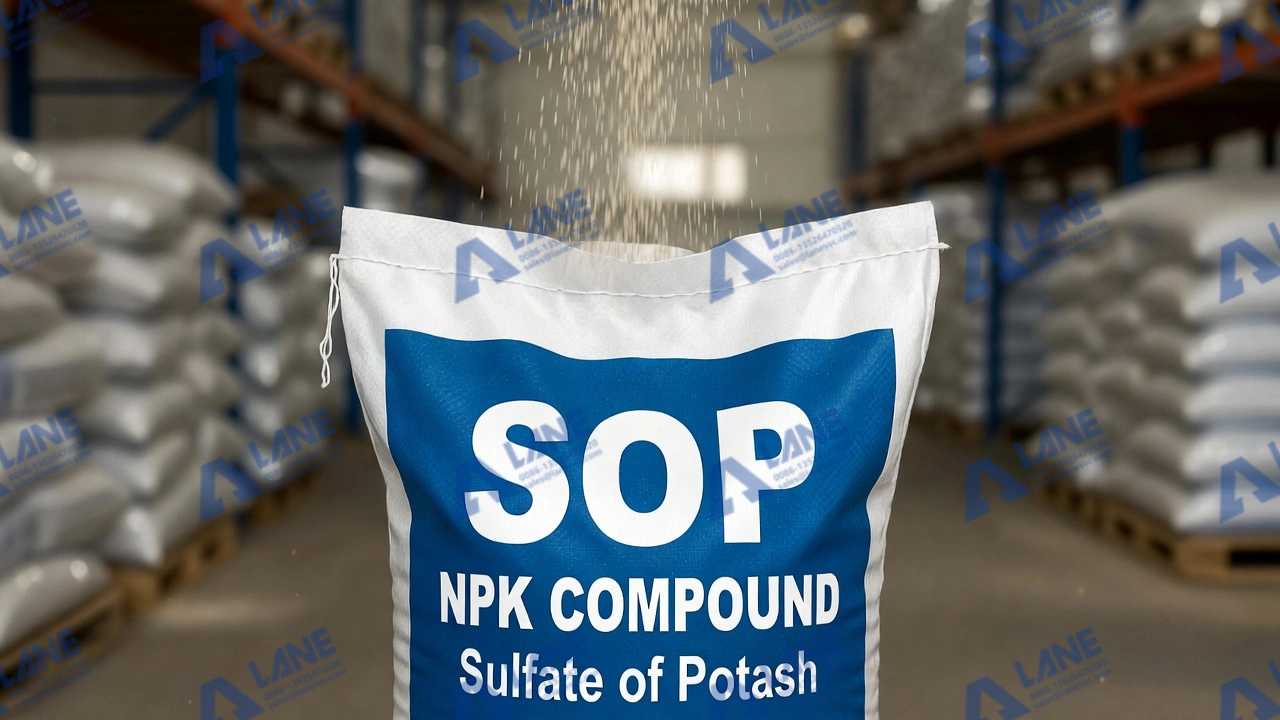
Sulfate of Potash (SOP) is a chloride-free premium potassium fertilizer which is very popular for chloride sensitive high value crops. It’s dual nutrient value and low chloride content is what makes it different from most popular potassium fertilizer muriate of potash (MOP). but in today’s market, standard SOP fertilizer is no longer enough. Integrating SOP fertilizer additive humic acid in your production line you can create a next generation product with higher economic value.
SOP fertilizer additive humic acid represents an opportunity to enhance product functionality, cater to the growing demand for soil health solutions, and increase profit margins. Humic acid acts as powerful bio stimulant which improve soil structure, increase nutrient and water retention and promotes root development. However, adding this organic additive into an inorganic fertilizer production line represents significant technical challenges.
This guide provides details about the technical process for incorporating SOP fertilizer additive humic acid using a modern using production line from LANE Heavy Industry.
Pre-Production Considerations: Formulation and Material Prep
The integration of SOP fertilizer additive humic acid begins before the production starts.
- Humic Acid Source & Form: powdered humic acid is preferred for the granulation. the raw materials must be consistent in nutrient value. it must have high humic/fulvic acid content, and low moisture to avoid downstream issues.
- Formulation Ratio: Determine the ratio of humic acid in the SOP blend. Typically, it is around 5%-15%. this is important for batching the raw materials.
- Raw SOP Analysis: determine the size, moisture, temperature of your base SOP to adjust process parameters.
Process Flow: Integrating Humic Acid into the SOP Production Line
The goal of a SOP fertilizer additive humic acid production line is to create a coated, granular SOP-humic acid fertilizer that will get you premium price. The standard integrated flow is
Raw Material Reception → Crushing/Screening → Precision Dosing → Mixing → Granulation → Drying → Cooling → Screening → Coating → Packaging.
The critical integration points for the SOP fertilizer additive humic acid are at dosing, mixing, and granulation.
Spotlight on LANE Heavy Industry Machinery for Optimal Integration
4.1. Raw Material Reception & Pre-processing
LANE’s vertical crushers and roller screens prepare raw SOP and humic acid to a uniform fine powder. This creates ideal surface for binding with the humic acid additive.
4.2. Precision Dosing & Homogeneous Mixing
This is the most critical stage for quality control. The raw materials are fed into the LANE Dynamic Batching System. It is equipped with weighting and scale sensors. proportions programmed by the technicians are delivered to the mixer. LANE’s Double shaft mixer is ideal here. It creates a forceful, three-dimensional mixing action that achieves a perfectly homogeneous blend in 2-3 minutes and prevents segregation.
4.3. Granulation: The Core of Stability
The uniform powder blend is then fed into the granulation unit. A LANE Rotary Drum Granulator or LANE two in one rotating Granulator is recommended. water of other binding agent is sprayed inside the rotating drum. The tumbling and cascading motion along with stirring pin creates perfectly round, consistent granules where the SOP and humic acid are locked together. You can also use LANE Double-Roller Granulator to physically press the blended powder into uniform granules without heat or moisture
4.4. Drying & Cooling
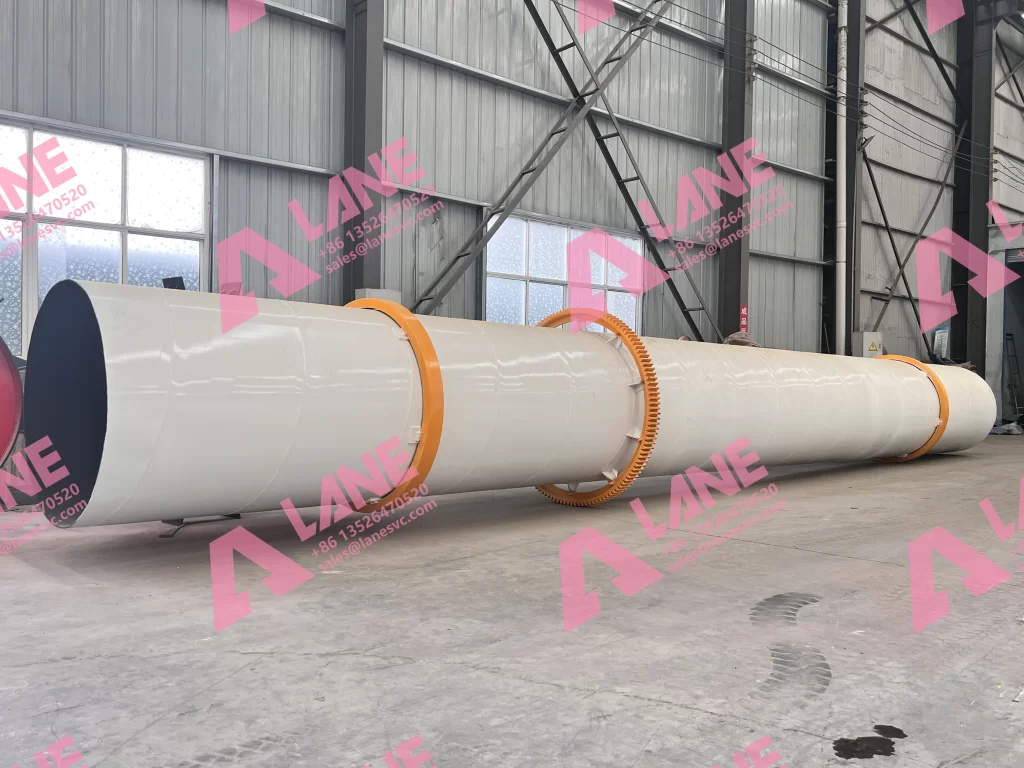
After granulation the wet granules have high moisture content and have risk of caking. they are sent to the LANE Rotary Dryer. LANE Rotary Dryer efficiently reduces moisture using concurrent hot air flow. The granules are then stabilized in a LANE Rotary Cooler. this prepares them for coating. Integrated temperature control here protects organic humic acid component from thermal degradation.
4.5. Screening, Coating, and Packaging
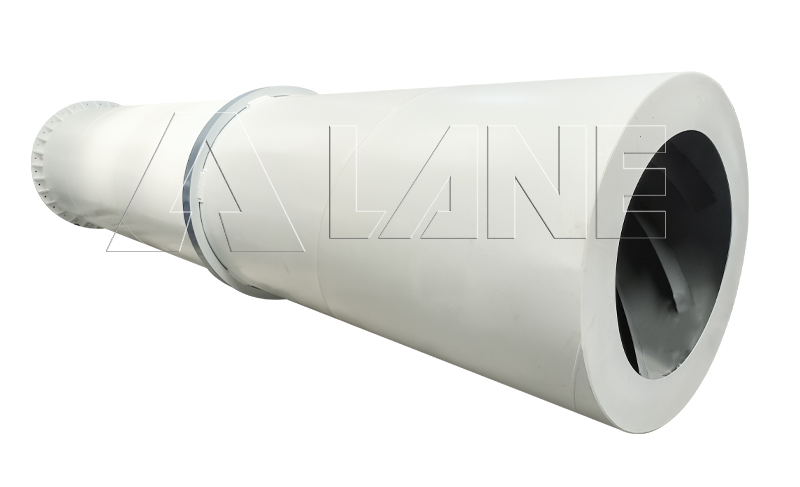
Oversized and undersized granules and fines are screened out in this stage. LANE uses Rotary Drum Screen to screen out on size granules and send them to coating machine. Oversized and undersized granules are sent back to crusher for recycled. LANE Coating Drum applies anti-caking or dust-control coating to the granules. after that the finished granules are sent to the Automatic Packing Machine to bag the finished final premium fertilizer.
Key Technical Parameters & Quality Control
- Mixing Uniformity: CV (Coefficient of Variation) of <5% for SOP fertilizer additive humic acid distribution in the powder mix.
- Granulation Rate: Target >90% on-size granules (e.g., 2-4 mm).
- Granule Strength: Crushing strength should exceed 20N to withstand handling.
- Moisture Control: Final product moisture below 2% to ensure stability.
- Temperature Control: Drying air temperature should not exceed 120°C to preserve humic acid activity.
Benefits of a Streamlined, Integrated Production Line
Utilizing a coordinated production line from a single supplier like LANE Heavy Industry ensures:
- Seamless Compatibility: All equipment is engineered to work in harmony.
- Process Consistency:Automated control delivers a uniform, high-quality product, ideal for producing SOP fertilizer additive humic acid.
- Reduced Loss & Contamination: Enclosed systems maximize yield and purity.
- Scalability: Lines can be designed for capacities from 10 to 50+ tons per hour.
- Lower Operational Cost: Integrated engineering optimizes energy and labor use.
FAQ: Common Questions on SOP and Humic Acid Production
Q1: Can humic acid be added to the SOP melt in a crystallization process?
A: While possible, it is inefficient and can degrade humic acid at high temperatures. The dry granulation process described above is the most effective and preserves the bioactivity of the humic acid.
Q2: Does humic acid make the granulation process more difficult?
A: It can, as it is an organic material with different binding properties. This is why precision mixing and potentially adjusting the binder type/amount in the granulator are crucial. LANE’s granulation technology is adaptable to these material variations.
Q3: What is the typical production capacity of such a line?
A: LANE Heavy Industry designs lines from small (5-10 t/h) to large-scale (30-50 t/h) outputs, fully customizable based on your raw material input and market requirements.
Q4: Why not just blend finished SOP granules with humic acid powder?
A: Dry blending leads to severe segregation during handling and transport. Integrated granulation creates a compound granule where every granule contains both SOP and humic acid, guaranteeing the intended nutrient and additive delivery to the soil.
Conclusion
Integrating humic acid additive in SOP fertilizer is a forward-thinking strategy. It will help you capture a growing market segment. Success depends on the production process designed around precision, homogeneity and gentle processing of the organic component. By leveraging experience of LANE Heavy Industry, you can build a production line that is equipped with batching, mixing, granulation, and drying systems which is reliable and efficient. The result is a premium fertilizer that can deliver consistent result for farmers.
Of course, we also offer other types of products for your different needs, you can click to view.
For more information, please contact us by sending an inquiry today! We can help you!



Write a Reply or Comment