
Key Machinery and Layout for a Modern Water-Soluble SOP Fertilizer Manufacturing Plant
Introduction: The Demand for Precision in SOP Production
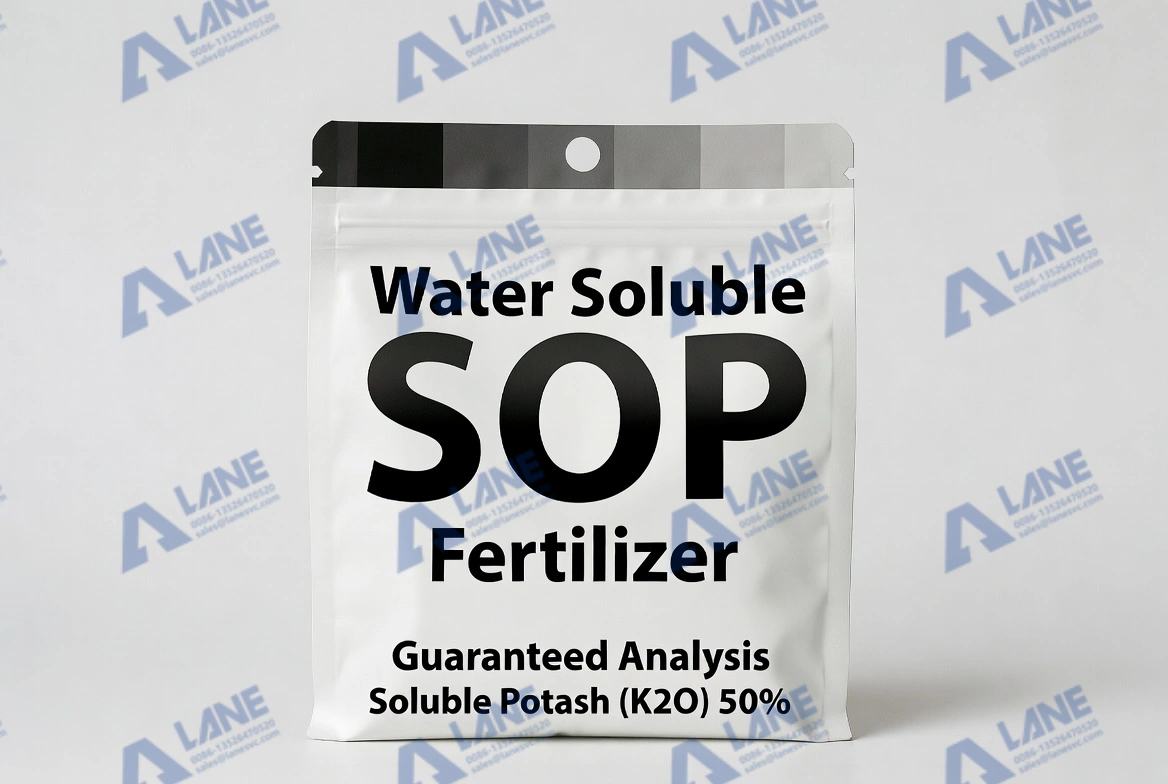
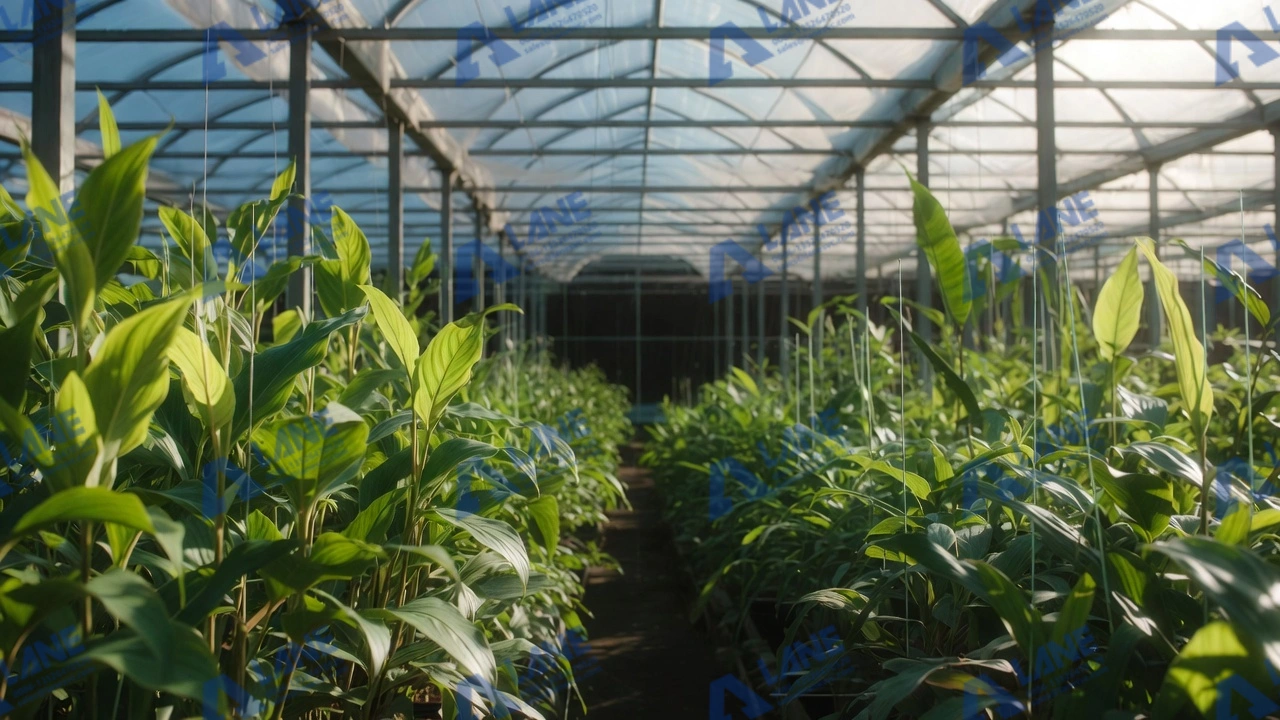
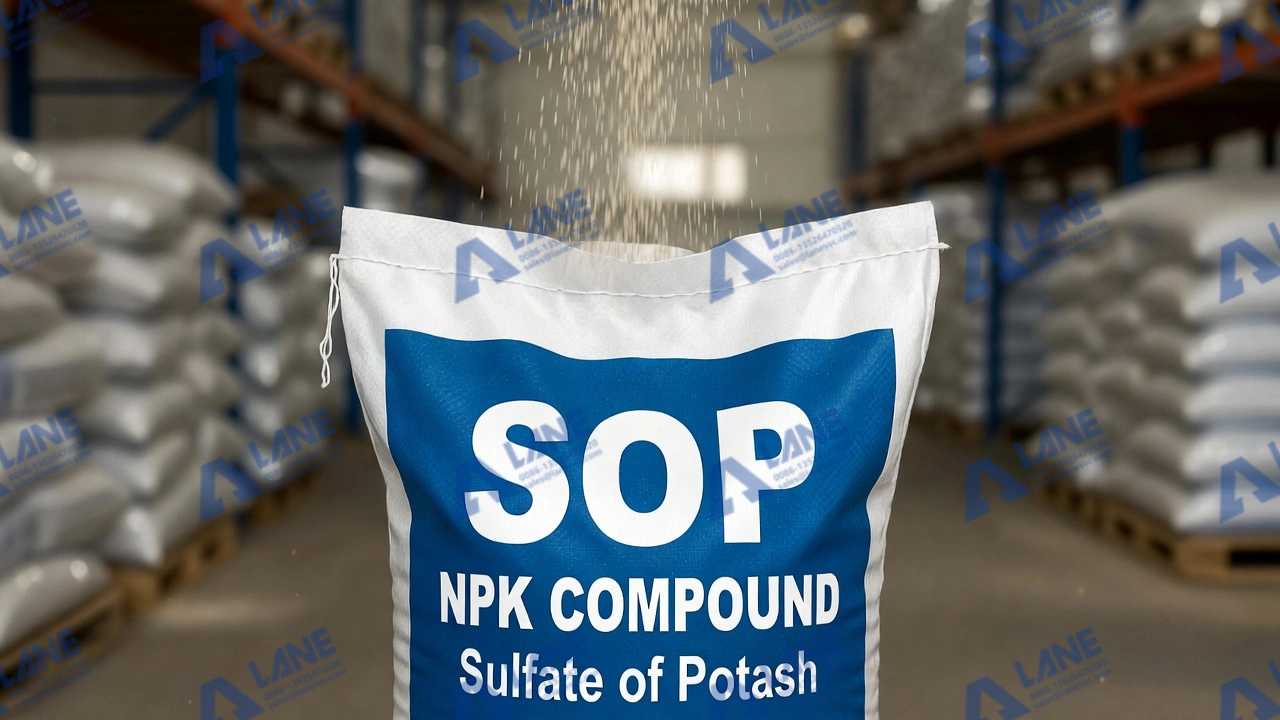
Water-soluble SOP (Sulfate of Potash) fertilizer is a premium, high-purity, chloride-free potassium fertilizer. It is popular for its dual nutrient (potassium up to 52% and sulfur up to 18%) and its chloride-free composition. It’s very popular among premium cash crop farmers. Water-soluble SOP fertilizer has excellent solubility and rapid nutrient absorption. It is in high demand for greenhouse cultivation and drip irrigation systems. It effectively improves crop yield and quality without damaging soil structure.
The production of high-quality water-soluble SOP fertilizer relies on advanced, precision machinery. Manufacturing a consistent, dust-free, and rapidly soluble granule requires a meticulously engineered production line. This article explains the key machinery and plant layout essential for a modern water-soluble SOP fertilizer plant.
Core Philosophy of a Modern Water-Soluble SOP Line
The production of superior water-soluble SOP fertilizer depends on uniformity, solubility, and efficiency. The production process must form granules that are strong enough to handle yet dissolve completely in water without residue. This can’t be done with a disjointed set of machines. It requires a synchronized, integrated production line system.
Key Machinery in the LANE Heavy Industry Production Line
A turnkey production line from LANE Heavy Industry is designed as a synchronized unit. Here are the critical components:
Raw Material Preparation: Crushers and Feeders
- The process first begins with raw material sizing. Lumpy raw SOP and other nutrient sources (like MKP, MAP) are first passed through a crusher to achieve a fine, uniform powder. They are then sent to storage. From there, they are sent to the dynamic batching system where they are precisely sent to the mixing system according to the formulation.
Precision Mixing: The Twin-Shaft Paddle Mixer
- Mixing is required for proper nutrient distribution. LANE’s heavy-duty horizontal mixer is engineered for this task. Its counter-rotating shafts with intermeshing paddles create a thorough cutting and folding action, ensuring a homogeneous mixture of SOP powder and trace elements. This homogeneity is the first step toward producing a granule with consistent nutrients.
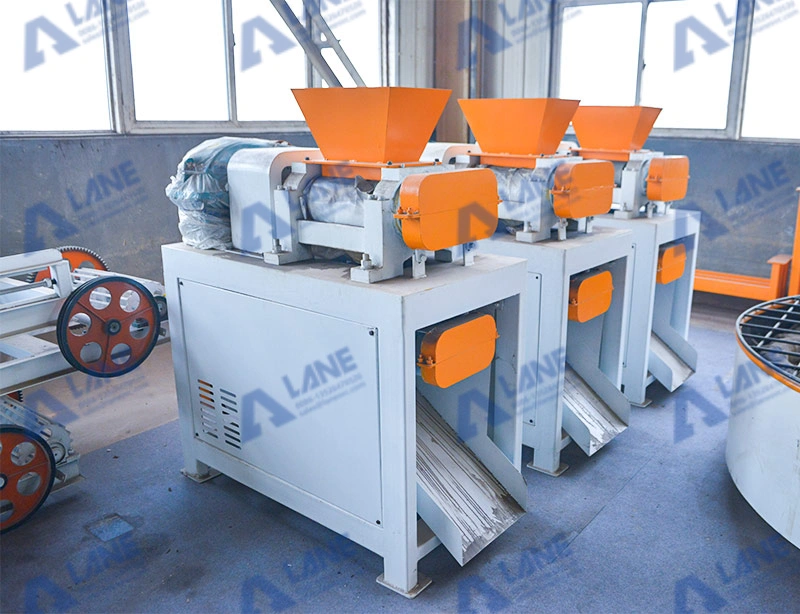
The Heart of Formation: The Double Roller Granulator
- This is where the water-soluble SOP fertilizer granule takes shape. The homogeneous powder is sent to the double roller granulator where two counter-rotating rollers compress the powder into irregularly shaped granules. This compaction process creates granules that are easily dissolved in water.
Screening and Recycling: The Closed-Loop System
- After granulation, it is necessary to screen the on-size (2-4mm) granules from fines and oversized water-soluble SOP fertilizer. A rotary screening machine classifies the product. On-size granules proceed; oversized lumps and fines are crushed and recycled back to the mixer.
Final Enhancement: Packaging
- The on-size water-soluble SOP fertilizer is conveyed to the automated weighing and bagging machine. Here, the granules are weighed and packed according to the user’s input.
Optimized Plant Layout for Efficiency and Quality
The machinery must be arranged logically to promote smooth material flow and operational safety. A modern LANE-designed layout typically follows a vertical or linear flow:
- Raw Material Receiving & Storage: Located at one end, with easy access for trucks and silos/warehouses for raw SOP and additives.
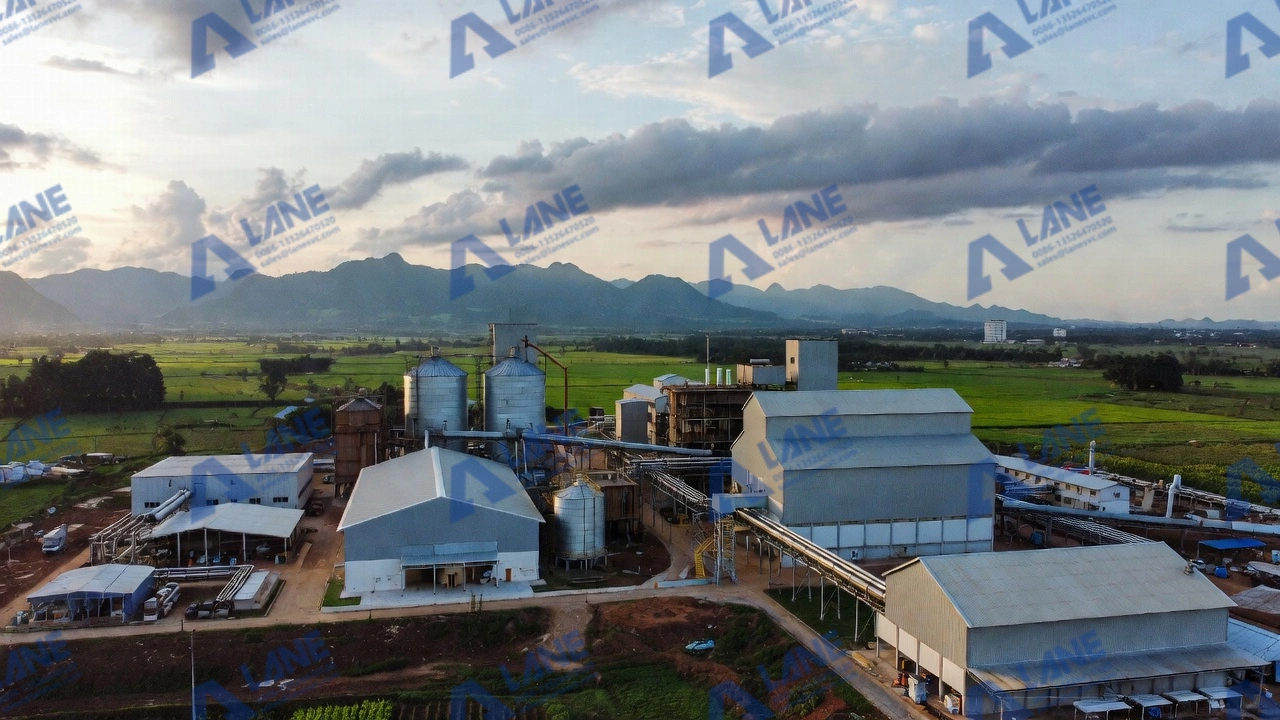
- Processing Bay: This is the main corridor which houses the machinery. This area contains the crusher, mixer, granulator, and screening machine in a straight-line, L-shaped, or U-shaped configuration to minimize conveyor lengths.
- Screening & Recycling Loop: Positioned centrally to allow easy return of fines and crushed oversize to earlier stages.
- Finished Product Bay: Located at the opposite end from raw materials. It features storage hoppers and automated packing lines.
- Control Room: A centralized, sound-insulated room overlooking the processing bay. It allows operators to monitor and control the entire line from one location.
This layout minimizes cross-contamination, reduces energy loss in conveying, and simplifies maintenance access.
Why Choose an Integrated Line from LANE Heavy Industry?
Choosing a single supplier for your integrated line will save you from many integration-related problems. LANE offers the following advantages for water-soluble SOP fertilizer production:
- Seamless Compatibility: All machines from LANE are engineered to work in harmony, avoiding bottlenecks or performance mismatches.
- Single-Point Accountability: One supplier is responsible for the entire production line’s performance, training, and after-sales support.
- Proven Process Guarantee: LANE provides a tested process flow and engineering support to ensure the line meets specified output and quality targets.
- Scalability: We can design water-soluble SOP fertilizer production lines from small-scale (e.g., 5t/h) to large-scale (e.g., 30t/h) production.
FAQ: Water-Soluble SOP Fertilizer Production
Q1: What is the main difference between producing standard SOP and water-soluble SOP?
A1: The key difference lies in the granulation process and binder selection. Water-soluble SOP fertilizer production uses a non-salt-based binder and precise granulation control to create a porous granule that disintegrates rapidly in water, whereas standard SOP may use different binders prioritizing hardness over instant solubility.
Q2: How important is the choice of binder in the production process?
A2: It is critical. The binder must provide enough strength for handling and storage but must not form a water-insoluble shell. The type and amount are carefully calibrated in the mixing stage to guarantee 100% solubility without residue.
Q3: Can one production line make different formulations of water-soluble fertilizers?
A3: Yes, a flexible line like LANE’s can produce various NPK + SOP blends. This requires precise feeder controls for different raw materials (like MAP, Urea, Nitrates) and a robust mixing system to ensure homogeneity for each recipe change.
Q4: What is the typical production capacity range for such a plant?
A4: Integrated lines can be designed for a wide range, from small-scale operations of 1-5 tons per hour to large-scale industrial plants producing 20-30 tons per hour of finished water-soluble SOP fertilizer.
Conclusion: Building a Foundation for Quality
The production of high-quality water-soluble SOP fertilizer depends on advanced machinery and scientific layout. Investing in a modern production line is a strategic decision to capture the growing premium fertilizer market. LANE Heavy Industry’s production line integrates energy efficiency, environmental protection, and intelligence. By prioritizing precision granulation, efficient thermal processing, and a closed-loop recycling system, manufacturers can ensure every granule meets the stringent standards demanded by modern, precision agriculture, building a reputation for reliability and performance.
Of course, we also offer other types of products for your different needs, you can click to view.
For more information, please contact us by sending an inquiry today! We can help you!



Write a Reply or Comment