
How to Choose the Right SOP Fertilizer Production Process | LANE Machinery Guide
Introduction: The Critical Choice of Process
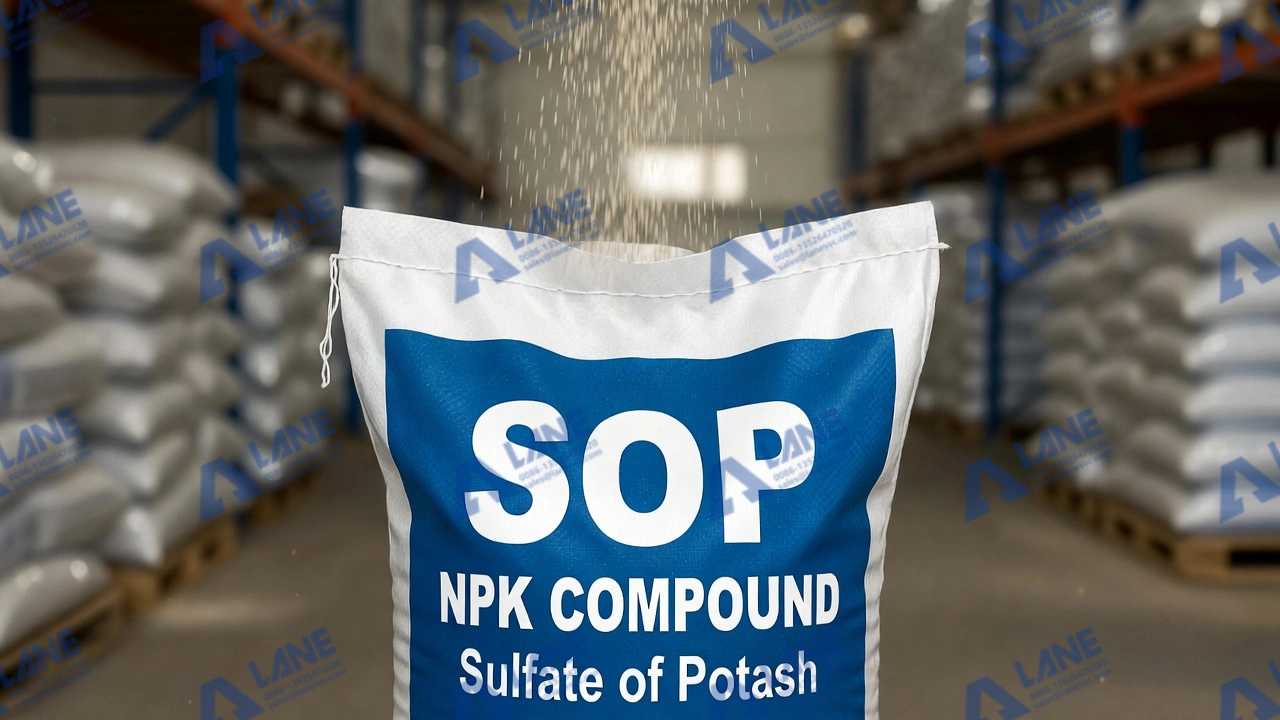
Potassium is essential for plant growth and resistance against nature. Among the potassium nutrient sources, Sulfate of Potash (SOP) stands out as a chloride-free solution with its double nutrient value. It is essential for chloride-sensitive cash crops like tobacco, citrus, and potatoes. But not all SOP fertilizer is the same. The SOP fertilizer production process directly determines product quality, yield, operational cost, and scalability. This is not a one-size-fits-all production line. A Sulfate of Potash (SOP) fertilizer production line dictates your plant’s capital expenditure (CapEx), product quality, and your profitability.
A process perfectly suited for a 50,000-ton-per-year granular product is vastly different from one designed for 200,000 tons of fertilizer. Choosing the right SOP fertilizer production process requires balancing raw material compatibility, equipment efficiency, and regulatory compliance. LANE Heavy Industry, a leading fertilizer machinery manufacturer with 20 years of experience, offers tailored production lines that optimize the SOP fertilizer production process for different scale production lines.
Defining Your Output Goals: The First Step
Before you start any production-related work you should first determine your output goals. Ask the following questions:
- Annual Capacity: What is your annual operation goal? Are you targeting 30,000, 100,000, or 300,000+ metric tons per year?
- Product Form: Who are your buyers? What kind of product form do they prefer? Are they demanding coarse, hard granules for bulk blending, standard powder for compaction, or crystalline SOP for specialty agriculture?
- Raw Material Sourcing: How much is your raw material cost? Can your suppliers provide consistent raw materials (e.g., potassium chloride, sulfuric acid, or various potassium salts)?
- Future Expansion: Do you plan to scale up production in phases?
The answers to these questions will form the blueprint for your future SOP fertilizer production process.
Demystifying the Core SOP Fertilizer Production Processes
There are various methods of SOP Fertilizer Production Process, but two primary methods dominate the landscape due to their industrial feasibility.
The Mannheim Process: A Proven Workhorse
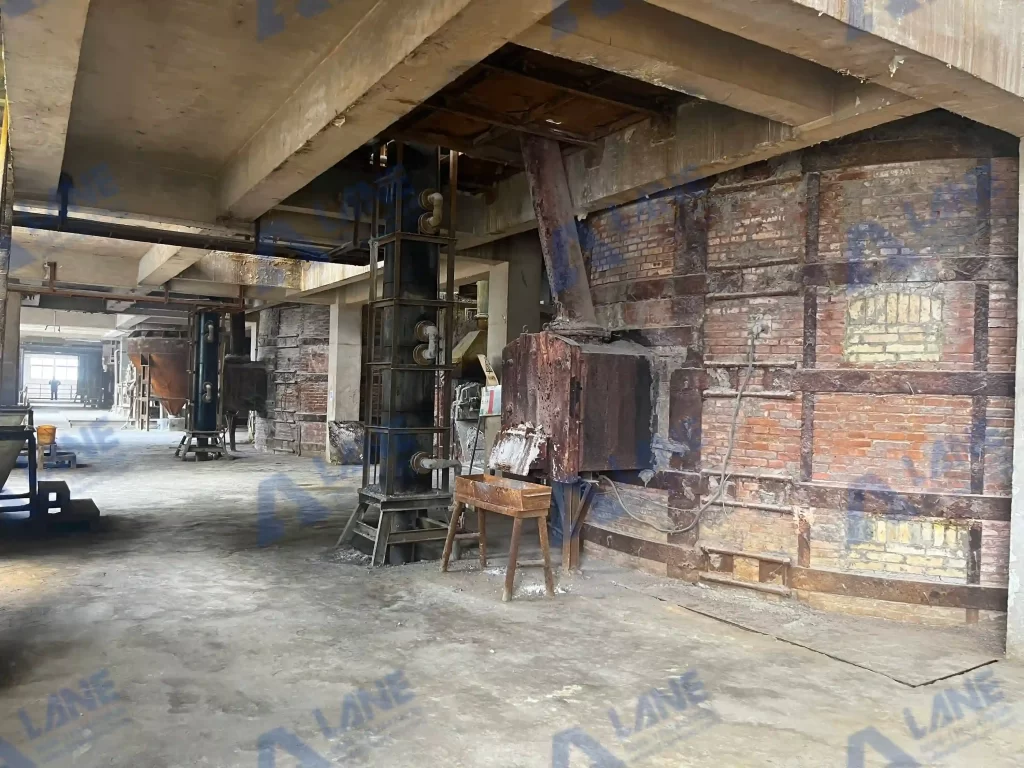
The Mannheim process is the most common SOP fertilizer production process. It involves the reaction of potassium chloride (KCl) with sulfuric acid (H₂SO₄) in a specialized Mannheim furnace. The reaction temperature of the furnace is around ~500-600°C and it needs specialized materials. This process produces SOP and hydrochloric acid (HCl) as a by-product.
- Best Suited For: It is best suited for large-scale, continuous production of standard to granular-grade SOP.
- Output Match: This is excellent for large scale industrial goals (100,000+ tons/year). LANE Heavy Industry’s engineered Mannheim reactor furnaces are designed for maximum thermal efficiency and reaction yield. They are made with thermal and corrosion-resistant material which can withstand up to 2000°C. This SOP fertilizer production process is highly economical at scale.
The Solution-Based K₂SO₄ Process: A Flexible Alternative
In this method, KCI is reacted with various sulfate sources (like magnesium sulfate or sodium sulfate) in a solution. After a series of crystallization, separation, and drying steps, high-purity SOP is obtained.
- Best Suited For: This is best suited to produce premium, crystalline SOP or situations where HCl handling is not feasible. It can be more adaptable to different raw material suites.
- Output Match: This is often preferred for medium-output goals with a focus on product purity or crystalline form. LANE provides tailored crystallization reactors, centrifuges, and multi-stage dryers to optimize this SOP fertilizer production process.
Matching Process to Output with LANE Heavy Industry Machinery
Your SOP fertilizer production process needs industrial-grade precision equipment. LANE Heavy Industry offers modular and integrated solutions for each path.
For Low to Medium Output & Standard Grade:
For a low to medium SOP fertilizer production line, LANE offers:
- Compact Reaction Systems:Tailored furnaces or reactors scaled to your throughput.
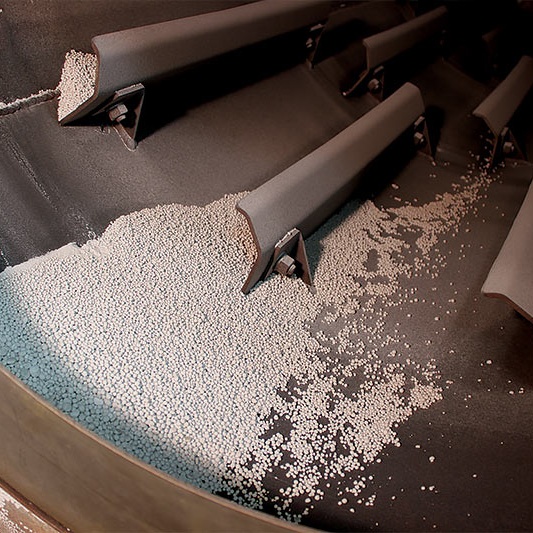
- Efficient Granulation:A robust rotary drum granulator or compaction-granulation line (using a double roller press) to form granules from powder.
- Key Auxiliaries:Rotary dryers and coolers for product hardening, and screening systems for size classification.
For High-Output & Premium Granular SOP Production:
This type of production line demands a fully integrated, continuous SOP fertilizer production process line.
- High-Capacity Mannheim Furnace:The Mannheim furnace is the best solution for a high-capacity production process. LANE Mannheim furnaces are engineered for 24/7 operation, automated feeding, and precise temperature control.
- Advanced Granulation Circuit: A robust rotary drum granulator or compaction-granulation line (using a double roller press) to form granules from powder.
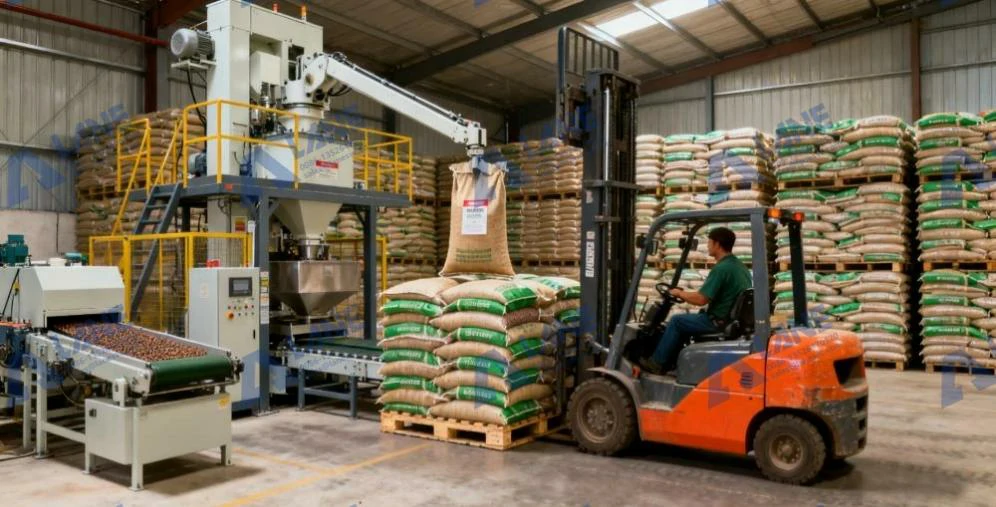
- Complete Finishing Section: We provide high-efficiency fluidized bed dryers & coolers, rotary coating drums for anti-caking, and automated packaging systems.
Integrated End-to-End Production Lines:
LANE has a dedicated experienced engineering team. They design the entire SOP fertilizer production process as a cohesive system: from raw material feeding and reaction to granulation, drying, cooling, screening, and dust recycling, every component is engineered to work in harmony. This maximizes yield and minimizes energy consumption.
The Selection Process: A Practical 5-Step Checklist
- Quantify Goals: Finalize your target capacity, product specifications, and budget.
- Process Feasibility Study: After getting the raw material data and your production goal, you must determine if the Mannheim, Solution, or a hybrid SOP fertilizer production process is economically viable for you.
- Preliminary Engineering & Layout: Partner with LANE Heavy Industry to design a process flow diagram (PFD) and plant layout based on the selected process.
- Core Machinery Specification: Get the detailed specifications for the reactor, granulator, dryer, cooler, and material handling systems from LANE.
- Lifecycle Cost Analysis: You should also evaluate the long-term operational, maintenance, and energy costs of the proposed SOP fertilizer production process line. LANE offers a 5-year warranty for their production line.
Conclusion: Building on a Foundation of Quality
Choosing the right SOP fertilizer production process determines your product quality, yield, operational cost, and scalability. It is the cornerstone upon which a successful and profitable fertilizer plant is built. By aligning LANE’s equipment with your capacity, quality, and cost goals, you can establish a reliable, efficient SOP fertilizer production process that adapts to market demands and drives long-term success.
Frequently Asked Questions (FAQ)
Q1: What are the two main types of SOP fertilizer production processes?
A1: The two primary industrial processes are the Mannheim Process (direct reaction of KCl and H₂SO₄) and various Solution-Based Processes (using KCl and other sulfates). The choice depends on scale, desired product form, and raw material availability.
Q2: How does output goal influence the choice of process?
A2: Output goals are decisive. The Mannheim process is typically more capital-intensive but highly cost-effective for very high output (e.g., >100,000 t/year). Solution processes can be more adaptable for medium-scale, premium-grade production. Your target capacity directly dictates the scale and type of machinery, like LANE’s reactor furnaces or crystallization systems, needed.
Q3: Why is LANE Heavy Industry’s machinery well-suited for an SOP line?
A3: LANE Heavy Industry specializes in designing and manufacturing integrated, heavy-duty processing lines. For the SOP fertilizer production process, this means offering core components like Mannheim furnaces, granulators, and dryer/coolers that are built for durability, energy efficiency, and seamless integration, ensuring high uptime and consistent product quality for your specific output goals.
Q4: Can a production line be designed for future expansion?
A4: Yes, a well-planned SOP fertilizer production process line from the outset can be modular. With LANE, you can design key areas (like reaction and granulation) with future capacity increases in mind, allowing for expansion with minimized disruption and redundant capital costs later.
Q5: Is the by-product HCl from the Mannheim process a problem?
A5: It can be a challenge or an opportunity. The HCl must be handled safely, requiring absorption systems to produce commercial-grade hydrochloric acid or water. If a viable market exists for this acid, it can become a significant secondary revenue stream, improving the overall economics of this SOP fertilizer production process.
Of course, we also offer other types of products for your different needs, you can click to view.
For more information, please contact us by sending an inquiry today! We can help you!



Write a Reply or Comment