
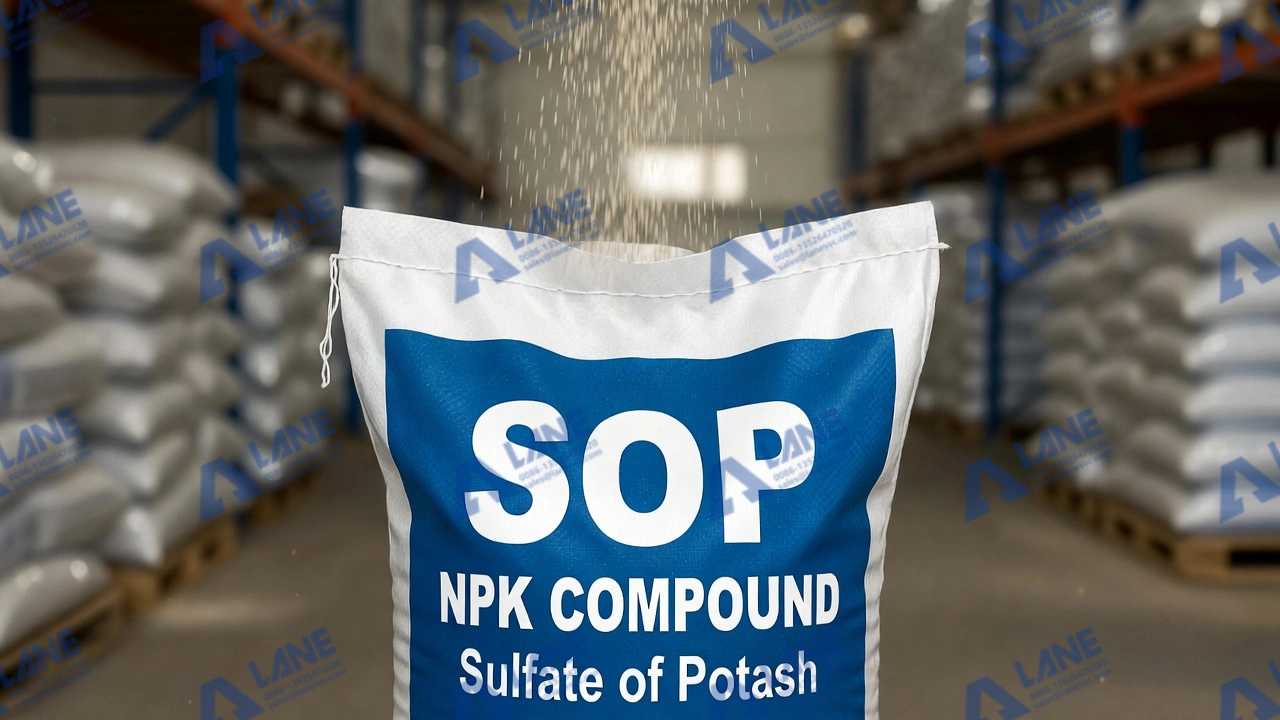
Cost-Effective Production of SOP Fertilizer in NPK Compound
Introduction: The Economic Imperative for SOP in NPK Production
In the competitive agricultural industry, producers seek ways to deliver premium products while maintaining healthy profit margins. This competitiveness drives innovation and delivers newer and more powerful tools for the agriculture industry. SOP fertilizer in NPK compound has emerged as such an innovative tool for modern farmers. It is valued for its ability to provide balanced nitrogen (N), phosphorus (P), and potassium (K) in optimal ratios while also delivering sulfur without any chloride content. Sulfate of Potash (SOP) has established itself as the preferred potassium source for high-value, chloride-sensitive crops. However, many manufacturers struggle with high production costs, which limit profitability and market competitiveness.
The solution is efficient, advanced production equipment from LANE Heavy Industry. Our engineered machines stand out for cost-effective manufacturing of SOP fertilizer in NPK compound.
Understanding the Cost Challenges in SOP Production
It is essential to understand why the production of SOP fertilizer in NPK compound presents economic hurdles. Traditional SOP fertilizer production lines struggle with several cost-intensive issues such as:
- Raw material waste from dust generation and inefficient processing
- High energy consumption, particularly in drying and granulation stages
- Equipment wear caused by abrasive SOP powder
- Quality inconsistencies leading to rejected batches and rework costs
- Environmental compliance expenses for dust control and byproduct management
These challenges increase when producers attempt to integrate SOP into complex NPK formulations. In SOP fertilizer in NPK compound production lines, precise NPK ratios and uniform granule quality are non-negotiable. LANE Heavy Industry addresses each of these pain points through integrated system design.
The LANE Advantage: Engineered for Cost Efficiency
- Intelligent Raw Material Management
The journey of cost-effectiveness starts at the raw material reception stage. LANE provides enclosed conveying systems with sealed bucket elevators, enclosed screw conveyors, and enclosed belt conveyors. This prevents SOP and other powdered raw materials from becoming airborne dust.
This containment delivers immediate economic benefits:
- 3–5% increase in product yield by capturing material that would otherwise be lost
- Reduced raw material procurement costs through maximized utilization
- Lower maintenance expenses by preventing abrasive dust from damaging equipment bearings and seals
Every kilogram of raw material retained transforms into direct cost savings. LANE’s precision feeding systems further enhance efficiency by controlling the reaction of the Mannheim process and ensuring optimal reaction conditions and minimum waste.
The granulation stage represents one of the most energy-intensive stages in producing SOP fertilizer in NPK compound. LANE addresses this through advanced granulation systems that balance product quality with energy consumption.
Our rotary drum granulators and double-roller compaction granulators are designed with controllable drum/roller speed, lifters, and spray systems to ensure uniform granule formation while minimizing fine and oversized granule generation. This efficiency translates directly to reduced energy requirements for subsequent drying and cooling stages.
The production of SOP fertilizer in NPK compound benefits from LANE rotary dryers, engineered for maximum heat efficiency with minimal air velocity to reduce fine particle carry-over. Similarly, our rotary coolers use controlled ambient airflow to gently reduce product temperature without causing thermal stress and granule breakdown.
- Closed-Loop Byproduct Management
LANE’s approach to cost-effective SOP fertilizer in NPK compound production includes HCl scrubbers that capture byproduct hydrogen chloride from the Mannheim furnace reaction, recycling it into hydrochloric acid and generating another income source.
This closed-loop system delivers dual economic benefits:
- Reduced waste disposal costs by converting byproducts into saleable commodities
- Lower raw material expenses through acid recovery and reuse
- Regulatory compliance without expensive end-of-pipe treatment systems
For manufacturers interested in SOP fertilizer in NPK compound, this integrated approach transforms what was traditionally a cost center into a potential revenue stream.
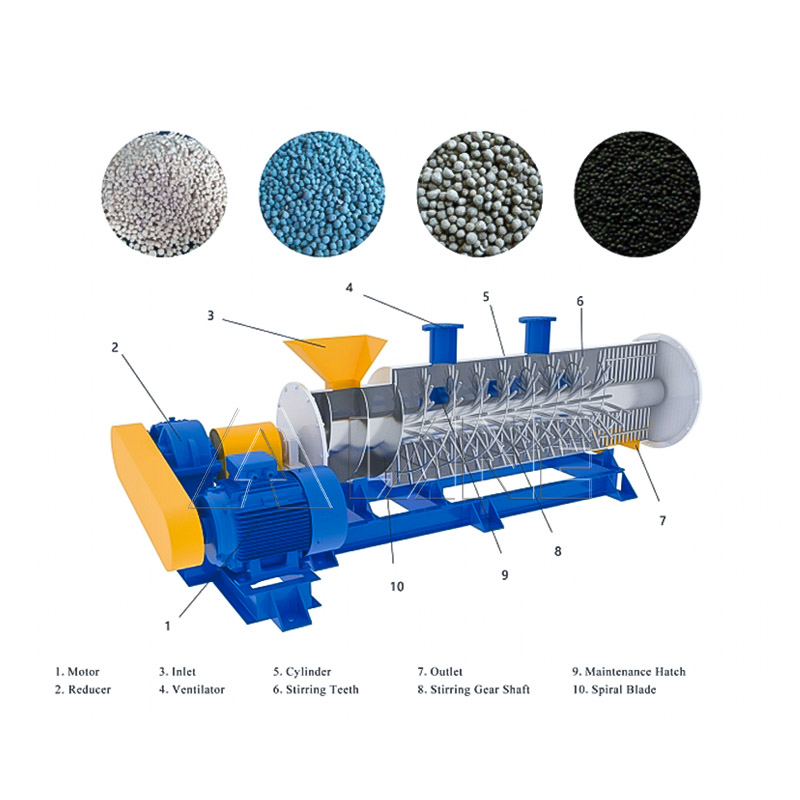
Creating homogeneous SOP fertilizer in NPK compound requires precise mixing of SOP with nitrogen and phosphorus sources along with micronutrient additives. LANE’s corrosion-resistant high-shear horizontal mixers ensure complete blending before granulation begins.
This precision eliminates the need for reprocessing due to nutrient inconsistencies and reduces both energy consumption and production time. The paddle design is adjustable for producing standard NPK ratios or specialized blends.
- The Coating Advantage: Preventing Post-Production Losses
One of the most overlooked factors of a fertilizer factory is what happens after the fertilizer leaves the factory. SOP fertilizer in NPK compound that arrives at the farmer’s gate as dust represents complete loss of user trust and value.
LANE’s rotary coating drums apply a uniform layer of anti-caking and dust-suppression agents to every granule. This inert coating (typically 0.2–0.5% of product weight) seals the granule surface, preventing moisture absorption and abrasion during handling, storage, and transport.
For manufacturers of SOP fertilizer in NPK compound, this coating stage delivers measurable economic returns:
- Reduced customer complaints and product returns
- Premium pricing for dust-free, free-flowing products
- Enhanced brand reputation that drives repeat business
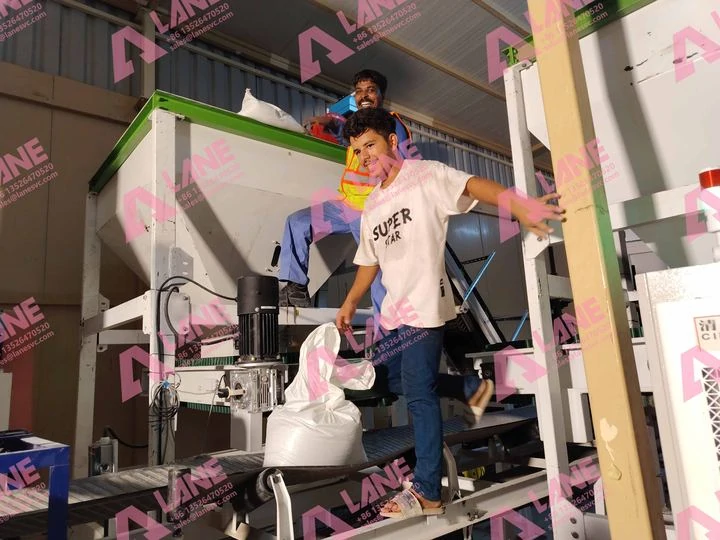
The final stage of cost-effective production is automated, dust-tight packaging. LANE systems use enclosed conveyors to transfer SOP fertilizer in NPK compound into automatic packing machines.
Automation reduces labor costs while improving accuracy and consistency. LANE’s packaging systems can work around the clock without breaks, increasing overall production capacity and reducing per-ton labor expenses.
Integration Strategies: SOP in Compound NPK Formulations
Producing SOP fertilizer in NPK compound cost-effectively requires understanding how SOP interacts with other fertilizer components. LANE’s production line accommodates bulk blending approaches or granulation integration.
Bulk Blending Approach
For manufacturers seeking flexibility, SOP fertilizer in NPK compound can be produced through bulk blending. In this system, granular SOP is physically mixed with other granular nutrients. This approach requires minimal equipment. The machines required are batching systems, mixers, and packaging. This makes it ideal for operations with diverse, customized formulations.
Granulation Integration
To produce homogeneous premium-quality fertilizer, SOP fertilizer in NPK compound can be manufactured through customized granulation lines where all nutrients are precisely combined before granulation. This approach ensures every granule contains the same nutrient profile. Though it requires more extensive equipment including crushers, granulators, dryers, and coolers.
LANE offers both approaches, with production lines scalable from 1 ton per hour to 50 tons per hour, allowing manufacturers to match capacity to market demand.
ROI for LANE SOP Production Lines
Investing in a LANE production line for SOP fertilizer in NPK compound delivers compelling returns:
| Investment Aspect | Expected Outcome |
| Initial Investment (mid-scale) | $350,000–$2,000,000 |
| Payback Period | 2–3 years |
| Margin Improvement | 30–40% on SOP sales |
| Yield Increase | 3–5% reduction in material loss |
| Maintenance Reduction | Significant decrease from dust control |
For farmers using SOP fertilizer in NPK compound produced on LANE lines, the benefits translate to 15–25% higher yields compared to standard potassium chloride alternatives, particularly for root crops and chloride-sensitive vegetables.
Frequently Asked Questions
Q1: What makes LANE’s production line more cost-effective for manufacturing SOP fertilizer in NPK compound?
A1: LANE’s integrated design addresses multiple cost factors simultaneously—enclosed systems prevent material loss, energy-efficient equipment reduces utility expenses, closed-loop byproduct management creates revenue streams, and automated processes minimize labor costs. The result is a production system where every stage contributes to overall economics.
Q2: Can I produce both standard SOP and SOP fertilizer in NPK compound on the same line?
A2: Yes. LANE production lines are designed with flexibility in mind. The modular configuration allows manufacturers to produce straight SOP, SOP fertilizer in NPK compound, and even SOP fertilizer with micronutrients by adjusting process parameters and incorporating additional feeding systems.
Q3: What is the minimum production capacity for a cost-effective SOP fertilizer in NPK compound line?
A3: LANE offers production lines ranging from 1 ton per hour for small-scale operations to 50 tons per hour for large industrial facilities. The most cost-effective scale depends on your market access, raw material availability, and capital resources. Our team can help you determine the optimal capacity for your specific situation.
Q4: How does the coating process affect the agronomic performance of SOP fertilizer in NPK compound?
A4: The coatings used in LANE’s production lines are inert, non-toxic materials applied in minute quantities (0.2–0.5%). They do not affect nutrient availability or soil interaction—their sole purpose is to improve physical handling characteristics. Once the granule reaches moist soil, the coating dissolves and the nutrients become fully available to plants.
Q5: Does LANE provide support for retrofitting existing production lines to produce SOP fertilizer in NPK compound?
A5: Absolutely. LANE specializes in auditing existing facilities and implementing targeted retrofits. Whether you need to add precision mixing capabilities, install coating drums, or upgrade your granulation system, our engineers can design modular upgrades that transform your conventional line into a high-performance SOP fertilizer in NPK compound production system.
Q6: What warranty and after-sales support does LANE provide?
A6: LANE offers comprehensive support including 5-year warranties on key components, overseas installation and commissioning services, operator training, and remote monitoring systems. Our commitment extends well beyond equipment delivery to ensure your ongoing success.
Of course, we also offer other types of products for your different needs, you can click to view.
For more information, please contact us by sending an inquiry today! We can help you!



Write a Reply or Comment