
20 T/H NPK Production Plant with MOP Fertilizer: Full Process & Design Guide
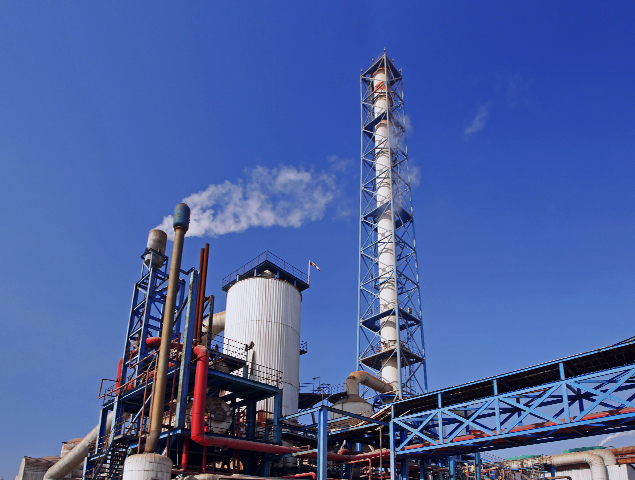
In modern agriculture, compound fertilizer plays a vital role in improving soil fertility and crop yields. The 20 T/H NPK Production Plant with MOP Fertilizer has become a core plant for producers who aim to cash in on the growing demand for high-efficiency, balanced compound fertilizers. MOP (Muriate of Potash), chemically known as potassium chloride, is a cost-effective potassium raw material with up to 62% potassium content. The 20 T/H NPK Production Plant with MOP Fertilizer is designed to produce high-quality NPK (Nitrogen, Phosphate, Potassium) compound fertilizers efficiently.
The 20 T/H NPK Production Plant with MOP Fertilizer designed and manufactured by LANE Heavy Industry stands out for its stability, efficiency, and customization. This article provides a comprehensive guide to the full process, design, and key considerations for setting up a 20 T/H NPK Production Plant with MOP Fertilizer with LANE Heavy Industry’s machinery.
What is a 20 T/H NPK Production Plant with MOP Fertilizer?
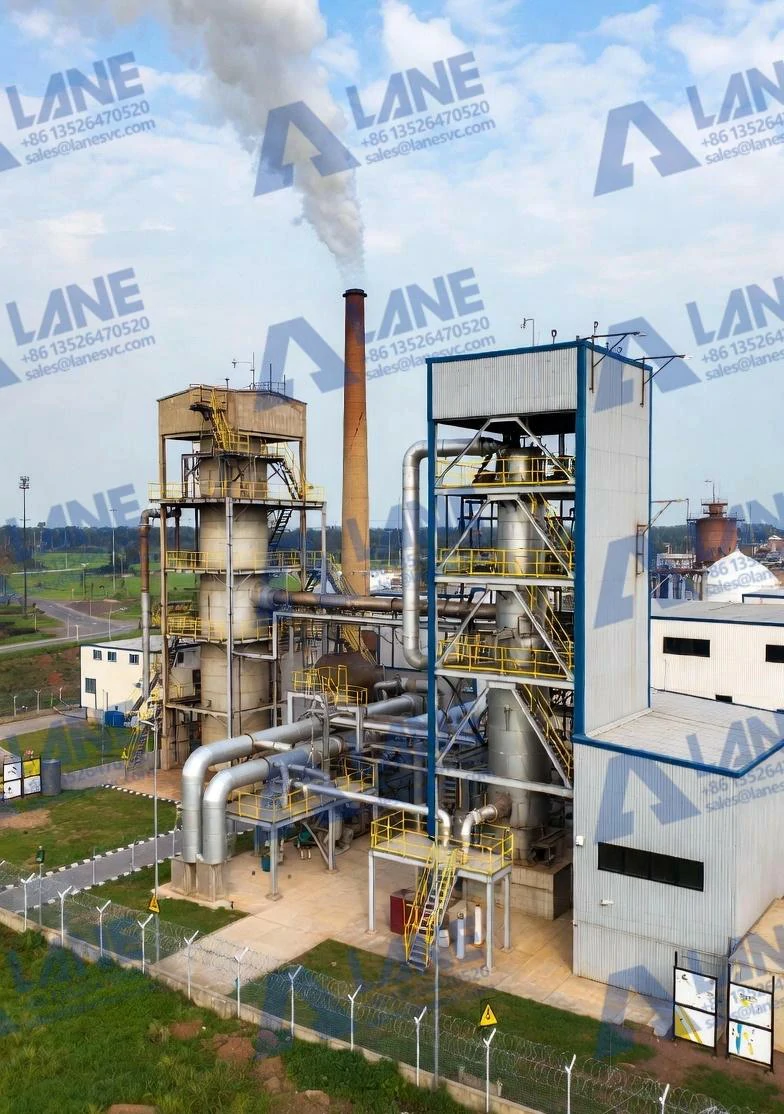
A 20 T/H NPK Production Plant with MOP Fertilizer refers to a fertilizer manufacturing facility capable of producing 20 tons per hour of NPK compound fertilizers using MOP (Muriate of Potash) as the potassium source. The modern plant integrates modern technologies for raw material mixing, granulation, drying, cooling, screening, and packaging.
Key Features:
- It has a production capacity of 20 tons per hour
- This production plant uses MOP as a primary potassium source
- Advanced granulation technology for uniform particle size
- Automated control systems for precision and efficiency
- Environmentally friendly with dust collection systems
Main Raw Materials
NPK stands for Nitrogen, Phosphate, Potassium. The production of NPK requires all three sources of nutrients.
- Nitrogen (N):Provided by urea, ammonium nitrate, or ammonium sulfate.
- Phosphate (P):Provided by phosphate rock or superphosphate.
- Potassium (K):Provided by MOP (Potassium chloride).
A 20 T/H NPK Production Plant with MOP Fertilizer combines these raw materials together or with optional trace elements to create a balanced, high-efficiency fertilizer.
Plant Layout and Design
The layout of a 20 T/H NPK Production Plant with MOP Fertilizer is critical for production efficiency, safety, and scalability. LANE Heavy Industry offers modular layouts that can be adjusted according to site conditions and client requirements.
Key Sections of the Plant
- Raw Material Storage and Handling
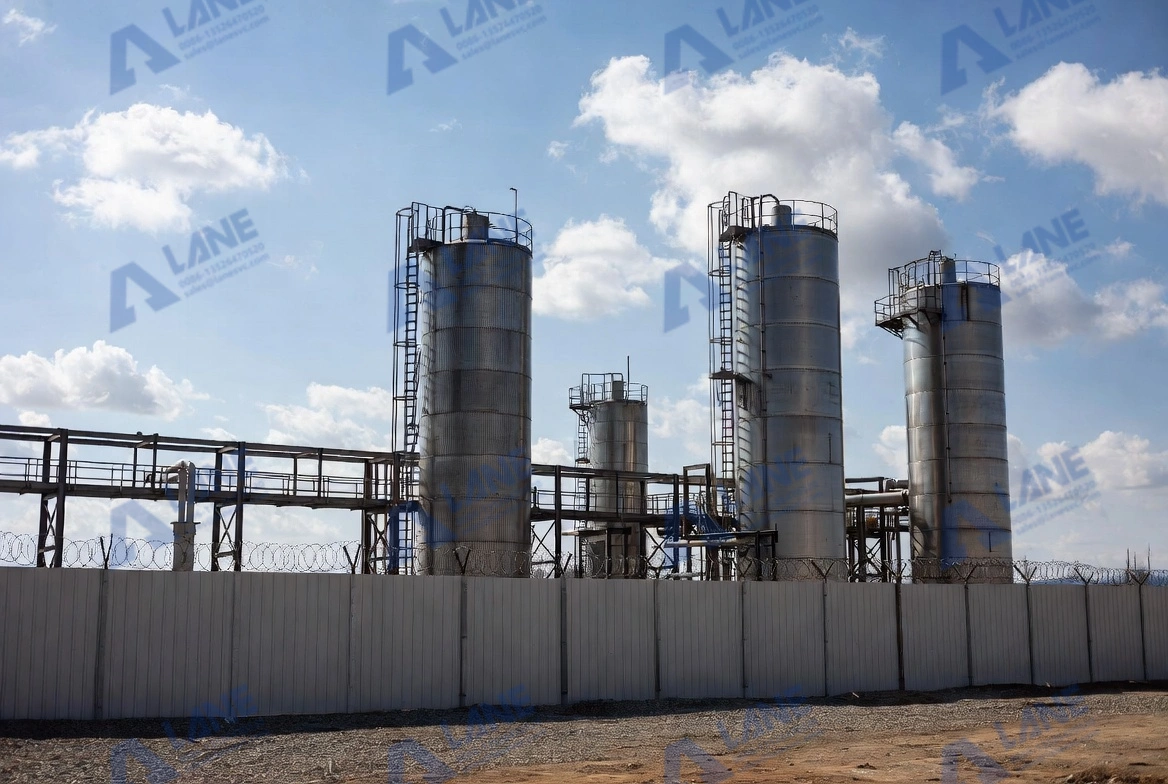
- The production plant is equipped with silos for urea, phosphate, and MOP.
- Belt conveyors and bucket elevators for material transfer.
- Raw materials sometimes form clumps. A hammer crusher/cage crusher is used to crush the raw materials into uniform powder.
- Batching and Mixing
- Automatic dynamic batching systems ensure accurate ratios of N, P, and K.
- We use a twin shaft mixer to mix raw materials into a uniform mixture.
- Granulation
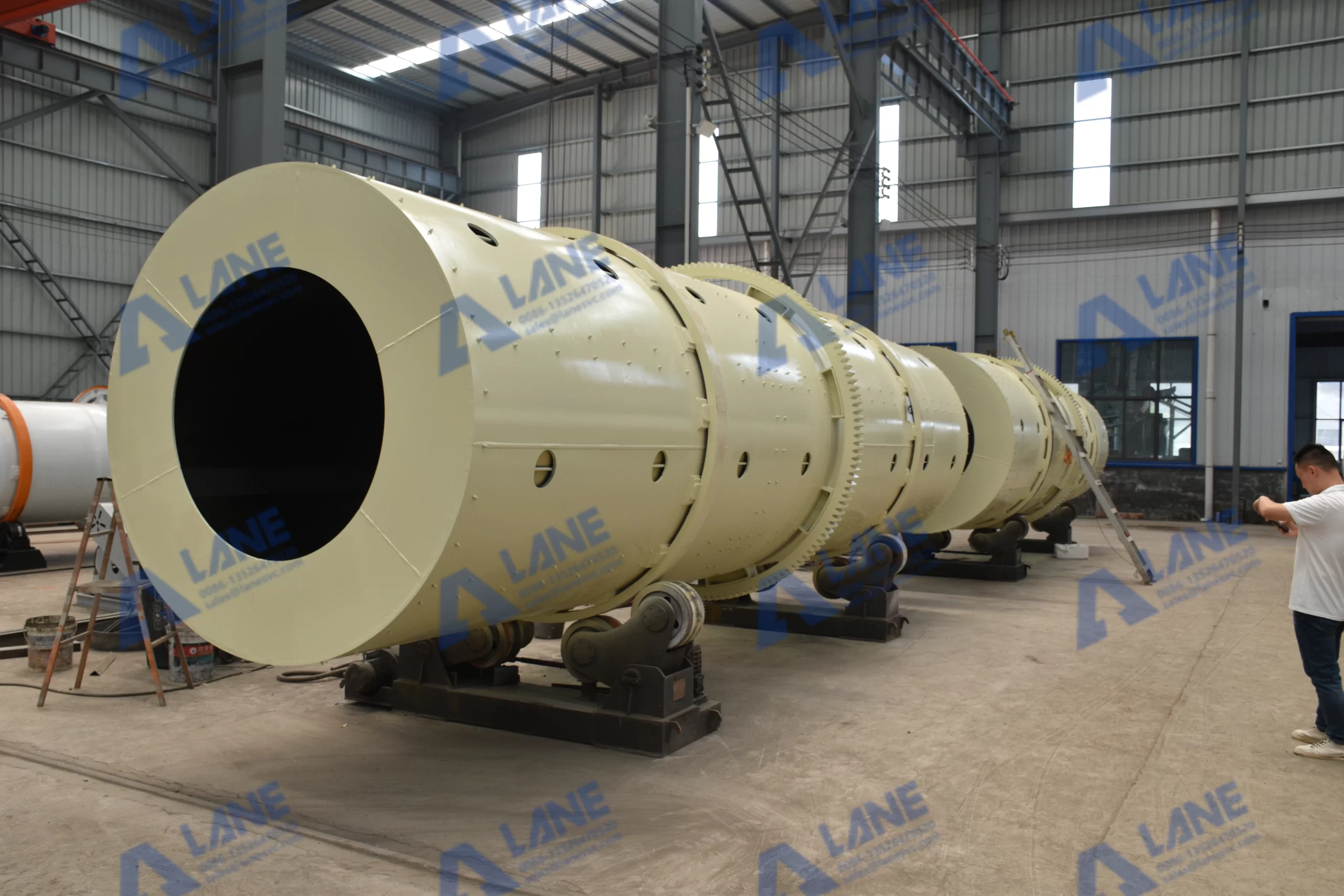
- In a 20 T/H NPK Production Plant with MOP Fertilizer, the wet granulation method is used. LANE’s Rotary Drum granulator is used for compound fertilizer.
- Ensures uniform granule size and high strength.
- Drying and Cooling
- Rotary drum dryers reduce moisture content to around 2–3%.
- Rotary coolers prevent clumping and improve storage stability.
- Screening and Coating
- Our vibrating screening machine separates oversized and undersized granules and sends them back to the crushing machine.
- Coating drums apply anti-caking agents to improve storage life.
- Packaging
- Automatic packaging machines weigh and pack fertilizers in 25–50 kg bags.
- Ensures consistency and reduces labor costs.
Production Process
Step 1: Raw Material Handling
Raw materials, including MOP, urea, and phosphate, are first crushed and stored in silos. LANE designs a separate storage system for the raw materials. Closed conveyors are used to transfer them to the batching system. There they are measured accurately according to the NPK formula.
| Dynamic Batching System | |||||
| Model | Silo Size(m) | Silo Volume(m³) | Belt width(mm) | Belt Length(mm) | Power(kw) |
| LADP-2 According to the number of silos | 2*2 | 5 | 800 | 3000 | 1.5 |
Step 2: Mixing
The raw materials are then sent to a mixing machine for uniform mixing. They are blended uniformly in a rotary drum mixer or twin shaft mixer. This step turns the raw materials into a uniform mix for consistent fertilizer quality.
| Twin Shaft Mixer | ||||||
| Model | Capacity(tph) | Drum Size(mm) | Size(mm) | Power(kw) | Drum Volume(m³) | Mixing Shaft Size(mm) |
| LAM-1560D | 18-22T/H | 800*4000 | 7250*2500*1500 | 30 | 5.9 | 219*20 |
Step 3: Granulation
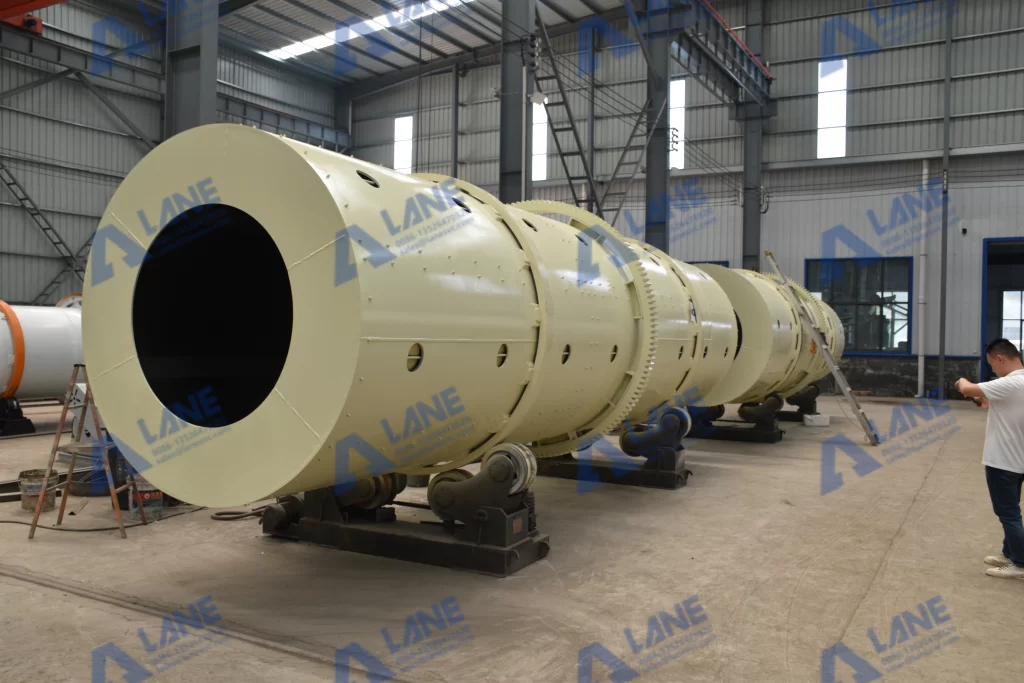
The mixed powders enter the granulator. In a 20 T/H NPK Production Plant with MOP Fertilizer, LANE suggests the use of a Rotary Drum Granulator. This granulator is suitable for large-scale production.
| Rotary Drum Granulator | ||||||
| Model | Drum size(mm) | Rotation Speed(rpm) | Thickness(mm) | Capacity(tph) | Power(kw) | Tilt Angle(°) |
| LAZR-2410 | Φ2400*10000 | 11.5 | 16 | 15-20 | 37 | 2-2.5° |
Step 4: Drying and Cooling
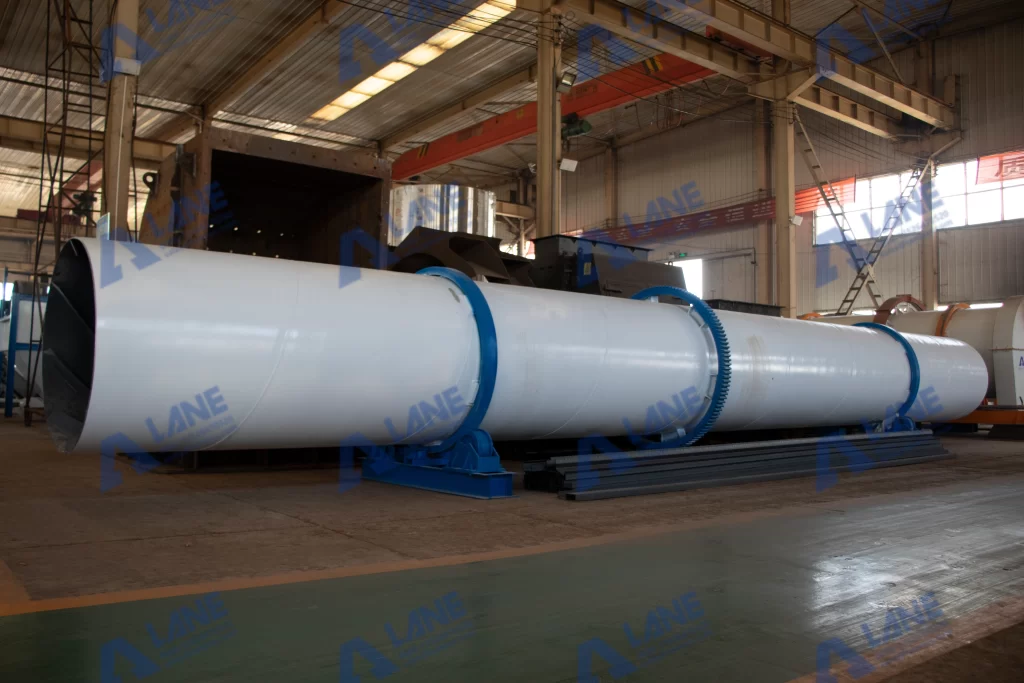
Granules contain 30–40% moisture after granulation. They need to be dried before they can be screened. LANE’s design uses a rotary dryer and cooling in a rotary cooler. Proper drying prevents degradation and caking during storage.
| Rotary drum cooler/dryer | ||||||
| Model | Capacity(tph) | Drum Size(mm) | Rotation speed(r/min) | Steel Plate Thickness(mm) | Lift Plate Thickness(mm) | Power(kw) |
| LARC2020 | 20-25 | Ф2000*2000 | 4 | 14 | 6 | 37 |
Step 5: Screening and Coating
After cooling, granules pass through a vibrating screening machine. Oversized or undersized particles are crushed with a vertical crusher and returned to the granulator for reprocessing. Coating improves flowability and reduces caking.
| Vibrating screener | |||||
| Model | Capacity(tph) | Overall Size(mm) | Tilt Angle(°) | Amplification(mm) | Power(kw) |
| LA-1025-3 | 0.1-15 | 2300*1300*1600 | 5 | 5-7 | 1.5 |
Step 6: Packaging
Final NPK granules are transported to an automatic packing system. Bags are sealed and labeled for sale or storage.
| Packaging Machine | |
| Model | LAB-50F |
| Belt Feed Size(mm) | 2000*500 |
| Packaging Specification(kg) | 5-50 |
| Max. Weighing Weight(kg) | 100 |
| Packaging Speed(bags/min) | 45388 |
| Packaging Precision | ±0.2% |
| Voltage | 50Hz/220V/380V |
| Size(mm) | 820*1400*2300 |
Machinery for a 20 T/H NPK Production Plant with MOP Fertilizer
LANE Heavy Industry provides all essential equipment for a 20 T/H NPK Production Plant with MOP Fertilizer, including:
- Dynamic Batching System
- Belt conveyors and bucket elevators
- Hammer crusher
- Vertical crusher
- Rotary drum granulators
- Rotary dryers and coolers
- Vibrating screens
- Coating drums
- Automatic packing machines
- Dust collection systems
LANE designs and engineers the machinery for durability, energy efficiency, and minimal maintenance.
Advantages of Using MOP in NPK Production
Muriate of Potash is widely used in NPK production lines because:
- It provides essential potassium for plant growth
- Enhances crop resistance to drought and disease
- Improves fruit quality and yield
- Easy to store and transport
A 20 T/H NPK Production Plant with MOP Fertilizer can produce fertilizers according to your formulation. You can make custom formulations or use existing formulas to create fertilizer for specific crops or regions.
Environmental and Safety Considerations
Operating a 20 T/H NPK Production Plant with MOP Fertilizer requires adherence to safety and environmental regulations.
- Dust collection systems reduce airborne particles.
- Temperature control prevents overheating and material degradation.
- Safety measures for handling corrosive materials like MOP and acids.
- Noise reduction and proper ventilation systems for worker safety.
LANE Heavy Industry integrates these considerations into the plant design for sustainable production.
Economic Benefits
Investing in a 20 T/H NPK Production Plant with MOP Fertilizer provides:
- High return on investment due to large production capacity
- Because of automation, it has lower labor costs
- Industrial machines create stable products that create better market competitiveness
- The ability to produce customized NPK ratios for different crops
Maintenance Tips
For optimal operation of a 20 T/H NPK Production Plant with MOP Fertilizer:
- Regularly inspect granulators, dryers, and mixers
- Lubricate bearings and moving parts
- Monitor moisture content during drying
- Clean dust collectors frequently
- Calibrate batching systems for accurate fertilizer ratios
Proper maintenance ensures that your production plant has better performance and consistent production.
FAQ
Q1: What is the capacity of a 20 T/H NPK Production Plant with MOP Fertilizer?
A: It produces 20 tons of NPK fertilizer per hour.
Q2: What raw materials are used?
A: Urea, phosphate, and MOP (Potassium chloride), plus trace elements.
Q3: What granulation methods are used?
A: Pan granulation and rotary drum granulation.
Q4: Can the plant produce customized NPK formulas?
A: Yes, the batching system allows flexible NPK ratios.
Of course, we also offer other types of products for your different needs, you can click to view.
For more information, please contact us by sending an inquiry today! We can help you!



Write a Reply or Comment