
Inside SOP Production: How to Use SOP Fertilizer for Root Crops Effectively
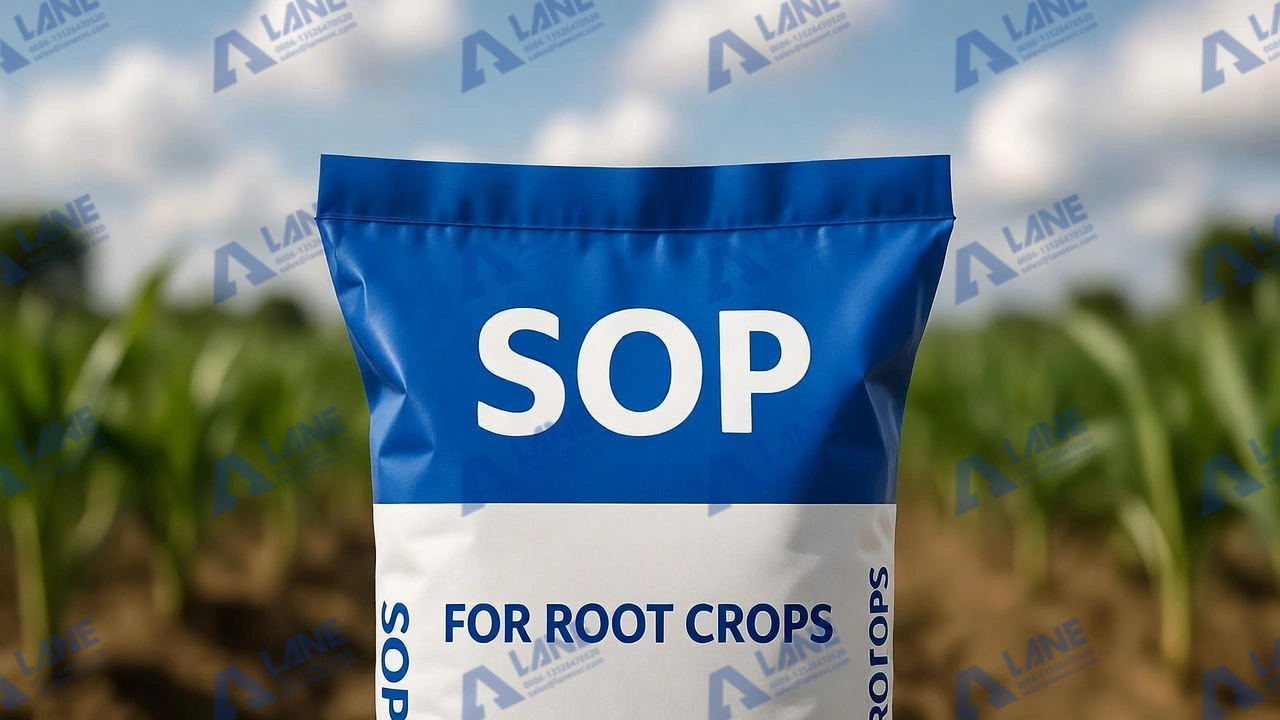
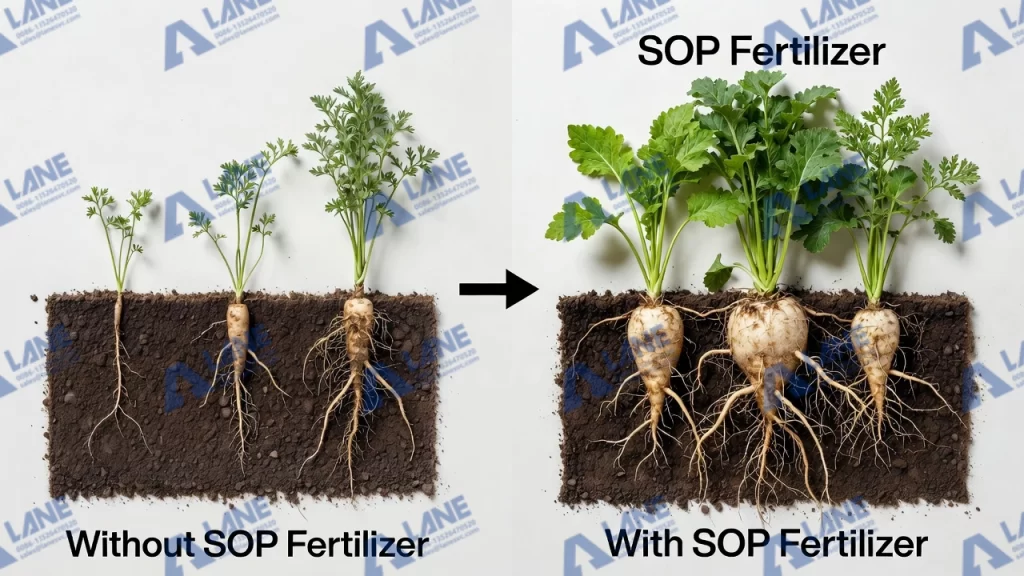
Root crops like potatoes, carrots, sweet potatoes, and beets rely on balanced nutrition to develop plump, healthy tubers and roots. Among all the fertilizers, Sulfate of Potash or SOP Fertilizer for root crops delivers essential nutrients for these crops with its chloride-free formula and its high potassium and sulfur content. Unlike traditional fertilizer, SOP delivers essential potassium and sulfur without the risks of salt buildup in soil. This makes SOP Fertilizer for root crops an ideal fertilizer for farmers aiming to boost tuber size, quality, and overall yield.
But to maximize the benefits of SOP Fertilizer for root crops, it is essential to have an advanced production line. In this article, we’ll dive deep into the production of SOP using cutting-edge machinery from LANE Heavy Industry and explore the usage strategies to maximize results in root crop farming.
The SOP Fertilizer Production Process: Precision Engineering from LANE Heavy Industry
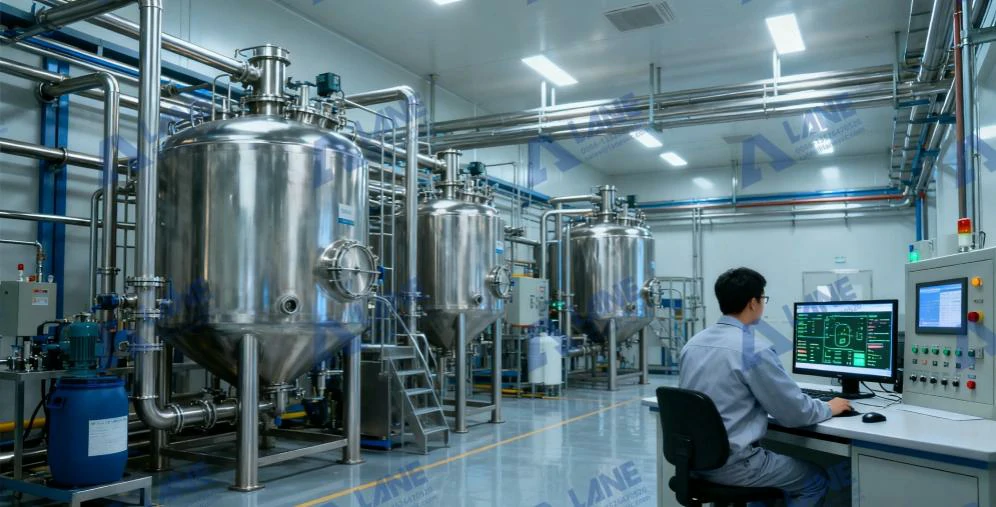
The production of high-quality SOP Fertilizer for Root Crops requires sophisticated industrial processes and chemical control to ensure purity, consistency, and cost-efficiency. LANE Heavy Industry, a leading Chinese manufacturer of fertilizer production equipment, offers state-of-the-art SOP production lines that streamline this complex operation. Our machinery integrates advanced automation, energy-efficient designs, and robust materials to handle the chemical reactions involved in converting raw materials into premium SOP granules.
The journey begins with the raw material preparation. LANE utilizes high-capacity crusher and screening systems to process potassium chloride (KCl), sulfuric acid (H₂SO₄), and other reagents. Our precise feeding system meters the raw materials and feeds them into the Mannheim furnace. It is constructed with corrosion-resistant materials and heat-resistant brick lining to withstand the harsh chemical environment. In this furnace a decomposition reaction occurs: 2KCl + H₂SO₄ → K₂SO₄ + 2HCl.
Post reaction, the SOP enters LANE’s granulation production system. In this production system, the molten SOP goes through cooling and crushing process then is sent to our Double Roller Granulator or Rotary Drum Granulator for granulation. Our advanced granulator creates uniform granules (2–4mm in size) ideal for SOP fertilizer for root crops.
It goes through further drying and cooling with LANE Rotary Dryer and Cooler to prevent caking and to ensure free-flowing product. After that, LANE rotary screening machine is used to ensure the uniformity of the granules. It screens out fines and oversized granules and sends them to crusher to be recycled. The on-size granules are sent to coating machine. This machine applies anti-caking agents for long shelf life.
What sets LANE Heavy Industry’s machinery apart is its scalability and customization. Our SOP Fertilizer for root crops production lines range from 1 ton per hour to 50 tons per hour. We deploy PLC control systems for real-time monitoring and adjustments. Various safety features and automated acid dosing are implemented to minimize risks.
For farmers: Fertilizer produced with our production line benefits the farmers directly. LANE-produced SOP achieves 50–52% K₂O content. The quality is far superior to normal production lines.
Environmental compliance is another hallmark of LANE production line. Our line includes HCl scrubbers to capture byproducts, recycling them into hydrochloric acid for reuse. This closed-loop approach cuts waste, operational costs and increases profit for the producer.
Why SOP Fertilizer Excels for Root Crops
Root crops thrive on potassium for root development, disease resistance, and starch accumulation. SOP fertilizer for root crops supplies potassium without chloride. Excessive chloride harms tuber quality of root crops. Sulfur from SOP also enhances soil microbiology, improving nutrient uptake. Studies from the International Potato Center show SOP users gain 15–25% higher yields compared to KCl (potassium chloride).
Soil types matter: sandy or saline soils, common in root crop regions like Southeast Asia and Africa, pair perfectly with SOP’s low salinity index.
Effective Usage Strategies for SOP Fertilizer in Root Crops
Applying SOP Fertilizer for root crops needs precision. You first must test your soil quality before you apply any kind of fertilizer. SOP Fertilizer for root crops is a flexible fertilizer and can be used with other fertilizers.
Basal Application
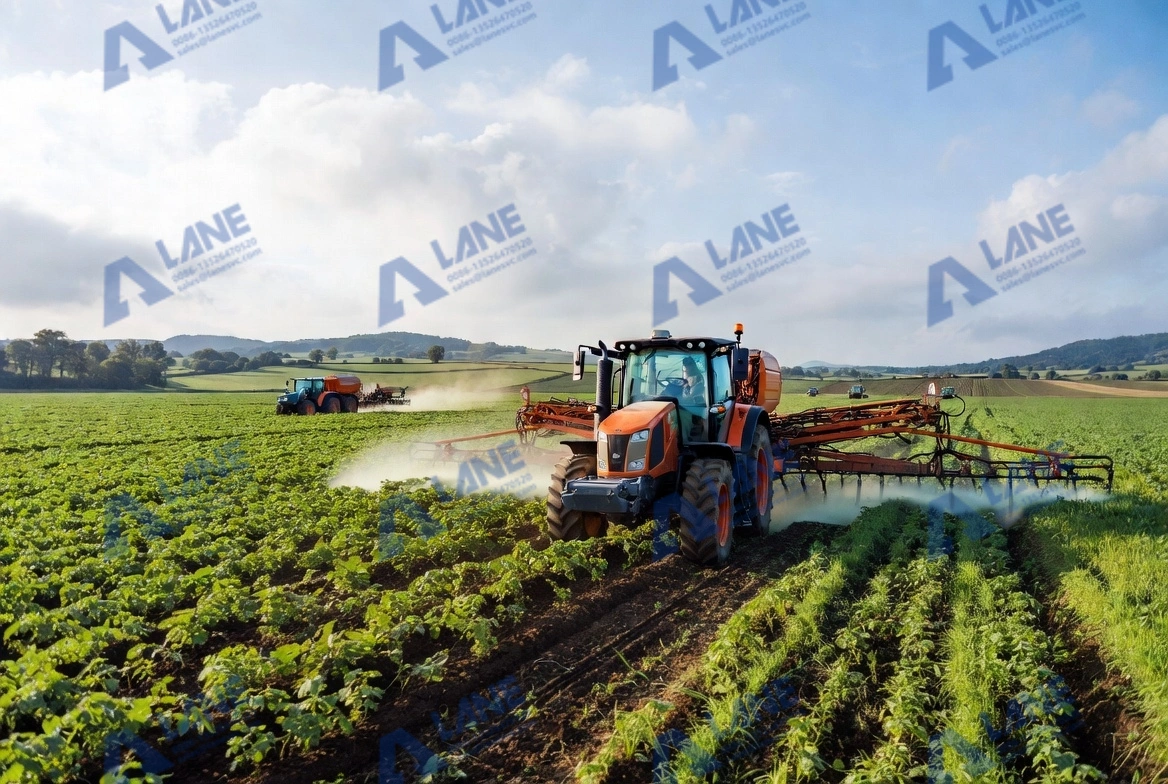
Incorporate 200–400 kg/ha of SOP at planting. For potatoes, broadcast and till into the top 15–20 cm of soil. This builds a potassium reservoir for early root expansion.
Top-Dressing
Split doses boost efficiency. Apply 100–200 kg/ha at 4–6 weeks post-emergence, side-dressed 10–15 cm from plants. Irrigation follows to drive nutrients to roots. In drip systems, fertigate SOP Fertilizer for root crops at 1–2 g/L weekly.
Foliar Spraying
For quick fixes, dissolve SOP at 2–3% concentration and spray during tuber initiation (around flowering). This targets potassium deficiencies rapidly, enhancing skin quality in carrots.
Timing is key: avoid late-season applications to prevent luxury uptake, which wastes fertilizer. Combine with NPK blends for balanced nutrition e.g., 15-15-25 + SOP for cassava.
Challenges and Best Practices
The common pitfalls include:
- Over-application which leads to imbalances
- Poor granule quality, which causes uneven distribution.
Use LANE granulation production line to mitigate this. Monitor via leaf analysis: potassium sufficiency shows dark green leaves without marginal scorch.
Economic Advantages of LANE’s SOP Production Lines
Investing in LANE Heavy Industry’s machinery pays off quickly. A mid-scale full production line including chemical reactors costs $500,000–$2M but recoups in 2–3 years via 30–40% margins on SOP sales. For farmers, SOP Fertilizer for root crops delivers ROI through premium harvests and superior product quality.
FAQ
What is SOP Fertilizer for root crops?
SOP (Sulfate of Potassium) is a chloride-free fertilizer providing potassium and sulfur, perfect for root crops like potatoes and carrots to improve yield and quality.
How does LANE Heavy Industry’s machinery produce SOP?
It uses a Mannheim furnace for reaction, granulation systems for sizing, and advanced controls for efficient, eco-friendly production up to 100,000 tons/year.
What’s the best application rate for SOP Fertilizer for root crops?
200–400 kg/ha basal, plus top-dressing; adjust based on soil tests for optimal results.
Can SOP be used in organic farming?
Yes, many SOP formulations are OMRI-listed; check LANE-produced batches for certification.
Why choose SOP over MOP for root crops?
SOP avoids chloride toxicity, enhancing tuber quality and suitability for saline soils.
Of course, we also offer other types of products for your different needs, you can click to view.
For more information, please contact us by sending an inquiry today! We can help you!



Write a Reply or Comment