
Optimizing Yield and Purity: Key Technological Considerations in the Industrial Production of SOP for Flowering Plants and Orchards
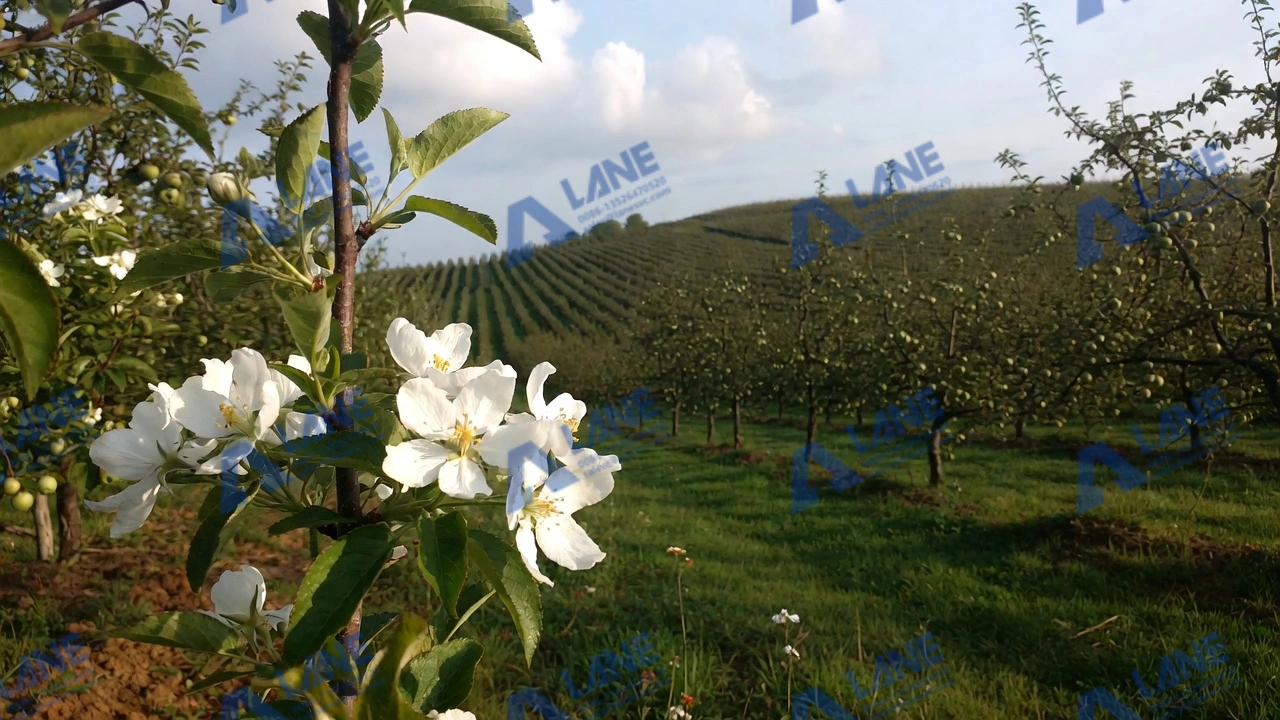
Sulfate of Potash (SOP) is a premium potassium fertilizer renowned for its low chloride content. This makes it indispensable for crops like flowering plants and orchards that are highly sensitive to chloride ions. Because of that, the global demand for high-quality SOP for flowering plants and orchards has surged in recent years. Sulphate of Potash (SOP) contains approximately 50% potassium (K₂O) and 18% sulfur. Both are essential nutrients that enhance bloom quality, flower color intensity, plant resilience, and fruit development in orchards.
For industrial fertilizer manufacturers, producing premium SOP for flowering plants and orchards requires sophisticated production technology that maximizes both yield and purity while maintaining economic viability. This article explores the key technological considerations in SOP production with the help of LANE Heavy Industry’s expertise.
The Importance of High-Purity SOP for Specialty Crops
Flowering plants and orchards have specific nutritional requirements that impact their commercial value. For flowering plants, potassium regulates water uptake, strengthens cell walls, and activates enzymes responsible for pigment development. In orchards, potassium improves fruit size, sugar content, and shelf life while enhancing disease resistance.
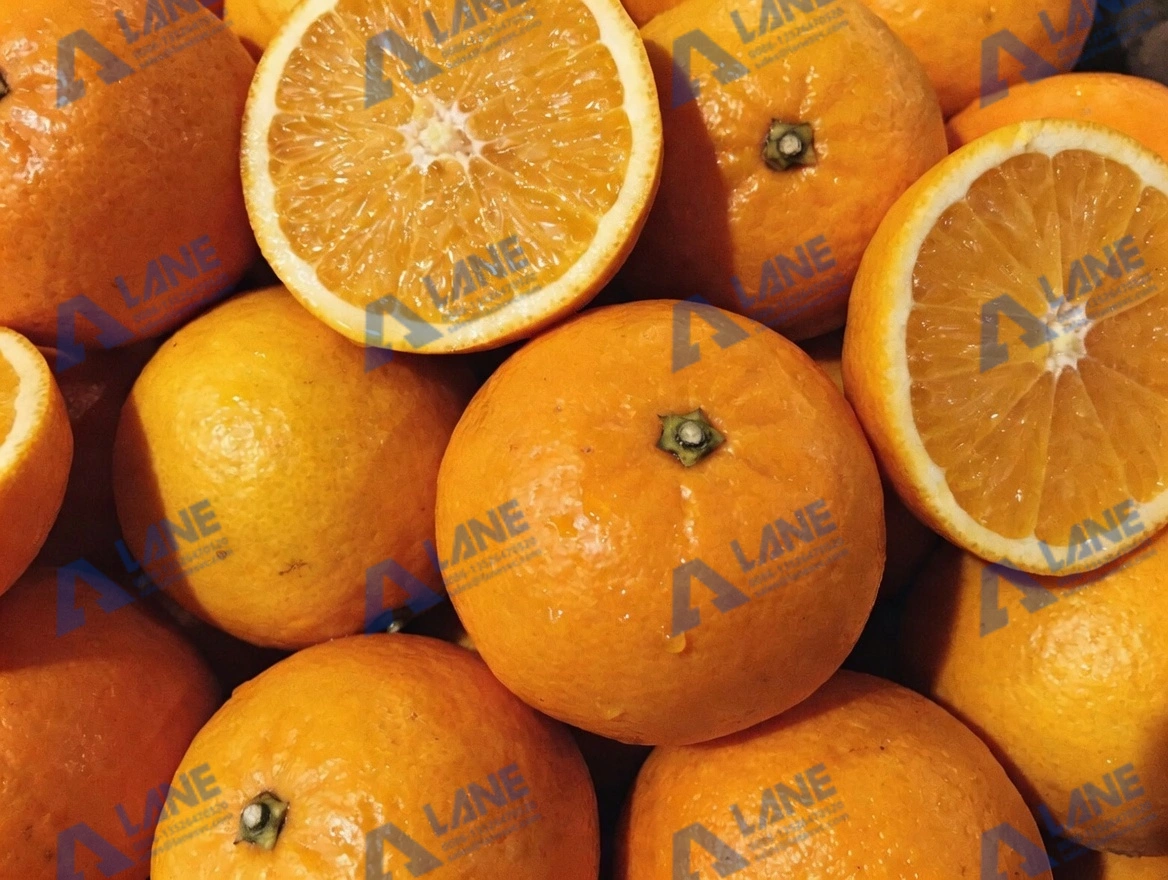
SOP for flowering plants and orchards must meet strict purity standards regarding chloride content. Chloride-sensitive crops like ornamental flowers, citrus trees, avocado orchards, and berry fruits can suffer from leaf burn, reduced yields, and poor fruit quality when exposed to chloride levels exceeding 2–3%. Premium SOP fertilizer contains less than 1% chloride, which ensures safe application for these high-value crops.
LANE Heavy Industry’s SOP Production Line: Core Technologies
LANE Heavy Industry has designed and developed an advanced SOP fertilizer production line engineered to produce high-purity SOP for flowering plants and orchards at industrial scales. The production line incorporates three critical technological systems that work in concert to optimize yield and purity.
- Advanced Potassium Sulphate Synthesis Process
The foundation of any SOP production line is the chemical synthesis process that converts raw materials into high-purity potassium sulphate. LANE created an advanced synthesis method which uses a controlled reaction of potassium chloride (KCl) with sulfuric acid (H₂SO₄) or alternative sulphate sources.
What distinguishes LANE’s synthesis technology is its precise control over reaction parameters. Our system can automatically monitor temperature, pressure, and reactant concentrations throughout the synthesis stage. Our precise technology ensures complete conversion of raw materials while minimizing the formation of by-products that could compromise purity. The result is a consistently high-yield output of SOP for flowering plants and orchards with chloride content below 1%.
Our Mannheim process reactor is constructed from specialized corrosion-resistant materials that withstand the aggressive chemical environment while maintaining structural integrity over extended production runs. This process also creates a highly sought byproduct of hydrochloric acid.
After the reaction process, the SOP is separated from the hydrochloric acid. After that, it goes to an advanced crystallization system and is sent to a cooler. It is then dried and ready for granulation.
- Granulation and Screening Systems
The cooled SOP is first sent to a crusher to get uniform particle size. After that, it is ready for the granulation process. Granule quality significantly impacts the handling, storage, and field performance of SOP for flowering plants and orchards. Uniform granules ensure even nutrient distribution during application. It prevents hotspots that could damage sensitive flowering plants or create uneven growth in orchards.
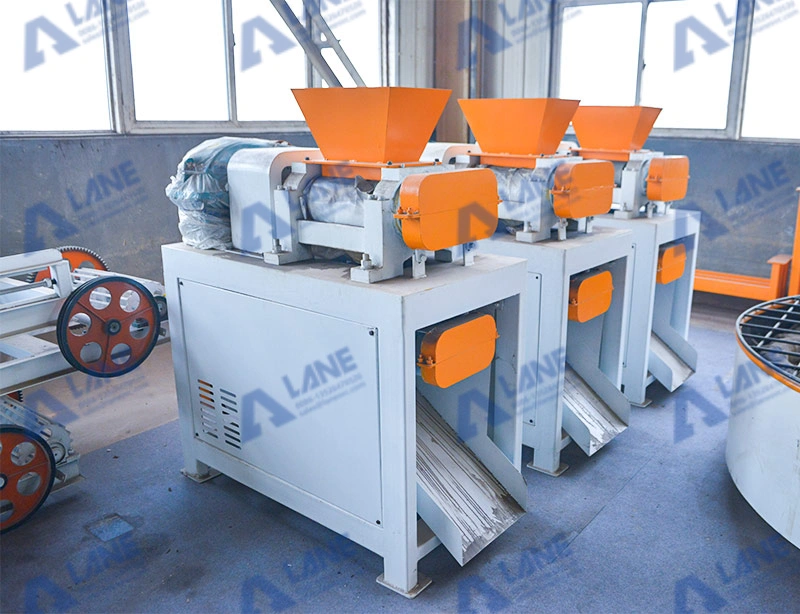
LANE uses a double roller compaction granulator to create granules from SOP powder. This advanced granulator creates consistently sized spherical granules with excellent flowability. The granulation process is carefully controlled to achieve optimal particle size distribution. The size ranging from 2–4mm balances ease of application with controlled nutrient release.
Following granulation, the rotary drum screener separates on-size granules from fines and oversized granules. They are sent to a crusher to be recycled back to the granulation system. It creates a closed-loop system that reduces material waste.
- Energy-Efficient Dust and Waste Recovery Systems
Environmental compliance and resource efficiency are key considerations in modern fertilizer production. LANE’s SOP production line incorporates dust collection and waste recovery systems that address both concerns.
We deploy dust collectors to capture fine particles generated during granulation and drying stages. The captured material is reintroduced into the production cycle, improving overall yield and reducing raw material waste. The closed-loop design ensures that manufacturers maximize their output of SOP for flowering plants and orchards from every ton of input material.
Automation and Quality Control
Modern SOP production demands consistent quality across thousands of tons of output. LANE’s production lines feature DCS/PLC automated control systems that continuously monitor and adjust production parameters. These systems track variables including:
- Reaction temperature and duration
- Chemical concentration ratios
- Granule size distribution
- Moisture content at various stages
- Final product chemical composition
Real-time monitoring allows immediate adjustments to maintain optimal conditions. This ensures that every batch of SOP for flowering plants and orchards meets the same high standards. The automation also reduces labor requirements and minimizes the potential for human error in production processes.
For manufacturers supplying the floriculture and orchard markets, this consistency builds trust with customers who rely on predictable fertilizer performance for their valuable crops.
Benefits for Flower and Orchard Growers
The state-of-the-art design built into LANE’s SOP production lines directly translates to benefits for the growers of flowering plants and orchard crops.
High-purity SOP for flowering plants and orchards produced on LANE equipment delivers:
- Enhanced bloom quality: Potassium activates enzymes responsible for pigment development, helping produce more vibrant flower colors that command premium prices in ornamental markets.
- Improved fruit characteristics: In orchards, potassium from SOP improves fruit size, sugar content, and storage quality while reducing physiological disorders.
- Disease resistance: Potassium helps create stronger cell walls. This helps flowering plants and fruit trees resist fungal and bacterial pathogens, reducing pesticide requirements.
- Chloride safety: With chloride content below 1%, LANE-produced SOP eliminates the risk of chloride toxicity that plagues chloride-sensitive crops.
- Consistent nutrient delivery: Uniform granules ensure even application and predictable nutrient release throughout the growing season.
Customization Capabilities
LANE Heavy Industry recognizes that different markets have different requirements. We offer extensive customization options for our SOP production lines. Manufacturers can specify:
- Production capacity ranging from small-scale specialty operations to large industrial facilities
- Final product particle size tailored to specific application methods (broadcast, fertigation, or foliar)
- Packaging configurations that match regional market preferences
- Integration with existing plant infrastructure
This flexibility ensures that manufacturers can optimize their production of SOP for flowering plants and orchards for their specific market conditions and customer requirements.
Conclusion
Optimizing the yield and purity of SOP for flowering plants and orchards requires a holistic approach that integrates raw material control, precise reaction management, advanced crystallization and drying, and strict quality monitoring. For fertilizer manufacturers serving the floriculture and orchard markets, investing in LANE’s production technology provides the capability to consistently produce premium SOP that meets the standards of growers.
By leveraging LANE’s innovative equipment and processes, manufacturers can meet the growing demand for premium SOP, supporting healthier flowering plants, higher orchard yields, and more sustainable agricultural practices.
Frequently Asked Questions
Q: What makes SOP fertilizer different from other potassium fertilizers for flowering plants and orchards?
A: SOP for flowering plants and orchards contains potassium and sulfur in sulfate form without the chloride found in Muriate of Potash (MOP). This makes it safe for chloride-sensitive crops including many ornamental flowers, citrus trees, and berry fruits. The sulfur component also contributes to essential oil production in flowers and protein synthesis in fruit crops.
Q: What production capacity can LANE Heavy Industry’s SOP line achieve?
A: LANE offers customizable production lines ranging from small-scale operations to large industrial facilities. The company provides flexible solutions based on manufacturer requirements, with capabilities to scale from pilot plants to full commercial production.
Q: How does LANE’s technology ensure low chloride content in the final SOP product?
A: LANE’s advanced synthesis process uses precise control of reaction parameters including temperature, pressure, and reactant concentrations to ensure complete conversion of raw materials while minimizing impurities. This results in SOP for flowering plants and orchards with chloride content consistently below 1%.
Q: Can the SOP production line be customized for different granule sizes?
A: Yes, LANE Heavy Industry offers customization options for particle size to meet specific application requirements. Whether growers need fine powder for fertigation systems or uniform granules for broadcast spreading, the production line can be configured accordingly.
Q: What environmental features does LANE’s SOP production line include?
A: LANE’s production lines incorporate cyclone dust collectors that capture and recycle fine particles, waste heat recovery systems that reduce energy consumption, and closed-loop designs that minimize material waste. These features make the production of SOP for flowering plants and orchards more sustainable and cost-effective.
Of course, we also offer other types of products for your different needs, you can click to view.
For more information, please contact us by sending an inquiry today! We can help you!



Write a Reply or Comment