
Setting Up an SOP Fertilizer Production Line for Tea Plantation to Control Quality and Cost
Introduction
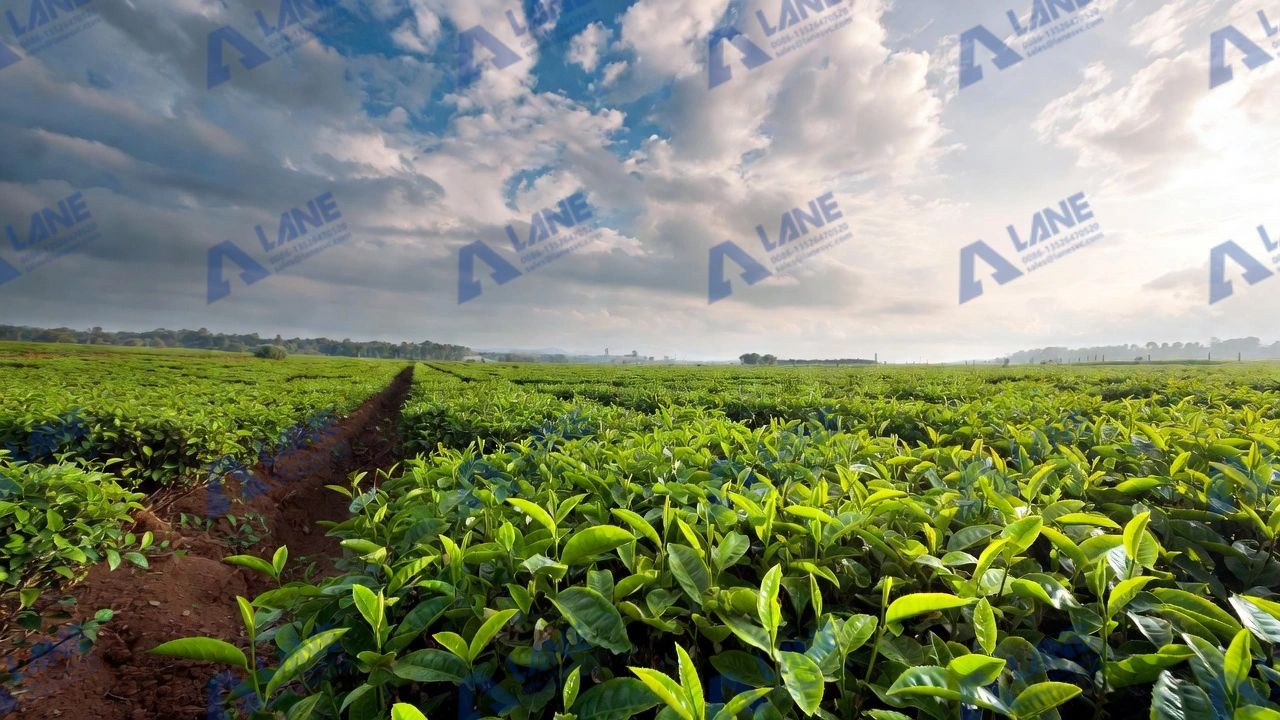
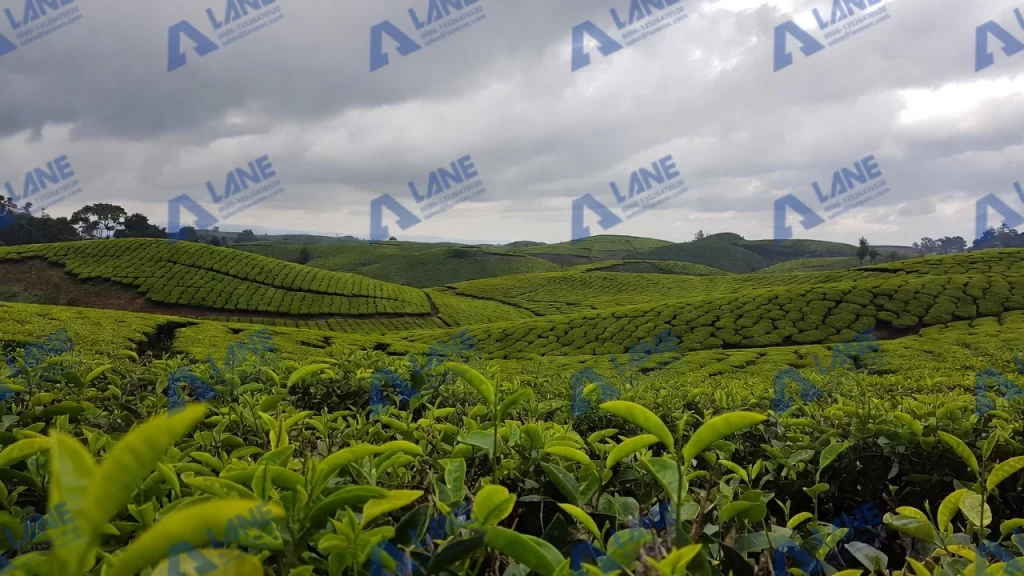
In the world of tea cultivation, quality is everything. It requires optimal nutrient supply to maintain the quality of tea leaves and sustainable yield. The difference between ordinary tea and premium tea lies in the soil quality and its nutritional value. Tea is a chloride-sensitive crop that requires careful consideration when determining its nutrient intake. Potassium and sulfur develop the aromatic compounds and tender leaves in the tea plant. A well-designed SOP fertilizer production line for Tea plantation is the cornerstone of achieving this goal.
LANE Heavy Industry, a leading manufacturer of fertilizer production machinery, has developed a specialized SOP fertilizer production line for Tea plantation that perfectly aligns with the unique nutrient requirements of tea plants. It helps growers balance quality and cost effectively.
The Strategic Advantage of In-House SOP Production
Standard potassium sources like Muriate of Potash (MOP) contain high chloride levels which can damage tea plants, reduce yield, and compromise leaf quality. Sulfate of Potash (SOP) is a premium potassium fertilizer which has low chloride content (less than 1%) and high sulfur concentration (17–18%). It enhances tea leaf quality, promotes better aroma and flavor, and supports disease resistance.
However, commercial SOP fertilizer commands premium prices in the market. This makes establishing your own SOP fertilizer production line for Tea plantation operations lucrative. By producing SOP on-site, tea gardens can:
- Eliminate supplier markups and transportation costs
- Ensure consistent quality tailored to specific soil conditions
- Guarantee supply availability during peak seasons
- Maintain complete traceability from raw material to field application
LANE Heavy Industry’s SOP Production Solution
LANE Heavy Industry has over two decades of fertilizer machinery expertise. We designed a new SOP fertilizer production line and bulk batching production line for tea plantation. Our SOP fertilizer production line for Tea plantation integrates advanced technology across every production stage.
Technical Highlight #1: Precision Potassium Sulphate Synthesis
The most important part of any SOP production operation is the chemical conversion process. LANE utilizes state-of-the-art Mannheim furnace reactors where potassium chloride (KCl) reacts with sulfuric acid (H₂SO₄) to produce potassium sulfate (K₂SO₄) and hydrochloric acid (HCl). The reaction follows this equation:
2KCl + H₂SO₄ → K₂SO₄ + 2HCl
Our SOP fertilizer production line for Tea plantation systems can precisely control the temperature, pressure, and reactant concentrations. This makes our system different from our competitors. The optimization capability in our system ensures high-purity potassium sulfate with minimal contaminants. The product of this reaction process is sulfate of potash crystal with less than 1% chloride.
Technical Highlight #2: Advanced Granulation for Uniform Application
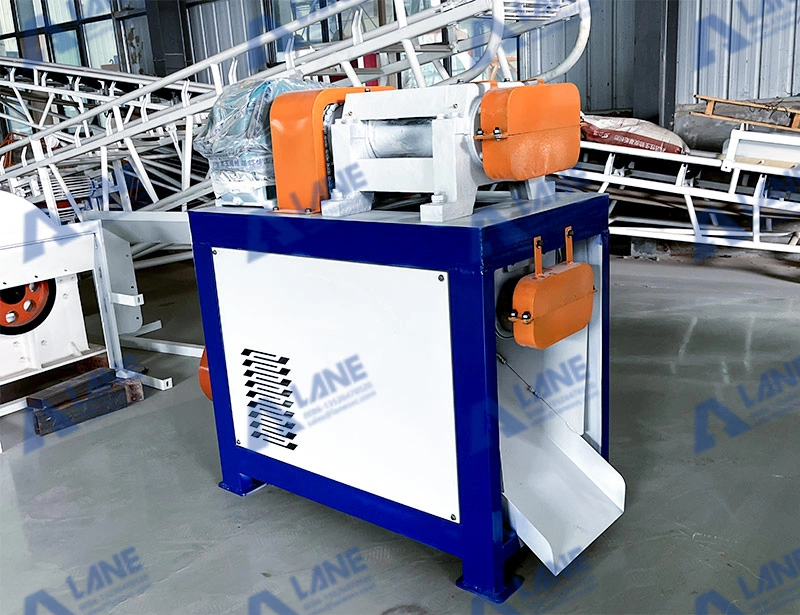
Granule quality directly impacts field application efficiency. LANE production line uses rotary drum granulators or double roller granulators to produce uniform size granules (2–5mm, controlled by operator). This delivers several practical benefits for the tea plantation:
- Consistent spreading across undulating terrain
- Even nutrient distribution to every tea bush
- Improved flowability during application
- Reduced dust loss during handling
- Enhanced storage stability without caking
The Double Roller Granulator system ensures that SOP fertilizer production line for Tea plantation operations yield hard, uniform granules that withstand storage and transport while releasing nutrients predictably in the soil.
Technical Highlight #3: Energy-Efficient Environmental Controls
LANE’s SOP fertilizer production line for tea plantation incorporates dust collection and waste recovery technologies in our production line. Cyclone dust collectors capture fine particles released during granulation and drying. This prevents environmental contamination while recovering valuable material for reprocessing.
The Production Process: From Raw Material to Tea-Ready Fertilizer
Understanding the complete manufacturing process helps plantation managers to appreciate the quality control system achievable with an in-house SOP fertilizer production line for Tea plantation facility.
Step 1: Raw Material Sourcing and Preparation
High-quality potassium chloride and sulfuric acid form the foundation of premium SOP fertilizer. LANE’s grinding and crushing machines ensure uniform particle size of potassium chloride. This step is critical for efficient chemical reaction.
Step 2: Chemical Reaction in Mannheim Furnace
The carefully controlled reaction produces high-purity potassium sulfate. LANE’s temperature control system determines final product quality.
Step 3: Separation and Purification
Our advanced filtration equipment removes hydrochloric gas (captured as a valuable by-product). This ensures minimal contaminants in the final SOP fertilizer.
Step 4: Cooling and Grinding
The SOP cake is cooled and crushed to prepare for granulation.
Step 5: Granulation and Drying
The material undergoes granulation, followed by drying that preserves chemical integrity. It is essential for maintaining the low salt index that protects tea plant roots.
Step 6: Screening and Recycling
On-size granules proceed to packaging, while fines and oversized particles return to the granulator in an efficient closed loop.
The finished SOP fertilizer is weighed, bagged, and labeled according to specifications.
Quality Control That Benefits Tea Plants
When you have your own SOP fertilizer production line for Tea plantation, you directly control the quality factors that matter most to tea cultivation:
Low Salt Index for Root Protection
SOP fertilizer has a salt index of just 46. This means less risk of osmotic pressure damaging tea plant roots. This is especially important in established plantations where root systems are extensive and vulnerable.
Chloride-Free Nutrition
Tea’s chloride sensitivity makes low-chloride SOP essential. You control the chloride levels of the SOP fertilizer. This prevents the leaf burn and reduced quality associated with chloride toxicity.
Sulfur for Flavor Development
Sulfur contributes to the amino acids that develop into tea’s characteristic flavor compounds. Consistent sulfur content (17–18%) in your SOP translates to consistent tea quality.
Cost Analysis: The Economic Case for In-House Production
While initial capital investment in an SOP fertilizer production line for Tea plantation requires careful consideration, the long-term economic benefits favor integration:
Raw Material Cost Advantage
Purchasing potassium chloride and sulfuric acid in bulk costs significantly less than buying finished SOP fertilizer. The margin between raw materials and finished product represents potential savings or profit.
Transportation Elimination
Finished fertilizer is heavy and expensive to transport. Producing on-site eliminates freight costs entirely.
Quality Premium
Consistent high-quality SOP fertilizer supports premium tea leaf growth. Plantations known for exceptional leaf quality command higher prices in specialty markets.
By-Product Value
The hydrochloric acid generated during production has commercial value. This creates an additional revenue stream.
Scalable Solutions for Every Operation
LANE offers SOP fertilizer production line for Tea plantation systems with customizable capacity. We offer 1 ton per hour for smaller estates to 100 tons per hour or more for large-scale commercial operations. Our PLC/DCS control automation reduces labor cost while ensuring consistent quality.
Conclusion
Setting up an SOP fertilizer production line for Tea plantation using LANE Heavy Industry’s machinery is a strategic investment for tea growers seeking to control quality and cost. LANE provides the technological foundation for successful in-house production. For tea plantation owners and fertilizer manufacturers serving the tea industry, the ability to control every aspect of SOP production translates directly to better tea quality, lower costs, and stronger market positioning. Whether for small-scale family plantations or large commercial tea estates, the SOP fertilizer production line for Tea plantation from LANE Heavy Industry is the ideal solution to achieve consistent quality, reduce costs, and support sustainable tea production.
Frequently Asked Questions
Q1: Why is SOP fertilizer specifically recommended for tea plantations?
A: SOP fertilizer contains high potassium (50–52% K₂O) and sulfur (17–18%) with less than 1% chloride, making it ideal for chloride-sensitive tea plants. It improves leaf quality, enhances aroma and flavor compounds, and supports disease resistance—all critical factors for premium tea production.
Q2: What is the difference between SOP and MOP fertilizer for tea?
A: MOP (Muriate of Potash) contains significant chloride (up to 47%) with a high salt index of 116, which can damage tea plants and reduce leaf quality. In contrast, SOP has a low salt index of just 46 and minimal chloride, making it safer and more effective for tea cultivation, especially when applied through a well-designed SOP fertilizer production line for tea plantation to ensure optimal nutrient purity and crop performance.
Q3: What production capacity does LANE offer for SOP fertilizer lines?
A: LANE provides scalable SOP fertilizer production line for Tea plantation systems ranging from 1 ton per hour for smaller estates to 100 tons per hour or more for large commercial operations. All systems feature PLC/computer control for consistent quality.
Q4: How does producing my own SOP fertilizer control costs?
A: In-house production eliminates supplier markups, reduces transportation costs, allows bulk purchasing of raw materials (potassium chloride and sulfuric acid), and potentially generates revenue from by-product hydrochloric acid.
Q5: What are the main steps in the SOP production process?
A: The process includes: raw material grinding, chemical reaction in a Mannheim furnace, separation and purification, cooling and grinding, granulation, drying, screening, and automated packaging.
Q6: How does LANE’s production line ensure consistent granule quality?
A: LANE combines disc granulators and rotary drum granulators with precise screening systems to produce uniform 2–10mm granules. The closed-loop system recycles off-spec material, ensuring consistent output.
Q7: What environmental controls are included in LANE’s SOP lines?
A: The production line features cyclone dust collectors, waste recovery systems that reintroduce captured dust into production, and waste heat recovery technology that reduces energy consumption.
Q8: Can a tea plantation realistically operate its own fertilizer production?
A: Yes, with LANE’s modular, automated systems designed for various scales. Many large tea estates already produce their own inputs, and medium-sized operations can form cooperatives to share production facilities.
Of course, we also offer other types of products for your different needs, you can click to view.
For more information, please contact us by sending an inquiry today! We can help you!



Write a Reply or Comment