
NPK Fertilizer Industrial Plant with Potassium Chloride: Core of Modern Fertilizer Production
Introduction
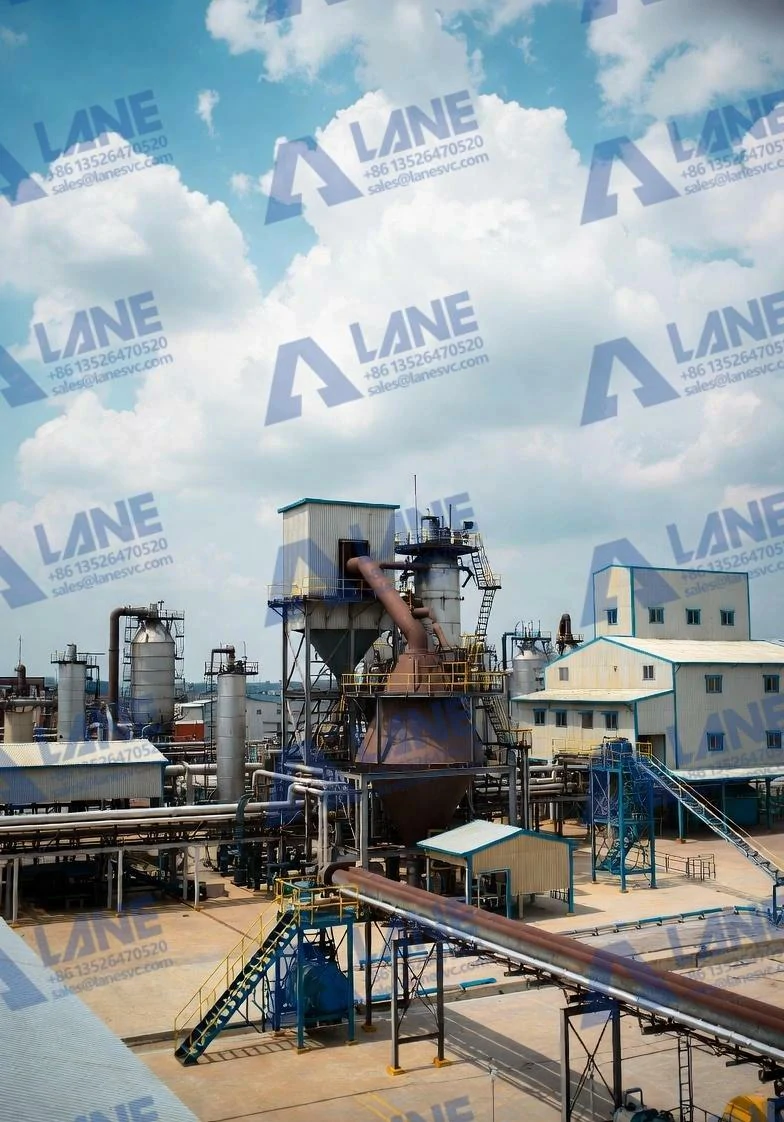
Modern agriculture is heavily dependent on plant nutrients. To meet this demand for high-yield farming, manufacturers rely on old manufacturing techniques which are unreliable and have higher operation and energy costs while generating less profit. The NPK fertilizer industrial plant with Potassium Chloride has emerged as a solution for replacing the old manual and ineffective fertilizer production plants. As the backbone of large-scale compound fertilizer production, this specialized facility integrates advanced technology, precise raw material handling, and efficient processing to deliver high-quality NPK fertilizers. The NPK fertilizer industrial plant with Potassium Chloride is designed to combine nitrogen (N), phosphorus (P), and potassium (K) into homogeneous, easy-to-apply granules.
Potassium plays a critical role in water balance, activating enzymes, and enhancing crop stress tolerance. Potassium Chloride (KCl), also known as muriate of potash, is most widely used due to its high potassium content and cost-effectiveness. LANE Heavy Industry Machinery Technology Co., Ltd. offers turnkey NPK fertilizer industrial plants with Potassium Chloride that integrate advanced granulation technology with robust aftersales support. This article provides an overview of how an NPK fertilizer industrial plant with Potassium Chloride operates.
The Importance of Potassium Chloride in NPK Fertilizer Production
Potassium Chloride serves as the primary potassium source in most NPK fertilizer formulations. Potassium Chloride is favored for its low cost, high solubility, and availability. Proper handling and granulation techniques are essential to produce granules that are uniform and resist segregation during blending.
In an NPK production line, potassium chloride is blended with nitrogen sources like urea or ammonium sulfate and phosphorus sources such as DAP or MAP. The raw materials are first crushed and mixed before they are conveyed to the granulator. For industrial production, LANE Heavy Industry provides rotary drum granulation. This granulation machine ensures a high granulation rate of up to 95% and produces spherical particles with 2–6mm diameter.
LANE Heavy Industry’s NPK Fertilizer Production Line
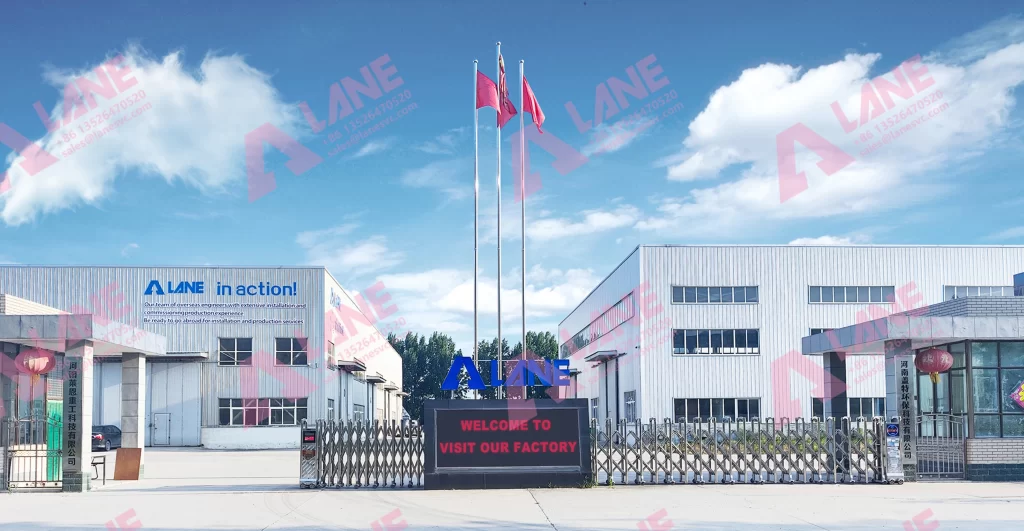
LANE Heavy Industry Machinery Technology Co., Ltd., based in Henan, China, is a recognized leader in fertilizer machinery manufacturing. Our NPK fertilizer production line is engineered for efficiency, durability, and ease of operation. With over a decade of experience and having built production lines in Canada, the US, Russia, Brazil, etc., LANE has a reputation for delivering customized turnkey solutions for compound fertilizer plants.
Key Equipment Components
A complete NPK fertilizer industrial plant with Potassium Chloride from LANE includes the following core equipment:
- Automatic Batching System: Precisely weighs and proportions nitrogen, phosphorus, and potassium inputs according to the desired formula.
- Cage Mill Crusher: It reduces raw materials into fine powder. Fine powder ensures proper mixing and nutrient distribution.
- Horizontal Mixer: Our horizontal mixer blends powdered materials thoroughly for uniform nutrient distribution.
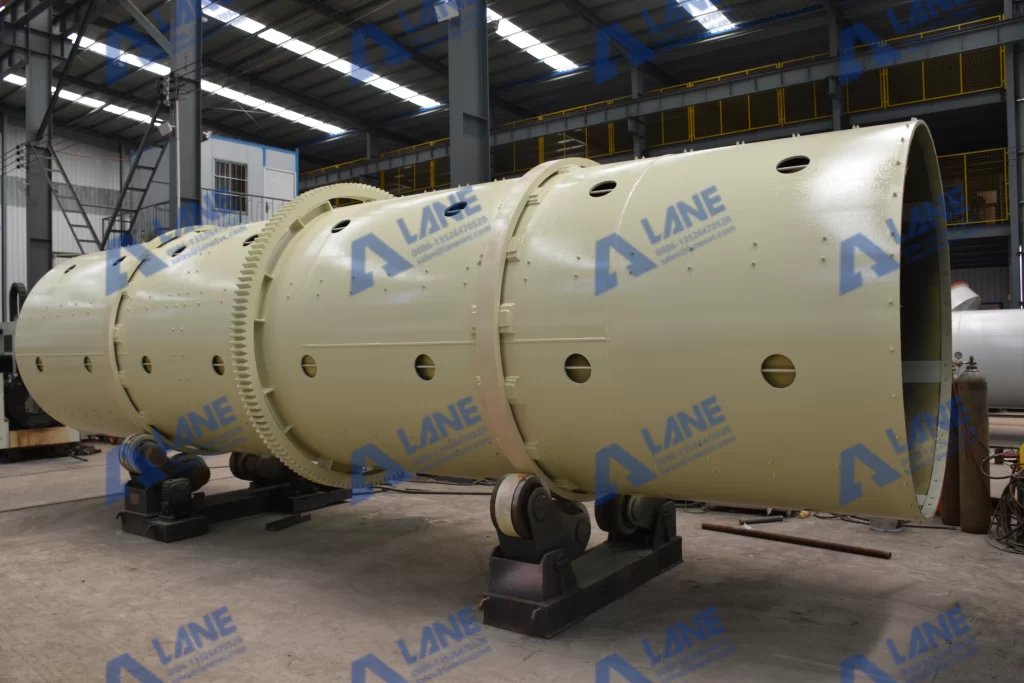
- Rotary Drum Granulator: LANE uses the wet granulation method for the NPK fertilizer industrial plant with Potassium Chloride. Our rotary drum granulator uses water to agglomerate fine particles into spherical granules. The granulation rate exceeds 95%, which reduces the recycle rate.
- Rotary Dryer: Our rotary dryer reduces moisture content to prevent caking and extend shelf life.
- Cooling Machine: Lowers granule temperature to stabilize the product.
- Screening Machine: The screening machine classifies granules into qualified products. Oversized and undersized particles are sent to the crushing machine.
- Coating Machine: Applies anti-caking agents and oils to improve storage stability and reduce dust.
- Automatic Packing Scale: The automatic packing line weighs and bags finished fertilizer for distribution.
All LANE equipment is fully automated with PLC control systems with SCADA panels; this ensures consistent quality and minimal manual intervention. The production line can be customized for capacities ranging from 1 ton per hour to 15 tons per hour. This makes it suitable for both small-scale and industrial-scale operations.
Process Technology
LANE employs the drum granulation method, a widely adopted technology for NPK compound fertilizers. Our process relies on powdered raw materials including potassium chloride with water binder to form granules in a rotating drum.
The key advantages of this method include:
- High flexibility: Producers can easily adjust nutrient ratios to produce various grades (e.g., 15-15-15, 20-20-20).
- Low environmental impact: Closed-loop recycling of undersized particles to minimize waste.
- Energy efficiency: Advanced dryers and coolers are designed to reduce fuel consumption.
For manufacturers who operate an NPK fertilizer industrial plant with Potassium Chloride, LANE’s rotary drum offers proven reliability and low operational costs. The company also provides onsite installation guidance and training for first-line operators, ensuring a smooth startup.
Technical Advantages of LANE’s NPK Fertilizer Production Line
Investing in an NPK fertilizer industrial plant with Potassium Chloride requires careful evaluation of equipment durability, energy consumption, and maintenance requirements. LANE Heavy Industry’s equipment stands out for several reasons:
- Five-Year Warranty: LANE offers an industry-leading five-year warranty on its NPK production lines. We are very confident about the quality of our machinery.
- CE and ISO Certification: All equipment meets international safety and quality standards, facilitating export and regulatory compliance.
- High Granulation Rate: LANE’s rotary drum granulator has over 95% granulation efficiency. It minimizes material recycling and boosts throughput.
- Corrosion Resistance: Our equipment is designed to handle the corrosive nature of KCl and other fertilizer salts, extending service life.
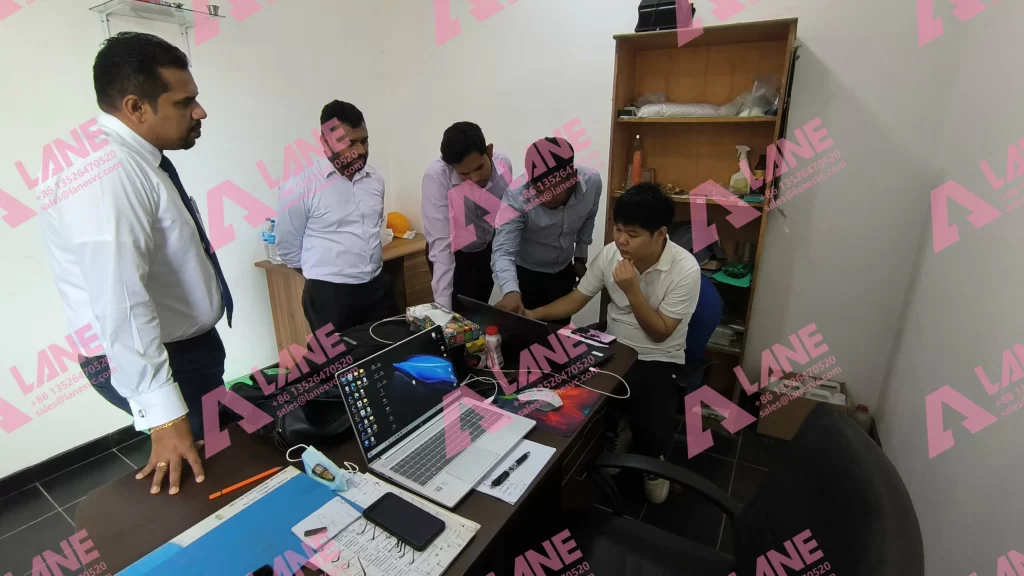
- Comprehensive After-Sales Support: LANE provides granulation experiments, customized designs, and overseas technical support. We also train your technicians.
These features make LANE a preferred supplier for fertilizer producers seeking to establish or upgrade their NPK fertilizer industrial plant with Potassium Chloride.
Why Choose LANE Heavy Industry?
LANE Heavy Industry’s commitment to innovation and customer service is evident in our global footprint. We have exported fertilizer production lines to over 30 countries, serving clients in Africa, South America, and the Middle East. We ensure that each project receives personalized attention.
Moreover, LANE can deliver both single machines and complete production lines. This allows our customers to scale their operations gradually. Whether you are building a new NPK fertilizer industrial plant with Potassium Chloride or upgrading existing facilities, LANE provides engineering expertise, installation support, and lifetime maintenance services.
FAQ
- What raw materials can be used in an NPK fertilizer industrial plant with Potassium Chloride?
LANE’s NPK production line processes urea, ammonium sulfate, DAP, MAP, Potassium Chloride (KCl), Potassium Sulfate (SOP), and various fillers.
- What is the typical capacity of LANE’s NPK fertilizer industrial plant with Potassium Chloride?
Capacities range from 1 to 15 tons per hour, with custom configurations available for larger volumes.
- How does LANE ensure product quality?
LANE provides free granulation experiments, CE and ISO certifications, and offers onsite installation guidance and operator training.
- What is the warranty period for LANE’s equipment?
LANE offers a five-year warranty on its NPK fertilizer production lines.
- Does LANE provide international installation support?
Yes, LANE has a professional overseas team that provides installation, debugging, and after-sales service worldwide
Of course, we also offer other types of products for your different needs, you can click to view.
For more information, please contact us by sending an inquiry today! We can help you!



Write a Reply or Comment