
The Future of Soil Nutrition: The 10 T/H NPK Fertilizer Plant with MOP Explained
Introduction
As the global population surges toward 10 billion, the demand for high-yield crop production is increasing. To meet this demand, farmers are using fertilizer and nutrient strategies. To keep up with the demand for fertilizer, new technology, production methods, and fertilizer formulas are being invented. LANE Heavy Industry has stepped forward with advanced solutions, particularly the 10 T/H NPK fertilizer plant with MOP. This helps manufacturers to create premium quality fertilizer along with experimental formulas and customizable granulation size.
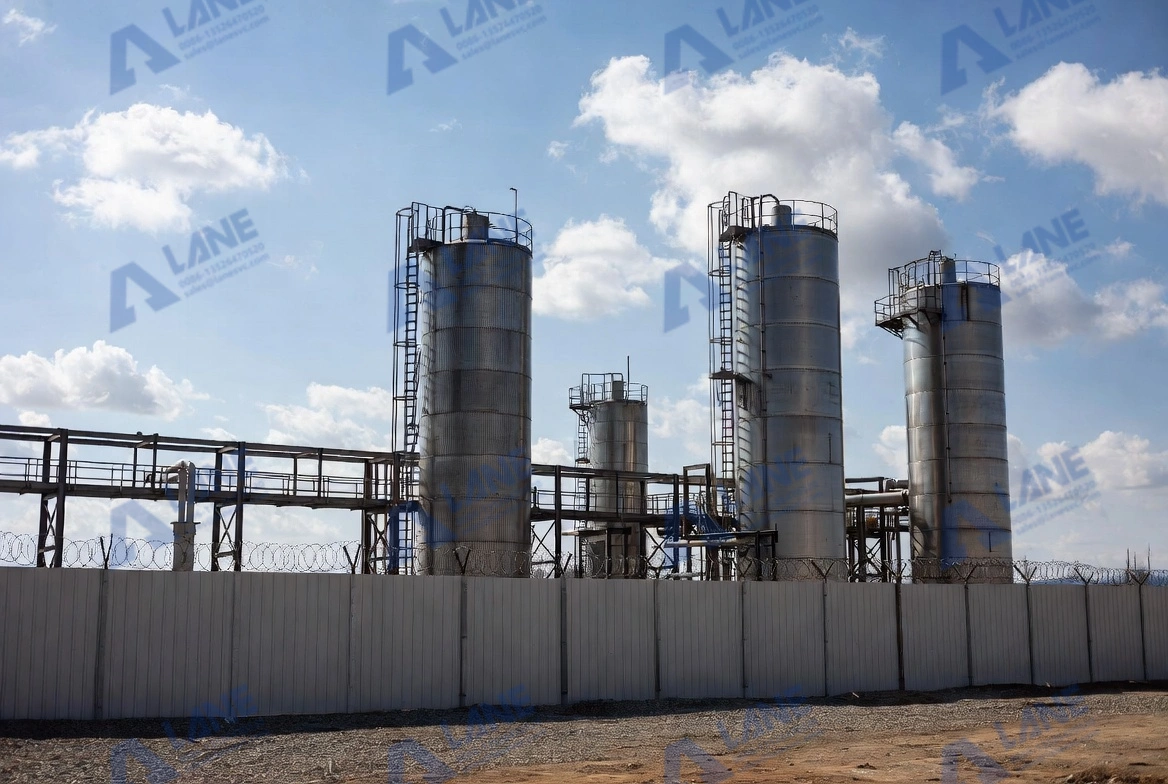
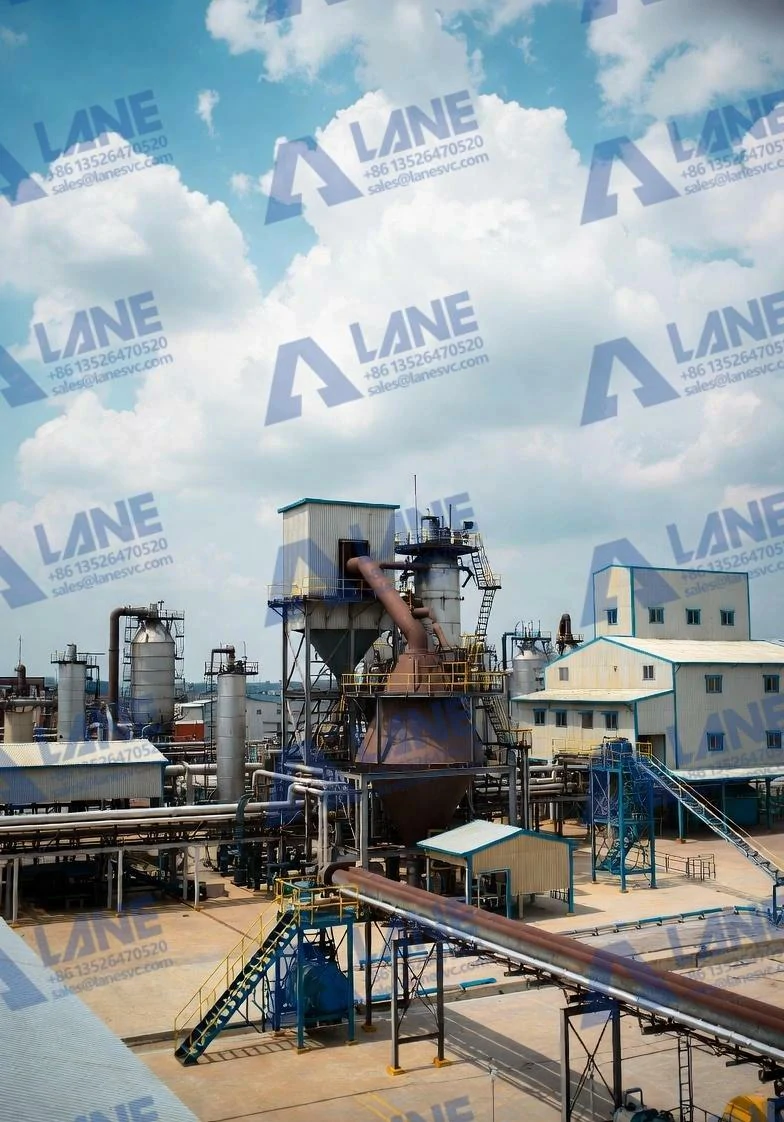
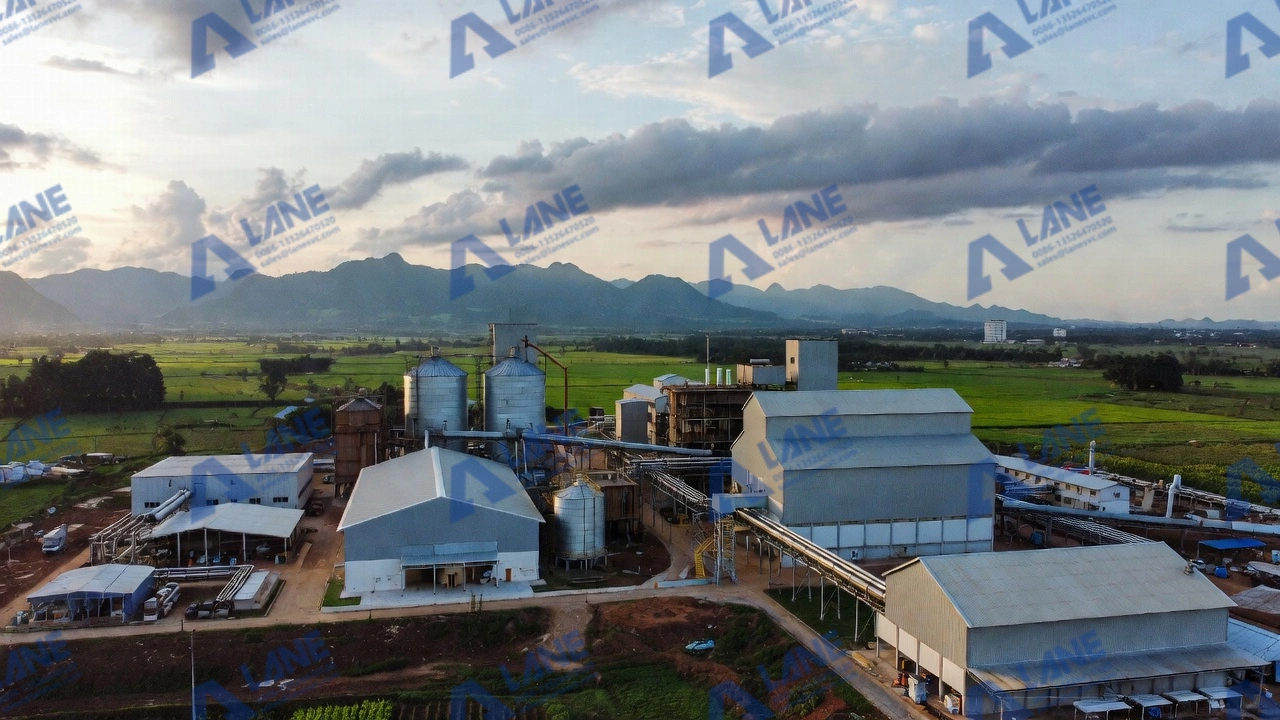
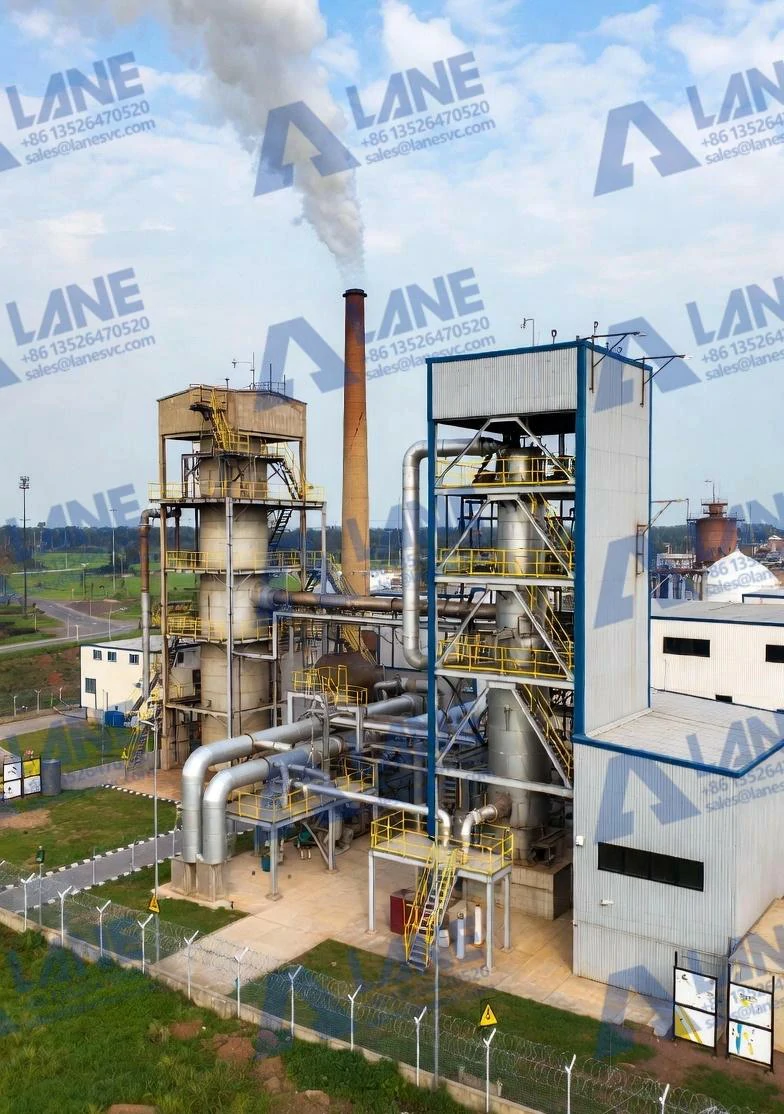
The 10 T/H NPK fertilizer plant with MOP is a high-performance production solution. This state-of-the-art facility redefines small-to-medium scale fertilizer production. This production line uses MOP as the core potassium source for NPK fertilizer and it can handle the raw materials of the NPK effectively and precisely. This article delves into the workings, benefits, and technological innovations behind this cutting-edge fertilizer production line.
Understanding the 10 T/H NPK Fertilizer Plant with MOP
The 10 T/H NPK fertilizer plant with MOP is designed to produce high-quality compound fertilizers that combine nitrogen (N), phosphorus (P), and potassium (K). This fertilizer incorporates Muriate of Potash (MOP) as the primary potassium source. The 10 T/H NPK fertilizer plant with MOP is a cohesive system designed to convert raw potassium chloride, urea, and diammonium phosphate (DAP) into high-grade granular NPK fertilizer at a steady rate of 10 tons per hour. This steady 10 tons per hour is a sweet spot for medium to large scale production. This integration ensures a balanced nutrient profile tailored for a wide range of crops, improving yield, soil health, and overall agricultural productivity.
LANE Heavy Industry’s equipment for the 10 T/H NPK fertilizer plant with MOP is engineered for continuous, automated precision operation. The plant can handle large volumes of different raw materials while maintaining uniform granule size, nutrient consistency, and minimal waste, making it ideal for modern commercial fertilizer production.
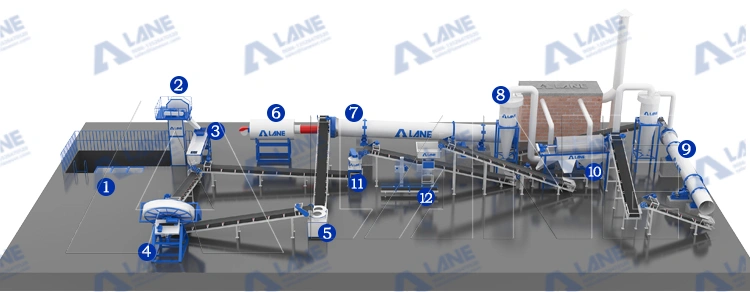
The Production Line Workflow: From Raw MOP to Finished Granules
The production line of the 10 T/H NPK fertilizer plant with MOP lies in its planned process. Each step of the automated process minimizes waste and maximizes consistency.
- Raw Material Batching: The production begins with precision batching. The automatic batching system weighs urea, DAP, and MOP according to the NPK formula (e.g., 15-15-15 or 20-10-10). The PLC-controlled system ensures that every batch has the precise nutrient ratio required for specific soil conditions.
- Crushing: Large lumps of MOP or other raw materials are crushed into a fine, uniform powder. This step is critical for ensuring thorough mixing later in the process.
- Mixing: The powdered materials are fed into a horizontal mixer. This mixer blends them into a homogeneous mixture. In this stage, the potassium from MOP is evenly distributed with the nitrogen and phosphorus sources. This guarantees that every granule contains the same nutrient profile.
- Granulation: This is the core of the 10 T/H NPK fertilizer plant with MOP. LANE utilizes advanced rotary drum granulators or double-roller granulators. The double roller granulator operates with a dry granulation method. It eliminates the need for water or heat and consumes less power than traditional wet granulation methods. The rotary drum granulators offer uniform granulation and greater granulation quality.
- Drying: If the manufacturer uses wet granulation, then the newly formed granules pass through a rotary dryer to reduce moisture content to just 1-5%. This prevents the fertilizer from caking during storage and extends its shelf life.
- Cooling: After drying, the granules are hot. LANE’s rotary cooler uses ambient air to reduce the temperature of the granules. The ambient air prevents clumping and prepares the product for packaging.
- Screening: A vibrating screen separates the granules by size. Oversized particles and undersized fines are crushed and returned to the mixer for reprocessing. Only perfectly sized granules move forward.
- Coating and Packaging: Finally, a coating machine applies a thin layer of anti-caking agent or other liquid nutrient to the granules. This improves their flowability and durability. The finished product is then automatically weighed and bagged by a high-speed packing scale, ready for distribution.
Advantages of Using a 10 T/H NPK Fertilizer Plant with MOP
Investing in a 10 T/H NPK fertilizer plant with MOP offers several benefits for fertilizer manufacturers and farmers:
- High Production Efficiency: With a capacity of 10 tons per hour, it significantly boosts output compared to traditional production methods.
- Enhanced Nutrient Balance: Incorporating MOP ensures potassium availability for crops, which is essential for plant growth and disease resistance.
- Cost-effectiveness: Automation reduces labor costs, energy consumption, and raw material wastage.
- Improved Soil Nutrition: Balanced NPK fertilizers enhance soil fertility and ensure sustainable farming practices.
- Flexibility: The plant can produce customized NPK formulations to meet different crop and soil requirements.
Technological Innovations in LANE’s 10 T/H NPK Fertilizer Plant with MOP
LANE Heavy Industry has incorporated several advanced technologies into their 10 T/H NPK fertilizer plant with MOP to optimize performance:
- Intelligent Control Systems: Automated PLC systems monitor each part of the production stage. This ensures consistent quality and safety.
- Energy-saving Granulation Techniques: Advanced drum and high-efficiency granulators reduce power consumption while improving granule formation.
- Dust Reduction and Environmental Compliance: The plant integrates dust collectors and recycling units; this adheres to modern environmental standards.
- Scalable Design: LANE’s advanced design allows us to expand the production line or integrate the production line with other production lines.
- Durability and Service: LANE equips contact parts with stainless steel to resist the corrosive nature of MOP. All products are ISO certified, and the company offers a five-year warranty, professional overseas installation, and after-sales support.
These technological innovations make the LANE design efficient and eco-friendly while addressing sustainability concerns in modern agriculture.
Application of Fertilizer Produced by the 10 T/H NPK Fertilizer Plant with MOP
The fertilizer produced from a 10 T/H NPK fertilizer plant with MOP is suitable for many types of crops, including cereals, fruits, vegetables, and cash crops. They can be used in:
- Precision agriculture for targeted nutrient application
- Soil rehabilitation to restore degraded soils
- Commercial farming operations where large-scale, uniform nutrient distribution is needed
Maintenance and Operational Tips
Maintaining a 10 T/H NPK fertilizer plant with MOP is critical for long-term efficiency. Key practices include:
- Regular inspection of granulators and mixers
- Timely replacement of wear-and-tear components
- Monitoring and adjusting moisture levels in the drying and cooling process
- Calibration of automated control systems for consistent nutrient ratios
Conclusion
LANE Heavy Industry’s 10 T/H NPK fertilizer plant with MOP represents the convergence of advanced manufacturing and agricultural science. By combining the potassium of MOP with the mechanical excellence of LANE Heavy Industry’s machinery, producers can ensure a steady supply of high-quality nutrients. This production line is a commitment to the future of food security
FAQs
Q1: What is the daily production capacity of a 10 T/H NPK fertilizer plant with MOP?
A: A 10 T/H NPK fertilizer plant with MOP can produce approximately 240 tons per day, depending on operating hours and material quality.
Q2: Can this plant produce customized NPK ratios?
A: Yes, LANE Heavy Industry’s design allows precise blending to meet specific crop and soil requirements.
Q3: What is the role of MOP in this fertilizer?
A: MOP provides essential potassium, which strengthens plant structure, improves drought resistance, and boosts yield.
Q4: How energy-efficient is the 10 T/H NPK fertilizer plant with MOP?
A: With advanced granulation and drying technologies, the plant significantly reduces energy consumption compared to conventional lines.
Of course, we also offer other types of products for your different needs, you can click to view.
For more information, please contact us by sending an inquiry today! We can help you!



Write a Reply or Comment