
MOP Fertilizer Granulation Plant for Wheat: Raw Material Ratio and Granulation Process
Introduction
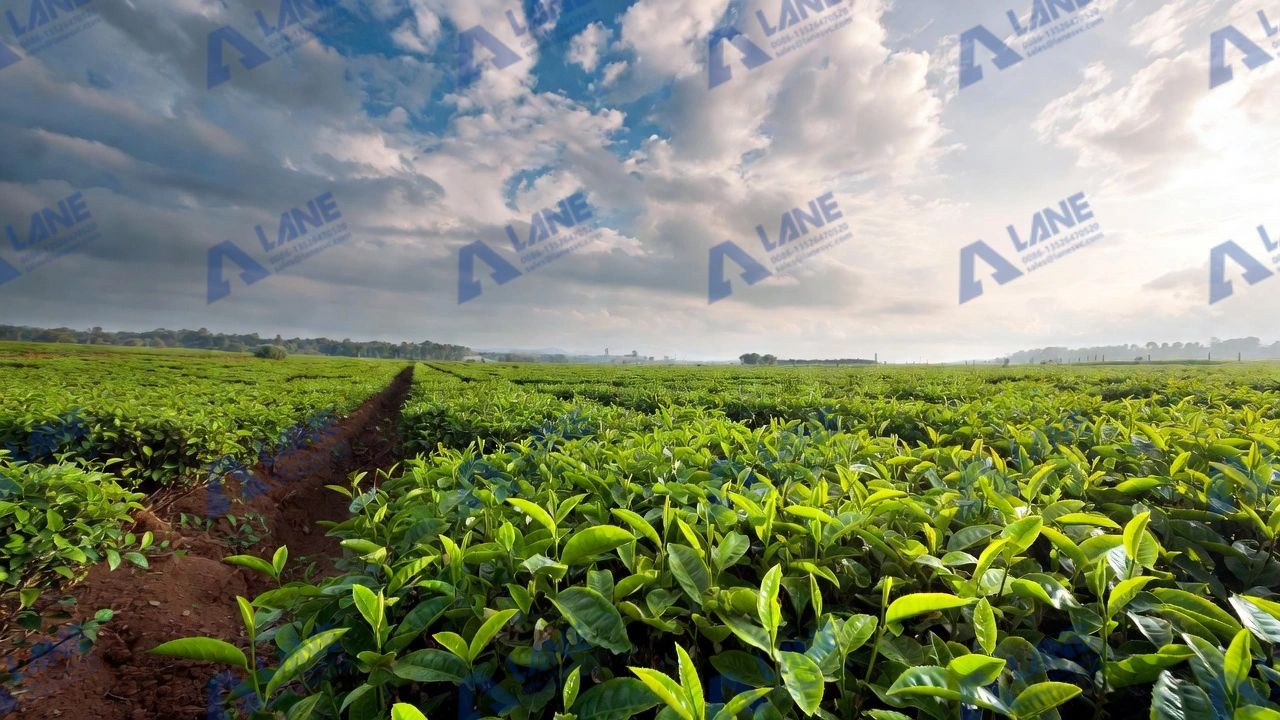
Wheat is one of the world’s most important crops. Every country in the world eats foods created from wheat. In modern agriculture, the growth and yield are closely related to the supply of nutrients. Muriate of Potash (MOP), scientifically known as potassium chloride (KCl), stands as the most widely used potassium fertilizer globally. Potassium is essential for water retention, photosynthesis, enzyme activation, and overall plant health. These are all critical factors in wheat growth. To produce high-quality MOP fertilizer suitable for wheat, a professional MOP fertilizer granulation plant for wheat is essential. LANE Heavy Industry Machinery Technology Co., Ltd. offers advanced fertilizer production lines designed to meet wheat solutions.
This article will explain the raw material ratios and granulation processes for a MOP fertilizer granulation plant for wheat with the help of LANE Heavy Industry’s equipment.
Understanding MOP Fertilizer for Wheat Production
Muriate of Potash (potassium chloride) is the most used potassium fertilizer in wheat production. When establishing a MOP Fertilizer Granulation Plant for Wheat, manufacturers must understand that wheat responds to potassium. The potassium in MOP ranges from 60% to 62% K₂O. This makes it an efficient nutrient carrier.
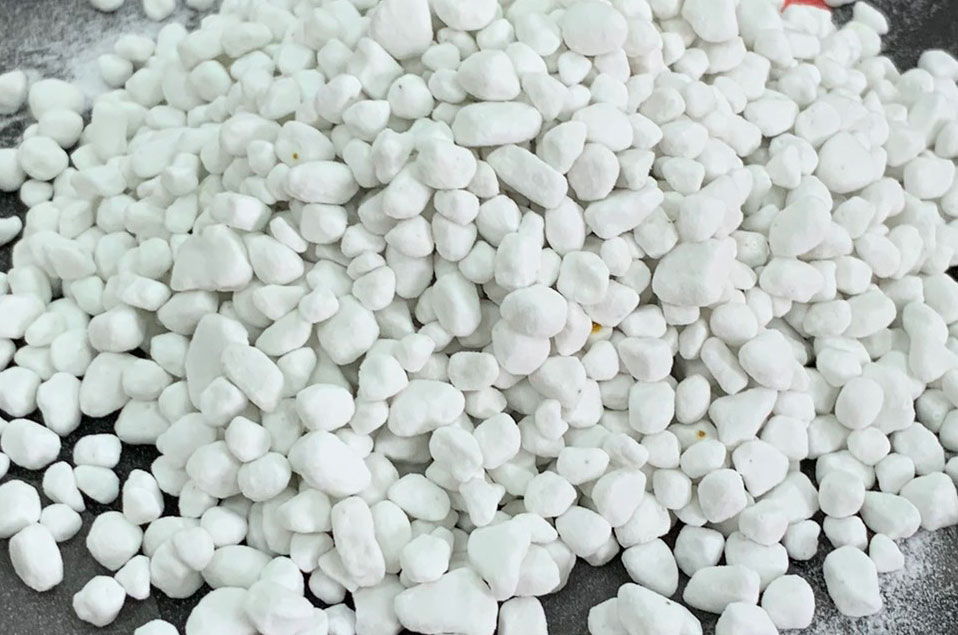
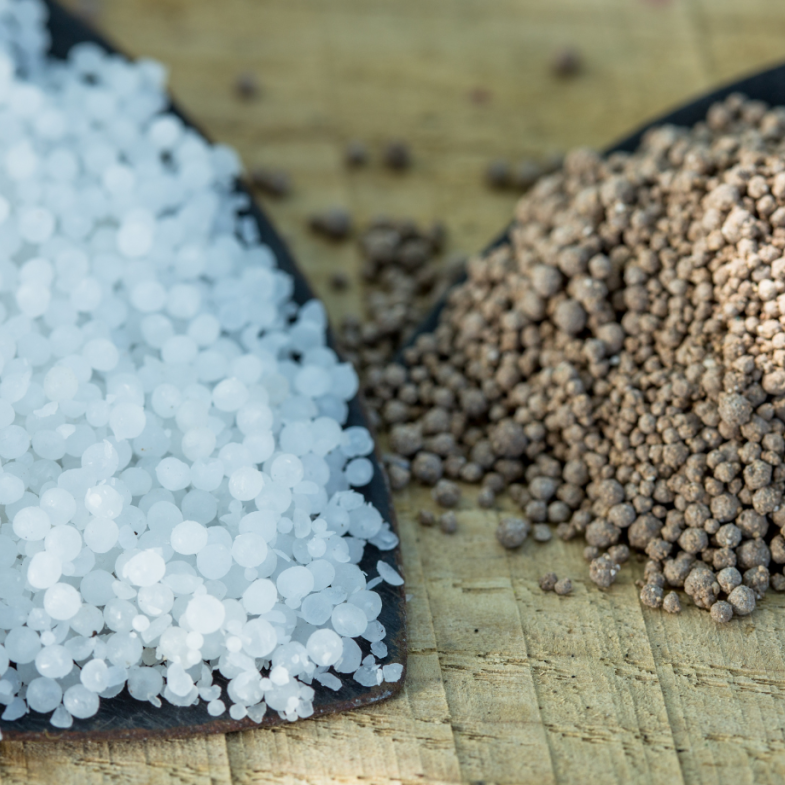
A well-designed MOP Fertilizer Granulation Plant for Wheat produces premium quality granules that ensure optimal storage and even distribution during field application.
Raw Material Ratio for Optimal MOP Fertilizer Granulation
The success of any MOP Fertilizer Granulation Plant for Wheat begins with formulation. Formulation is the step according to which you source your raw materials. The raw material ratio impacts granule quality, nutrient consistency, and overall production efficiency.
Primary Raw Materials
For a Custom MOP Fertilizer Granulation Plant for Wheat, the primary raw materials include:
| Raw Material | Typical Ratio Range | Function |
| MOP (KCl) | 60–70% | Primary potassium source |
| Nitrogen Source (Urea/AS) | 15–25% | Provides essential nitrogen |
| Phosphate Source | 0–15% | Optional for NPK blends |
| Filler (Clay/Calcite) | 5–10% | Improves granulation and prevents caking |
| Binder | 2–5% | Enhances granule strength |
Recommended Formulation for Wheat-Specific MOP Fertilizer
Based on industry practices and wheat requirements, a dedicated MOP Fertilizer Granulation Plant for Wheat should consider the following formulations:
- Potassium-Only Granules:95–98% MOP with 2–5% anti-caking agents and binders
- NPK Blend with Potassium Emphasis: Grades such as 12-12-17 or 15-15-15 where MOP serves as the potassium source
For wheat crops specifically, MOP-type fertilizers are highly suitable. Before application always conduct a soil test and read the labels.
Quality Control Considerations
LANE Heavy Industry understands the importance of consistent quality. We implement automation for preserving raw material quality. Our dynamic batching system with variable speed electronic feeders precisely controls the quantity of each raw material entering the granulation loop. This precision is essential for maintaining consistent product quality in any MOP fertilizer granulation plant for wheat.
Granulation Process in MOP Fertilizer Production
The granulation process represents the core technology of any MOP fertilizer granulation plant for wheat. LANE Heavy Industry offers multiple granulation approaches tailored to different production requirements.
Dry Granulation with Double Roller Technology
For potassium-based fertilizers, dry granulation offers many advantages. The double roller granulator, available from LANE Heavy Industry, transforms fertilizer powders into strong, uniform granules without requiring water or heat. This granulation method is particularly well-suited for MOP fertilizer granulation plant for wheat because:
- It uses pure mechanical pressure for energy-efficient operation
- It produces dense granules resistant to crumbling during storage and transport
- It eliminates drying costs which reduces overall energy consumption
- It allows quick adjustments for easy formula changes
This process involves feeding pre-mixed formulation of MOP powder between two heavy-duty rollers that apply extreme pressure to compact the material into granules.
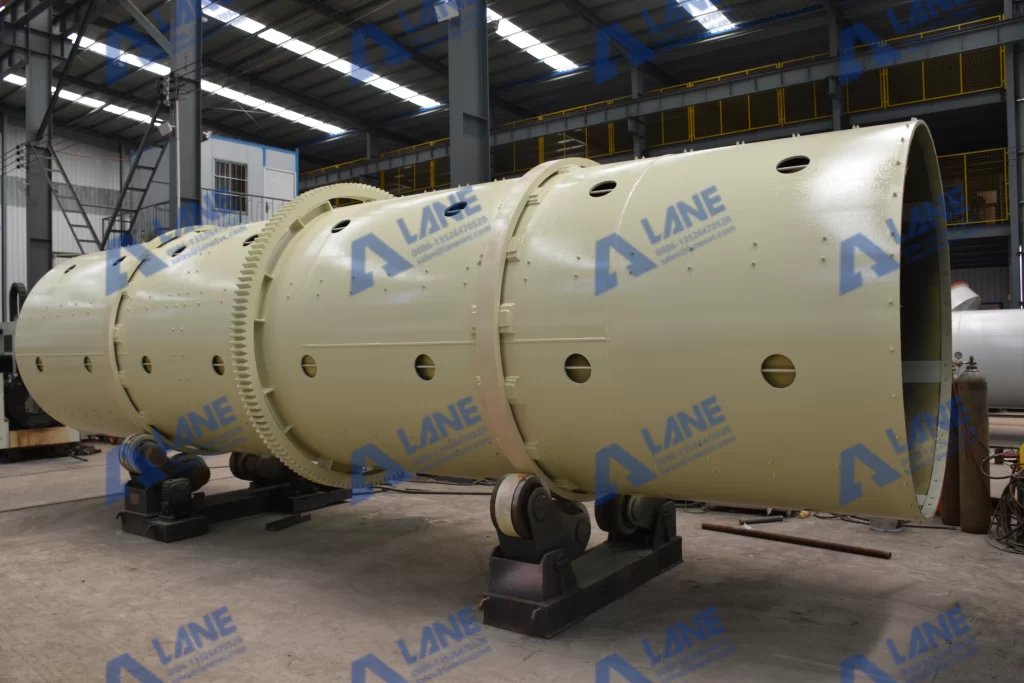
For higher capacity operations, a rotary drum granulator represents an excellent choice for a MOP fertilizer granulation plant for wheat. This is a wet granulator and requires liquid binders to form uniform spherical granules. LANE Heavy Industry’s rotary drum granulators can achieve production capacities ranging from 5 to 30 tons per hour.
Complete Production Line Process
A custom MOP fertilizer granulation plant for wheat from LANE Heavy Industry follows this process flow:
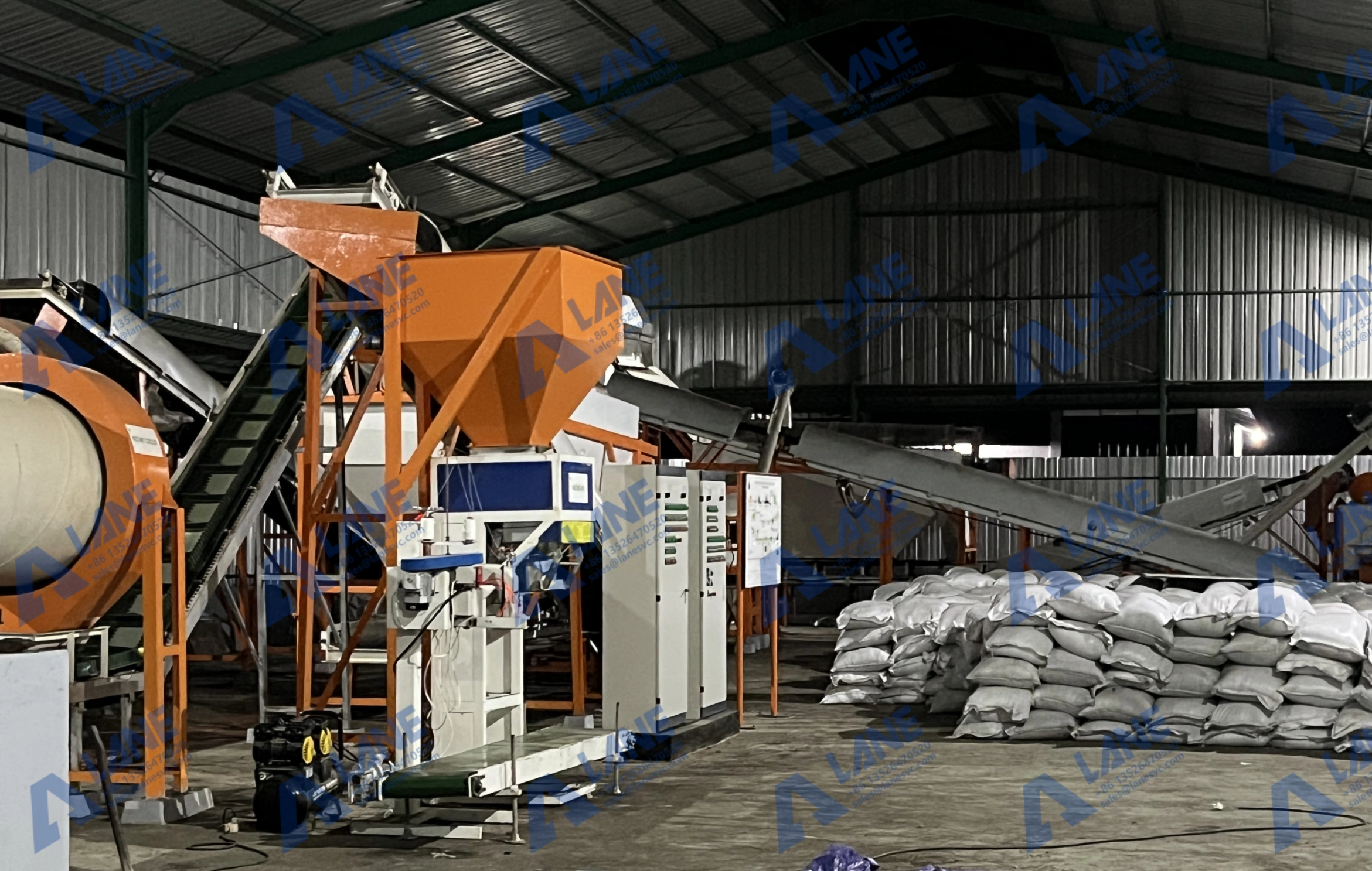
- Raw Material Preparation: MOP, nutrient sources, and fillers are stored separately in dedicated bins before being precisely metered into the system. Our automated electronic feeders ensure accurate proportioning according to the target formulation.
- Crushing and Mixing: Raw materials pass through crushers to achieve uniform particle size, followed by intensive mixing in horizontal mixers to ensure even nutrient distribution.
- Granulation: The granulation stage utilizes either a double roller press or rotary drum granulator depending on the production requirements. Granulation strength determines the storability, hardness, and application of the MOP fertilizer. This is the most critical stage in any MOP fertilizer granulation plant for wheat.
- Drying and Cooling: For the wet granulation process, a rotary dryer is used to remove excess moisture, followed by rotary coolers to stabilize the product. Dry granulation eliminates this step.
- Screening: A rotary screening machine separates qualified granules from oversized and undersized particles. Unqualified material is recycled back into the production process, minimizing waste.
- Coating and Packaging: Finished granules receive anti-caking coating before being packaged using automatic filling machines.
LANE Heavy Industry: Excellence in Fertilizer Equipment Manufacturing
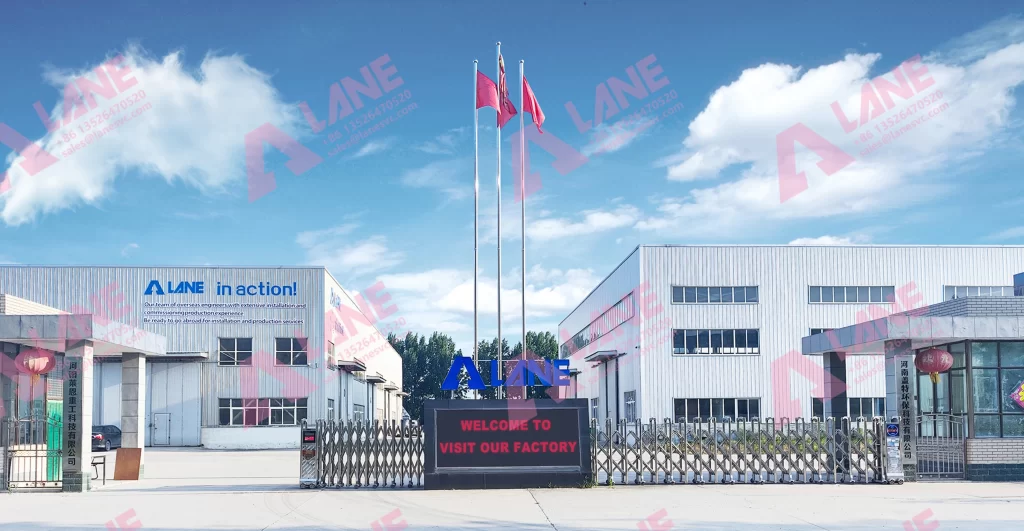
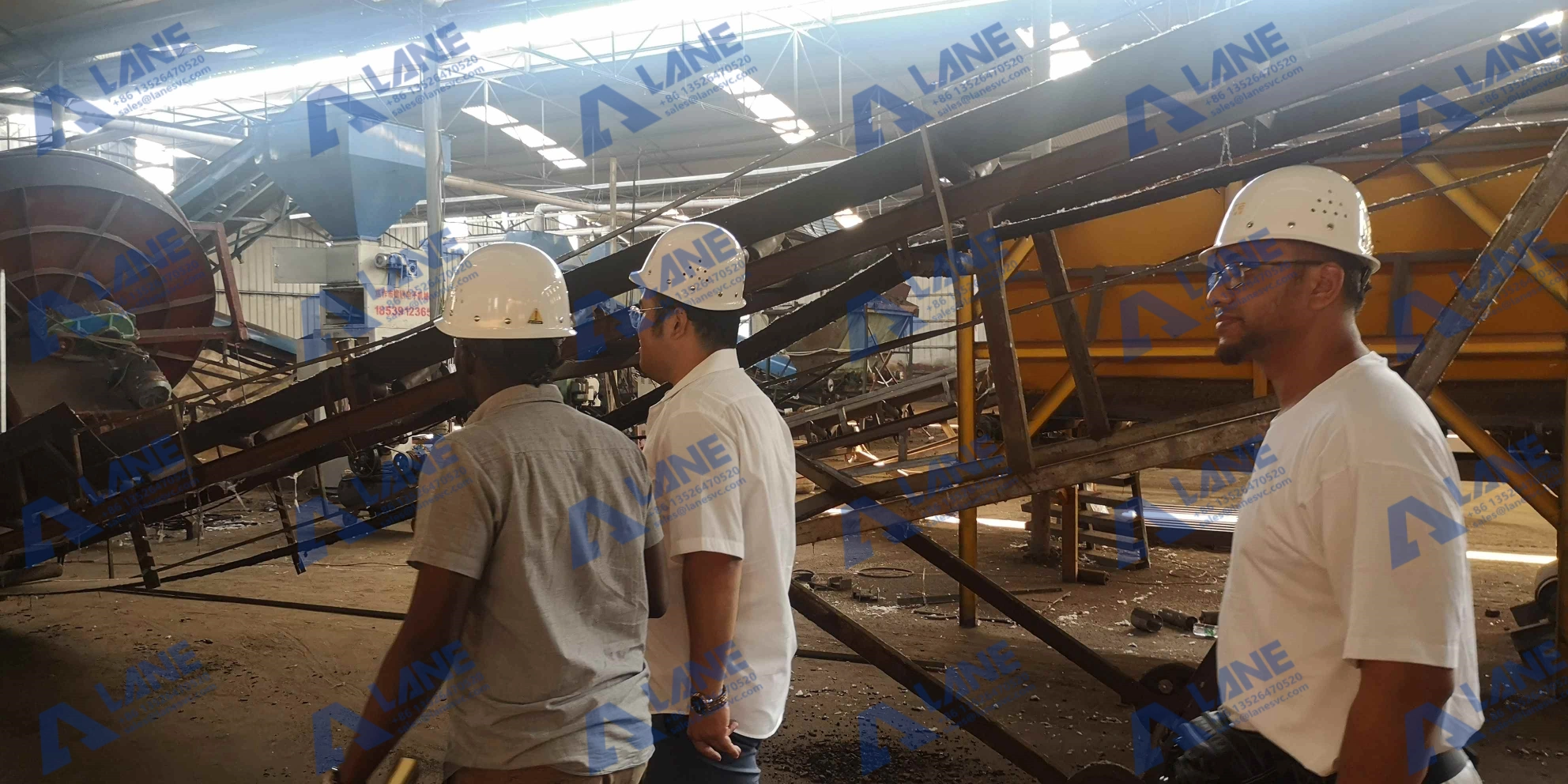
Henan LANE Heavy Industry Machinery Technology Co., Ltd. has established itself as a leader in the fertilizer equipment industry. With over 20 years of manufacturing experience, our engineering team has developed fertilizer machines that have ISO 9001, ISO 14001, and CE certifications. LANE Heavy Industry provides reliable equipment for MOP fertilizer granulation plant for wheat projects worldwide.
Key Advantages of LANE Heavy Industry Equipment
- One-Stop Service: From initial consultation to installation and after-sales support, you will get everything from us.
- Customized Solutions: Equipment tailored to specific raw materials and capacity requirements. We use industrial grade raw materials for our equipment, so that they can withstand the corrosiveness of the raw materials.
- Global Experience: Successful projects across Africa, Southeast Asia, and beyond.
- Comprehensive Warranty:5-year warranty period after shipment date.
- Technical Support: On-site installation guidance and operator training provided.
We are committed to producing quality equipment. Our commitments are demonstrated through projects such as the compound fertilizer production line retrofit for Indonesia. That production line achieved 35% capacity improvement and 83% reduction in equipment failure rates.
Economic Considerations for MOP Fertilizer Granulation Plant Investment
Investing in a manufacturing plant is a huge decision. It requires careful economic analysis. LANE Heavy Industry’s equipment offers several financial advantages:
- Energy Efficiency: Dry granulation technology reduces power consumption.
- Low Maintenance: High-quality materials and robust design minimize downtime.
- Flexible Production: Ability to produce multiple formulations from a single production line.
- Quick ROI: Projects achieve return on investment within 2–3 years.
Frequently Asked Questions
Q: What is the ideal raw material ratio for a MOP fertilizer granulation plant for wheat?
The optimal raw material ratio depends on the target fertilizer grade. For potassium-only granules, a ratio of 95-98% MOP with 2-5% binders and anti-caking agents is common. For NPK blends, ratios vary based on specific nutrient requirements, with MOP serving as the potassium source.
Q: What granulation technology does LANE Heavy Industry recommend for MOP fertilizer production?
LANE Heavy Industry offers both dry granulation (double roller granulator) and wet granulation (rotary drum granulator) technologies. The double roller granulator is particularly suitable for MOP fertilizer because it eliminates drying requirements and produces dense, uniform granules using only mechanical pressure.
Q: How does a MOP fertilizer granulation plant for wheat benefit wheat farmers?
A dedicated MOP fertilizer granulation plant for wheat produces uniform, high-quality potassium fertilizer that improves wheat stem strength, drought resistance, and grain quality. The consistent granule size ensures even field application, leading to more uniform crop growth and higher yields
Of course, we also offer other types of products for your different needs, you can click to view.
For more information, please contact us by sending an inquiry today! We can help you!



Write a Reply or Comment