
Investment Guide: Starting a MOP Fertilizer with Additive Plant Business
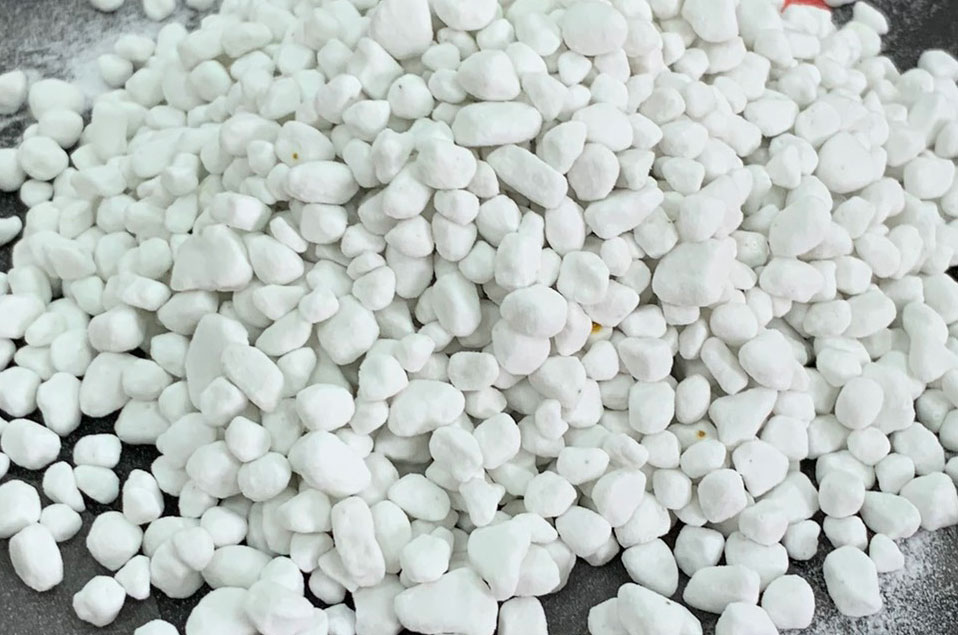
The agricultural industry is one of the most profitable and stable sectors in the world. This sector includes the food processing industry, farming industry, fertilizer industry, fishing industry, etc. Among them, fertilizer manufacturing supports crop growth and productivity. Among the fertilizers, traditional muriate of potash (MOP) is the backbone of potash foundation. It is the most used potassium fertilizer worldwide, but forward-thinking investors and growers are looking for value-added products. Establishing a MOP Fertilizer with Additive Plant represents a strategic opportunity to capture market share in the premium fertilizer segment. For investors looking to enter the fertilizer market, starting a MOP Fertilizer with Additive Plant business using advanced machinery from LANE Heavy Industry offers a lucrative opportunity.
What is a MOP Fertilizer with Additive Plant?
MOP, or Muriate of Potash, is the most popular potassium-based fertilizer. It is used to improve crop yields. When combined with additives, MOP fertilizer can enhance soil quality, provide micronutrients, and improve nutrient absorption by plants. A MOP fertilizer additive plant integrates additives like Polysulphate, Humic Acid / Fulvic Acid, Amino Acids, etc. to produce a specialized product tailored to meet the diverse needs of modern agriculture.
Investing in such a plant will allow your business to cater to both domestic and international markets. You can export to markets where the demand for high-quality, nutrient-rich fertilizers continues to grow.
Advantages of Starting a MOP Fertilizer with Additive Plant
- High Market Demand: Potassium is essential for plant growth. It is one of the three major nutrients for plants alongside nitrogen and phosphorus. This makes this fertilizer consistently in demand. By offering a MOP Fertilizer with Additive Plant, investors can capture markets that require customized nutrient solutions.
- Profit Potential: With LANE Heavy Industry’s production line, the plant can achieve high efficiency, reduce operating costs, and maximize output.
- Scalability: You can start the production plant with just essential machines and later grow it into a fully automatic production plant.
- Sustainable Business Model: Fertilizer is a core need of crop nutrient strategy. This makes the business relatively resilient to economic fluctuations.
LANE Heavy Industry Machinery for Fertilizer Production
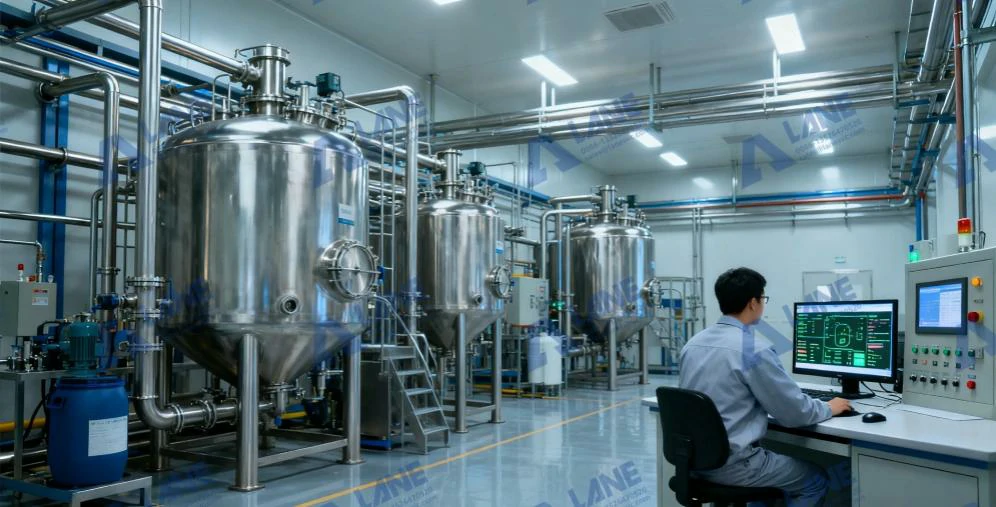
LANE Heavy Industry is a fertilizer production machinery manufacturer with over 20 years of experience. We offer a complete, scalable MOP Fertilizer with Additive Plant production line designed to ensure high efficiency, minimal waste, and consistent product quality. Our production plant includes:
- Raw Material Storage and Feeding System: This ensures the accurate measurement and handling of MOP and additives.
- Mixing Equipment: Our fully automatic mixing equipment homogeneously combines MOP with additives like Polysulphate, Humic Acid / Fulvic Acid, and Amino Acids according to the raw material formulations.
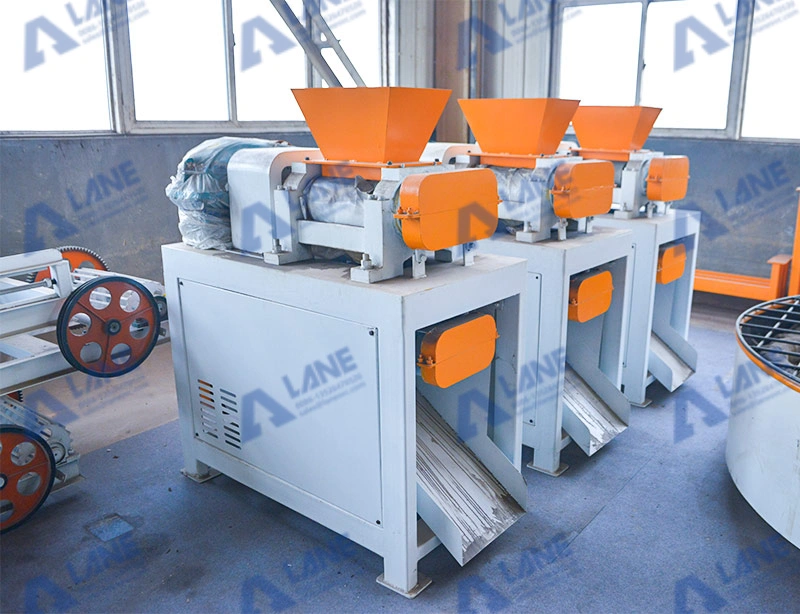
- Granulation Equipment: It converts the mixed materials into uniform granules suitable for packaging and distribution.
- Drying and Cooling Systems: Our Rotary Dryer and Cooler remove excess moisture and ensure long shelf life and stable fertilizer quality.
- Screening and Coating Machines: Our Rotary Screener and Drum Coating machine filter oversized granules and apply coatings for better nutrient retention.
- Packaging System: Automates bagging, labeling, and storage, reducing labor costs.
Using LANE Heavy Industry machinery, a MOP fertilizer with additives plant can achieve production capacities ranging from a few tons per hour to industrial-scale output, depending on the chosen configuration.
Steps to Start a MOP Fertilizer with Additive Plant Business
- Conduct Market Research: You should conduct a thorough analysis of local and international markets to understand demand, pricing trends, and competitor strategies. Identify crops that rely heavily on potassium fertilizers and regions with growing agricultural sectors.
- Secure Funding and Investment: Starting a MOP fertilizer with Additive Plant requires capital for land, machinery, raw materials, and operating expenses. You should make a detailed financial plan to ensure long-term profitability.
- Choose the Right Machinery: Selecting LANE Heavy Industry’s fertilizer production line ensures reliable operations, high granulation efficiency, and lower maintenance costs. This ensures machinery matches your production goals.
- Select Raw Materials: High-quality MOP and additive chemicals are critical for producing effective fertilizer. Establish relationships with reputable suppliers and create a consistent supply chain for your raw materials.
- Establish Production Processes: Set up proper workflows that ensure proper mixing, granulation, drying, and packaging. Quality control measures at each stage prevent defective batches and maintain product standards.
- Obtain Licenses and Certifications: The most important step to start a fertilizer industry is to obtain compliance certifications. Certifications enhance your plant’s credibility and help with international exports.
- Marketing and Distribution: Develop strategies to reach farmers, cooperatives, and distributors. Highlight the benefits of your MOP fertilizer with additives plant in promoting soil health and crop productivity.
Economic Benefits of a MOP Fertilizer with Additive Plant
Starting a MOP fertilizer with additive plant provides long-term economic benefits:
- Steady Income: Agriculture’s consistent demand for fertilizers ensures stable revenue streams.
- Export Potential: Many countries rely on imported potassium fertilizers, providing opportunities for international trade.
- Job Creation: A production plant not only creates jobs in the plant itself, it also creates jobs in logistics, sales, and transportation sectors.
Challenges to Consider
While the production of MOP fertilizer is profitable, it has its own challenges.
- Initial Investment: Machinery and setup costs can be significant.
- Raw Material Supply: Dependable access to MOP and additives is essential.
- Regulatory Compliance: Adhering to fertilizer standards and environmental regulations is mandatory.
LANE Heavy Industry provides reliable, energy-efficient machinery that can help you mitigate production-related challenges effectively.
Conclusion
Establishing a MOP Fertilizer with Additive Plant is a forward-thinking investment that addresses the modern farmer’s need for advanced fertilizers. It also represents an investment opportunity for entrepreneurs seeking to tap into the agricultural sector. With growing demand for nutrient-rich fertilizers and the technological advantage provided by LANE Heavy Industry’s machinery, investors can build a profitable, scalable, and sustainable business.
By investing in a MOP Fertilizer with Additive Plant, you are entering a profitable market while contributing to the enhancement of agricultural productivity.
FAQs About MOP Fertilizer with Additive Plant
Q1: What is the production capacity of a MOP Fertilizer with Additive Plant?
A: With LANE Heavy Industry machinery, production can range from 2–20 tons per hour, depending on plant size and configuration.
Q2: What types of additives are used in MOP fertilizers?
A: Additives can include micronutrients, anti-caking agents, and coating materials to enhance nutrient absorption and storage life.
Q3: Is a MOP Fertilizer with Additive Plant profitable?
A: Yes. With high demand and proper management, investors can achieve substantial returns within a few years.
Q4: How long does it take to set up the plant?
A: Installation and commissioning of a MOP Fertilizer with Additive Plant typically take 3–6 months, depending on capacity and infrastructure readiness.
Q5: Can this plant produce customized fertilizer formulations?
A: Absolutely. The production line allows blending of MOP with various additives to meet specific crop and soil requirements.
Of course, we also offer other types of products for your different needs, you can click to view.
For more information, please contact us by sending an inquiry today! We can help you!


Related News
SOP (sulfate of potash) is a valuable potassium fertilizer used for crops that are sensitive to chloride. During fertilizer production, granulated SOP usually contains residual moisture that must be removed before the product can move to the next processing stage. If the granules are not dried properly, they may become sticky, form lumps during storage, or create problems during screening and packaging.
Choosing the right fertilizer dryer for SOP is therefore an important part of planning an SOP fertilizer production line. However, selecting a dryer is not simply a matter of matching the machine to the production capacity. The inlet moisture content, required final moisture, granule characteristics, heating source, and local fuel prices all affect the actual drying requirements.
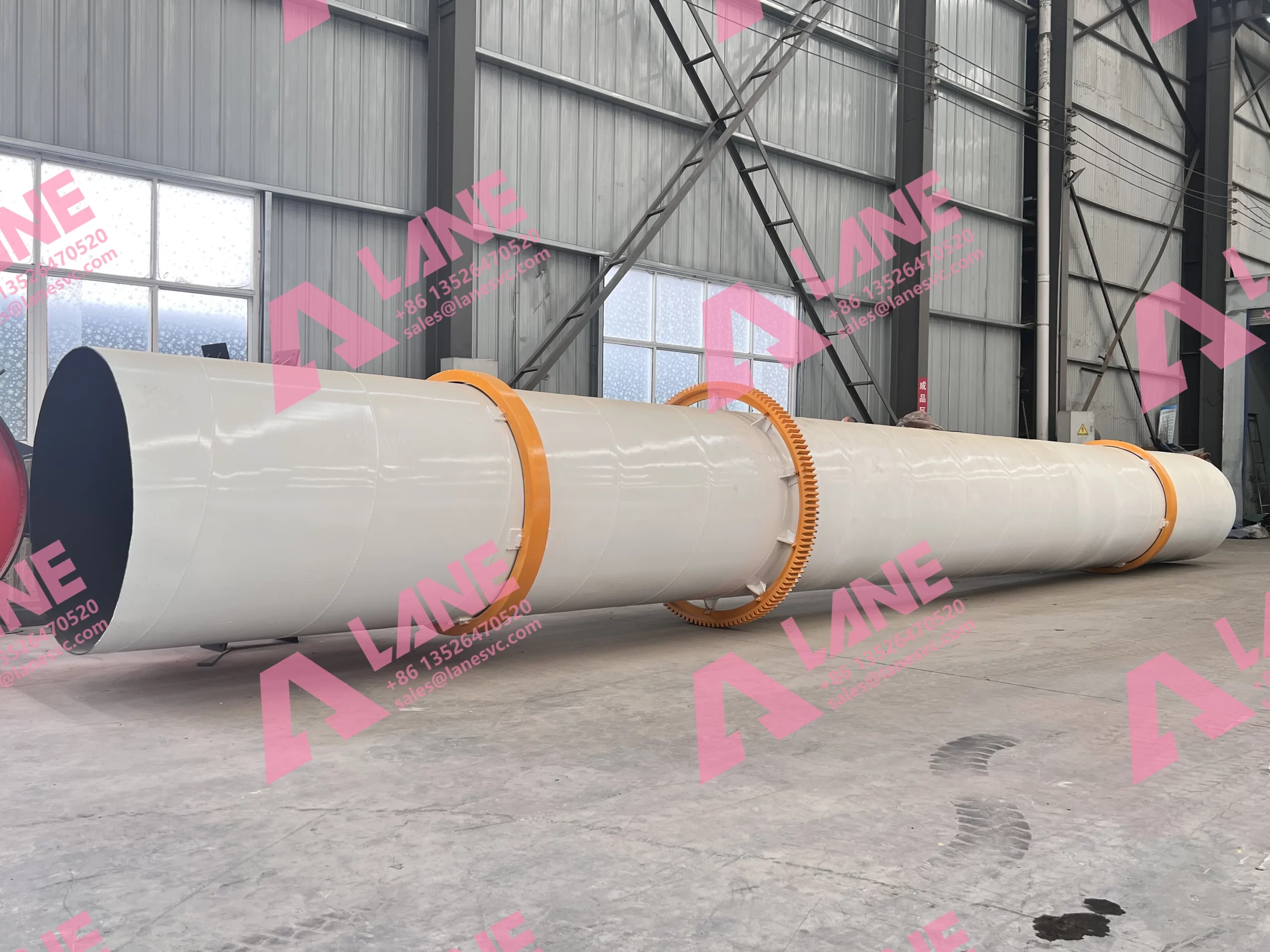
For most granular fertilizer applications, a rotary drum dryer is a practical option. It works with a hot air system to remove moisture continuously, making it suitable for production lines that need stable and consistent output.
This guide explains how to select a fertilizer dryer for SOP, compare common drum sizes, choose a suitable heating source, and match a hot blast stove to the drying process.
What Should You Consider When Choosing a Fertilizer Dryer for SOP?
Before choosing a fertilizer dryer for SOP, collect several basic production details. These figures help determine how much heat the system needs and whether a standard rotary drum dryer can meet the production target.
Inlet moisture content
The moisture content of SOP granules entering the dryer is one of the most important factors. Granules with higher moisture require more heat and a longer drying process.
For example, a production line handling 5 tons of wet granules per hour does not necessarily need the same drying capacity as another 5 T/H line. If one line has an inlet moisture content of 8% and the other has 15%, the amount of water that must be removed will be different.
Target outlet moisture
You should also define the required moisture content after drying. A dryer must remove enough water to meet the downstream product requirements, but excessive drying wastes energy and may affect the physical quality of the granules.
The target should be based on the SOP product specification and actual production tests rather than an assumed universal value.
Actual hourly output
Use the amount of wet material entering the dryer, not only the final output of the production line. The dryer handles material before moisture has been removed, so its required feed capacity may be higher than the final dry product weight.
Granule size and physical strength
Small particles, large granules, and fragile particles may behave differently inside a rotary drum. The lifting plates, drum rotation, feeding rate, and drying conditions should be considered together to avoid uneven drying or unnecessary particle breakage.
These details provide a more reliable basis for selecting a fertilizer dryer for SOP than production capacity alone.
How to Choose the Right Rotary Drum Dryer Size?
A rotary drum dryer uses a rotating cylinder to move fertilizer granules through a heated drying zone. Lifting plates installed inside the drum repeatedly raise and release the material, allowing it to come into contact with the hot air.
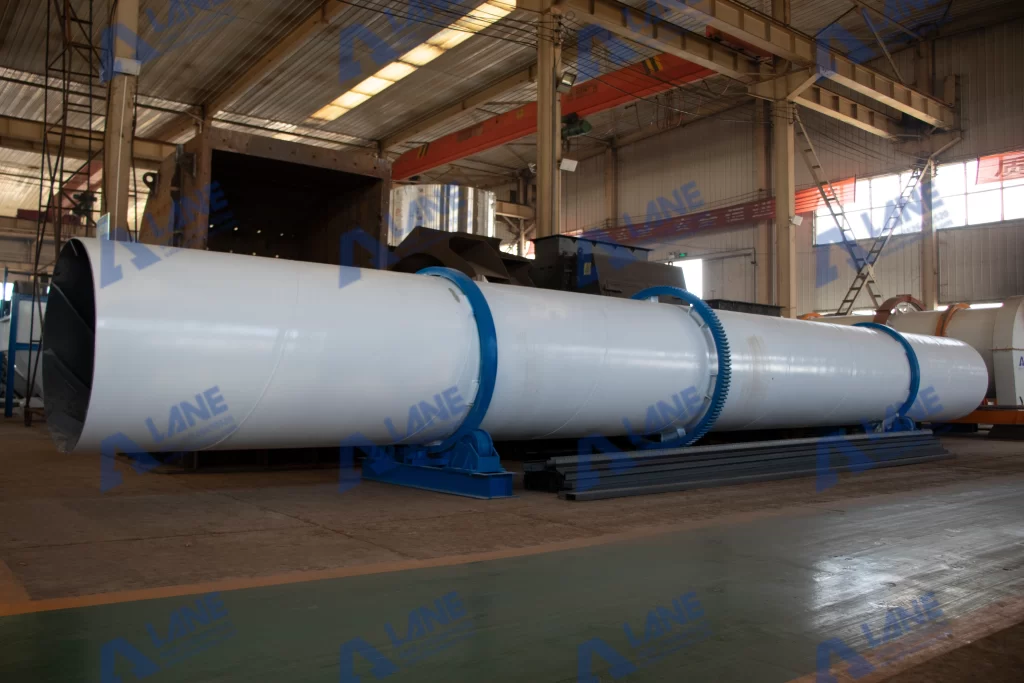
The drum size affects the amount of material that can be handled and the available space for heat exchange. A larger drum generally provides more internal volume, but the correct size still depends on the material’s moisture content, required evaporation rate, and operating conditions.
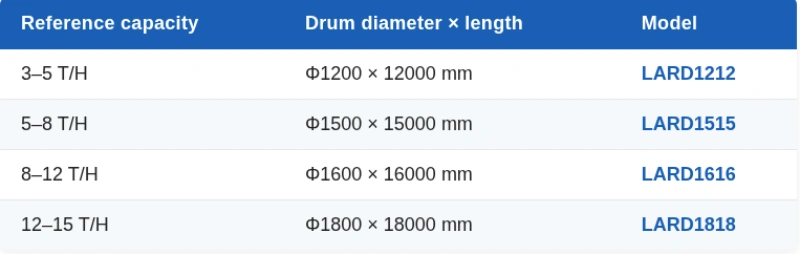
The following models are common reference options listed on the manufacturer’s rotary drum dryer product page.
For a 3–5 T/H production line
The LARD1212 has a drum diameter of 1,200 mm and a length of 12,000 mm. It is a reference option for smaller production lines within the listed capacity range.
For a 5–8 T/H production line
The LARD1515 measures Φ1500 × 15000 mm. It provides a larger drum volume for production lines with higher feed rates.
For an 8–12 T/H production line
The LARD1616 measures Φ1600 × 16000 mm. It is a reference model for medium-scale drying requirements.
For a 12–15 T/H production line
The LARD1818 measures Φ1800 × 18000 mm. It is suitable as a reference option for a larger continuous production line.
These figures are the manufacturer’s listed model capacities, not guaranteed output figures for every SOP formulation. A fertilizer dryer for SOP should be selected after checking the actual inlet moisture, target outlet moisture, material properties, and available heating capacity.
For other models and detailed specifications, see the rotary drum dryer specifications.
Which Heating Source Is Suitable for a Fertilizer Dryer for SOP?
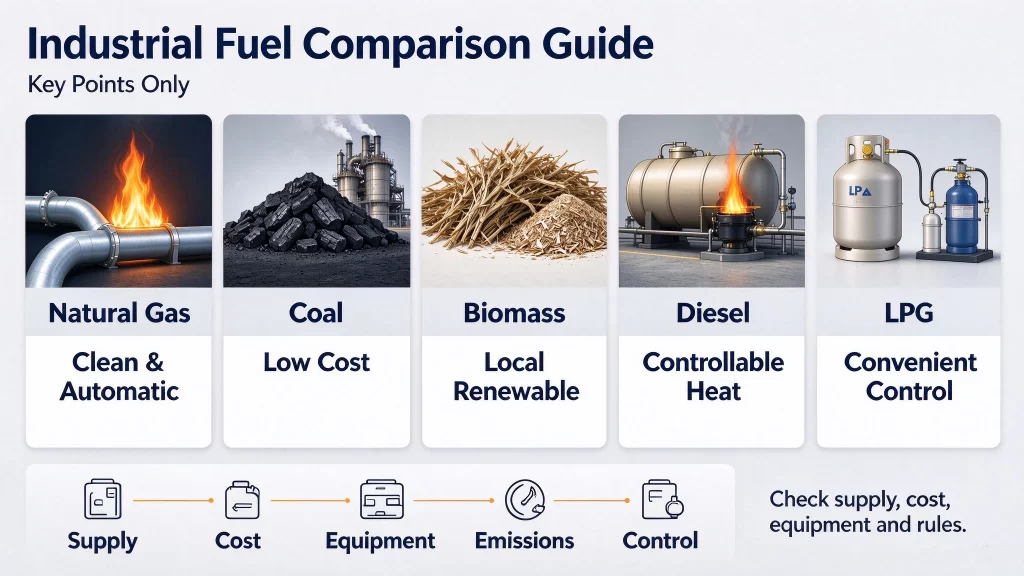
The heating source directly affects the operating cost and stability of a drying system. A rotary drum dryer needs a continuous supply of hot air, so the fuel should be selected according to local availability, price, and operating conditions.
Natural gas
Natural gas is convenient where a reliable pipeline supply is available. Its combustion process is relatively easy to control, making it suitable for production lines that require stable hot air temperatures.
However, the local gas price and pipeline connection cost should be included in the investment calculation. Natural gas is not automatically the cheapest option in every country.
Coal
Coal may be an economical heating option in areas where it is readily available at a competitive price. It can provide a substantial amount of heat for continuous industrial drying.
The disadvantages include ash handling, combustion management, emissions control, and additional environmental requirements. Before choosing coal, check local regulations and the cost of the necessary dust and flue-gas treatment equipment.
Biomass
Biomass fuels, such as biomass pellets, may be suitable for factories located near agricultural or forestry residue suppliers. Their cost can be attractive when local resources are available.
However, biomass quality varies. Moisture content, particle size, and heating value can affect combustion stability. A consistent fuel supply is important if the fertilizer dryer for SOP needs to operate for long shifts every day.
Diesel
Diesel is relatively easy to store and can be useful where gas pipelines or other fuel supplies are unavailable. It can also provide a convenient heating option for certain production conditions.
Its main disadvantage is operating cost. For a plant running continuously, calculate the expected diesel consumption before choosing this option.
LPG
LPG can be considered where natural gas is unavailable but a gas-based heating system is preferred. It offers convenient combustion control, although storage, transportation, safety requirements, and fuel prices must be considered.
The best fuel is not necessarily the one with the lowest price per kilogram or cubic meter. Compare the estimated cost of evaporating one ton of water. This provides a more useful basis for evaluating different heating options.
How Does a Hot Blast Stove Work with a Rotary Drum Dryer?
A hot blast stove is an important part of a hot-air drying system. It produces the heated air required by the rotary drum dryer. The two machines perform different functions: the hot blast stove supplies heat, while the rotary drum dryer provides the space and material movement needed for drying.
In a typical arrangement, fuel is burned in the heating unit, and the generated heat is transferred to the air supplied to the dryer. Fans move the hot air through the system. Inside the rotating drum, lifting plates continuously turn the fertilizer granules so that they come into contact with the hot air.
When selecting a fertilizer dryer for SOP, the heating unit should be matched to the actual drying load rather than selected only by the drum’s nominal capacity.
For example, a line with a nominal feed rate of 5 T/H may use a different heating configuration depending on the moisture that must be removed. If the material enters the dryer with high moisture, the required heat load may be greater than that of a line handling drier material at the same feed rate.
A suitable fertilizer dryer for SOP therefore requires coordination between the drum, hot blast stove, fans, and air ducting. The final configuration should be confirmed using the actual material and process data.
How Should You Control the Drying Temperature for SOP?
Temperature control is important because the goal is to remove excess moisture without unnecessarily affecting the granules.
A higher hot-air temperature may increase the rate of moisture removal, but it does not mean that the highest possible temperature is always the best choice. The actual drying result also depends on air volume, material feed rate, residence time, and the amount of moisture entering the drum.
Check the inlet and outlet moisture
Measure the moisture content of the material before and after drying. If the outlet moisture remains too high, the problem may be insufficient heat, excessive feed rate, poor air distribution, or insufficient residence time.
Adjust the feed rate
If wet material enters faster than the system can dry it, the outlet product may not meet the moisture target. Reducing the feed rate can help identify whether the system is operating beyond its effective drying capacity.
Avoid unnecessary overheating
Excessive heat can increase energy consumption and may affect product quality. Temperature settings should be established through commissioning and adjusted according to actual operating results.
For a fertilizer dryer for SOP, stable operation is more useful than simply pursuing a high inlet temperature. The target is consistent outlet moisture with reasonable fuel consumption.
What Other Equipment Is Needed for the Drying Process?
A rotary drum dryer normally works with several auxiliary components. These parts help maintain material flow, hot-air circulation, and dust control.
Hot blast stove: Supplies the heat required for drying.
Blower and induced draft fan: Help move hot air and maintain the required airflow through the drying system.
Dust collection system: Collects dust carried by the exhaust gas and helps control emissions. The specific equipment should be selected according to local environmental requirements.
Conveyors: Transfer wet granules into the dryer and move dried material to the next processing stage.
Rotary cooler: Dried SOP granules may still be hot when they leave the dryer. Cooling them before storage and packaging helps prevent problems caused by packing hot material.
Cooling is a separate step after drying. When planning a fertilizer dryer for SOP, make sure there is enough space and suitable conveying equipment for the following process.
What Information Should You Prepare Before Buying a Fertilizer Dryer for SOP?
Before requesting a quotation, prepare the following information. It helps the manufacturer evaluate the required drum size, heating capacity, and auxiliary equipment.
- Required production capacity: How many tons of wet material need to be processed per hour?
- Inlet moisture content: What is the moisture content of the granules before drying?
- Target outlet moisture: What moisture level should the finished product reach?
- Granule size: What is the approximate particle size range?
- Available fuel: Can the factory obtain natural gas, coal, biomass, diesel, or LPG?
- Daily working hours: Will the dryer operate for 8, 16, or 24 hours per day?
- Installation conditions: What space, power supply, and environmental control facilities are available?
Providing these details makes it easier to determine whether a standard fertilizer dryer for SOP is suitable or whether the drying system needs a customized configuration.
It also helps avoid a common purchasing mistake: choosing a large drum without checking whether the heating system can supply enough energy to remove the required amount of water.
Conclusion
Choosing a suitable fertilizer dryer for SOP requires more than comparing machine dimensions or nominal production capacities. The inlet moisture content, target outlet moisture, hourly feed rate, fuel availability, and required heat input all influence the final selection.
A rotary drum dryer is a practical option for continuous SOP granule drying. Common reference sizes range from Φ1200 × 12000 mm to Φ1800 × 18000 mm for the 3–15 T/H capacity ranges listed above. The hot blast stove should then be selected according to the actual drying load, not simply matched by nominal production capacity.
If you are planning an SOP fertilizer production line, prepare your material moisture data, production target, and available fuel information before selecting a fertilizer dryer for SOP. These details will help determine a more suitable dryer size and heating configuration.

Write a Reply or Comment