
Explore the latest sop fertilizer price trends in 2026, compare international market quotations, understand production cost factors, and discover how SOP production lines can support cost control.
Introduction
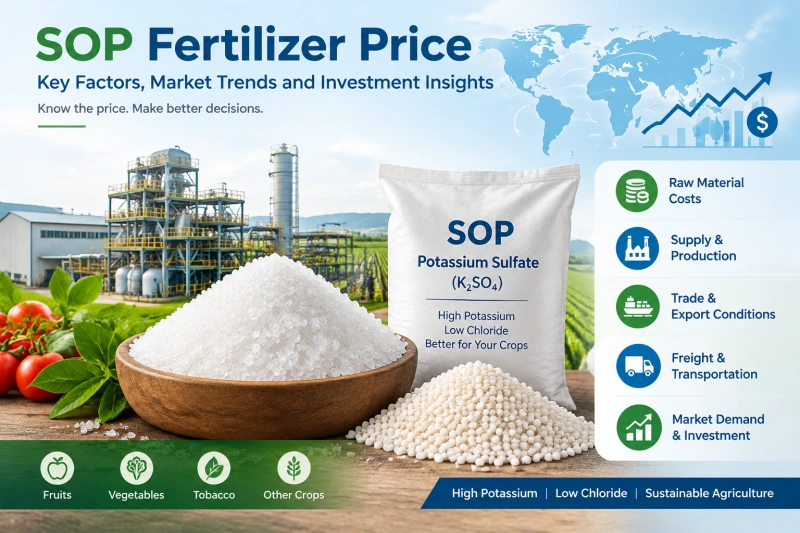
The sop fertilizer price is an important consideration for fertilizer distributors, agricultural suppliers, and manufacturers planning to enter the potassium sulfate market. SOP, or sulfate of potash (K₂SO₄), supplies potassium and sulfur without the high chloride content associated with muriate of potash (MOP). It is widely used for fruits, vegetables, tobacco, and other crops that are sensitive to chloride.
In 2026, the SOP market has experienced both cost pressure and changes in purchasing activity. The sop fertilizer price varies significantly by region, product grade, and delivery terms, making it important for buyers to compare market quotations carefully. Meanwhile, raw material costs, production operating rates, export conditions, and transportation expenses continue to influence the final price.
For buyers, understanding these factors helps with purchasing decisions. For manufacturers, tracking the sop fertilizer price can also help determine whether investing in or expanding a potassium sulfate production line is commercially worthwhile.
Latest SOP Fertilizer Price in the International Market
When comparing the sop fertilizer price in different countries, buyers should use the same product specifications and trade terms to make a meaningful comparison. A factory quotation on an FOB basis does not include the same costs as an imported product quoted on a CIF basis. The latter generally includes the cost of the goods, freight, and insurance to the named destination port.
According to Procurement Resource’s published Q3 2026 price data, the following quotations were reported for August 2026.
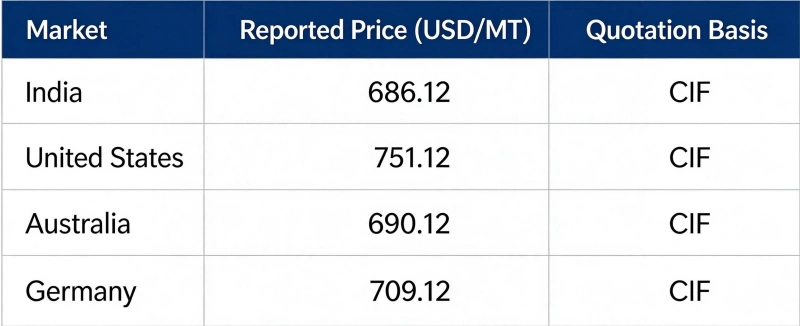
When checking a sop fertilizer price, buyers should confirm whether the quotation is for powder or granular SOP, the potassium content, water-soluble grade requirements, packaging, order volume, delivery location, and payment terms. A lower price is not necessarily the better deal if the product does not meet the intended application or requires additional processing.
Why Is the SOP Fertilizer Price Changing?
Several factors influence the sop fertilizer price, and their effects may differ between producing countries and import-dependent markets depending on raw material costs, supply availability, and local demand.
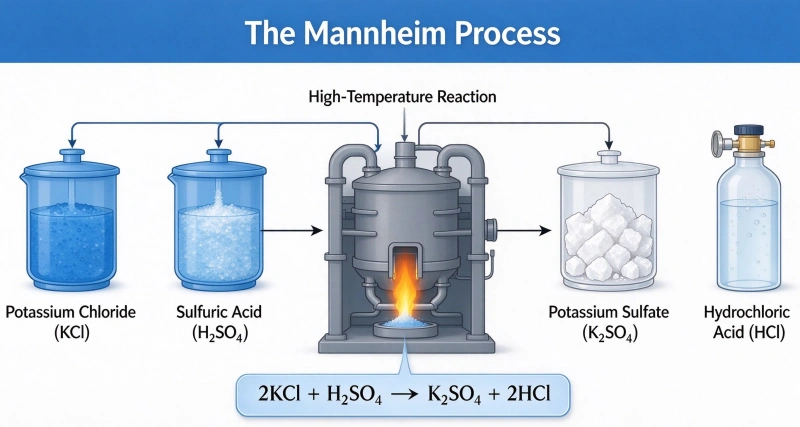
Raw material costs remain a major factor. In the Mannheim process, potassium chloride reacts with sulfuric acid to produce potassium sulfate and hydrochloric acid. Changes in potassium chloride, sulfuric acid, energy, and other operating costs therefore affect the economics of production. When these inputs become more expensive, manufacturers may increase offers to protect their margins. When costs fall, the pressure to maintain previous selling prices can weaken.
The effect is not always immediate. Manufacturers may hold inventories purchased at earlier prices, have existing supply contracts, or face different energy and logistics costs. Consequently, the sop fertilizer price does not necessarily move in step with every short-term change in raw material quotations, because inventory costs, supply contracts, and production expenses can delay the effect.
Supply availability and export conditions also matter. SOP production is concentrated in particular regions, and the ability of manufacturers to supply additional volumes can be limited by maintenance schedules, operating rates, and the availability of feedstocks. Industry analysis from CRU noted that Chinese export restrictions and the slower-than-expected delivery of some new projects had contributed to tight specialty potash supply and high SOP price premiums.
For overseas buyers, limited export availability can make procurement more difficult even when local demand is not particularly strong. Importers may need to diversify suppliers, purchase earlier, or keep additional inventory to reduce the risk of delivery delays.
Demand and purchasing behavior can move prices in the opposite direction. SOP is used in higher-value agricultural applications, including fruits, vegetables, nuts, and tobacco. Demand depends on crop planting schedules, fertilizer application periods, farm economics, and distributor inventory levels. When distributors postpone replenishment or compound fertilizer manufacturers reduce purchases, suppliers may offer more competitive prices to secure orders.
This helps explain why market quotations do not always rise simply because production costs are high. If buyers are cautious and available supply is sufficient, sellers may have limited room to pass every cost increase on to customers.
Freight and regional distribution costs create further differences. A buyer importing SOP must consider shipping, insurance, port handling, customs duties where applicable, warehousing, and inland transportation. A region with limited local production may face a higher delivered cost than a region with established producers, even when the factory-level price is similar.
For this reason, the most useful way to evaluate the sop fertilizer price is to compare equivalent products on a consistent delivery basis and calculate the total cost of getting the fertilizer to the intended customer.
How Does SOP Production Cost Affect Selling Prices?
For an SOP manufacturer, the sop fertilizer price must account for more than the purchase cost of the main raw materials, including energy, labor, maintenance, environmental protection, packaging, and transportation.A realistic production-cost calculation should include raw materials, energy, labor, equipment maintenance, environmental protection, quality control, packaging, storage, and transportation to the agreed delivery point.
The production route is especially important. The Mannheim process uses potassium chloride and sulfuric acid, while other routes may rely on different raw materials, reaction systems, or recovery arrangements. The suitability of each route depends on raw material availability, product specifications, local environmental requirements, plant capacity, and the cost of utilities.
Manufacturers should therefore evaluate the entire process rather than selecting equipment based only on its initial purchase price. A lower-cost machine may not provide the desired throughput, product consistency, operating stability, or maintenance performance. Over time, these differences can influence the cost per ton of finished SOP.
Before investing, manufacturers should establish the target annual output, required product grade, expected operating hours, local raw material prices, energy tariffs, labor expenses, and sales channels. These inputs provide a more reliable basis for estimating the production cost per ton and comparing it with realistic market quotations.
Choosing SOP Production Equipment for Better Cost Control
The right equipment configuration depends on the manufacturing process and the required finished product. A complete SOP project may involve raw material handling, proportioning, reaction or conversion equipment, gas treatment, solid-liquid separation where required, drying, cooling, screening, and packaging. Not every process uses the same equipment, so the design should follow the selected production route.
For plants using the Mannheim process, the reaction system and associated gas treatment are central process considerations. The design must account for process control, corrosion resistance, safe handling of hydrochloric acid-containing gas streams, and compliance with applicable environmental regulations, all of which can influence production costs and the competitive sop fertilizer price. These requirements make engineering review essential before equipment selection.
If the target product is granular SOP, granulation and subsequent screening may also be needed, depending on the condition of the material leaving the preceding stages. The granulation section should be selected according to the powder characteristics, moisture content, desired particle size, production capacity, and product strength requirements. A fertilizer granulator shapes or agglomerates prepared material; it does not replace the chemical conversion process needed to produce potassium sulfate from raw materials.
Manufacturers can also improve cost control by matching equipment capacity to actual demand. An oversized line may increase capital costs and create difficulties when operating at low utilization. An undersized line may restrict order fulfillment or require additional shifts. A balanced configuration should account for expected output, planned maintenance, product changeovers, and future expansion.
When comparing suppliers, buyers should request information about rated capacity, actual operating conditions, energy consumption, wear parts, maintenance intervals, process guarantees, installation requirements, and after-sales support. These factors help establish whether a proposed line can deliver the required output consistently rather than simply offering the lowest initial quotation.
For businesses exploring fertilizer machinery and production solutions, Fertilizer Industry Leader provides a starting point for reviewing fertilizer equipment and production-line options. The final configuration should still be based on the specific SOP process, product requirements, and site conditions.
Is Investing in an SOP Production Line Worth Considering?
Whether an SOP production line is worth investing in depends on the relationship between the expected sop fertilizer price and the full cost of production. A high market quotation alone does not guarantee a profitable project. Manufacturers must also consider raw material supply, plant utilization, product quality, environmental compliance, financing, and the cost of delivering the product to customers.
A practical feasibility assessment should compare at least three scenarios: a conservative selling price, a base-case market price, and a more favorable price scenario. For each case, calculate the estimated cost per ton, annual production volume, expected sales, operating expenses, and the time needed to recover the investment. Sensitivity analysis should also test what happens if potassium chloride prices rise, selling prices fall, or the plant operates below its planned capacity.
Market quotations can serve as useful reference points, but they should not be used as the sole basis for an investment decision. A producer may have a competitive advantage if it secures reliable raw materials, controls energy consumption, maintains stable product quality, and reaches customers with manageable logistics costs.
For companies considering a new plant or an upgrade, the next step is to define the target capacity, feedstock supply, product grade, and destination market. With these details, an equipment supplier can help evaluate the appropriate process and line configuration. Businesses seeking a tailored solution can contact LANE Heavy Industry to discuss their project requirements.
Conclusion
The sop fertilizer price in 2026 reflects a combination of raw material costs, production availability, trade conditions, regional demand, and transportation expenses. Published quotations show that prices can differ considerably across markets and that short-term declines do not necessarily mean a return to previous-year price levels.
For buyers, the priority is to compare equivalent product grades and calculate the full delivered cost. For manufacturers, the more important question is whether the expected selling price can support production costs and investment returns under realistic operating conditions.
A well-planned SOP production project starts with the right process, reliable raw material supply, suitable equipment, and a realistic cost model that helps manufacturers respond to changes in the sop fertilizer price while maintaining long-term competitiveness.Evaluating these factors together provides a stronger foundation for long-term competitiveness than making decisions based on market prices alone.



Write a Reply or Comment