
How a Mannheim Process Potassium Sulfate Production Line Produces High-Purity SOP Fertilizer
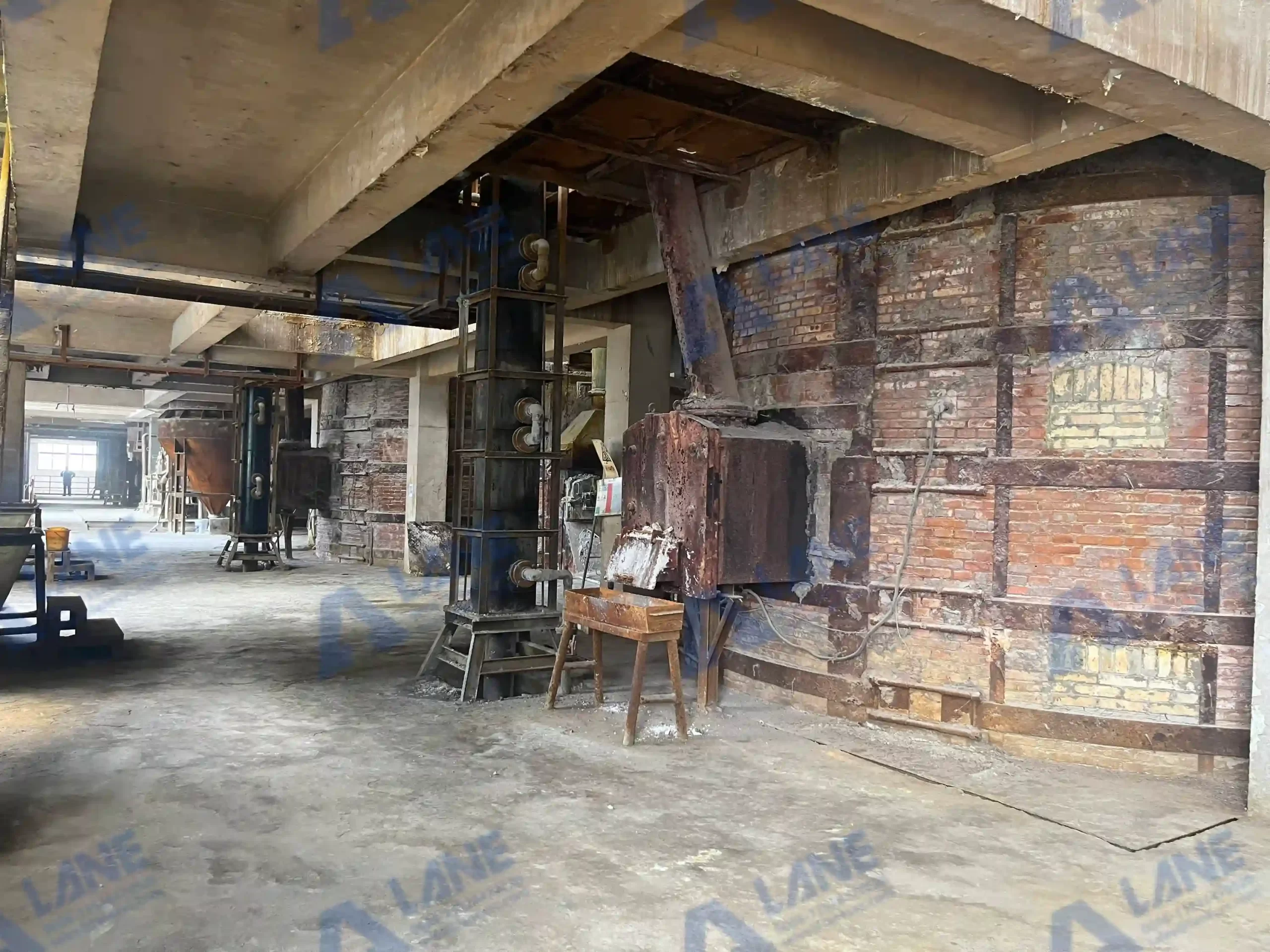
Synthesizing potassium sulfate (SOP) is one of the most extreme environments in the chemical processing industry. This process requires equipment to withstand extreme temperature (over 600°C) and acid corrosion. The reactor must have the ability to this operation efficiently without breaking down and causing downtime. This requires Mannheim process potassium sulfate production line built by LANE. This machine is built to produce high purity SOP fertilizer efficiently and economically.
The Mannheim process is the most widely used industrial method for SOP production because it combines proven technology, reliable product quality, and scalable production capacity. With advanced equipment supplied by LANE Heavy Industry, a modern Mannheim process potassium sulfate production line can achieve stable operation, high conversion efficiency, and excellent product purity.
What Is the Mannheim Process?
The Mannheim process is a chemical reaction process that converts potassium chloride (KCl) and sulfuric acid (H₂SO₄) into potassium sulfate (K₂SO₄) and hydrochloric acid (HCl) gas.
The chemical reaction occurs in two stages. First, potassium bisulfate forms with heat release:
KCl + H₂SO₄ → KHSO₄ + HCl
Then at operating temperatures of 500-540°C, potassium bisulfate reacts with additional potassium chloride to form final potassium sulfate:
KHSO₄ + KCl → K₂SO₄ + HCl
The overall reaction is expressed as:
2 KCl + H₂SO₄ → K₂SO₄ + 2 HCl
In a Mannheim process potassium sulfate production line, this reaction takes place in a specially designed Mannheim furnace operating at high temperatures. This result in high level of pure potassium and sulfate while remaining virtually free of chloride. This makes it ideal for chloride-sensitive crops.
Why Choose a Mannheim Process Potassium Sulfate Production Line?
A Mannheim process potassium sulfate production line manufactured by LANE offers several advantages:
High -purity SOP fertilizer: The Mannheim process is a two-stage process that creates high purity SOP fertilizer while eliminating chloride content.
Mature technology: The technology of the Mannheim processes a mature and proven. It has been used in many factories in the past and present.
Continuous industrial operation: Our technology allows you to operate the production line 24/7 without stopping. You just need to do maintenance and replacement of worn parts.
Potassium content: Mannheim process helps create potassium Sulfate fertilizer where 52-54% are potassium. This is the highest potassium per ion in chloride free potassium fertilizer.
Hydrochloric acid byproduct: LANE implements gas recovery system with the Mannheim process. It keeps the workers safe and help the manufacturer create secondary by product Hydrochloric Acid (HCI).
Equipment’s in a Mannheim Process Potassium Sulfate Production Line
Raw Material Storage and Feeding System: The production process of a Mannheim process potassium sulfate production line starts with the precise handling of raw materials. The primary raw materials are potassium chloride (KCl) and concentrated sulfuric acid (H₂SO₄). They are stored in silos or storage bins equipped with dust control systems and sulfuric acid is stored in corrosion-resistant tanks.
The feeding area includes weighing hoppers, screw conveyors, belt feeders, and automatic dosing systems. These machines are used to continuously supply the materials to the Mannheim furnace. Modern control system monitors feed rates in real time, ensuring operation and consistent SOP quality throughout the production cycle.
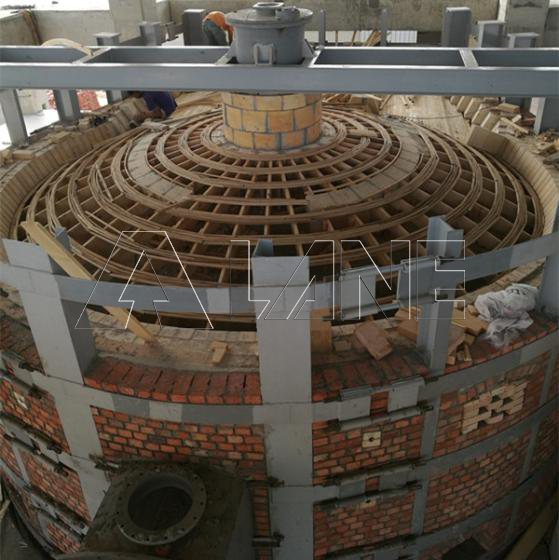
Mannheim Furnace (Mannheim Reactor): This is the heart of the Mannheim process potassium sulfate production line. It is made with
The Mannheim furnace is the heart of the Mannheim process potassium sulfate production line. This specialized reactor carries out the high-temperature conversion of potassium chloride and sulfuric acid into potassium sulfate (K₂SO₄) and hydrochloric acid (HCl) gas.
The raw materials used by LANE Heavy Industry for Mannheim process are:
| Component | Typical Material Choice | Purpose |
| Muffle lining | High-alumina brick (70% Al₂O₃) | Direct contact with acid melt |
| Hearth | Acid-resistant castable + Al₂O₃ brick | Reaction bed support |
| Rabble arms | HH-grade heat-resistant cast steel | Stirring and transport |
| Furnace shell | Welded carbon steel Q345R | Structural integrity |
| Insulation | Calcium silicate boards + ceramic fiber | Heat containment |
| HCl gas piping | Graphite + Hastelloy C22 | Corrosion-proof gas extraction |
The process occurs in two reaction stages, In the first stage sulfuric acid reacts with potassium chloride at 250–350°C to form potassium bisulfate (KHSO₄) and hydrogen chloride gas. In the second stage the potassium bisulfate is reacted with additional potassium chloride at 500–650°C. This second reaction creates potassium sulfate and additional HCl gas.
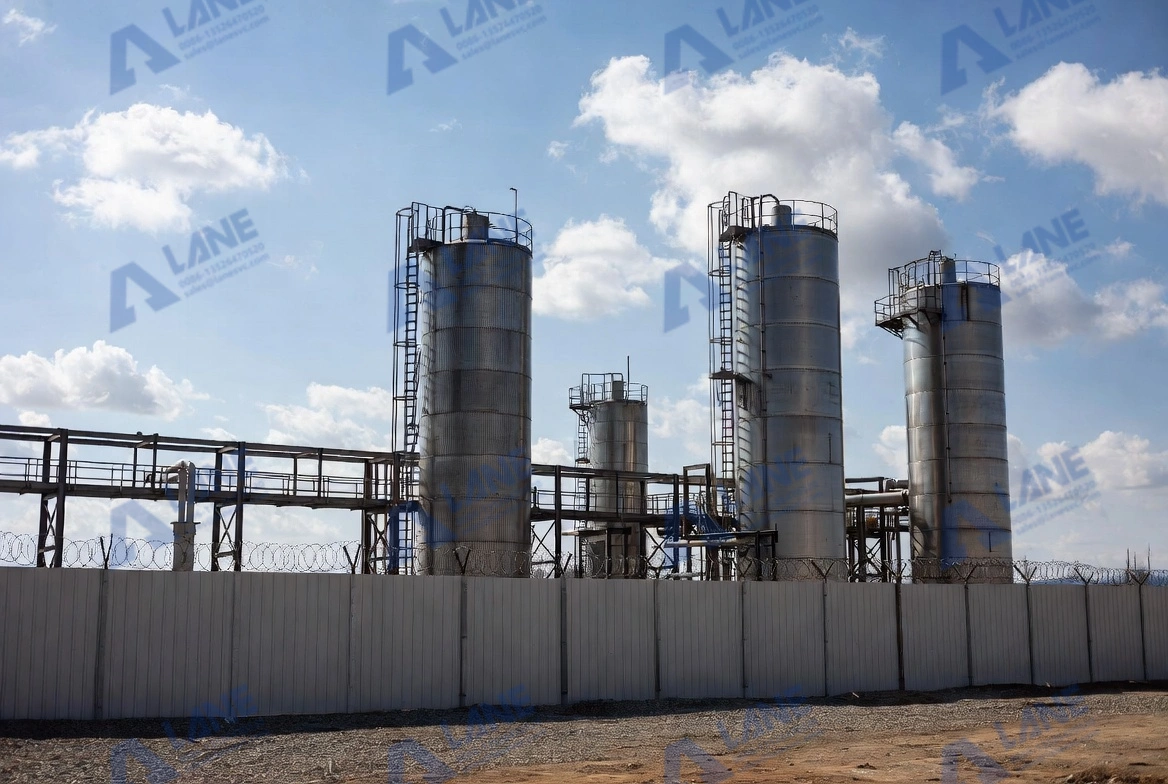
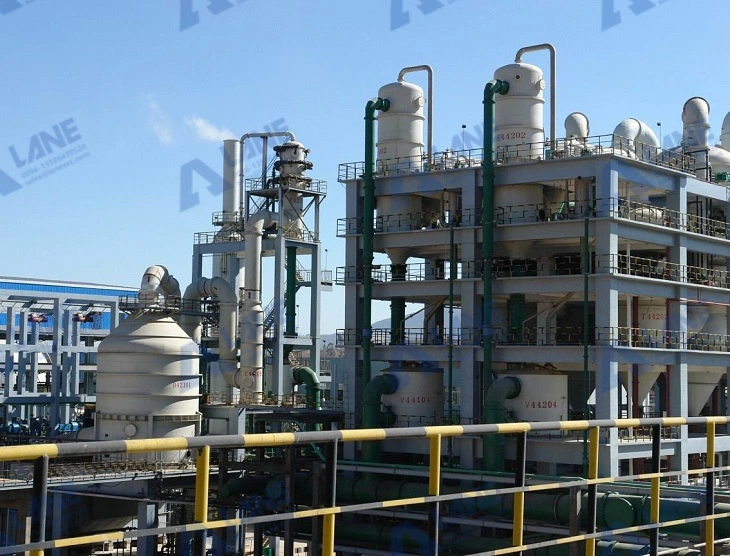
HCl Gas Recovery and Absorption System: Hydrochloric acid gas generated during Mannheim reaction is a valuable byproduct. An efficient gas recovery system is therefore an important component of a modern Mannheim process potassium sulfate production line.
The hot HCl gas first passes through purification to remove dust and impurities. The clean gas then enters an absorption tower, where it is absorbed into water to produce commercial-grade hydrochloric acid.
Product Cooling and Discharge System: The molten Potassium sulfate first needs to be cooled before it can be used for granulation. LANE provides cooling conveyor, fluidized-bed cooler, or rotary cooling unit as cooling system.
Crushing and Screening System: After cooling the SOP chunks needs to be crushed. The material first passes through an impact crusher. After crushing a vibrating screens separate material according to size specifications. Oversized particles are returned to the crusher for further reduction, while qualified material proceeds to the next stage.
SOP Granulation System: Granule product is easier to transport, store, blend, and apply in the field. This enables manufacture to enter premium fertilizer market. For this reason, many modern plants incorporate a granulation section into the Mannheim process potassium sulfate production line.
Depending on the capacity, product strength, factory area, and budget, LANE provides double-roller extrusion granulators, rotary drum granulators, or disc granulators. Among these technologies, double-roller extrusion granulation is commonly used for SOP because it operates without the need for energy hungry drying process.
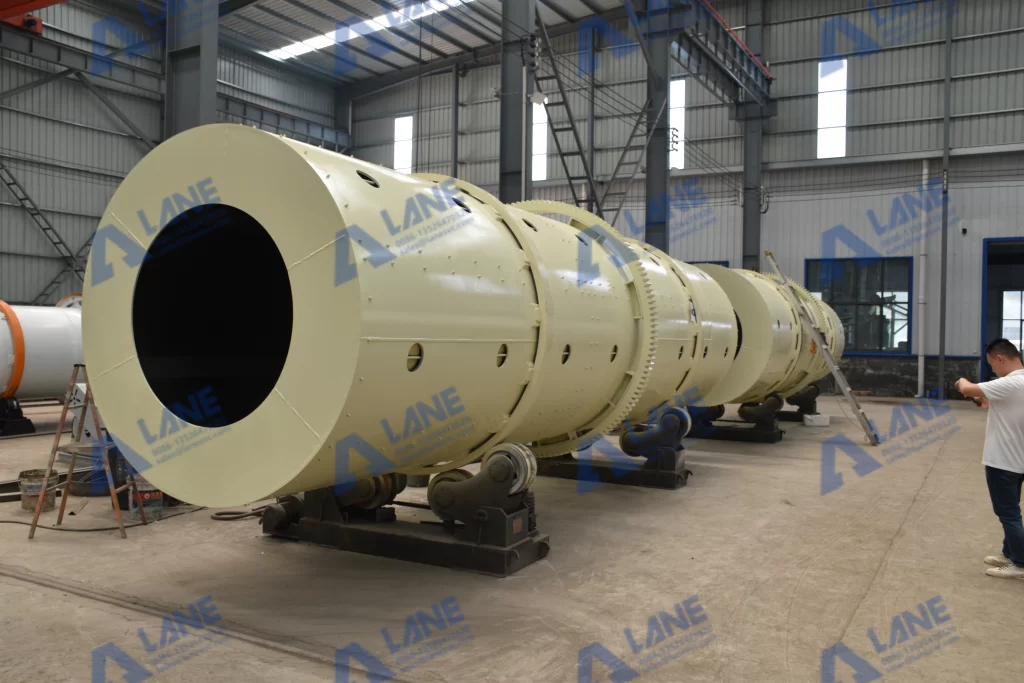
Drying and Final Cooling System: When the wet granulation method is used, the granules need to dried for avoiding caking and efficient packaging. The drying section consists of a rotary dryer equipped with coal furnace, or biomass pellet or fuel burner.
After drying the granules need to be cooled before it can be screened and packaged. The granules enter a cooling system where their temperature is reduced to ambient conditions. Proper drying and cooling improve granule strength, reduces caking during storage, and extend product shelf life.
Screening, Packaging and Storage System: The cooled granules are separated based on their size on the next stage. LANE uses rotary screening system and vibratory screener in this stage. The oversized and fines are recycled back to crusher to reenter the production system.
The final stage of the SOP fertilizer production line is the automated packaging systems. LANE provides automatic packaging system which includes weighing machines, bagging equipment, sewing or heat-sealing machines, metal detectors, and palletizing systems. Common package sizes range from 25 kg and 50 kg bags to jumbo bags for bulk distribution.
Intelligent Control and Automation System: The whole production is fully automated. Advanced Mannheim process potassium sulfate production line by LANE utilizes PLC and SCADA control systems to monitor raw material feeding, furnace temperature, gas recovery, product cooling, and packaging operations.
This gives the operator the full control of the production system from a single area. They can optimize reaction conditions, reduce energy consumption, and improve plant safety. It also reduces human error and maintains stable production condition during continuous production.
FAQ: Mannheim Process Potassium Sulfate Production
What is the Mannheim process for potassium sulfate production?
The Mannheim process potassium sulfate production line reacts potassium chloride with sulfuric acid at high temperatures (500-560°C) in a Mannheim furnace, producing K₂SO₄ and HCl byproduct.
What percentage of global SOP supply uses the Mannheim process?
The Mannheim process accounts for 50% to 60% of global potassium sulfate supply, making it the most widely used production method.
What are the raw materials for Mannheim process SOP production?
The Mannheim process potassium sulfate production line uses potassium chloride (KCl) with particle size under 2mm and concentrated sulfuric acid (98 wt%) as primary feedstocks.
What is the operating temperature for the Mannheim furnace?
The reaction temperature ranges from 510-560°C, typically controlled at 540-560°C for optimal conversion.
Of course, we also offer other types of products for your different needs, you can click to view.
For more information, please contact us by sending an inquiry today! We can help you!



Write a Reply or Comment