
The Best Type of Potassium Fertilizer for Sandy Soil: A Complete Guide
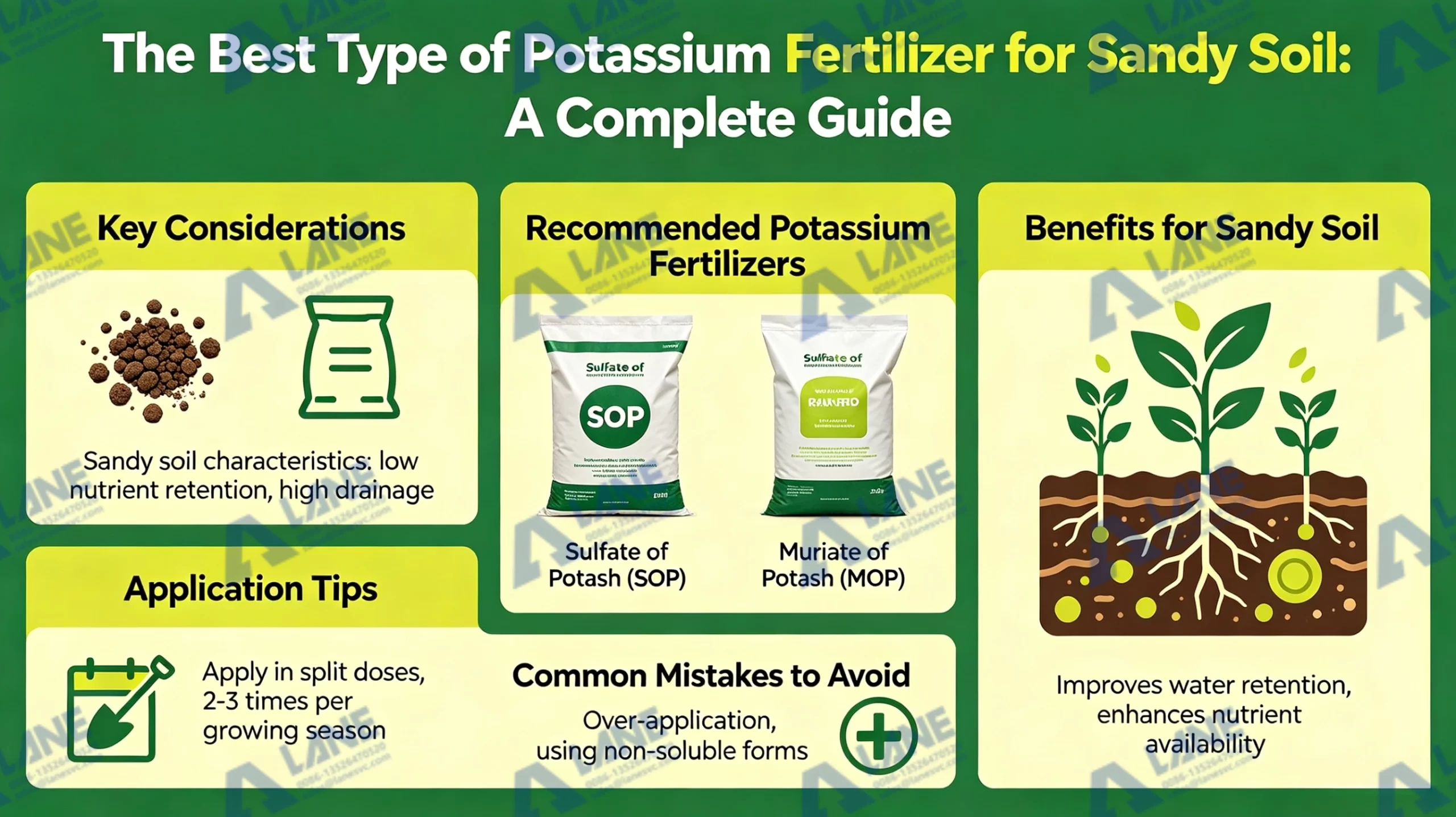
Imagine pouring water into a bucket riddled with holes, no matter how much water you pour in, the liquid will slip away. This is exact the frustration farmers face when they manage sandy soils. Sand lacks the natural electrical charges needed to hold onto vital nutrients. This makes crops access to essential nutrients over extended periods. Among these nutrients, potassium plays a critical role in plant growth, water regulation, disease resistance, and crop yield. But whenever it rains most of the potassium in the sandy soil leech away. To avoid this nutrient loss producers must select best type of potassium fertilizer for sandy soil for their farming strategy.
Selecting the best type of potassium fertilizer for sandy soil requires understanding of both chemistry and physical manufacturing. Because sandy soils have low cation exchange capacity (CEC), potassium can easily leach below the root zone and reduce fertilizer efficiency. This guide explores the factors that affect potassium in sandy soils, and how modern fertilizer production technologies from LANE Heavy Industry help manufacturers produce high-quality potassium fertilizers tailored for sandy soil applications.
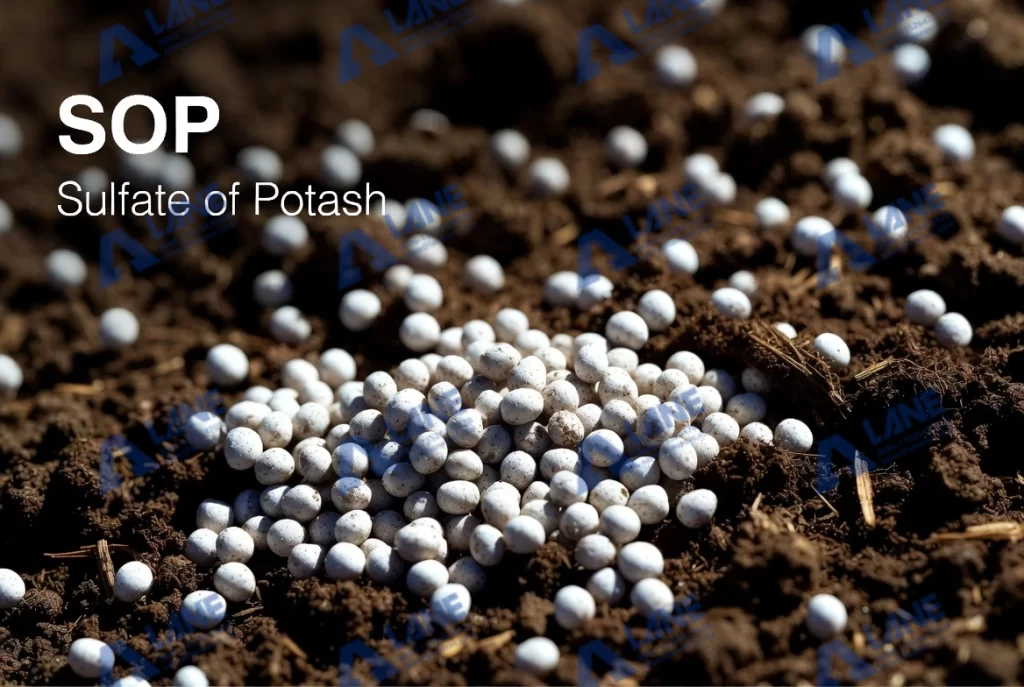
Why Sandy Soil Loves Potassium—and Loses It
Sandy soils have large, gritty particles with huge pore spaces. Water moves through them without any restrictions. They easily carry dissolved nutrients like potassium (K⁺) deep below the root zone. The cation exchange capacity (CEC) of pure sand is often less than 3 meq/100 g. This means there are very few negatively charged clay or organic matter to hold positively charged ions. Rain or irrigation pushes potassium downward within hours. when you are looking for best type of potassium soil, you are looking for fertilizer that can resist this rapid leaching.
Potassium deficiency on sand shows up as yellowing or scorching on leaf edge, weak stalks, and small, flavorless fruit. When a standard fertilizer like muriate of potash (MOP) or Sulfate of potash (SOP) is applied, much of them slips below root before plant can absorb it. The solution is not more potassium; it’s a potassium fertilizer form that releases slowly. That’s why the best type of potassium fertilizer for sandy soil is an engineered, controlled release product.
Common Potassium Fertilizers and Their Limits in Sand
To identify the best type of potassium fertilizer for sandy soil, you first understand the common potassium fertilizers.
- Potassium Chloride (MOP, 0-0-60):This is the most used and cheapest potassium fertilizer. It is used to make other some of the other potassium fertilizer. It is highly soluble and instantly available, but on sandy soil it leaches rapidly. Its high chloride content also build up salinity in poorly buffered sand. For sandy soil, MOP is the worst choice.
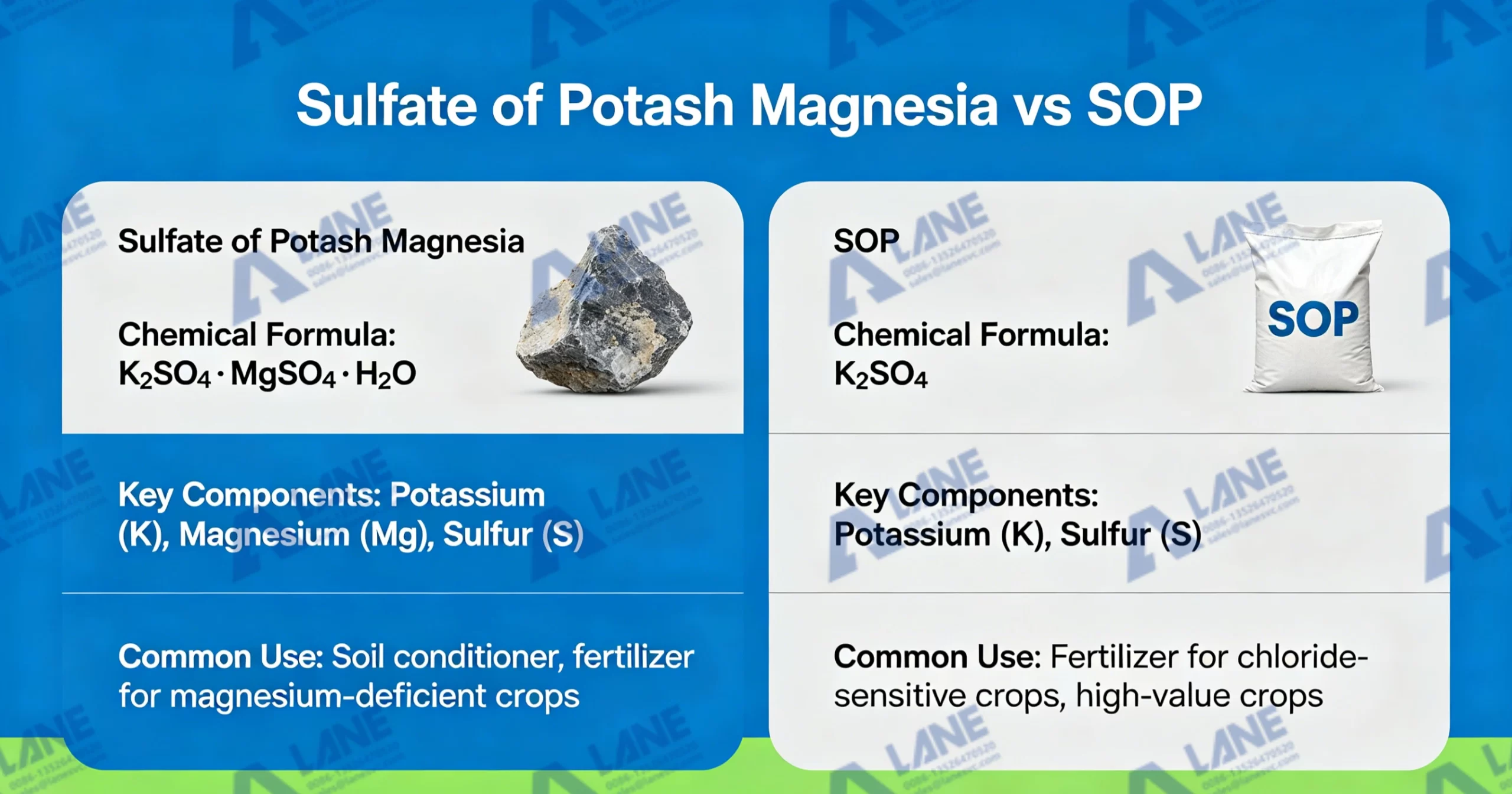
- Potassium Sulfate (SOP, 0-0-50):It has only a trace amount of chloride and provide sulfur as secondary micronutrient. It has a lower salt index and it fits batter in sandy soil than MOP. But this fertilizer also dissolves quickly unless it is coated with control release coating oil.
- Potassium Nitrate (13-0-44):It’s a dual nutrient ultra soluble pH-neutral fertilizer. In sand, its nitrate nitrogen and potassium both leach at high speed, making it impractical as a standalone base fertilizer.
- Potassium Magnesium Sulfate (Langbeinite, 0-0-22):This fertilizer contains K, Mg, and S in a slowly soluble mineral form. It has a lower dissolution rate thank MOP and SOP. However, it doesn’t have controllable release property.
- Coated / Slow-Release Potassium:This is made by adding an extra step in the potassium granule production line. Nutrient release is governed by soil temperature and moisture. Granules of SOP or other potassium fertilizer are coated with polymer, resin, or sulfur coatings to create this type of fertilizer. This category consistently emerges as the best type of potassium fertilizer for sandy soil in university trials.
The verdict? The best type of potassium fertilizer for sandy soil is a controlled-release potassium sulfate or a coated potassium-magnesium complex. They release potassium over the weeks rather than hours. But these fertilizers can’t be made with traditional fertilizer equipment’s. LANE have engineered advance fertilizer production line that can process pure potassium fertilizer and coats them for slow release.
Step-by-Step Production Process of Potassium Fertilizer for Sandy Soils
The best type of potassium fertilizer for sandy soil requires advance production line that can handle the raw materials of potassium sources and can coat slow-release oils.
- Automated Batching & Crushing:Raw potassium sources like SOP are weights alongside the binding agents, micronutrients, or organic matters using LANE’s dynamic batching systems. Heavy-duty vertical crushers reduce any caked solid material to a fine, uniform powder.
- Homogeneous Mixing:A dual-shaft horizontal mixer ensures that the potassium is distributed evenly throughout the blend. This ensures every granules is are made according to the formulation.
- Advanced Granulation:The mixed powder enters LANE Rotary Drum or Disc Granulator. Here, liquid binders are added. The continuous rotating creates agglomerate action and turns the powder into tightly packed, robust granules.
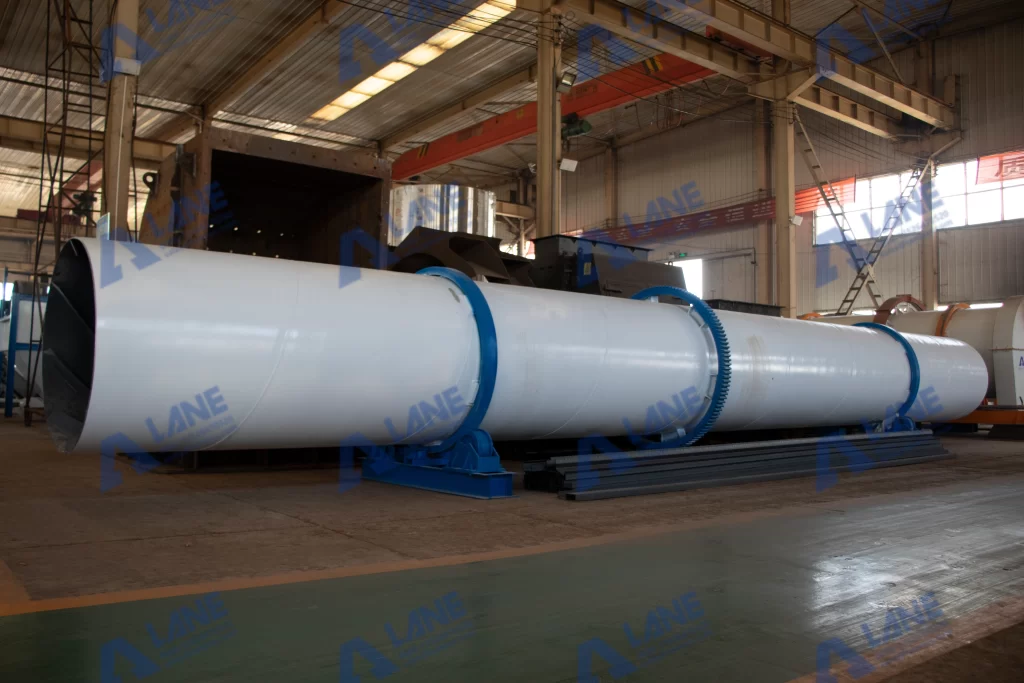
- Drying and Cooling:High-capacity rotary dryer reduces internal granule moisture. This is followed by a rotary cooler, which hardens the granules to prevent crumbling during transport and storage.
- Screening:LANE’s rotary screening machines separate out-of-spec particles from the on-size granules. Oversized granules and fines are crushed and recycled back to the granulator. This step ensures that only the perfect size is packed.
- Anti-Caking Coating & Packaging:The premium granules are then sent to a rotary coating machine where polymer, resin, or sulfur add a thin protective layer. This gives control release property to the granules and creates the best type of potassium fertilizer for sandy soil.
Practices for Applying Potassium in Sandy Profiles
When farmers use the best type of potassium fertilizer for sandy soil processed by advance machinery from LANE, their jobs become easy and liner. They just have to implement strategic application of the fertilizer.
- Split Applications:Instead of applying the entire seasonal potassium requirement at once, split them into 2-4 group and apply them throughout the growing season. This match crops nutrient intake pattern and minimizes the leaches.
- Combine with Organic Matter:Co-apply your manufactured potassium granules with compost or organic humates. The organic matter adds CEC to the sandy soil, and helps grab and hold the potassium ions released by the granules.
- Sub-Surface Banding:Place the potassium granular closer to the root zone. It improves fertilizer intake more than broadcasting across the bare, sandy surface.
FAQ: Best Type of Potassium Fertilizer for Sandy Soil
Q1: What is the best type of potassium fertilizer for sandy soil?
The best type of potassium fertilizer for sandy soil is Sulfate of Potash (SOP/Potassium Sulfate) because it has low chloride content (<3%) and provides beneficial sulfur.
Q2: Why is MOP not recommended for sandy soil?
MOP contains high chloride that can injure sensitive crops, especially in sandy soils where chloride concentrates. The best type of potassium fertilizer for sandy soil avoids this risk.
Q3: How much potassium does SOP contain?
SOP contains 42% potassium (K) and 18% sulfur, making the coated SOP the best type of potassium fertilizer for sandy soil for quality-focused crops.
Of course, we also offer other types of products for your different needs, you can click to view.
For more information, please contact us by sending an inquiry today! We can help you!



Write a Reply or Comment