
Sulfate of Potash Magnesia vs SOP: Breaking Down the Pros and Cons
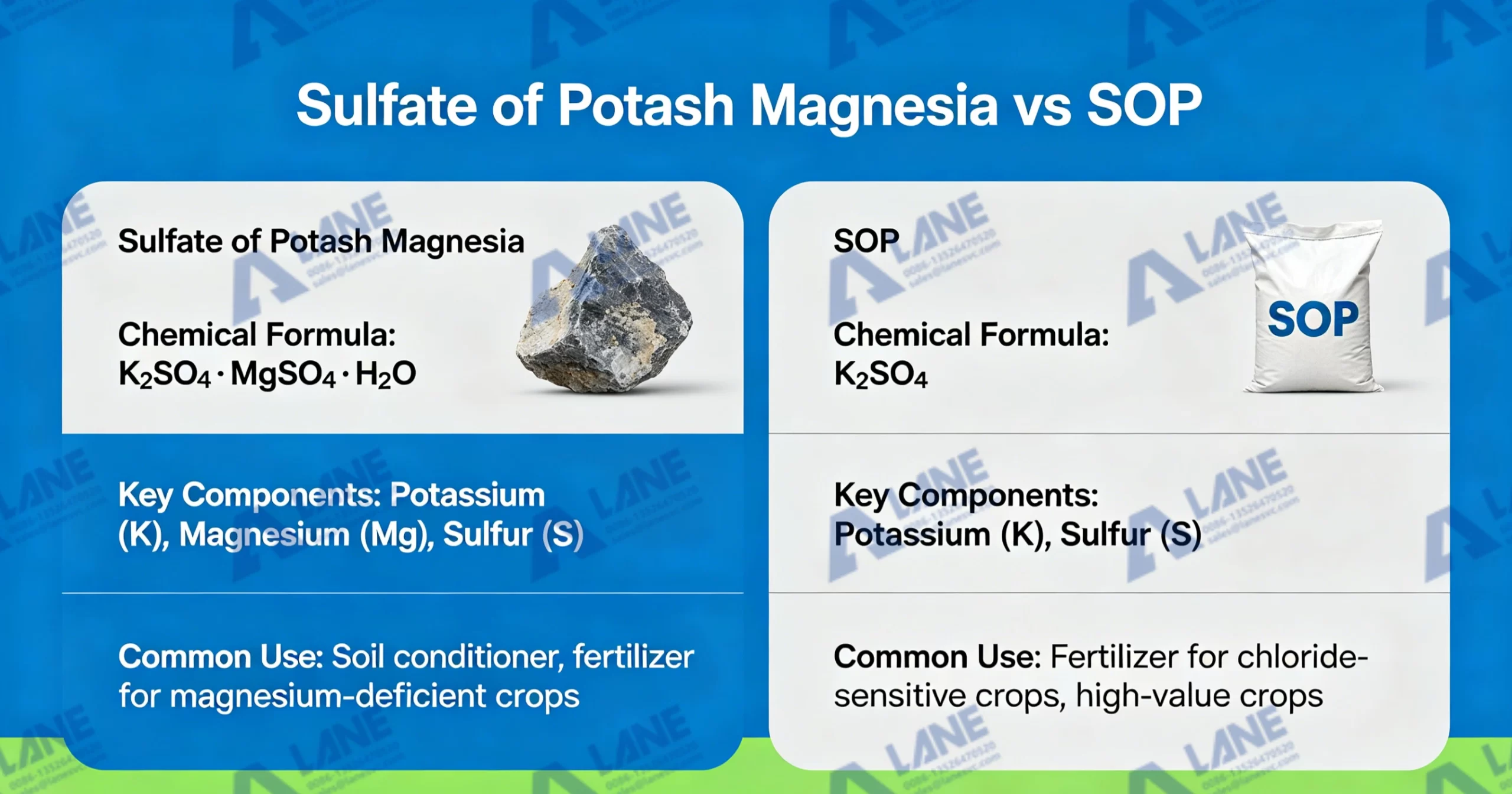
Potassium fertilizer is an indispensable part of modern nutrient system. It helps crops improve water regulation, disease resistance, fruit quality, and yield quality. When evaluating potassium for chloride sensitive crops, fertilizer manufacturers and growers evaluate sulfate of potash magnesia vs SOP to protect root zones from osmotic stress. potassium Sulfate delivers concentrated potassium along with sulfur in sulfate form. But some soil composition requires balanced chemical performance. Sulphate of potash magnesia provides essential water-soluble magnesium to the crop for driving chlorophyll synthesis and maximizing crop photosynthetic capacity.
Sulfate of potash magnesia vs SOP is a useful comparison for anyone who wants to choose a potassium fertilizer for their chloride sensitive crops, fertigation systems, or premium crop nutrition programs. For manufacturers or investors who wants to manufacture this fertilizer, LANE Heavy Industry has designed and engineered production line that can produce premium quality potassium fertilizer. In this article, we will discuss the key distinctions between sulfate of potash magnesia vs SOP, including nutrient composition, advantages, disadvantages, and applications.
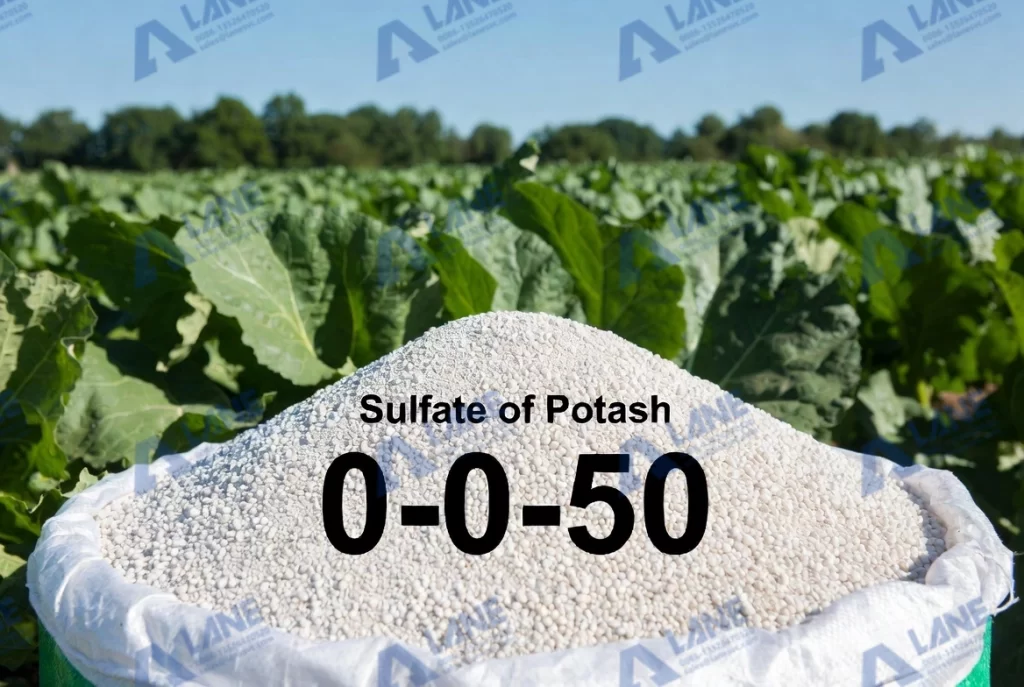
Technical Comparison: The Chemical Breakdown
To evaluate the choice of sulfate of potash magnesia vs SOP, we must first compare their elemental breakdowns:
| Nutrient Profile | Sulfate of Potash (SOP) | Sulfate of Potash Magnesia (SOPM) |
| Chemical Formula | K2SO4 | K2SO4.2MgSO4 (Langbeinite) |
| Potassium K2O | ~50% to 52% | ~22% |
| Sulfur (S) | ~17% to 18% | ~22% |
| Magnesium (MgO) | 0% | ~11% |
| Chloride Content (Cl) | < 1% to 2.5% max | < 2.5% max |
Standard SOP fertilizer delivers higher concentrated amount of potassium and sulfate of potash magnesia provides balanced multi nutrient fertilizer containing potassium, sulfur, and magnesium in a stable form.
- Sulfate of Potash (SOP)
Sulfate of Potash (SOP) is a premium potassium fertilizer which contains 50% potassium oxide (K₂O) and 18% sulfur. Unlike Muriate of Potash (MOP), SOP contains no chloride, making it suitable for chloride sensitive crops.
The Pros:
High Concentration of Potassium: It provides higher concentrated amount of potassium to the soils. Grower can apply less fertilizer to achieve the desired potassium level for their crops. This reduces the transportation and application labor costs.
Low Salt Index: SOP fertilizer has a comparatively lowers Salt index of 46. This helps prevent leaf margin scorching and root-zone dehydration in sensitive soils.
Sulfur Bonus: SOP fertilizer contains 18% sulfur in readily available sulfate form. It promotes optimal nitrogen uptake and protein synthesis.
Premium Crop Quality: SOP fertilizer improves crop size, color, brix levels, and shelf life. these quality gives the produce premium tag.
The Cons:
Missing Magnesium: If soil testing reveals magnesium deficiency, standard SOP fertilizer cannot fix it. Grower must buy additional fertilizer for soil applications.
- Sulfate of Potash Magnesia (SOPM)
Sulfate of Potash Magnesia is often referred to by its mineral name, langbeinite or its commercial name Sul-Po-Mag. It provides three essential nutrients for targeted cropping systems. It provides 22 % Potassium (K₂O), 11% Magnesium (Mg), and 22% Sulfur (S).
The Pros:
The Power of Magnesium: Magnesium serves as the central atom in chlorophyll molecules. It drives photosynthesis and allocates carbon within emerging crops. SOPM supplies 11% fully soluble magnesium without shifting neutral soil pH balances. This simplifies fertilizer programs and reduces the need for multiple products.
Synergistic Nutrient Delivery: The specific combination of potassium, sulfur, and magnesium in SOPM helps prevent the localized nutrient antagonism often triggered by heavy, unbalanced applications of pure potassium
Naturally Neutral Salt: This fertilizer dissolves slowly and naturally. It provides nutrients on steady release on the root-zone.
The Cons:
Lower Potassium Concentration: It contains around 22% potassium, which is lower than SOP. farmers must use double the fertilizer compared to SOP for balanced nutrient. This can raise shipping and storage expenses per unit of active potassium.
Tough Physical Composition: Raw langbeinite or crystallized SOPM salts are dense and highly crystalline. Converting this into granules requires more mechanical pressure and power.
Sulfate of Potash Magnesia vs SOP: Which Is Better?
When evaluating sulfate of potash magnesia vs SOP, there is no clear winner as they bot have their own usefulness. The better option is depended on the crop’s nutritional requirements, existing soil fertility, and the grower’s management objectives.
When SOP Is the Better Choice
Sulfate of Potash (SOP) is preferred for crops who required higher amount of potassium and the magnesium levels in the soil is already sufficient. SOP contains a higher potassium concentration compared to SOPM. This allows growers to deliver more potassium with lower application rate.
SOP is highly soluble salt, this makes it excellent option for fertigation systems, drip irrigation, hydroponic production, and foliar applications.
When SOPM Is the Better Choice
Sulfate of Potash Magnesia (SOPM) is the preferred choice option when soils are deficient in magnesium or when crops have a high demand for this nutrient. SOPM supplies potassium, sulfur, and magnesium in a single nutritional package. Specialty crops, orchards, vineyards, and vegetable farms often use SOPM to maintain adequate magnesium levels while maintaining the potassium level.
Making the Right Choice
The sulfate of potash magnesia vs SOP decision should be based on soil test results and crop nutritional needs. By matching fertilizer selection to actual field conditions, growers can maximize nutrient efficiency and crop performance.
Manufacturing SOP and SOPM with LANE Heavy Industry Equipment
Sulfate of potash magnesia vs SOP conversation also expands to the production line. They both requires production line that can handle the corrosiveness of the raw materials. Raw powder grades cake easily, suffer from poor moisture distribution, and can quickly erode standard steel machinery.
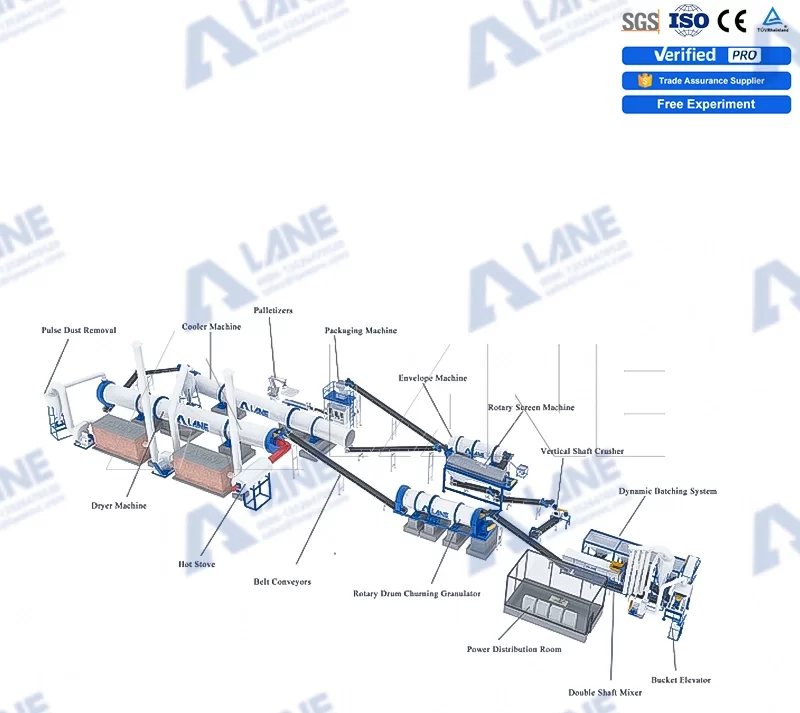
LANE Heavy Industry provides complete production line solution that support the manufacturing of SOP, SOPM, and other specialty fertilizer products. Here is how their specific machinery processes sulfate of potash magnesia vs SOP:
Raw Material Crushing Systems: The first step of the production line is preparation. raw crystalline forms of SOPM are hard and standard impact crusher degrades quickly. LANE Heavy Industry provides specialized cage mills and double-shaft chain crushers. They are built with wear-resistant alloys to reduce raw crystals down to a uniform fine powder.
Advanced Mixing Equipment: In this stage the crushed SOP or SOPM powder is blended with essential micronutrient for custom formulation. This ensures that each batch maintains consistent composition.
High-Performance Granulation Machines: Granulation is one of the most important stages in fertilizer manufacturing. LANE Heavy Industry offers Rotary Drum granulator, disk granulator for wet granulation and Double roller granulator for dry granulation in this stage. These industrial granulators can work tirelessly 24/7 and provide consistent performance.
Drying and Cooling Systems: After wet granulation process the granulation moisture needs to be dried. LANE Heavy Industry’s drying and cooling equipment reduces moisture content to the desired level while stabilizing granule temperature. This process improves product durability, prevents caking during storage, and enhances transportation performance.
Screening Equipment: Consistent particle size is an essential quality indicator for commercial fertilizers. LANE’s screening machine separate oversized and undersized particles from finished products. This ensure that only qualified granules move forward to packaging. Recycled materials can be returned to the production process which improve efficiency.
The on-size granules are packaged and ready for markets around the world.
FAQ
What is the main difference in sulfate of potash magnesia vs SOP?
SOP supplies potassium and sulfur, while sulfate of potash magnesia also supplies magnesium.
Is SOP more soluble?
SOP is known for strong water solubility and is widely used in fertigation, though formulation grade matters for actual system performance.
Which is better for chloride-sensitive crops, sulfate of potash magnesia vs SOP?
SOP is usually the safer and more common choice because it is chloride-free.
Can sulfate of potash magnesia replace SOP?
Not always. It can replace SOP only when the crop also benefits from magnesium and the product grade fits the application method.
Of course, we also offer other types of products for your different needs, you can click to view.
For more information, please contact us by sending an inquiry today! We can help you!


Compare sulfate of potash magnesia vs SOP fertilizers. Discover nutrient composition, crop benefits, and how LANE Heavy Industry’s compounding and granulation machinery optimizes high-quality production lines.

Write a Reply or Comment