
What Defines Industrial Grade Potassium Nitrate 99.4% Purity? Standard vs. Premium Quality

What Defines Industrial Grade Potassium Nitrate 99.4% Purity? Standard vs. Premium Quality
High purity Potassium nitrate (KNO₃) also known as saltpeter is one of the most demanded technical chemicals in the world. This chemical has excellent oxidizing properties, solubility, and reliable nutrient value. It is commonly used in the metallurgy, glass manufacturing, food preservation, pyrotechnics, and fertilizer production industry. The quality of this compound dictates the quality of the final product. Among the various grades available, industrial grade potassium nitrate 99.4% purity has emerged as the benchmark for reliable performance in fertilizer and glass industry.
Not all potassium nitrate is manufactured to the same standard. Buyers sometimes mistakes the purity level defined on the packaging. Understanding the industrial grade potassium nitrate 99.4% purity is critical for ensuring production stability, product consistency, and application performance. In this article we will discuss the characteristics of Industrial grade potassium nitrate 99.4% purity, and how LANE Heavy Industry machinery supports potassium nitrate production lines.
What Is Industrial Grade Potassium Nitrate 99.4% Purity?
Industrial grade potassium nitrate 99.4% purity refers to potassium nitrate (KNO₃) with minimum 99.4% purity levels. The standard grade potassium nitrate (ranging from 93% to 98% purity) contains trace of moisture, chloride, and sulfate along with some insoluble matter. They are used as basic agriculture fertilizers. While fertilizer industry doesn’t mind the trace amount of these elements, industry like optical glass furnace or a high-tech solar thermal power plant doesn’t like these trace materials.
An Industrial grade potassium nitrate 99.4% purity has the appearance of white crystal and they can be made into granular particles or water-soluble crystalline form. Their high purity ensures better dissolution performance, lower contamination of impurity, stable reactions, and less caking issues.
Industries using Industrial grade potassium nitrate 99.4% purity include:
- Fertilizer manufacturing
- Water-soluble fertilizer production
- Glass manufacturing
- Explosives and pyrotechnics
- Heat treatment industries
- Pharmaceutical intermediates
- Chemical synthesis plants
Why Purity Matters in Potassium Nitrate fertilizer Production
Purity directly affects product performance. Lower grade purity means higher amount of contaminates such as chloride, sulfate, sodium, moisture, or insoluble substances. These contaminates reduces the performance of fertilizer or the industrial application of Potassium Nitrate.
Excess chloride negatively affects sensitive crops such as tobacco, potatoes, grapes, strawberries, and greenhouse vegetables. It reduces the crop quality, lower the yield, and damage root systems under intensive fertigation conditions.
Excess sulfate and sodium impurities affect the chemical stability of potassium nitrate. These contaminates interfere with nutrient balance and reduce the water solubility. Excess sodium accumulation in soils, damages the soil structure and reduce the water absorption efficiency for crops.
Insoluble particles are most problematic in water-soluble fertilizer applications. Modern fertigation equipment and drip irrigation system requires fully dissolvable fertilizer to avoid clogging nozzles, filters, and pipelines.
High-quality Industrial grade potassium nitrate 99.4% purity offers:
- Higher Solubility
One of the main advantages of Industrial grade potassium nitrate 99.4% purity is its excellent water solubility. The higher purity means it dissolves quickly and completely without leaving any sediment or insoluble particles. This makes it ideal for drip irrigation, hydroponics, greenhouse fertigation, liquid fertilizer production.
Complete dissolution helps nutrient flow smoothly through irrigation systems without clogging pipes or spray nozzles. In the fertilizer industry, better solubility improves mixing efficiency and production speed.
- Better Nutrient Efficiency
potassium nitrate with 99.4% purity provides plants with nitrate nitrogen and potassium while minimizing harmful contaminates. Less contamination means fewer unwanted salts and impurities. This means crops can absorb nutrient more efficiently. High purity potassium Nitrate supports faster nutrient uptake, increased crop growth, improved fruit quality, and higher yields. It also reduces salt stress and maintains healthier soil conditions for long term cultivation.
- Stable Industrial Performance
Industrial applications require stable and consistent raw materials. potassium nitrate with 99.4% purity can affect reaction stability and product quality in the glass manufacturing, specialty chemicals, pharmaceuticals, pyrotechnics, and heat treatment industries.
Using Industrial grade potassium nitrate 99.4% purity helps maintain consistent chemical performance, stable thermal properties, and reliable production results. High purity materials reduce unwanted side reactions and improve overall manufacturing efficiency.
- Reduced Equipment Corrosion
Chloride and excess moisture can damage reactors, pipelines, pumps, and storage tanks in chemical processing plants. This increases the maintenance cost and sometimes causes equipment loss. In higher purity levels manufacturers benefit from lower maintenance requirements, improved safety, and more reliable plant operation.
- Improved Storage and Transportation Stability
High-purity potassium nitrate has better physical stability. The low moisture content and uniform crystal structure reduce the risk of caking, agglomeration, dust formation, and packaging damage. This is important for fertilizer manufacturers and chemical suppliers who export their product overseas.
- Higher Commercial Value
Product with potassium nitrate with 99.4% purity also achieve strong market performance because customers demand cleaner and more reliable materials. It allows the customers to target the premium markets, export industries, specialty chemicals, and precision agriculture sectors. As global quality standards continue to rise, demand for high-purity potassium nitrate is expected to grow.

Standard Quality vs. Premium Quality Potassium Nitrate
Both standard and premium quality potassium nitrate meets the industrial specification but there are some important differences that changes their value.
| Parameter | Standard Quality | Premium Quality |
| Potassium Nitrate Content | 98%–99% | 99.4% or higher |
| Moisture Content | Higher | Very low |
| Chloride Level | Moderate | Extremely low |
| Water Solubility | Good | Excellent |
| Particle Uniformity | Variable | Highly consistent |
| Application Stability | Acceptable | Superior |
| Storage Performance | Moderate | Excellent |
| Industrial Compatibility | Basic | Advanced industrial use |
LANE Heavy Industry Machinery: Ensuring Consistent 99.4% Purity
Producing Industrial grade potassium nitrate 99.4% purity requires advanced equipment, process control, and efficient process technology. LANE Heavy Industry has engineered customized machinery designed for producing potassium nitrate with 99.4% purity. This production line is consistent and fully automatic and it address the challenges in KNO₃ manufacturing.
Crystallization Systems: Our advanced crystallization technology ensures that crystals are pure and uniform. This system determines the final purity and particle quality of potassium nitrate products.
Purification Equipment: We implement a multi-stage purification process. This process removes chloride, sulfate, and insoluble matter to meet the strict impurity limits of industrial grade potassium nitrate 99.4% purity specifications.
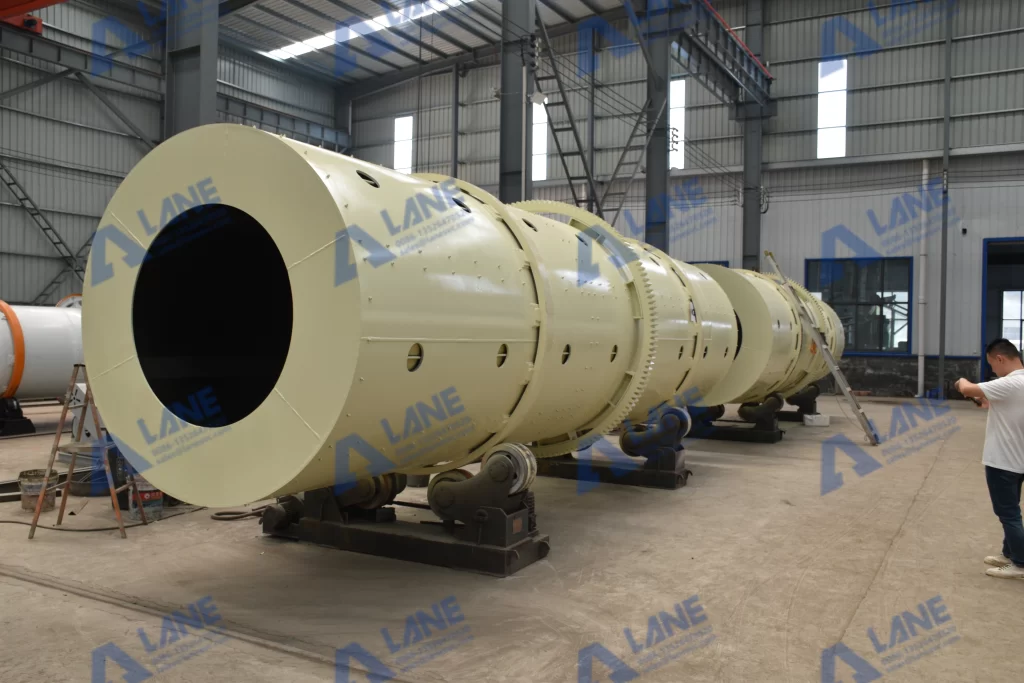
Granulation Technology: Our granulation production line offers rotary drum granules with over 90% granulation rate. The closed loop system ensures that 100% of the raw material is used.
FAQ
Q1: What does Industrial grade potassium nitrate 99.4% purity mean?
It means the product contains at least 99.4% potassium nitrate with controlled impurity levels suitable for industrial and fertilizer applications.
Q2: Why is Industrial grade potassium nitrate 99.4% purity important?
Higher purity improves solubility, chemical stability, fertilizer efficiency, and industrial performance.
Q3: What industries use Industrial grade potassium nitrate 99.4% purity?
Industries include fertilizer production, pyrotechnics, glass manufacturing, chemical processing, and heat treatment.
Of course, we also offer other types of products for your different needs, you can click to view.
For more information, please contact us by sending an inquiry today! We can help you!


Related News
SOP (sulfate of potash) is a valuable potassium fertilizer used for crops that are sensitive to chloride. During fertilizer production, granulated SOP usually contains residual moisture that must be removed before the product can move to the next processing stage. If the granules are not dried properly, they may become sticky, form lumps during storage, or create problems during screening and packaging.
Choosing the right fertilizer dryer for SOP is therefore an important part of planning an SOP fertilizer production line. However, selecting a dryer is not simply a matter of matching the machine to the production capacity. The inlet moisture content, required final moisture, granule characteristics, heating source, and local fuel prices all affect the actual drying requirements.
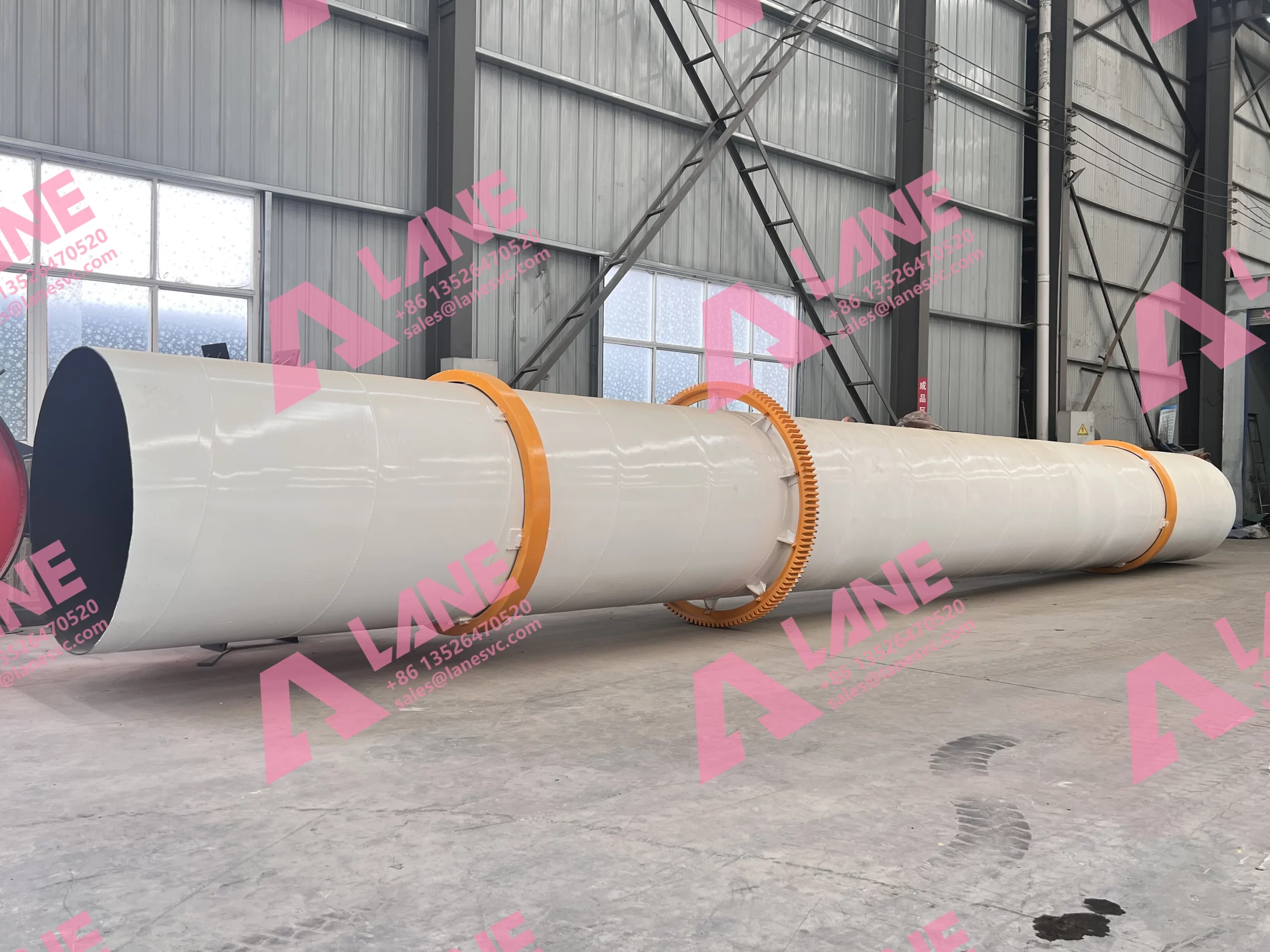
For most granular fertilizer applications, a rotary drum dryer is a practical option. It works with a hot air system to remove moisture continuously, making it suitable for production lines that need stable and consistent output.
This guide explains how to select a fertilizer dryer for SOP, compare common drum sizes, choose a suitable heating source, and match a hot blast stove to the drying process.
What Should You Consider When Choosing a Fertilizer Dryer for SOP?
Before choosing a fertilizer dryer for SOP, collect several basic production details. These figures help determine how much heat the system needs and whether a standard rotary drum dryer can meet the production target.
Inlet moisture content
The moisture content of SOP granules entering the dryer is one of the most important factors. Granules with higher moisture require more heat and a longer drying process.
For example, a production line handling 5 tons of wet granules per hour does not necessarily need the same drying capacity as another 5 T/H line. If one line has an inlet moisture content of 8% and the other has 15%, the amount of water that must be removed will be different.
Target outlet moisture
You should also define the required moisture content after drying. A dryer must remove enough water to meet the downstream product requirements, but excessive drying wastes energy and may affect the physical quality of the granules.
The target should be based on the SOP product specification and actual production tests rather than an assumed universal value.
Actual hourly output
Use the amount of wet material entering the dryer, not only the final output of the production line. The dryer handles material before moisture has been removed, so its required feed capacity may be higher than the final dry product weight.
Granule size and physical strength
Small particles, large granules, and fragile particles may behave differently inside a rotary drum. The lifting plates, drum rotation, feeding rate, and drying conditions should be considered together to avoid uneven drying or unnecessary particle breakage.
These details provide a more reliable basis for selecting a fertilizer dryer for SOP than production capacity alone.
How to Choose the Right Rotary Drum Dryer Size?
A rotary drum dryer uses a rotating cylinder to move fertilizer granules through a heated drying zone. Lifting plates installed inside the drum repeatedly raise and release the material, allowing it to come into contact with the hot air.
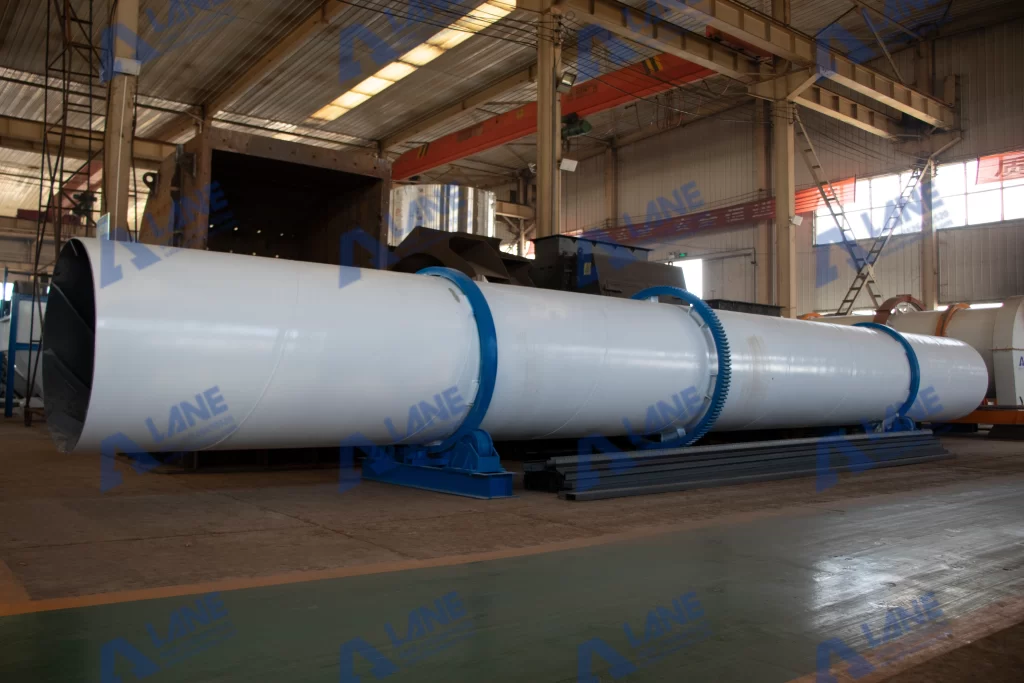
The drum size affects the amount of material that can be handled and the available space for heat exchange. A larger drum generally provides more internal volume, but the correct size still depends on the material’s moisture content, required evaporation rate, and operating conditions.
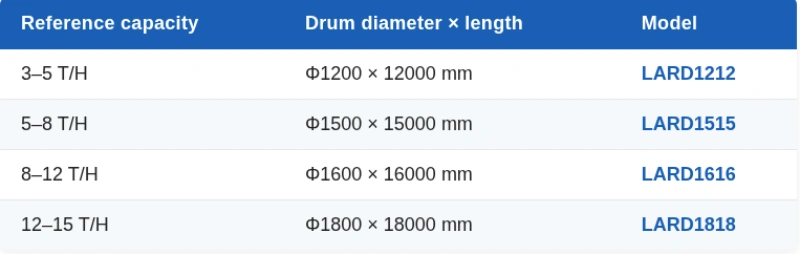
The following models are common reference options listed on the manufacturer’s rotary drum dryer product page.
For a 3–5 T/H production line
The LARD1212 has a drum diameter of 1,200 mm and a length of 12,000 mm. It is a reference option for smaller production lines within the listed capacity range.
For a 5–8 T/H production line
The LARD1515 measures Φ1500 × 15000 mm. It provides a larger drum volume for production lines with higher feed rates.
For an 8–12 T/H production line
The LARD1616 measures Φ1600 × 16000 mm. It is a reference model for medium-scale drying requirements.
For a 12–15 T/H production line
The LARD1818 measures Φ1800 × 18000 mm. It is suitable as a reference option for a larger continuous production line.
These figures are the manufacturer’s listed model capacities, not guaranteed output figures for every SOP formulation. A fertilizer dryer for SOP should be selected after checking the actual inlet moisture, target outlet moisture, material properties, and available heating capacity.
For other models and detailed specifications, see the rotary drum dryer specifications.
Which Heating Source Is Suitable for a Fertilizer Dryer for SOP?
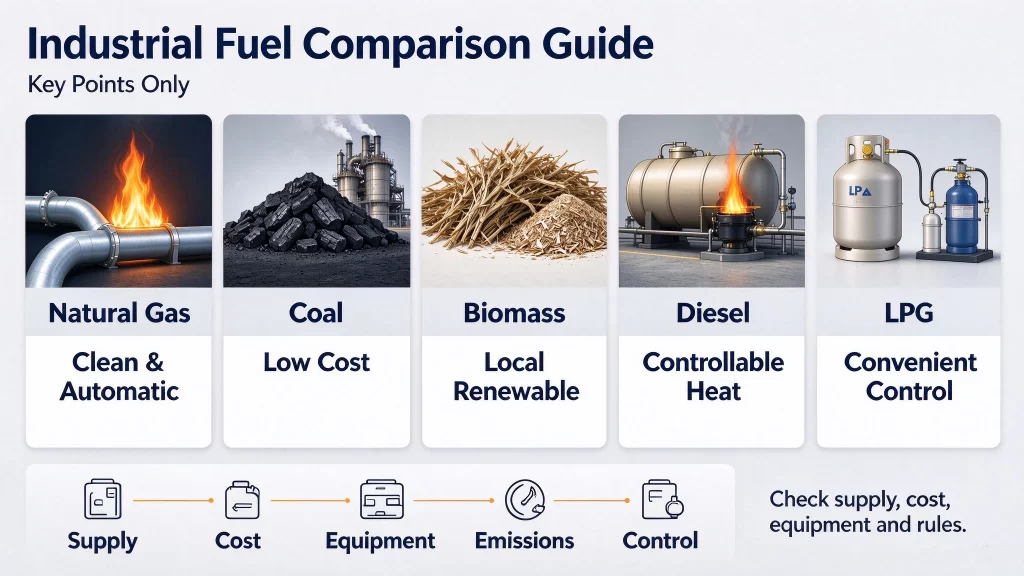
The heating source directly affects the operating cost and stability of a drying system. A rotary drum dryer needs a continuous supply of hot air, so the fuel should be selected according to local availability, price, and operating conditions.
Natural gas
Natural gas is convenient where a reliable pipeline supply is available. Its combustion process is relatively easy to control, making it suitable for production lines that require stable hot air temperatures.
However, the local gas price and pipeline connection cost should be included in the investment calculation. Natural gas is not automatically the cheapest option in every country.
Coal
Coal may be an economical heating option in areas where it is readily available at a competitive price. It can provide a substantial amount of heat for continuous industrial drying.
The disadvantages include ash handling, combustion management, emissions control, and additional environmental requirements. Before choosing coal, check local regulations and the cost of the necessary dust and flue-gas treatment equipment.
Biomass
Biomass fuels, such as biomass pellets, may be suitable for factories located near agricultural or forestry residue suppliers. Their cost can be attractive when local resources are available.
However, biomass quality varies. Moisture content, particle size, and heating value can affect combustion stability. A consistent fuel supply is important if the fertilizer dryer for SOP needs to operate for long shifts every day.
Diesel
Diesel is relatively easy to store and can be useful where gas pipelines or other fuel supplies are unavailable. It can also provide a convenient heating option for certain production conditions.
Its main disadvantage is operating cost. For a plant running continuously, calculate the expected diesel consumption before choosing this option.
LPG
LPG can be considered where natural gas is unavailable but a gas-based heating system is preferred. It offers convenient combustion control, although storage, transportation, safety requirements, and fuel prices must be considered.
The best fuel is not necessarily the one with the lowest price per kilogram or cubic meter. Compare the estimated cost of evaporating one ton of water. This provides a more useful basis for evaluating different heating options.
How Does a Hot Blast Stove Work with a Rotary Drum Dryer?
A hot blast stove is an important part of a hot-air drying system. It produces the heated air required by the rotary drum dryer. The two machines perform different functions: the hot blast stove supplies heat, while the rotary drum dryer provides the space and material movement needed for drying.
In a typical arrangement, fuel is burned in the heating unit, and the generated heat is transferred to the air supplied to the dryer. Fans move the hot air through the system. Inside the rotating drum, lifting plates continuously turn the fertilizer granules so that they come into contact with the hot air.
When selecting a fertilizer dryer for SOP, the heating unit should be matched to the actual drying load rather than selected only by the drum’s nominal capacity.
For example, a line with a nominal feed rate of 5 T/H may use a different heating configuration depending on the moisture that must be removed. If the material enters the dryer with high moisture, the required heat load may be greater than that of a line handling drier material at the same feed rate.
A suitable fertilizer dryer for SOP therefore requires coordination between the drum, hot blast stove, fans, and air ducting. The final configuration should be confirmed using the actual material and process data.
How Should You Control the Drying Temperature for SOP?
Temperature control is important because the goal is to remove excess moisture without unnecessarily affecting the granules.
A higher hot-air temperature may increase the rate of moisture removal, but it does not mean that the highest possible temperature is always the best choice. The actual drying result also depends on air volume, material feed rate, residence time, and the amount of moisture entering the drum.
Check the inlet and outlet moisture
Measure the moisture content of the material before and after drying. If the outlet moisture remains too high, the problem may be insufficient heat, excessive feed rate, poor air distribution, or insufficient residence time.
Adjust the feed rate
If wet material enters faster than the system can dry it, the outlet product may not meet the moisture target. Reducing the feed rate can help identify whether the system is operating beyond its effective drying capacity.
Avoid unnecessary overheating
Excessive heat can increase energy consumption and may affect product quality. Temperature settings should be established through commissioning and adjusted according to actual operating results.
For a fertilizer dryer for SOP, stable operation is more useful than simply pursuing a high inlet temperature. The target is consistent outlet moisture with reasonable fuel consumption.
What Other Equipment Is Needed for the Drying Process?
A rotary drum dryer normally works with several auxiliary components. These parts help maintain material flow, hot-air circulation, and dust control.
Hot blast stove: Supplies the heat required for drying.
Blower and induced draft fan: Help move hot air and maintain the required airflow through the drying system.
Dust collection system: Collects dust carried by the exhaust gas and helps control emissions. The specific equipment should be selected according to local environmental requirements.
Conveyors: Transfer wet granules into the dryer and move dried material to the next processing stage.
Rotary cooler: Dried SOP granules may still be hot when they leave the dryer. Cooling them before storage and packaging helps prevent problems caused by packing hot material.
Cooling is a separate step after drying. When planning a fertilizer dryer for SOP, make sure there is enough space and suitable conveying equipment for the following process.
What Information Should You Prepare Before Buying a Fertilizer Dryer for SOP?
Before requesting a quotation, prepare the following information. It helps the manufacturer evaluate the required drum size, heating capacity, and auxiliary equipment.
- Required production capacity: How many tons of wet material need to be processed per hour?
- Inlet moisture content: What is the moisture content of the granules before drying?
- Target outlet moisture: What moisture level should the finished product reach?
- Granule size: What is the approximate particle size range?
- Available fuel: Can the factory obtain natural gas, coal, biomass, diesel, or LPG?
- Daily working hours: Will the dryer operate for 8, 16, or 24 hours per day?
- Installation conditions: What space, power supply, and environmental control facilities are available?
Providing these details makes it easier to determine whether a standard fertilizer dryer for SOP is suitable or whether the drying system needs a customized configuration.
It also helps avoid a common purchasing mistake: choosing a large drum without checking whether the heating system can supply enough energy to remove the required amount of water.
Conclusion
Choosing a suitable fertilizer dryer for SOP requires more than comparing machine dimensions or nominal production capacities. The inlet moisture content, target outlet moisture, hourly feed rate, fuel availability, and required heat input all influence the final selection.
A rotary drum dryer is a practical option for continuous SOP granule drying. Common reference sizes range from Φ1200 × 12000 mm to Φ1800 × 18000 mm for the 3–15 T/H capacity ranges listed above. The hot blast stove should then be selected according to the actual drying load, not simply matched by nominal production capacity.
If you are planning an SOP fertilizer production line, prepare your material moisture data, production target, and available fuel information before selecting a fertilizer dryer for SOP. These details will help determine a more suitable dryer size and heating configuration.

Write a Reply or Comment