
How to Prevent SOP Fertilizer Caking with the Right Equipment
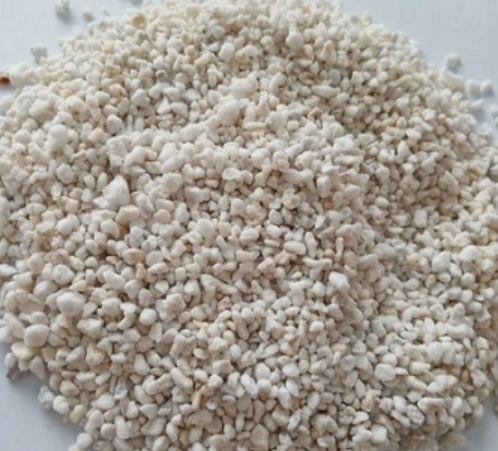
Introduction: Why SOP Fertilizer Caking Is a Problem for Manufacturers
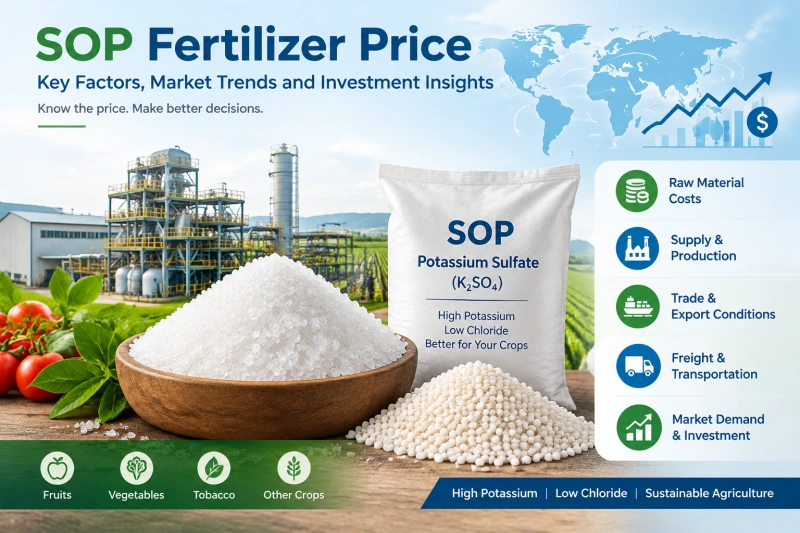
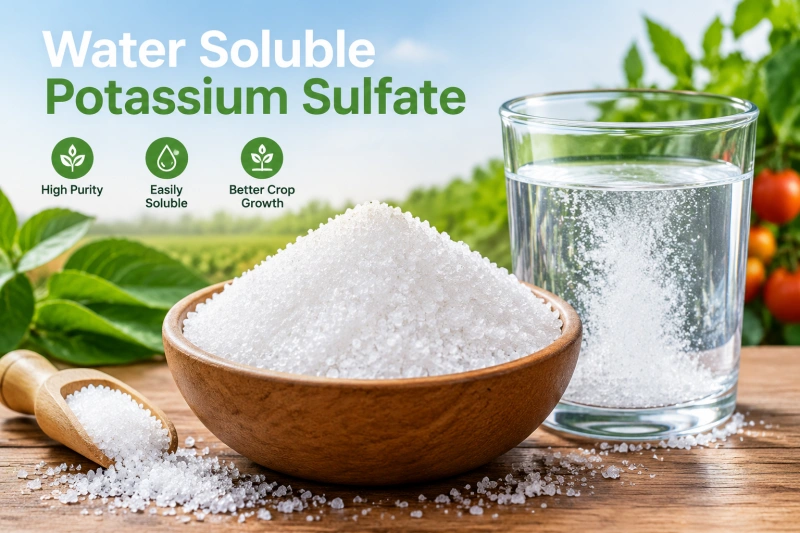
Sulfate of Potash (SOP), also known as potassium sulfate (K₂SO₄), is an important potassium fertilizer used in agriculture, particularly for crops that require potassium but are sensitive to chloride. It is widely used in fruit, vegetable, tobacco, and other high-value crop production. Because of its relatively low chloride content, SOP is an attractive fertilizer product for many agricultural markets.
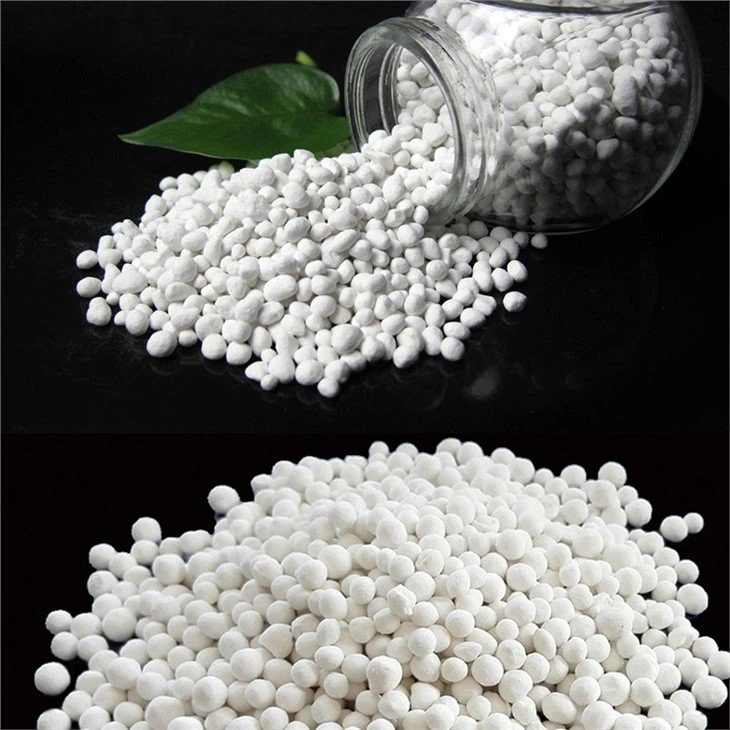
However, producing a fertilizer with the correct nutrient content is only one part of the manufacturing process. The physical quality of the finished product also matters.Some manufacturers find that their SOP granules become hard lumps after several weeks of storage or during transportation, making SOP fertilizer caking a recurring problem that affects finished product quality. This problem affects product flow, packaging operations, warehouse management, and the experience of the final customer.
SOP fertilizer caking can have several causes. Excessive moisture, insufficient cooling, uneven particle sizes, soluble impurities, and unsuitable storage conditions may all contribute to the problem. In some cases, the issue begins during production rather than after the fertilizer reaches the warehouse.
For this reason, manufacturers should not rely entirely on storage management to solve SOP fertilizer caking, but should also examine the processing stages that affect finished granule quality.They also need to examine the processing stages and determine whether their existing equipment can provide adequate moisture control, cooling, screening, and surface treatment.
At LANE, we understand that different fertilizer materials and production capacities require different equipment configurations. This article explains how drying machines, cooling machines, screening machines, and coating machines work together to reduce the risk of SOP fertilizer caking and improve finished product quality.
What Causes SOP Fertilizer Caking During Production and Storage?
Before selecting equipment, manufacturers need to understand what causes SOP fertilizer caking. Identifying the actual cause is important because installing additional machinery will not necessarily solve a problem caused by an unsuitable formulation or poor warehouse conditions.
Excessive moisture in fertilizer granules
Moisture is one of the most important factors affecting fertilizer storage stability. If SOP granules contain excessive residual moisture, water may form liquid bridges between neighboring particles. When these particles remain in contact, the bridges can become stronger as the fertilizer is stored, eventually forming hard lumps.
Moisture may enter the production process through wet raw materials, granulation liquids, washing operations, or insufficient drying. These factors can increase the risk of SOP fertilizer caking, even when the material looks dry on the surface but still contains more internal moisture than required.
High product temperature before packaging
Temperature is another factor that manufacturers should consider. Fertilizer granules coming directly from a dryer may still be hot. If they are transferred into bags or stored in a warehouse before reaching a suitable temperature, temperature differences can contribute to condensation under certain conditions.
The resulting moisture can increase the risk of SOP fertilizer caking by causing particles to stick together. Therefore, cooling is not simply an optional step for improving handling. It is an important part of preparing fertilizer for stable packaging and storage.
Uneven particle size and excessive fines
A finished fertilizer product usually contains particles of different sizes. However, too many fine particles can increase the contact area between granules and affect product flow. Fine powder may also fill the gaps between larger particles, making the material more compact during transportation and storage.
If the screening process is inadequate, undersized and oversized particles may remain in the finished product, potentially increasing the risk of SOP fertilizer caking and affecting both product appearance and physical consistency.
Moisture absorption, impurities, and storage pressure
Although SOP has relatively low hygroscopicity compared with some other fertilizer salts, its storage stability can still be affected by environmental humidity, soluble impurities, and product composition.
Long-term stacking pressure also matters when dealing with SOP fertilizer caking. When fertilizer bags are piled high, the particles at the bottom experience greater pressure. If moisture or surface adhesion is already present, this pressure can encourage particles to form larger lumps.
Understanding these factors helps manufacturers determine whether the main problem comes from drying, cooling, screening, coating, formulation, or storage management.
How Does Fertilizer Processing Equipment Help Prevent SOP Fertilizer Caking?
A suitable processing line can reduce several conditions associated with SOP fertilizer caking. However, each machine has a different function and contributes to product quality in a different way. Manufacturers should understand what each piece of equipment can actually achieve instead of expecting one machine to solve every quality problem.
Rotary Drum Dryer: Control Moisture Before Packaging
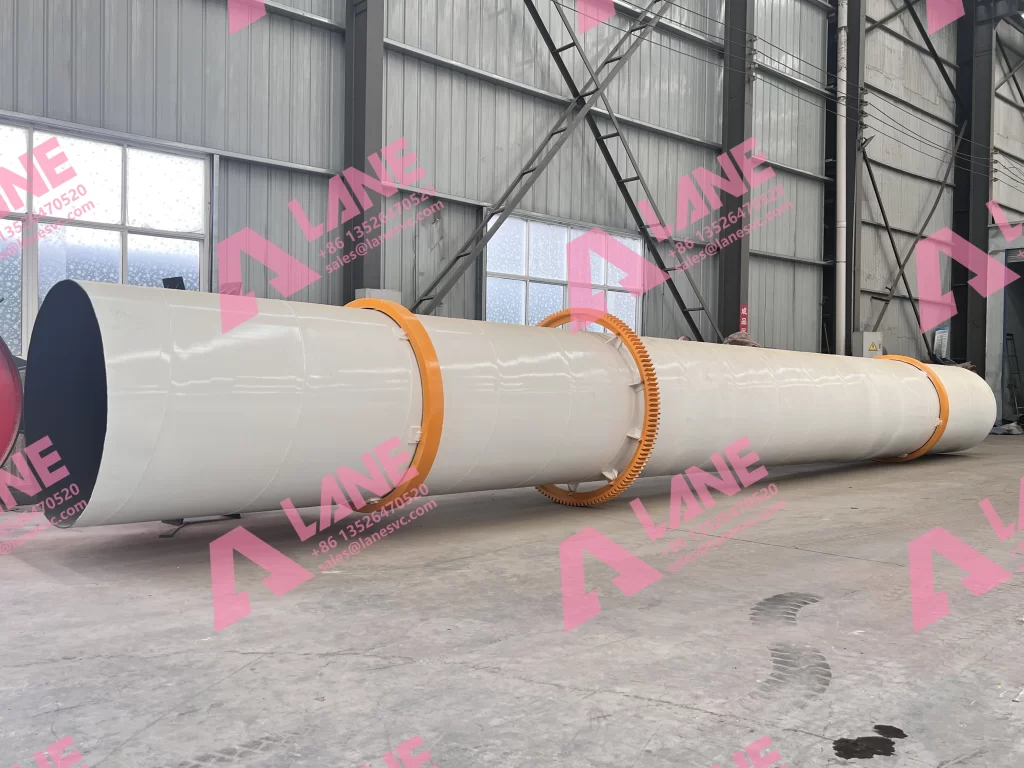
A rotary drum dryer is commonly used to reduce the moisture content of fertilizer materials. Its rotating cylinder allows the material to move through the drying chamber while hot air transfers heat to the particles.
For SOP fertilizer production, the dryer helps reduce residual moisture before the material enters the cooling and finishing stages. This is particularly important when the granules have been produced through a wet granulation process or contain moisture from earlier processing operations.
Proper moisture control is essential when addressing SOP fertilizer caking. The drying process should be adjusted according to the material’s initial moisture content, particle size, production capacity, and required final moisture level. Excessive drying temperature is not automatically better.If the operating conditions are unsuitable, the material may experience unnecessary thermal stress, while energy consumption increases.
When investigating SOP fertilizer caking, manufacturers should check the moisture content at the dryer outlet rather than judging the result only by appearance. Representative samples from different parts of the production run can help identify whether the dryer provides consistent results.
LANE can help manufacturers evaluate dryer capacity and configuration according to their material characteristics and production requirements. The objective is to achieve stable moisture control without creating unnecessary energy consumption or reducing production efficiency.
Rotary Drum Cooler: Reduce Temperature Before Storage
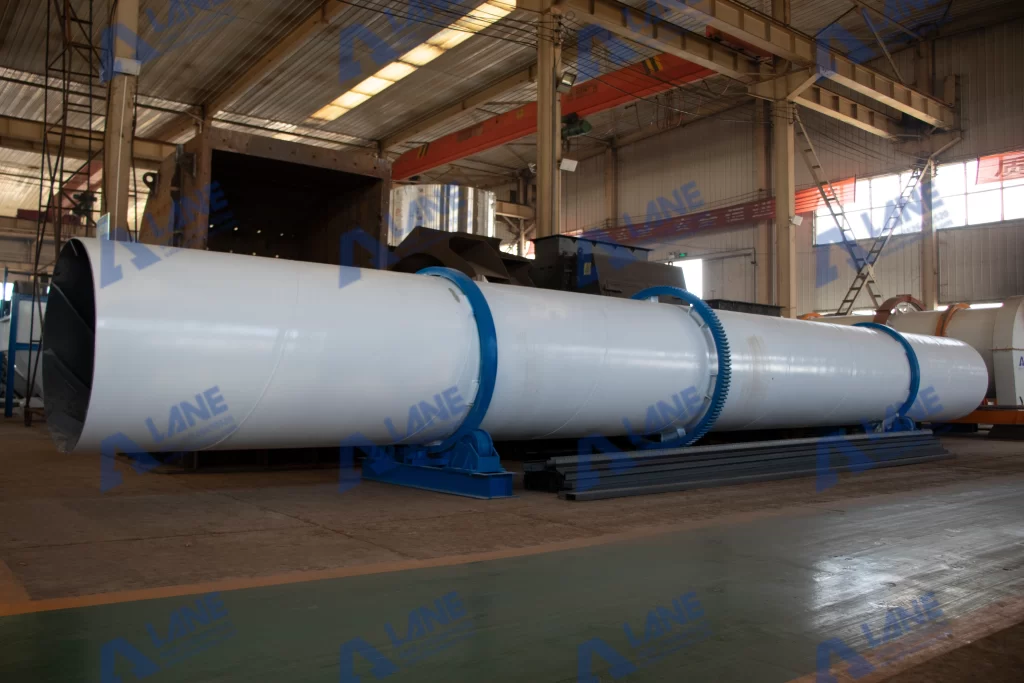
After drying, fertilizer granules generally need to be cooled before further handling. A rotary drum cooler uses a rotating cylinder and a cooling medium, commonly ambient air, to remove heat from the material.
Cooling is important because hot granules should not be packed immediately without considering the surrounding temperature and humidity. If the product is too warm, temperature differences inside the package may contribute to condensation under unfavorable conditions.
A properly selected cooler helps bring the granules closer to the required packaging temperature, reducing one of the potential causes of SOP fertilizer caking. It also makes subsequent screening, coating, conveying, and bagging operations easier to manage.
When choosing a rotary drum cooler, manufacturers should consider the dryer outlet temperature, required cooling temperature, material throughput, and local environmental conditions. A cooler that is too small may not provide sufficient cooling time at the required production capacity.
For manufacturers experiencing SOP fertilizer caking after packaging, checking the cooling stage is a practical step. The problem may not come entirely from the drying process. In some cases, the granules leave the dryer with acceptable moisture content but enter the packaging system while still too hot.
Rotary Screening Machine: Maintain Consistent Particle Size
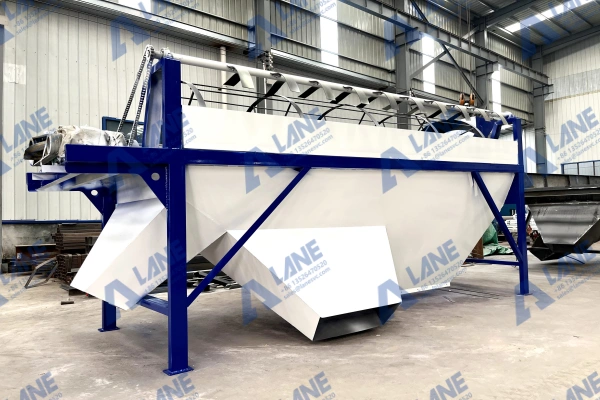
Screening is another important stage in fertilizer finishing. A rotary screening machine separates particles according to size, allowing manufacturers to remove excessive powder, undersized granules, and oversized material.
Why does this matter for preventing SOP fertilizer caking? A product containing too many fines may have poorer flow characteristics and more contact points between particles. Removing excessive fines can help improve the physical consistency of the finished product.
A screening machine can also separate oversized granules for further crushing and recycling, depending on the production process. Undersized materials may be returned to an appropriate processing stage rather than being mixed directly into the final product.
For example, a manufacturer producing SOP granules with a target size of 2–4 mm may configure the screening system to separate material outside that range. The actual screen openings should be determined according to the product specification and the characteristics of the granules.
Screening does not directly prevent moisture-related caking, but it helps control particle size distribution and remove excessive fines. This makes it an important supporting step when addressing SOP fertilizer caking.
Fertilizer Coating Machine: Apply Anti-Caking Agents
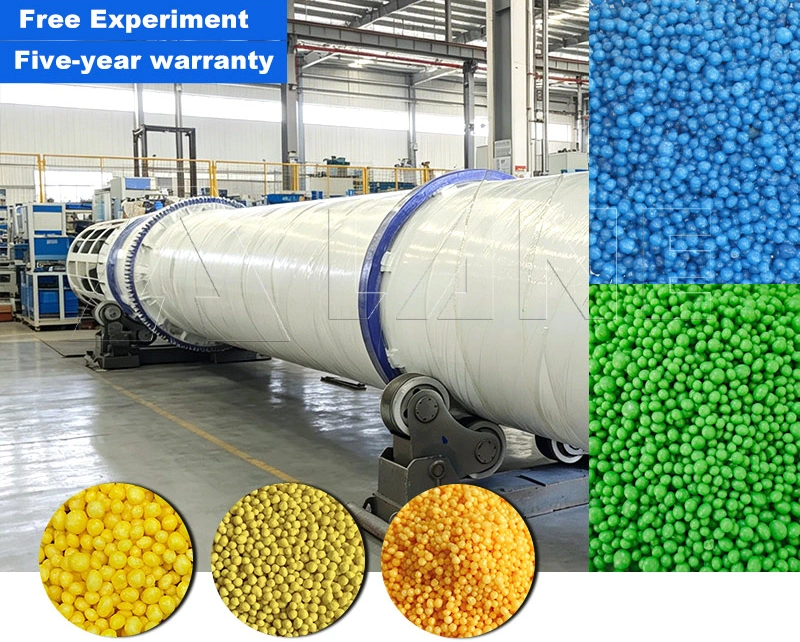
Among the machines discussed in this article, the fertilizer coating machine has the most direct connection with anti-caking treatment.
A fertilizer coating machine is designed to apply a controlled amount of liquid or powder coating material to the surface of fertilizer granules. Depending on the product formulation, suitable anti-caking agents can create a surface layer that reduces direct contact and adhesion between neighboring particles.
During operation, granules enter the coating drum and move continuously as the drum rotates. A spraying or feeding system distributes the coating material across the particle surface. The goal is to achieve relatively uniform coverage without using more coating material than necessary.
For SOP products, the selection of an anti-caking agent should be based on compatibility with potassium sulfate, the intended fertilizer application, product specifications, and local market requirements. Not every coating agent is suitable for every fertilizer formulation.
The coating amount also needs to be controlled when treating SOP fertilizer caking. Too little coating may provide insufficient protection, while excessive application can affect the product’s appearance, flow characteristics, or nutrient concentration.
If manufacturers experience SOP fertilizer caking even after moisture and temperature have been controlled, examining the coating process may be worthwhile. A suitable coating machine, combined with an appropriate anti-caking formulation, can provide an additional layer of protection during storage and transportation.
LANE can help customers evaluate coating equipment according to their production capacity, granule characteristics, and finishing requirements.
How to Arrange These Machines in an SOP Fertilizer Production Line?
Selecting individual machines is only part of the work. Manufacturers also need to consider how the machines are connected and how materials move between processing stages.
For a production line that requires drying, cooling, screening, and anti-caking treatment, a typical arrangement may follow this sequence:
SOP granules → Rotary Drum Dryer → Rotary Drum Cooler → Rotary Screening Machine → Fertilizer Coating Machine → Finished Product Packaging
The dryer reduces residual moisture first. The cooler then lowers the product temperature before the granules enter the finishing section. Screening removes excessive fines and separates particles that do not meet the required size specification. Finally, the coating machine applies a suitable anti-caking treatment before the finished fertilizer is packed.
However, this arrangement is not a fixed requirement for every SOP plant. Some manufacturers purchase semi-finished granules that already meet moisture and particle-size specifications. In such cases, additional drying or screening capacity may not be necessary.
Other manufacturers may have an existing dryer but lack a suitable cooler or coating system. Their investment should focus on the actual production bottleneck rather than replacing the entire line.
Before arranging the equipment, manufacturers should provide several basic details:
- Current production capacity, such as 3 T/H, 5 T/H, or 10 T/H.
- Initial and final moisture content of the fertilizer.
- Target granule size and particle-size distribution.
- Temperature of the material after drying.
- Whether an anti-caking agent is already being used.
- Available workshop space and existing equipment.
These details allow an equipment supplier to recommend a more suitable configuration. They also help avoid purchasing machines with unnecessary capacity or functions.
For LANE, the goal is not simply to provide several individual machines. It is to help customers build a processing arrangement that matches their material characteristics, production targets, and finished product requirements.
What Should You Consider When Choosing SOP Fertilizer Processing Equipment?
Different fertilizer plants have different operating conditions. A machine that performs well in one factory may not be the most suitable option for another. Before investing in equipment to reduce SOP fertilizer caking, manufacturers should evaluate the following factors.
Production capacity
Capacity is one of the first factors to check. A 3 T/H production line and a 10 T/H production line require different equipment dimensions, processing times, and material-handling arrangements.
The dryer, cooler, screening machine, and coating machine should be selected according to the actual throughput. If one machine has a much lower capacity than the others, it may become a bottleneck and affect the entire production line.
Initial moisture content and required final moisture
Manufacturers should test the actual material rather than rely on general assumptions. For example, two SOP products with the same nominal production capacity may require different drying configurations if their initial moisture contents are different.
The required final moisture should also be determined by product specifications and storage conditions. A dryer should be selected based on the amount of water that needs to be removed, not simply its advertised capacity.
Particle size and granule characteristics
Granule size, hardness, surface condition, and the amount of fine powder all affect equipment selection. A coating machine, for example, needs to distribute coating material effectively across the actual particle size range.
If the incoming material contains excessive fines, manufacturers may need to improve screening before investing in a more advanced coating system.
Coating agent compatibility
The anti-caking agent must be compatible with the fertilizer product. Manufacturers should consider its chemical characteristics, application rate, effect on nutrient concentration, and suitability for the intended market.
Testing a small sample before full-scale production is a sensible way to evaluate the coating result. It can help determine whether the treatment improves flow and storage performance without affecting product quality.
Energy consumption and operating costs
Drying and cooling systems affect the long-term operating cost of a fertilizer plant. Manufacturers should consider electricity consumption, heating requirements, maintenance needs, spare parts, and labor.
The cheapest machine is not necessarily the most economical option over several years. Equipment reliability and the ability to maintain stable production are also important.
Storage and packaging conditions
Even a well-designed production line cannot completely compensate for unsuitable storage conditions. Finished SOP fertilizer should be packed only after reaching an appropriate temperature and moisture level.
Manufacturers should also consider packaging materials, warehouse humidity, ventilation, stacking height, and storage duration. Moisture-resistant packaging and proper warehouse management can support the results achieved through processing equipment.
Conclusion: Choose the Right Equipment to Reduce SOP Fertilizer Caking
SOP fertilizer caking is not caused by a single factor. Excessive moisture, insufficient cooling, uneven particle size, unsuitable coating, and poor storage conditions can all affect the physical stability of the finished product.
For manufacturers, the most practical approach is to identify the actual source of the problem and improve the relevant processing stages. A rotary drum dryer helps control residual moisture, a rotary drum cooler reduces product temperature, a screening machine improves particle-size consistency, and a fertilizer coating machine applies anti-caking agents to the granule surface.
These machines serve different purposes, but they can work together as part of a complete fertilizer finishing system. Their configuration should depend on the actual material, production capacity, and finished product requirements.
LANE provides fertilizer processing equipment and production line solutions for customers with different manufacturing needs. Whether you need an individual dryer, cooler, screening machine, or coating machine, the first step is to evaluate your material and current production conditions.
If you are dealing with SOP fertilizer caking, you can share your production capacity, granule size, moisture content, and existing equipment configuration with LANE. Our team can help evaluate the processing stages and recommend a suitable equipment solution for your fertilizer plant.



Write a Reply or Comment