
Custom NPK Organic Inorganic Production Line with Potassium Sulfate: Turnkey Solutions
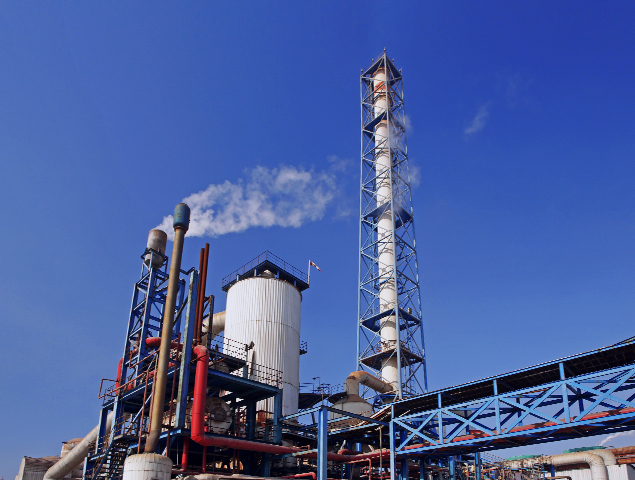
Modern agriculture sector demands innovation for their nutrient and soil solutions. Farmers are using both organic and chemical fertilizers for their crop production, which is creating complex problems for the farmers. Farmers and fertilizer manufacturers are looking for solutions that combine high nutrient content, sustainability, and consistent quality. The NPK organic inorganic production line with potassium sulfate by LANE is a sophisticated system that integrates the best of organic soil conditioning with the immediate nutrient delivery of inorganic compounds, anchored by Sulfate of Potash as the premium potassium source.
LANE Heavy Industry Machinery Technology Co., Ltd. delivers comprehensive, custom-engineered turnkey solutions for investors who want a full production line without the headache of sourcing equipment one by one. LANE provides everything from initial design and fabrication to on-site installation and after-sales support, ensuring your NPK organic inorganic production line with potassium sulfate operates at peak efficiency from day one.
What is an NPK Organic Inorganic Production Line with Potassium Sulfate?
An NPK organic inorganic production line with potassium sulfate is a specialized production system designed to produce NPK fertilizers by combining organic and inorganic raw materials. By adding potassium sulfate as the potassium source, manufacturers can enhance the potassium and sulfate content of fertilizers without increasing chloride levels. This is critical for chloride-sensitive crops and good for soil health as it prevents salt buildup in the soil.
The production line integrates advanced two-in-one organic inorganic granulator for granulation. It also integrates advanced drying, cooling, screening, and packaging machines which can be controlled by PLC and SCADA systems. By automating the process, manufacturers can achieve high efficiency, reduce labor costs, and maintain consistent product quality.
Advantages of Using LANE Heavy Industry’s Production Line
LANE Heavy Industry has over two decades of experience in the fertilizer equipment sector. We provide fully customizable solutions for investors and producers who want to build a turnkey production line. The NPK organic inorganic production line with potassium sulfate from LANE is designed with modern agriculture in mind, offering several advantages:
- Turnkey Solution: LANE provides a complete production line, including equipment, layout design, installation, and technical training.
- High Efficiency: The production line features advanced granulators and mixers that ensure uniform nutrient distribution in each fertilizer granule.
- Versatility: It supports multiple formulas, allowing manufacturers to produce fertilizers with varying NPK ratios and potassium sulfate levels.
- Cost-Effective: With energy-saving machinery and automated processes, operational costs are significantly reduced.
- Eco-Friendly: The integration of organic materials helps produce sustainable fertilizers with lower environmental impact.
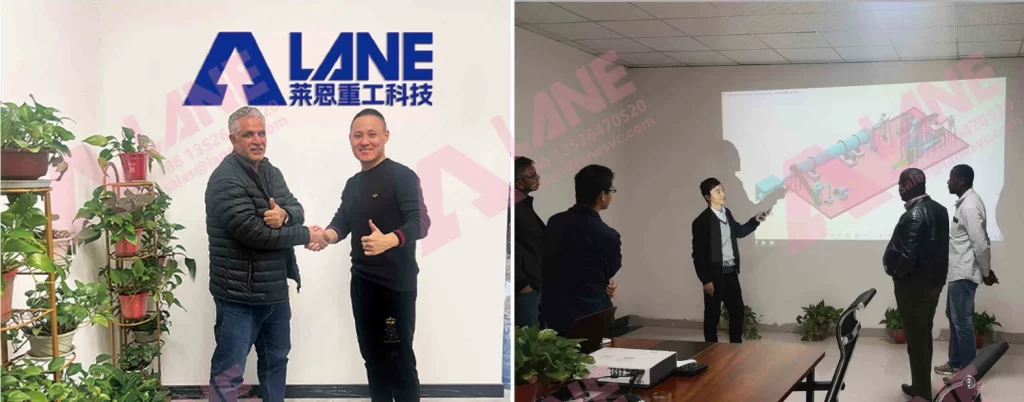
LANE Heavy Industry’s Turnkey Customization Advantage
Building an NPK organic inorganic production line with potassium sulfate requires more than just buying separate machines. We offer machines engineered to encompass the project’s entire lifecycle. Our service begins with a deep analysis of your raw materials (organic manure, urea, MAP/DAP, and potassium sulfate). We also consider your target capacity and your target customers. LANE’s engineering team designs a custom NPK organic inorganic production line with potassium sulfate layout optimized for your factory floor space. Our design ensures seamless material flow from intake hopper to finished bag. We also provide CAD layouts, 3D renderings, and electrical wiring diagrams as part of the comprehensive package.
LANE also offers a five-year warranty and professional overseas installation and commissioning services. This mitigates your risk and ensures that your specific blend of organic matter and potassium sulfate will granulate effectively and meet your exacting quality standards.
The Production Workflow: Precision Engineering at Every Step
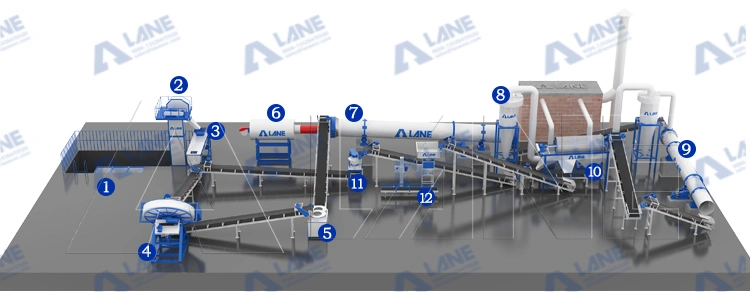
A successful NPK organic inorganic production line with potassium sulfate relies on a synchronized series of processes. LANE’s lines integrate the following critical stages into a single automated, PLC-controlled system:
- Raw Material Batching & Crushing: The NPK organic inorganic production line with potassium sulfate begins with a dynamic batching system. Our batching system accurately meters organic compost, urea, MAP, and potassium sulfate according to the preset formula and sends them to the crusher. LANE’s vertical or hammer crushers then pulverize these materials into a uniform powder to ensure stable mixing.
- Mixing & Homogenization: Achieving over 98% uniformity is crucial for an NPK organic inorganic production line with potassium sulfate. LANE utilizes a horizontal double shaft mixer to thoroughly blend the organic-inorganic matrix with the potassium sulfate, ensuring every granule has an identical nutrient profile.
- Granulation: The granulation process takes the mixed raw materials and creates round-shaped granules which are easy to store and apply. LANE offers multiple granulation methods: disc, rotary drum, and two-in-one organic inorganic granulator. Our advanced two-in-one organic inorganic granulator is particularly effective at binding potassium sulfate with organic carriers, achieving a high granulation rate of over 95% while minimizing dust and fine particle generation.
- Drying, Cooling, and Screening: The granules then move into the high-efficiency rotary dryers to reduce moisture content below 2% to prevent caking. Counter-flow coolers stabilize the granules. Granules are then sent to the vibrating screens to separate qualified granules from dust and oversized granules. They are recycled back into the process.
- Coating and Automated Packaging: Finally, the NPK organic inorganic production line with potassium sulfate employs coating machines which can apply anti-caking agents or micronutrients. Automatic weighing and sewing systems ensure accurate, high-speed bagging of the final NPK blend.
Customization Options for Fertilizer Manufacturers
LANE Heavy Industry understands that different markets have different fertilizer requirements. That’s why our NPK organic inorganic production line with potassium sulfate is a fully customizable system. Manufacturers can adjust:
- NPK ratios according to crop needs
- Granule size and shape
- Organic content percentage
- Production capacity ranging from small-scale to large industrial output
This flexibility allows producers to create fertilizers that meet unique market demands.
Installation and After-Sales Support
A key advantage of choosing LANE Heavy Industry is the support we provide to our customers. We offer:
- On-site installation by experienced engineers
- Staff training for operation and maintenance
- Technical support and troubleshooting services
- Spare parts supply to ensure continuous operation
This ensures that manufacturers can achieve maximum output with minimal downtime.
Economic and Environmental Benefits
Implementing an NPK organic inorganic production line with potassium sulfate enhances the profitability of manufacturers and farmers alike.
- Increased Yield: LANE granules have identical nutrient value and size. This uniform nutrient distribution improves crop yield and quality.
- Reduced Waste: We recycle raw material for further use. Our efficient mixing and granulation reduce raw material wastage.
- Sustainable Production: Incorporating organic matter helps recycle agricultural residues and reduces reliance on synthetic fertilizers.
Applications Across Agriculture
The fertilizers produced by the LANE production line are suitable for a wide range of crops, including:
- Vegetables and fruits
- Cereals and grains
- Cash crops such as cotton and tobacco
- Flowers and ornamental plants
This makes LANE’s NPK organic inorganic production line with potassium sulfate a valuable investment for fertilizer manufacturers targeting diverse markets.
Why Choose LANE Heavy Industry
LANE Heavy Industry has a proven track record in designing high-quality fertilizer production equipment. Our production line combines modern engineering with practical agricultural knowledge. Key reasons to choose LANE include:
- Proven Technology: Over two decades of experience in fertilizer machinery.
- Comprehensive Service: We offer support from consultation to maintenance.
- Custom Solutions: We tailor production lines for various scales.
- Global Reputation: Equipment exported worldwide with high customer satisfaction.
FAQ
Q1: What is the production capacity of the NPK organic inorganic production line with potassium sulfate?
A1: LANE Heavy Industry offers production lines with capacities ranging from 10,000 tons/year to over 200,000 tons/year, fully customizable to meet specific production needs.
Q2: Can the production line handle both organic and inorganic raw materials?
A2: Yes, the line is specifically designed for blending organic and inorganic components efficiently, ensuring uniform nutrient distribution.
Q3: Why is potassium sulfate preferred over potassium chloride?
A3: Potassium sulfate provides potassium without introducing harmful chloride, making it ideal for chloride-sensitive crops.
Q4: Is installation support included?
A4: Absolutely. LANE provides complete on-site installation, commissioning, and operator training for seamless operation.
Of course, we also offer other types of products for your different needs, you can click to view.
For more information, please contact us by sending an inquiry today! We can help you!


Related News
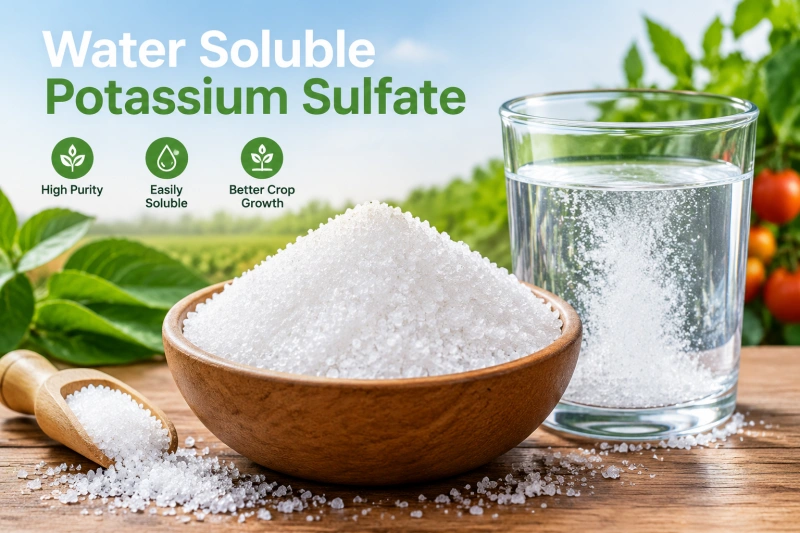
water soluble potassium sulfate is used to supply potassium and sulfur in agricultural applications where fertilizer dissolution and nutrient delivery need careful consideration. However, not every potassium sulfate product performs in the same way. Solubility, insoluble residue, chloride content, raw material purity, and processing conditions can all affect the finished product.
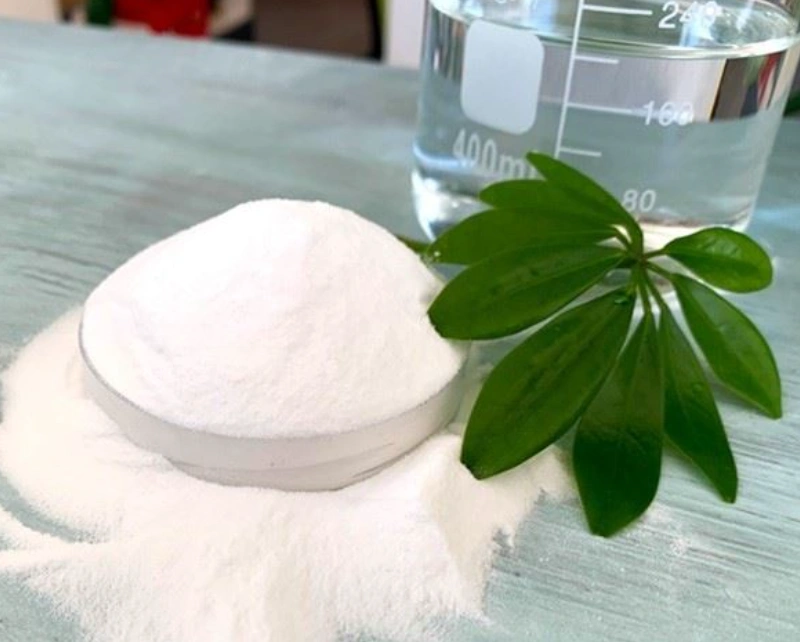
For fertilizer manufacturers, producing a suitable grade requires more than selecting a machine. The production route, raw materials, process controls, and finishing equipment must match the target specifications. Buyers also need to understand whether a product is suitable for their intended application. This guide explains the key quality considerations and how LANE’s fertilizer production equipment may fit into an SOP manufacturing project.
Why Are More Buyers Looking for Water Soluble Potassium Sulfate?
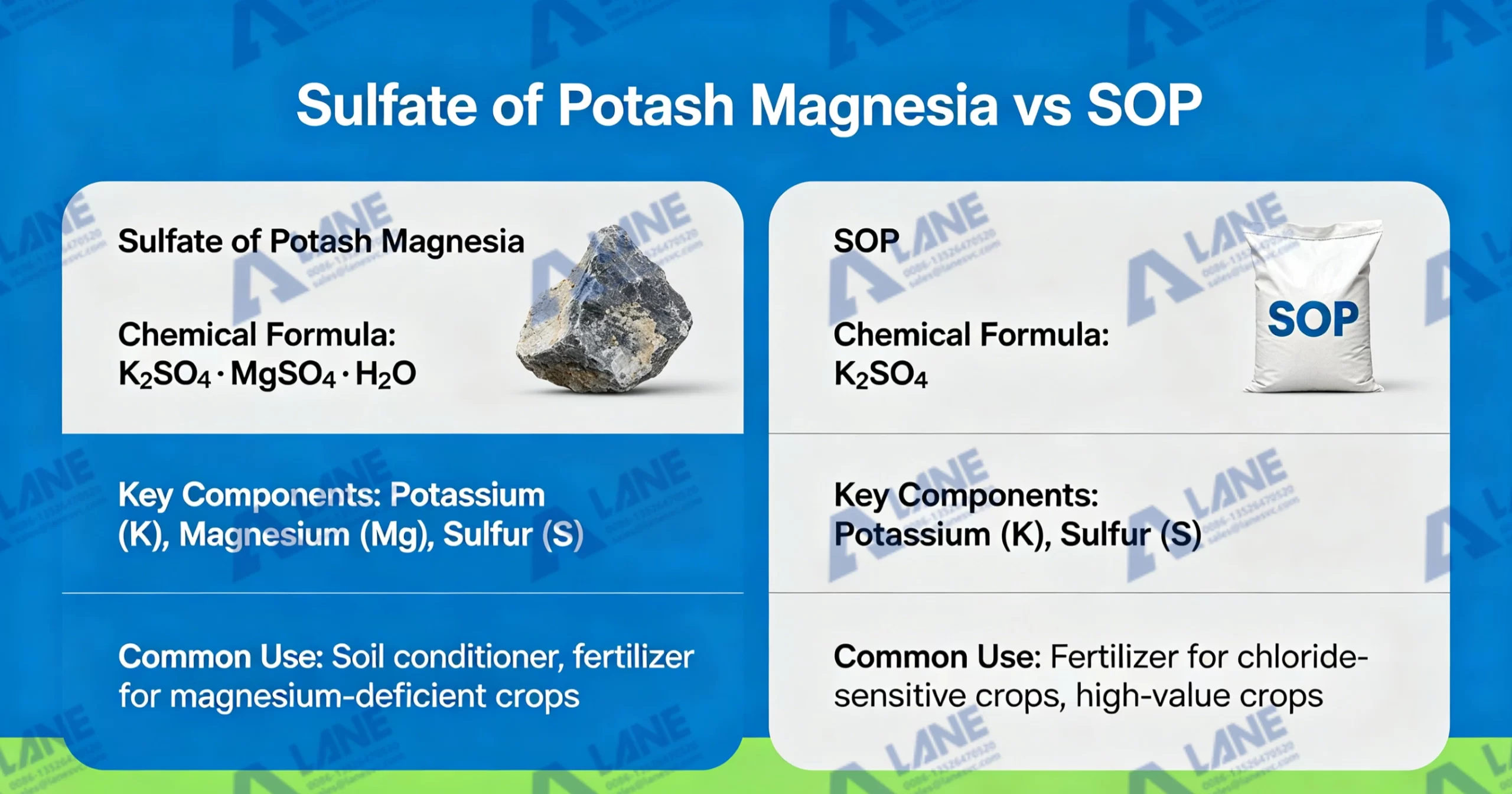
When evaluating water soluble potassium sulfate, buyers should know that potassium sulfate, also known as sulfate of potash or SOP, supplies potassium and sulfur without adding chloride as part of its chemical formula. Potassium supports water regulation and other essential plant functions, while sulfur contributes to protein formation and normal plant growth.
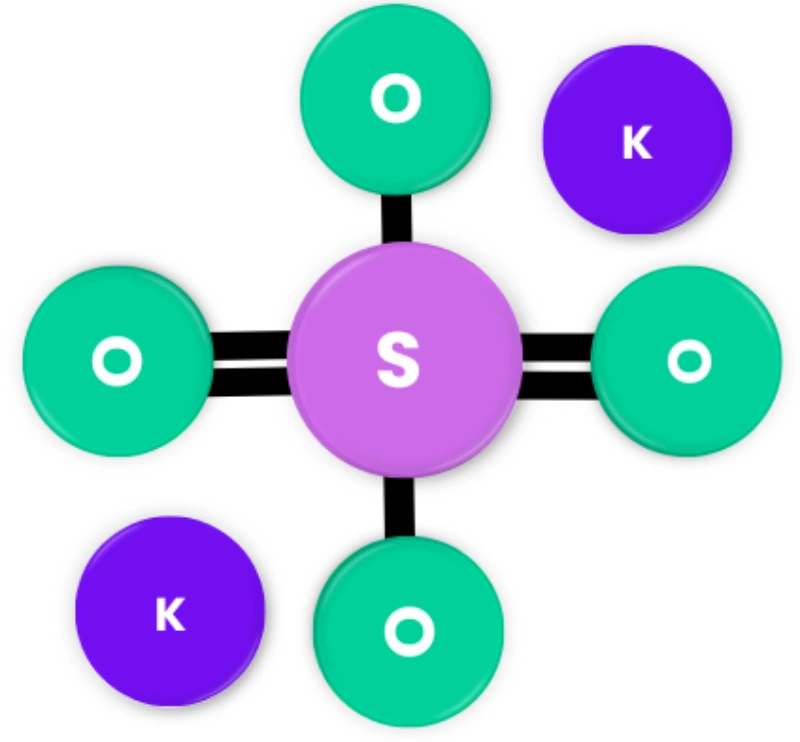
These characteristics make water soluble potassium sulfate relevant to crops and growing conditions where chloride management matters.Fruit, vegetable, tobacco, and other specialty crop producers may consider potassium sulfate when choosing a potassium source. The right fertilizer, however, depends on soil conditions, crop requirements, irrigation water, and the overall nutrient program.
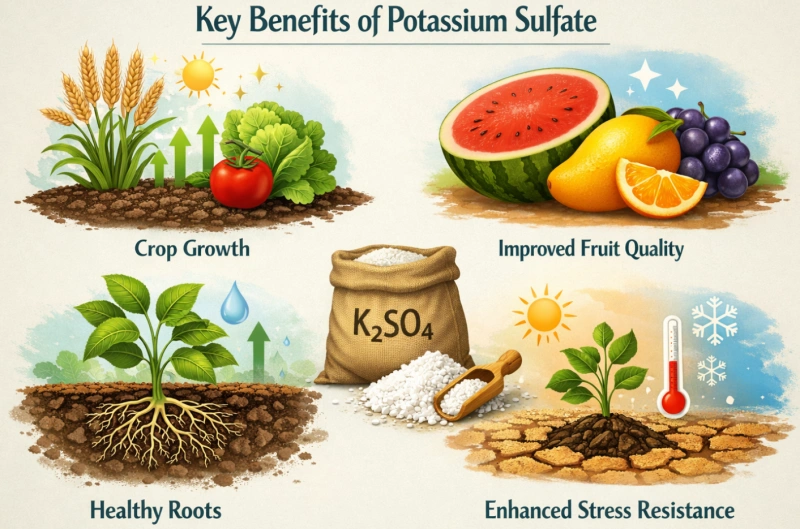
Interest in water soluble potassium sulfate is also connected to fertigation and controlled nutrient delivery. Greenhouse operators and growers using drip irrigation often need fertilizers that dissolve appropriately and work with their injection and filtration systems. Yet potassium sulfate is less soluble than potassium chloride, so a product’s suitability for fertigation should never be assumed from its name alone.
Buyers should check the product specification, dissolution conditions, and insoluble residue limits before making a decision. A product designed for conventional soil application may not meet the requirements of a demanding irrigation system.
For manufacturers, this creates an opportunity to serve different market segments with clearly defined product grades. The first step is to understand what customers actually need, rather than treating every SOP product as interchangeable.
What Should Buyers Check Before Choosing a Water Soluble SOP Product?
The product label for water soluble potassium sulfate provides useful information, but it does not tell the whole story.Buyers should review the technical data sheet and, where available, the certificate of analysis. These documents help confirm whether a particular grade matches the intended application.
Solubility and insoluble residue are particularly important for irrigation use. Ask how solubility is measured, what water temperature is used, and whether the result refers to a defined concentration. A test should also clarify whether any insoluble material remains after the specified mixing period. These details matter because suspended particles may affect filters or emitters.
Potassium and sulfur content should be checked against the product’s guaranteed analysis. Potassium is commonly expressed as potassium oxide equivalent (K₂O), while sulfur may be reported as elemental sulfur (S). Buyers should compare figures using the same reporting basis and verify the values against the supplier’s specification.
Chloride and other impurities deserve attention when the product is intended for chloride-sensitive crops or applications with strict quality requirements. Do not rely solely on descriptions such as “premium” or “high purity.” Ask for the relevant test results and applicable product standards.
Physical condition matters too. Moisture, particle form, packaging integrity, and storage conditions can influence caking and handling. For water soluble potassium sulfate, a consistent quality-control procedure is more reliable than judging product quality by appearance alone.
For a useful reference when comparing fertilizer specifications, consult the FAO fertilizer specifications resource. Buyers should still confirm the regulations and standards applicable in their own market.
Why Can the Same SOP Formula Produce Different Results?
Two products containing water soluble potassium sulfate may show different performance even when their main chemical component is the same.The reason is that a chemical formula does not describe every impurity, physical characteristic, or manufacturing variable.
Raw material purity is one important factor. Depending on the production route, unwanted components from feedstocks or process water may carry through into the finished product. Manufacturers targeting water soluble potassium sulfate therefore need to identify relevant impurities and determine how the process can control them.
Particle size can also influence dissolution speed. Smaller particles generally expose more surface area to water, which may help them dissolve faster under comparable conditions. However, fine particles do not automatically mean higher purity or lower insoluble residue. Dissolution performance needs to be evaluated through a suitable test.
The manufacturing route introduces additional variables. In processes involving solution preparation and crystallization, concentration, temperature, crystal formation, separation, and washing can influence the final material. In a Mannheim-based process, reaction conditions and downstream handling are different considerations. The appropriate control points depend on the actual process design.
Storage and transportation should not be overlooked. Moisture exposure, damaged bags, and poor warehouse conditions may contribute to caking or contamination. Even a product that met its original specification can develop handling problems if it is stored incorrectly.
Manufacturers should establish measurable quality criteria for each batch. These may include nutrient content, chloride, moisture, insoluble residue, and dissolution performance, depending on the intended grade. Consistent sampling and testing help identify problems before the product reaches customers.
How Does the Production Process Affect Water Soluble Potassium Sulfate Quality?
The correct production route for water soluble potassium sulfate depends on raw materials, required purity, target capacity, energy availability, environmental requirements, and the intended product form. No single process configuration is appropriate for every SOP manufacturer.
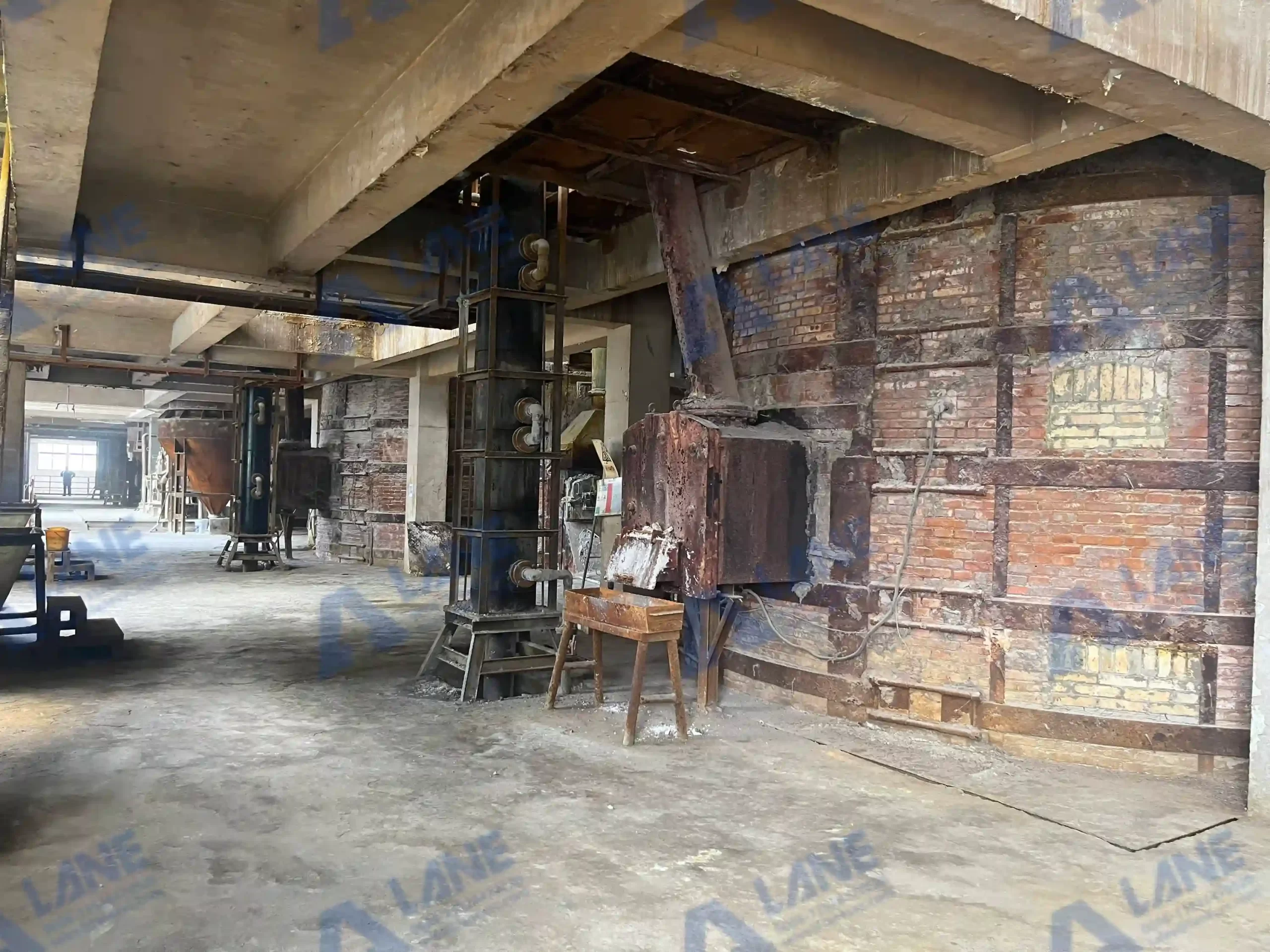
The Mannheim process is an established industrial method for producing potassium sulfate from potassium chloride and sulfuric acid. It involves a high-temperature reaction and generates hydrogen chloride gas, which requires suitable collection and treatment equipment. A project using this route must consider feeding, reaction control, heat management, corrosion-resistant materials, and gas handling.
Other production routes may use brines or solution-based chemistry and involve dissolution, reaction, purification, crystallization, solid-liquid separation, and drying. Their suitability depends on feedstock composition and process economics. These routes should not be treated as interchangeable without technical evaluation.
For manufacturers targeting water soluble potassium sulfate, downstream separation and quality checks are especially important. Depending on the process, relevant tests may include potassium content, chloride, insoluble residue, moisture, and solubility under defined conditions. Test results should be compared with the target specification rather than with a general claim that the product is water soluble.
Drying and product handling for water soluble potassium sulfate must also match the finished form. Excess moisture may contribute to caking during storage, while unsuitable handling can introduce contamination after purification. Packaging should protect the product from moisture and damage during transport.
A production plan should connect process design, quality testing, storage, and packaging. Adding a piece of equipment without checking its role in the complete process may increase investment costs without solving the actual quality problem.
Which Equipment Is Needed for a Potassium Sulfate Production Line?
Equipment selection for water soluble potassium sulfate should begin with the process route and raw material characteristics.A machine used for one SOP project may not be necessary for another. LANE’s SOP production equipment range includes machines that may be relevant to specific preparation, gas treatment, screening, cooling, and packaging stages.
Ball Mill and Cage Crusher
A Ball Mill may be considered when a suitable solid feedstock requires grinding to a specified particle size. A Cage Crusher can reduce the size of suitable materials before a later processing stage. Their use depends on the feedstock and process design. Neither machine should be presented as a universal requirement for water soluble potassium sulfate production.

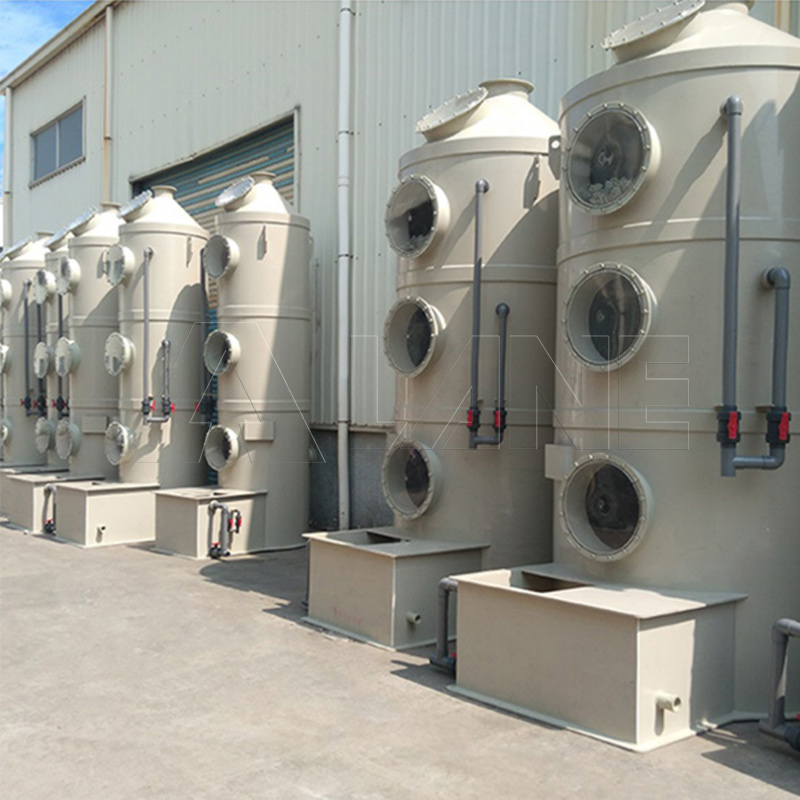
Spray Tower for Gas Treatment
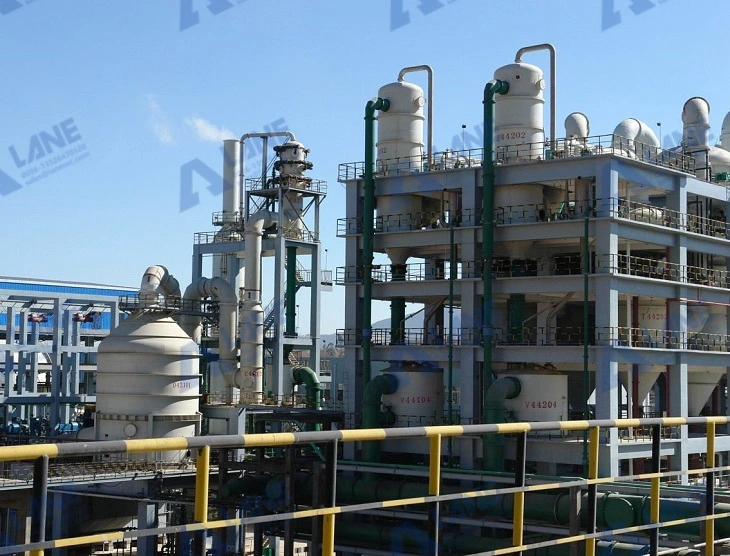
A Spray Tower may be used in industrial gas treatment, depending on its design and the gas stream. For a Mannheim plant, the hydrogen chloride generated by the reaction requires a properly engineered collection and treatment system. The equipment configuration must account for gas composition, corrosion, removal targets, and environmental regulations.
Screening, Cooling, and Packaging
A Drum Screening Machine can separate solid materials by particle size where screening is required. A Drum Cooler may be suitable for cooling hot granular products. An Automatic Packing Machine supports weighing and packing finished materials.
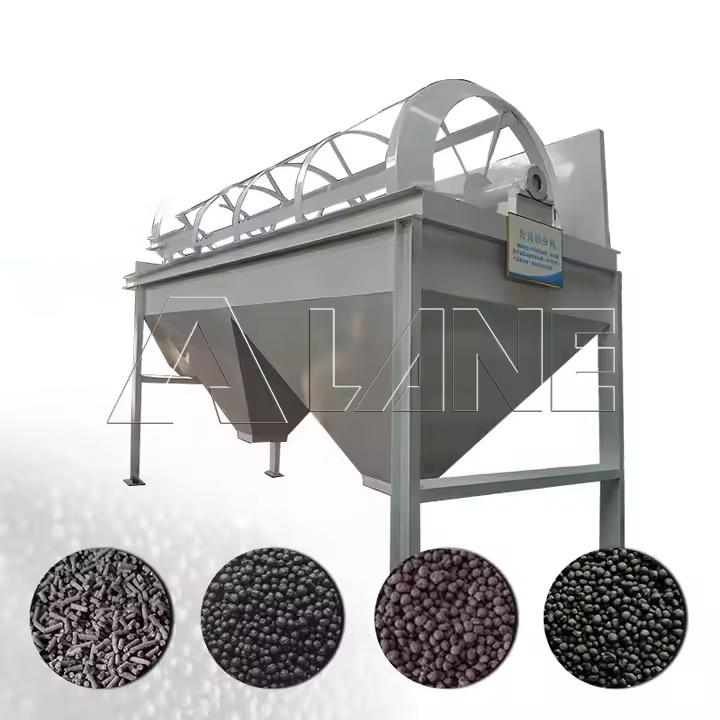
These machines are most relevant when the selected process produces a solid or granular product that requires downstream finishing. They do not independently guarantee solubility or purity. If the target is a highly soluble product for irrigation, process design and laboratory testing must establish whether the complete line can meet the required specification.
How LANE Helps Manufacturers Plan Their SOP Production Lines
LANE supplies fertilizer production equipment for projects where machine selection needs to match the manufacturing process. Before choosing individual units, manufacturers should define the raw materials, target grade, required capacity, plant conditions, environmental controls, and packaging format.
For a water soluble potassium sulfate project, the first question is whether the proposed production route can meet the required solubility, impurity limits, and nutrient analysis. The next step is to identify the operations needed to achieve those targets. Relevant equipment can then be evaluated according to its actual function in the complete line.
LANE’s product range includes mills, crushers, spray towers, screening machines, coolers, and packing equipment. The final configuration depends on the process design; not every project requires every machine. Manufacturers can review the LANE product page and SOP production line information when assessing possible configurations.
A productive equipment discussion should include feedstock information, product form, target quality parameters, expected output, and local operating conditions. These details make it easier to assess equipment compatibility and identify which technical questions need further engineering review.
Rather than selecting machines based only on their names, manufacturers should evaluate how each unit contributes to material preparation, process control, product finishing, or environmental management. This approach helps align capital investment with the project’s actual requirements.
Is Your Current SOP Production Process Ready for Water Soluble Products?
Producing a water soluble grade is not simply a matter of changing the product name or adjusting particle size. Manufacturers must verify that their production route and quality-control procedures can consistently meet the required nutrient analysis, solubility, and impurity limits.
Start by defining the target market and product specification. Review the raw materials, manufacturing route, purification or separation needs, testing methods, packaging, and storage conditions. If the existing line was designed mainly for conventional granular SOP, assess whether the process needs additional stages or different quality-control measures before investing in new machinery.
Ultimately, water soluble potassium sulfate must meet measurable quality requirements for its intended application. LANE can help manufacturers assess relevant SOP production equipment according to their raw materials, process, capacity, and finished-product specifications.

Write a Reply or Comment