
20T/H Turnkey NPK Compound Potassium Fertilizer Manufacturing Plant Full Set Production Machinery Details
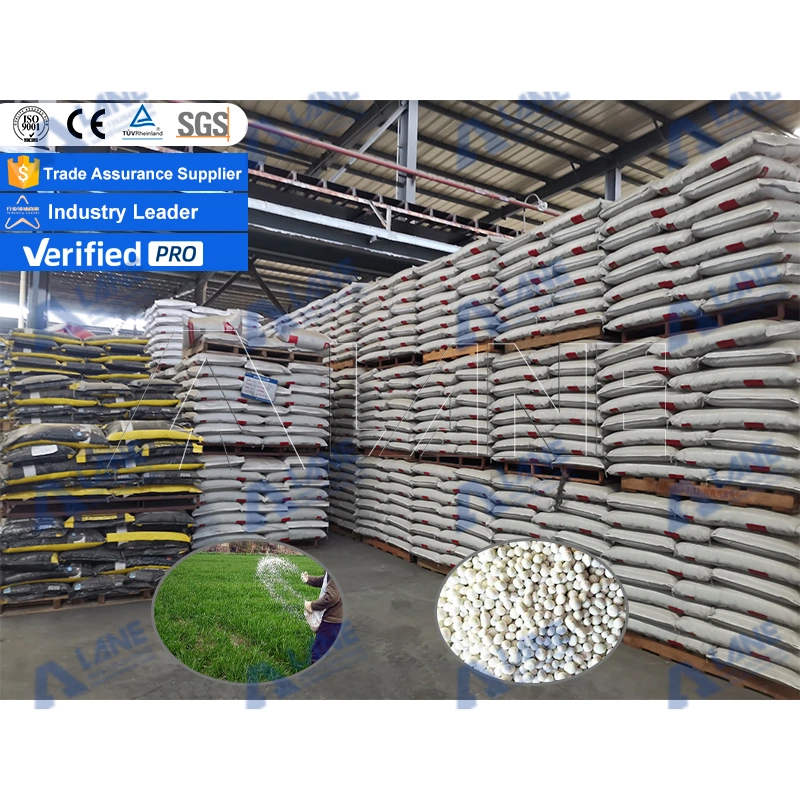
20T/H Turnkey NPK Compound Potassium Fertilizer Manufacturing Plant Full Set Production Machinery Details
Global agricultural demand for high-nutrient NPK compound fertilizer keeps rising year by year. NPK fertilizers provide balanced nutrients to the crops and plays a critical role in boosting crop yields. Producers and investors who wants to tap into the growing global demand for high-efficiency compound fertilizers, LANE Heavy Industry has researched, developed and manufactures the 20T/H turnkey NPK compound potassium fertilizer manufacturing plant, a fully integrated complete production line tailored for industrial-scale NPK potassium compound fertilizer production. This fully automated NPK fertilizer manufacturing plant combines automated batching, advanced granulation technology, and precision packaging into a single, efficient production system.
This article provides breakdown of a 20-ton per hour (T/H) turnkey NPK compound potassium fertilizer manufacturing plant designed and supplied by LANE Heavy Industry Machinery Technology Co., Ltd.
What Is a Turnkey NPK Compound Potassium Fertilizer Manufacturing Plant?
A turnkey NPK compound potassium fertilizer manufacturing plant refers to a complete, ready-to- operate production facility that is manufactured, delivered, installed and commissioned as a single integrated solution. The 20 T/H featured in this article means this plant can produce 20 tons per hour of premium quality NPK (Nitrogen, Phosphate, Potassium) compound fertilizers.
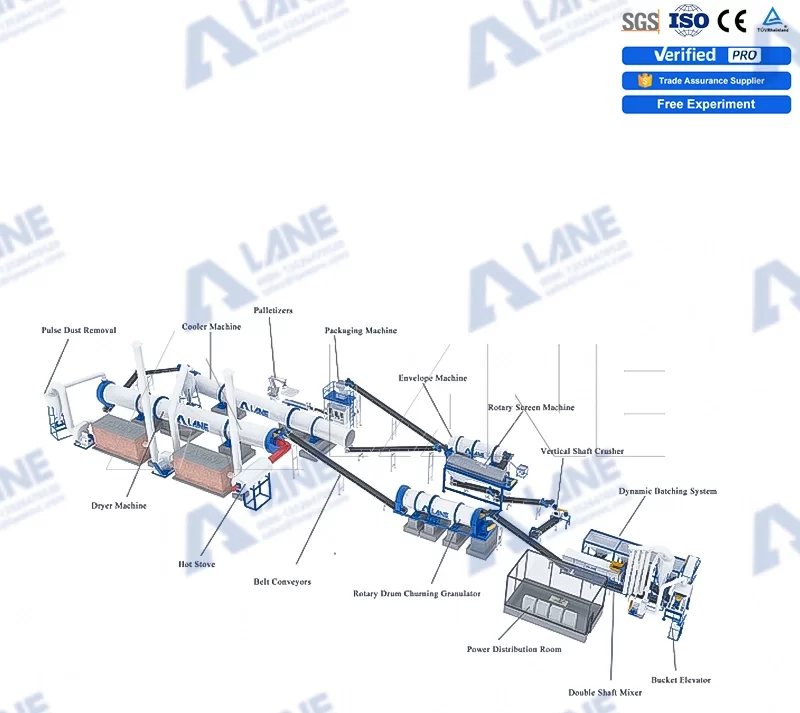
NPK compound potassium fertilizer manufacturing plant designed and manufactured by LANE Heavy Industry is proven and famous for its stability, efficiency, and customization flexibility. This NPK fertilizer manufacturing plant integrates modern technologies and automation for raw material mixing, granulation, drying, cooling, screening, and packaging into one seamless process.
Main Raw Materials
Ther term NPK stands for Nitrogen, Phosphate, and Potassium. these are the three primary nutrients for plant growth. The production process of this NPK compound potassium fertilizer manufacturing plant utilizes MOP/SOP as the primary potassium source.
Raw materials used in this NPK compound potassium fertilizer manufacturing plant include:
- Nitrogen (N):Provided by urea, ammonium nitrate, or ammonium sulfate
- Phosphate (P):Provided by phosphate rock or superphosphate
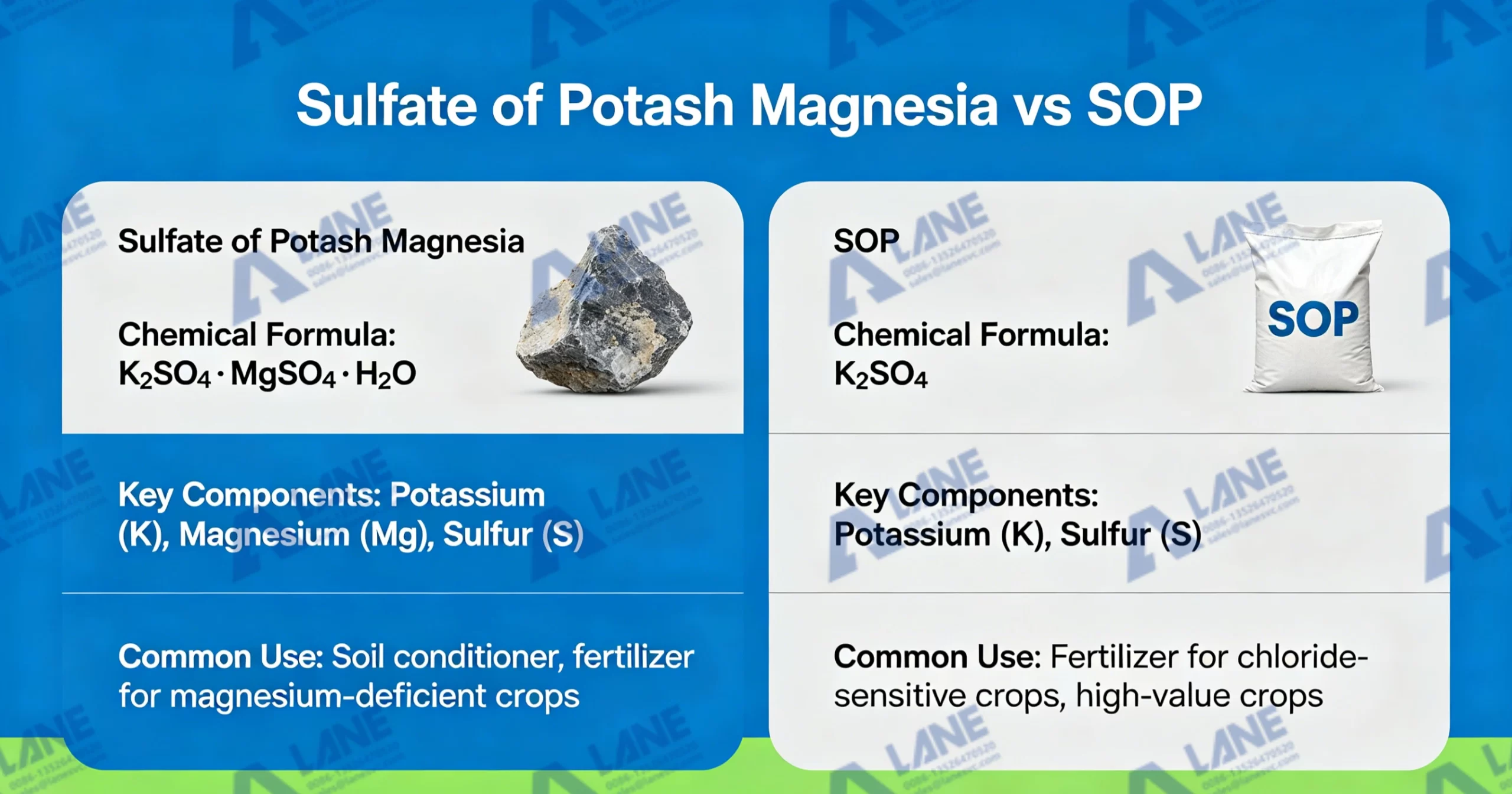
- Potassium (K):Provided by MOP (potassium chloride) or SOP (potassium sulfate)
These materials are combined in precise ratios to produce compound fertilizers tailored to specific crop requirements and soil conditions
Core Equipment and Process Flow
A high-performance NPK fertilizer manufacturing plant requires carefully engineered sequence of machinery. LANE Heavy Industry equips its 20 T/H NPK compound potassium fertilizer manufacturing plant with industry-leading components, each designed for continuous, automated operation.
- Raw Material Batching System
The production process begins with the automatic dynamic batching system. LANE NPK fertilizer manufacturing plant features a dynamic batching machine equipped with a weighing scale and sensors to accurately dispatch raw materials into the production line. manufacturer can input the ratio or amount in the PLC control panel to control the formulation.
Raw materials sometimes arrive in clumps or oversized particles. Our NPK fertilizer manufacturing plant utilizes a hammer crusher or cage crusher to reduce the raw material into uniform powder. Proper crushing of the raw material ensures optimal mixing consistency and improves final granule quality.
After crushing, raw materials enter a twin-shaft mixer or horizontal mixer. This NPK compound potassium fertilizer manufacturing plant relies on the mixer to achieve uniform distribution of all nutrients. mixing ensures that each granules contains balanced NPK content. uniform mixing is critical for product quality and customer satisfaction.
Granulation represents the core transformation step in any NPK compound potassium fertilizer manufacturing plant. LANE’s rotary drum granulator is a wet granulator; it is enhanced with steam/water injector. It produces round, dense granules measuring 3.5–4mm in diameter. The rotary drum granulator achieves a granulation rate of over 90%. This minimizes material waste and maximizes production efficiency.
- Drying System
After granulation, the granules contain around 20-30% moisture. This moisture must be removed to prevent caking and ensure long-term storage stability. The NPK compound potassium fertilizer manufacturing plant employs a rotary drum dryer, often configured as a two-stage system to reduce moisture content to approximately 2-3%. The cyclone collectors and bag filters capture dust to maintain clean air discharge.
After high-temperature drying, granules must be cooled before further processing. LANE production line features a counter-flow rotary cooler that reduces granule temperature to within 5°C above ambient room temperature. Proper cooling solidifies granule structure, prevent caking, and maintains product integrity during storage and transportation.
A vibrant rotary screening machine separates on-spec granules from oversized and undersized particles. Qualified granules proceed to the next stage, while off-spec material is returned to the crusher for reprocessing. This closed-loop recycling feature in the NPK compound potassium fertilizer manufacturing plant eliminates raw material waste and maximizes yield.
- Coating System
Surface coating prevents moisture-induced caking and allow manufacturer to add micro nutrients and controlled release coatings. Coated fertilizers maintain free-flowing characteristics and retain their market appeal throughout the supply chain.
The final stage of this NPK fertilizer manufacturing plant is automated weighing and bagging. Electronic weighing and packaging machine fill 25–50 kg bags with accuracy within ±0.2%. This ensures consistent product weight and reduces labor costs. An optional palletizing system may be integrated for bulk handling.
- Centralized PLC Control System
The entire NPK compound potassium fertilizer manufacturing plant operates under a centralized PLC control system. user can utilize SCADA/PLC automation to monitor and control the whole production line. Operators can adjust all production parameters from a single console; this reduces labor requirements and minimizes error rates.
Key Technical Specifications Summary
The 20 T/H NPK compound potassium fertilizer manufacturing plant from LANE Heavy Industry delivers the following performance benchmarks:
| Specification | Value |
| Production Capacity | 20 tons per hour |
| Granulation Method | Wet granulation (rotary drum with steam injection) |
| Granulation Rate | ≥90% |
| Final Moisture Content | ≤2–3% |
| Granule Size | 3.5–4 mm |
| Potassium Source | MOP (up to 62% K₂O content) |
| Packaging Accuracy | ±0.2% |
| Control System | PLC centralized automation |

Advantages of the LANE Heavy Industry Turnkey Solution
Investing in this NPK compound potassium fertilizer manufacturing plant offers multiple strategic benefits:
- Complete Turnkey Delivery: From initial 3D drawing design and process flow layout to manufacturing, installation, commissioning, and operator training, LANE provides end-to-end project execution.
- Flexible Formulation: The NPK compound potassium fertilizer manufacturing plant can produce various NPK ratios (e.g., 15-15-15, 20-20-20) by adjusting batching parameters, accommodating different crop and soil requirements.
- Energy Efficiency: Optimized equipment configuration and heat recovery in the drying and cooling systems reduce operating costs.
- Environmental Compliance: Integrated dust collection systems and waste gas treatment meet international environmental standards.
- Five-Year Warranty: LANE offers a comprehensive five-year warranty along with overseas installation and after-sales support
FAQ: NPK Compound Potassium Fertilizer Manufacturing Plant
Q1: What does “NPK” stand for in compound fertilizer?
A: NPK stands for Nitrogen (N), Phosphorus (P), and Potassium (K)—the three primary macronutrients essential for plant growth. A balanced NPK compound potassium fertilizer manufacturing plant produces fertilizers containing all three nutrients in customizable ratios.
Q2: What is the actual production capacity of this plant?
A: This NPK compound potassium fertilizer manufacturing plant is rated at 20 tons per hour (T/H). Assuming continuous 8-hour daily operation, the plant can produce approximately 160 tons per day, or around 48,000 tons annually.
Q3: What type of potassium source is used?
A: The NPK compound potassium fertilizer manufacturing plant described in this article uses MOP (Muriate of Potash) or SOP (Sulfate of Potash). Both have their own advantages.
Q4: Does LANE Heavy Industry provide installation and training?
A: Yes. LANE offers a complete turnkey solution that includes 3D drawing design, process flow layout, manufacturing, equipment installation, commissioning, and comprehensive operator training. Overseas installation services are available with professional engineering teams.
Of course, we also offer other types of products for your different needs, you can click to view.
For more information, please contact us by sending an inquiry today! We can help you!



Write a Reply or Comment