
How to Implement Eco-friendly NPK Fertilizer Production on a Local Scale: A Complete Guide Based on Lane Heavy Industry’s Machinery
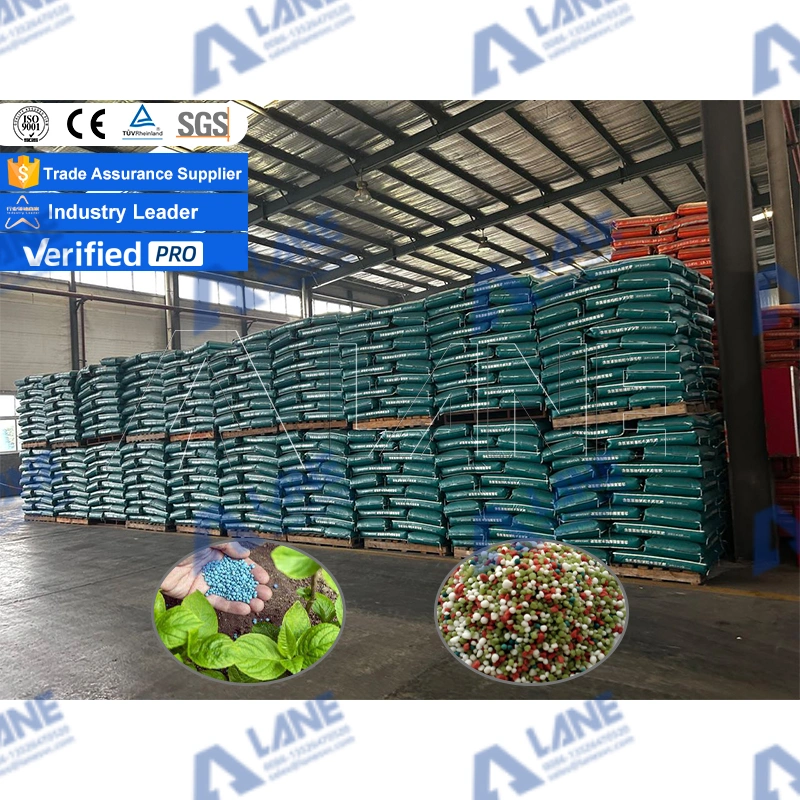
The agriculture industry around the world is shifting towards sustainability. Local communities and small-scale farmers are also seeking ways to reduce their environmental footprint while maintaining crop productivity. With volatile global supply chains and strict environmental regulations, localized eco-friendly NPK fertilizer production has emerged as a critical strategy for reducing logistics costs, improving soil health, and ensuring food security for local producers. Traditional manufacturing often consumes large amounts of energy, produces dust emissions, and generates wastewater. However, modern eco-friendly NPK fertilizer production line uses energy-efficient equipment and optimized processes to make environmentally friendly production.
Eco-friendly NPK fertilizer production is based on minimizing waste, reducing chemical runoff, and using renewable resources. It offers a solution that aligns environmental responsibility with local agricultural needs. LANE Heavy Industry Machinery offers advanced fertilizer production systems specifically designed to support small and medium-scale fertilizer plants. This guide explains how to build and operate a local-scale NPK fertilizer plant while prioritizing sustainability, cost efficiency, and long-term profitability with the help of LANE Heavy Industry.
Why Eco-friendly NPK Fertilizer Production Matters
Crops demand three major macronutrients: nitrogen (N), phosphorus (P), and potassium (K) to grow properly. They consume these nutrients more than other nutrients. However, creating balanced NPK fertilizer is a complex process and needs proper granulation and production methods, and fertilizer plants are facing growing pressure to reduce emissions and waste.
Implementing eco-friendly NPK fertilizer production provides several advantages:
- Lower carbon emissions during manufacturing
- Reduced dust pollution and odor release
- Efficient use of raw materials
- Lower water and electricity consumption
- Improved compliance with environmental regulations
- Better brand reputation among environmentally conscious buyers
For local producers, sustainable production is an environmental responsibility as well as a competitive business strategy.
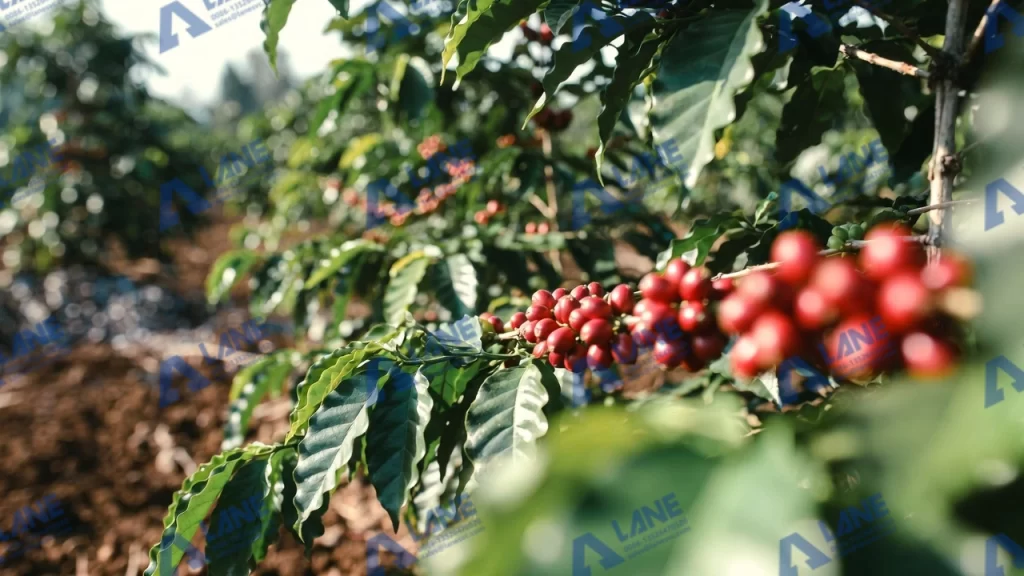
Why Choose “Localized” and “Eco-friendly”?
Traditional fertilizer production relies on large-scale, high-energy centralized factories. However, eco-friendly NPK fertilizer production at a local level offers significant advantages:
- Reduced Carbon Footprint: By eliminating long-distance transport, greenhouse gas emissions associated with logistics are lowered.
- Customized Formulas: Local production will allow you to customize and adjust Nitrogen (N), Phosphorus (P), and Potassium (K) ratios based on regional soil test results.
- Circular Economy: Eco-friendly production line can integrate local organic waste, such as livestock manure or crop stalks, and create organic NPK production and realize resource regeneration. Producers can use SOP fertilizer and organic fertilizer to create organic inorganic eco-friendly NPK fertilizer production.
Core Production Processes and LANE Heavy Industry’s Mechanical Advantages
To achieve true eco-friendly NPK fertilizer production line, the choice of equipment is very important. LANE Heavy Industry’s production line ensures low emissions through automation and energy-efficiency optimization.
- Raw Material Crushing and Mixing (Precise Pre-treatment)
The first step is processing raw materials such as urea, monoammonium phosphate, and potassium chloride to the appropriate fineness.
Key Equipment: LANE Heavy Industry’s chain crushers or cage crushers to create uniform powder, and horizontal mixers or disc mixers for mixing the nutrients.
Eco-Highlight: These machines feature optimized sealing structures to effectively suppress dust leakage. Subsequent high-speed mixing via mixers ensures uniform nutrient distribution in every granule.
- Advanced Granulation Technology
Granulation determines the physical quality of the fertilizer. To meet environmental goals, LANE Heavy Industry offers two primary solutions:
- Disc Granulator: Ideal for small to medium scale production. It features a granulation rate of over 93%. It has a simple structure and extremely low maintenance costs.
- Rotary Drum Granulator: Best for large scale production systems. It introduces steam or water to the mixed powders. The interior is lined with corrosion-resistant rubber or stainless steel, extending service life and reducing resource waste from frequent equipment replacement.
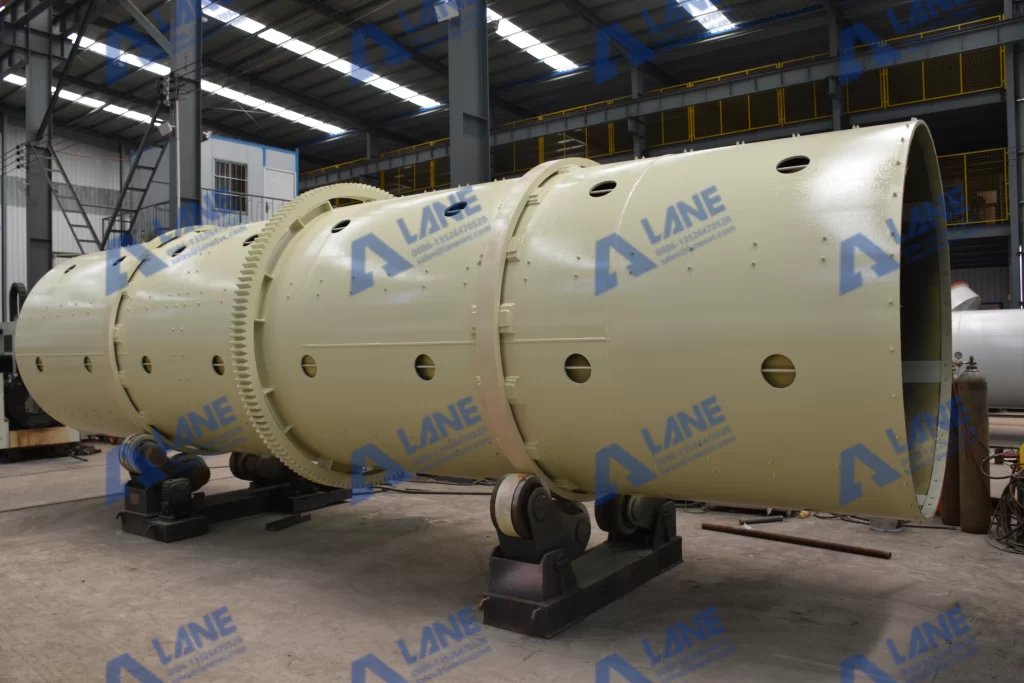
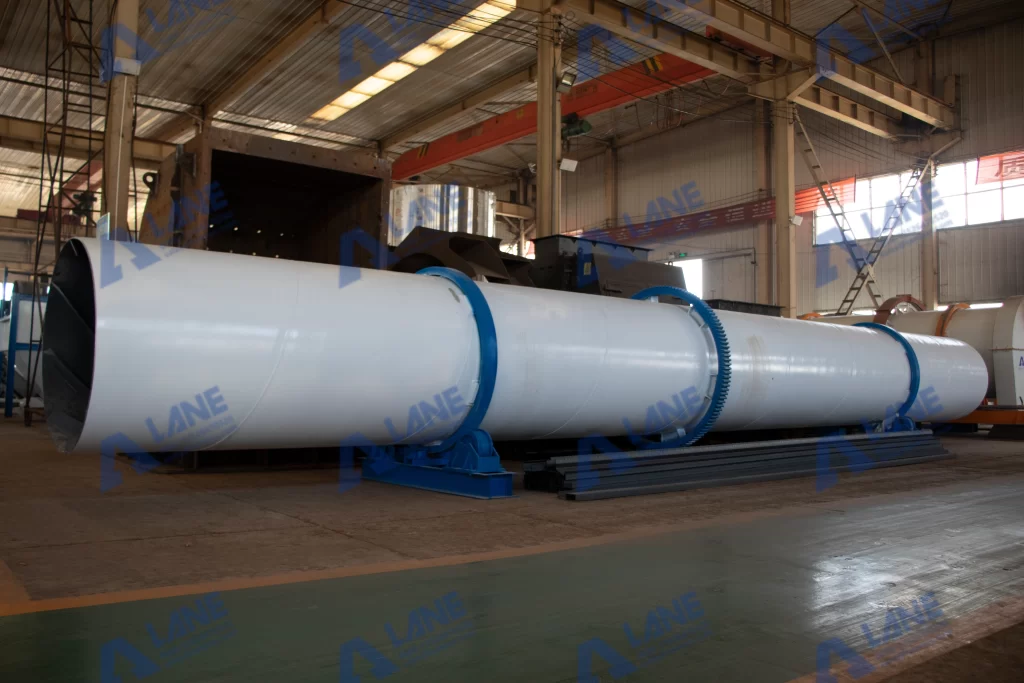
The drying process is the most energy-intensive part of a fertilizer production plant. LANE uses rotary dryer and rotary cooler in this stage. LANE’s dryers utilize a special internal lifting flight design to maximize heat exchange efficiency. It is paired with modern efficient hot air stoves which reduce the consumption of fossil fuel.
- Screening, Dust Collecting and Packaging
- Screening system: LANE provides rotary screener or vibrating screening machine for screening on-size granules from off-spec granules and fines. Off-spec granules and fines are sent back to the crusher to be recycled back to the granulation system.
- Cyclone and Bag Dust Collectors: LANE Heavy Industry implements cyclone dust removal or bag dust removal systems across the entire line to ensure air emissions meet local environmental standards.
- Automatic Packing Scales: These provide precise weight control for each bag and reduce material waste, enhancing the professionalism of the final product.
Five Steps to Implementing Eco-friendly NPK Fertilizer Production
Step 1: Soil Needs Assessment and Site Selection
Before breaking ground, conduct local soil sampling. Understanding the local soil NPK ratio will help the manufacturer provide the right fertilizer ratio and prevents nutrient leaching and environmental pollution.
Step 2: Determining Production Scale and Equipment Selection
LANE Heavy Industry provides customized fertilizer production lines. Our modular solutions range from 1 ton to 20 tons per hour.
- Small Local Plants (10k–30k tons/year):The Disc Granulation process is recommended.
- Large Industrial Projects (50k–200k tons/year):Rotary Drum or Extrusion Granulation processes are recommended. This type of production line requires fully automatic capability to run smoothly.
Step 3: Scientific Raw Material Formulation
The core of eco-friendly production lies in improving fertilizer utilization. LANE Heavy Industry suggests incorporating humic acid, amino acids, or beneficial bacteria into NPK formulas. This improves soil structure and reduces chemical runoff into groundwater.
Step 4: Employee Training and Automated Operations
LANE Heavy Industry provides comprehensive technical training to the technicians upon delivery. We cover everything from DCS automation systems to daily equipment inspections, ensuring the line operates at peak efficiency.
Step 5: Environmental Compliance and Quality Control
The producer can establish an internal lab to monitor granule strength, moisture content, and nutrient compliance. LANE’s machines are ISO9001 certified. This already ensures that your factory is already ahead of local environmental audits.
Economic Benefits and Social Impact
The Return on Investment (ROI) for an eco-friendly NPK fertilizer production line goes beyond the balance sheet:
- Lower Operational Costs: LANE’s machinery is designed for durability. It reduces downtime and spare parts require less frequent replacements.
- Policy Support: Many countries offer tax incentives or subsidies for companies that produce eco-friendly, low-carbon fertilizers.
- Brand Value: As a promoter of local sustainable agriculture, your business will gain higher levels of community recognition and government support.
Conclusion
Sustainable agriculture requires sustainable fertilizer manufacturing. By combining advanced raw material management, modern granulation technology, dust control, wastewater recycling, and automation, local producers can successfully establish eco-friendly NPK fertilizer production systems. For businesses that are seeking long-term growth, utilizing LANE Heavy Industry’s advanced technology to realize localized eco-friendly NPK fertilizer production is a decision that balances economic foresight with social responsibility.
Frequently Asked Questions (FAQ)
Q1: What is eco-friendly NPK fertilizer production?
It refers to manufacturing NPK (nitrogen-phosphorus-potassium) fertilizer using processes that minimize energy consumption, reduce emissions (dust, ammonia), recycle waste materials, and lower the overall carbon footprint compared to conventional methods.
Q2: Can a small-scale plant really be eco-friendly?
Absolutely. Modern small-scale equipment like LANE’s double-roller granulator avoids energy-intensive drying, and integrated dust and heat recovery systems make even a 1–5 tph plant highly sustainable.
Q3: What are the key eco-friendly features of LANE Heavy Industry’s NPK production lines?
Key features include waste heat recovery, ammonia recovery, dust emission control (≤20 mg/m³), 95%+ granulation rate (reducing rework and waste), and PLC automation that optimizes energy use.
Q4: How do I choose between a rotary drum granulator and a double-roller granulator for eco-friendly production?
Rotary drum granulators are superb for high-capacity and uniform round granules but require a drying step. Double-roller granulators use dry granulation, eliminating the need for drying and drastically cutting energy use—ideal for the smallest, most eco-conscious setups.
Of course, we also offer other types of products for your different needs, you can click to view.
For more information, please contact us by sending an inquiry today! We can help you!



Write a Reply or Comment