
SOP Fertilizer Crystallization System: Complete Guide for Industrial Potassium Sulfate Production
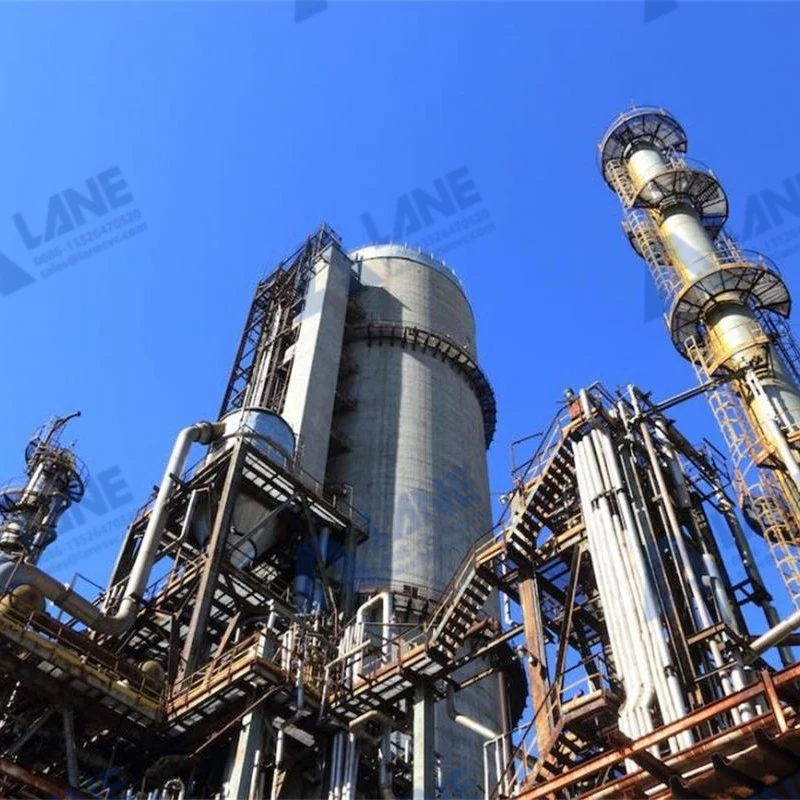
SOP Fertilizer Crystallization System: Complete Guide for Industrial Potassium Sulfate Production
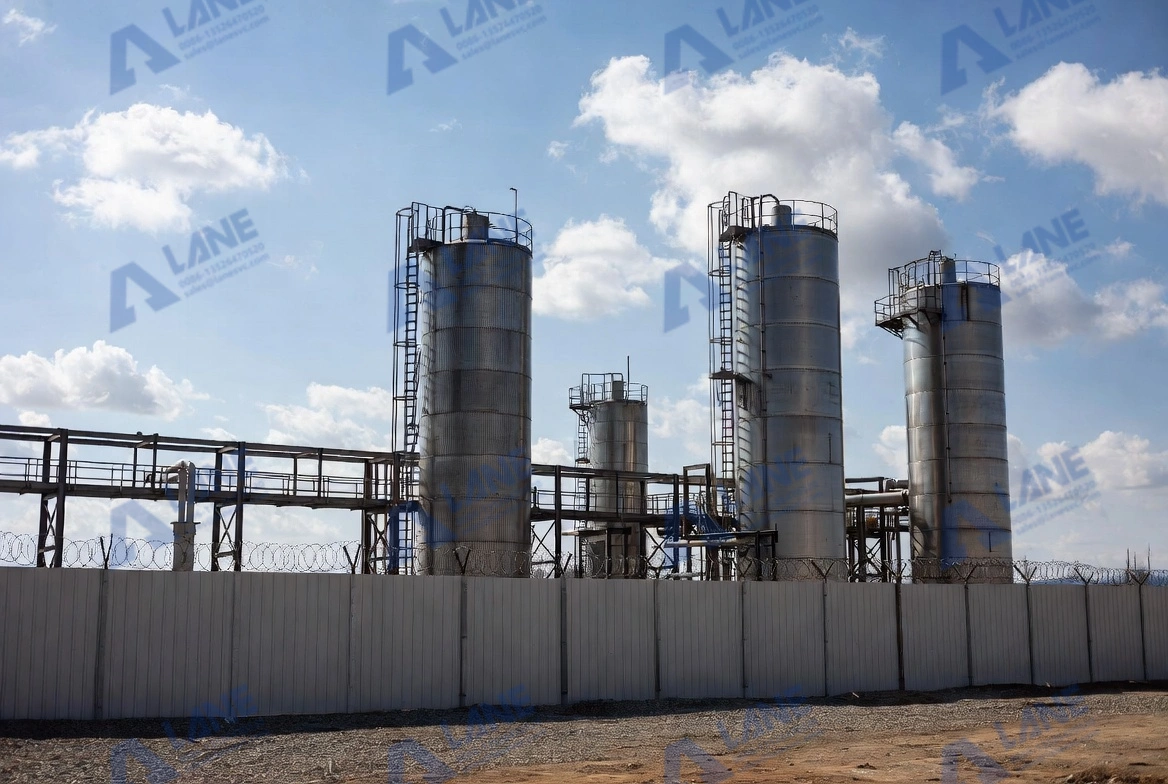
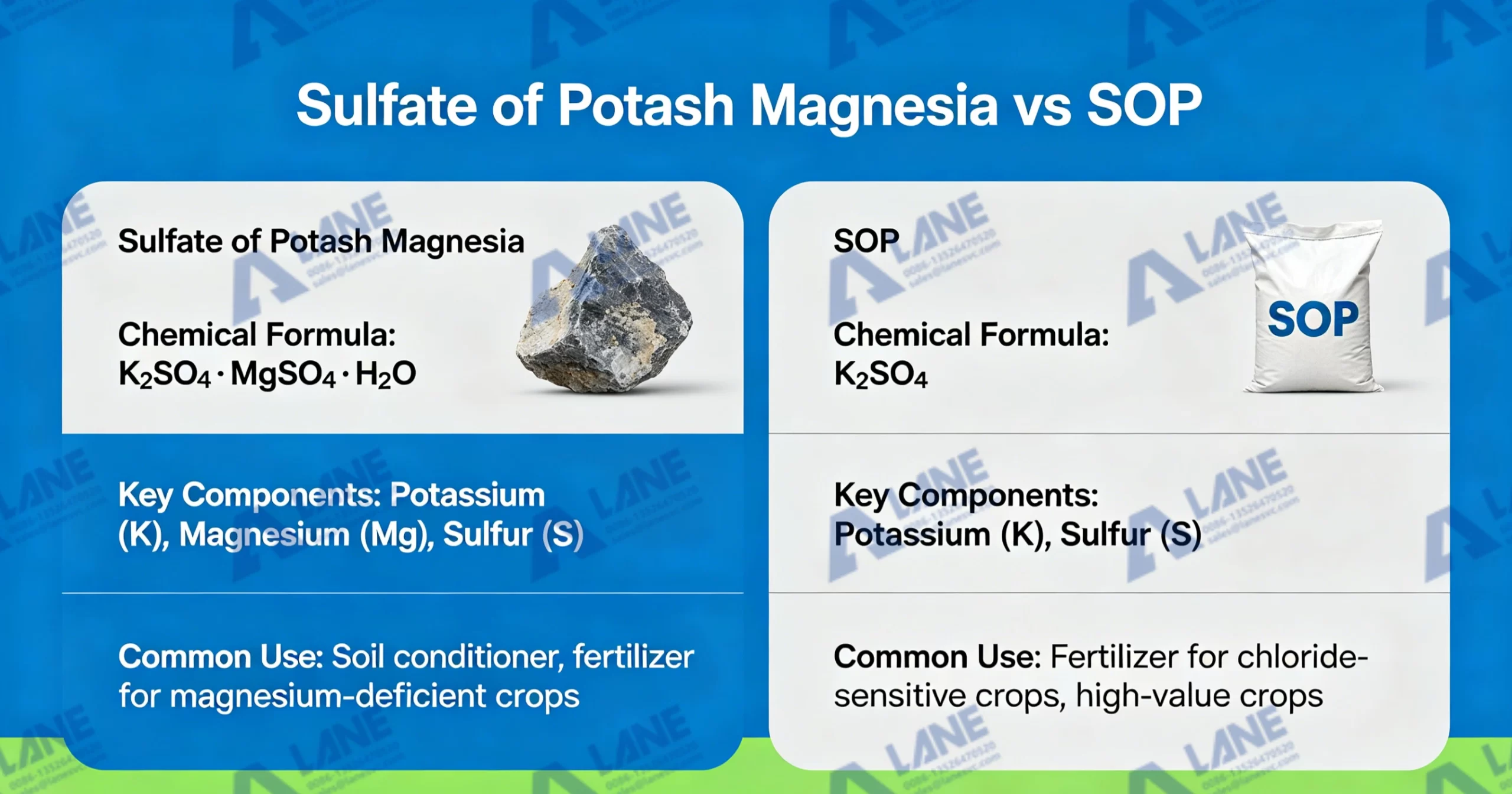
Soil salinity is one of the major problems in farming due to its effect on crops and the environment. Farmers and agribusinesses are looking for high-quality chloride-free fertilizers for farming. Potassium sulfate (SOP) is a potassium fertilizer which contains almost no chloride. Sulfate of Potash (SOP) is an indispensable fertilizer for high-value, chloride-sensitive crops such as tobacco, fruits, vegetables, and tree nuts. But creating premium quality SOP is a precision industrial process. To create high-purity SOP fertilizer, manufacturers require an efficient and stable SOP fertilizer crystallization system. This technology is one of the core systems for transforming raw materials into SOP fertilizer.
To achieve the strict purity, moisture, and particle size distribution requires efficient, large-scale processing equipment. Implementing a specialized SOP fertilizer crystallization system allows manufacturing plants to optimize chemical yield, maximize thermal energy efficiency, and produce premium-grade crystals capable of withstanding global storage and transport. At LANE Heavy Industry, advanced fertilizer machinery and complete production line solutions are designed to help fertilizer manufacturers improve output, reduce energy consumption, and ensure stable product quality.
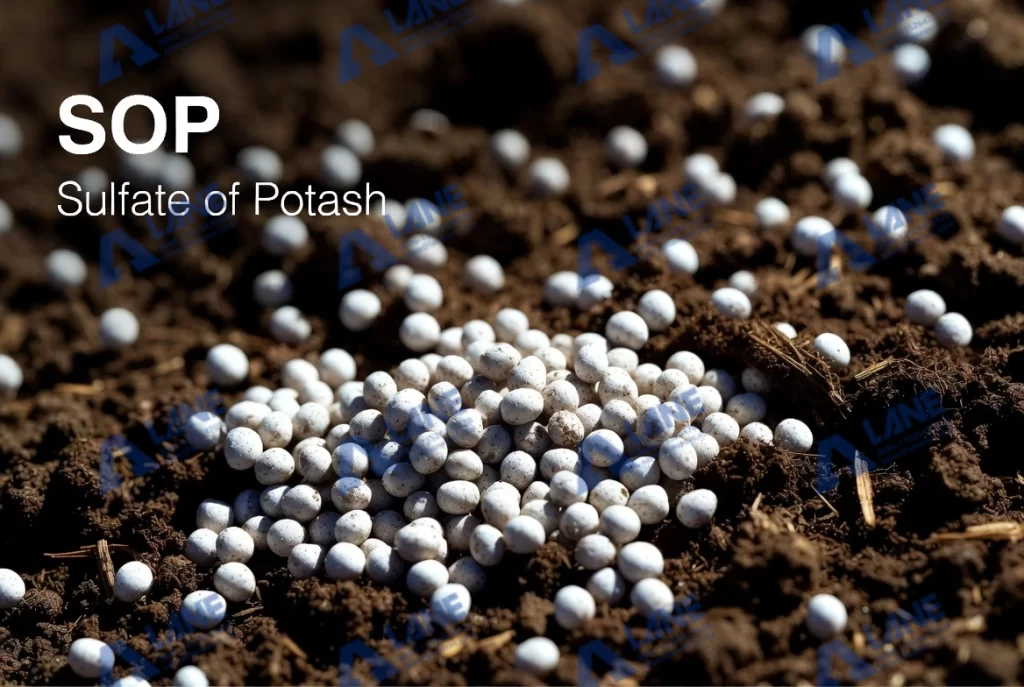
What Is an SOP Fertilizer Crystallization System?
An SOP fertilizer crystallization system is an industrial processing system used to crystallize potassium sulfate from liquid raw materials, brine, or chemical reaction solutions.
Its main function is to:
- Concentrate potassium sulfate solution
- Control supersaturation levels
- Promote crystal nucleation and growth
- Separate solid SOP crystals from mother liquor
- Prepare crystals for granulating, drying, cooling, and packaging
A complete SOP fertilizer crystallization system ensures:
- High purity potassium sulfate production
- Uniform crystal particle size
- Low impurity levels
- Stable continuous production
Without a reliable SOP fertilizer crystallization system, manufacturers face problems like poor crystal quality, inconsistent output, excessive energy use, and product contamination.
The Critical Role of Crystallization in SOP Manufacturing
The industrial manufacturing of potassium sulfate is generally achieved through the Mannheim process where direct reaction between potassium chloride and sulfuric acid creates SOP, or through the fractional crystallization of double salts derived from natural brines or minerals like polyhalite and schoenite. Regardless of the chemical source material, the conversion process culminates in an aqueous or slurry state where the separation of pure potassium sulfate from secondary products occurs.
This is where the chemical synthesis of potassium sulfate relies heavily on a precise thermal and chemical environment provided by the SOP fertilizer crystallization system. Crystallization is not merely a solid-liquid separation technique; it is a highly sensitive purification process governed by the laws of thermodynamics and crystallization kinetics.
A poor-quality SOP fertilizer crystallization system creates poor quality irregular particle size, excessive fines, and high levels of trapped impurities, which ultimately lower its commercial market value.
The main chemical transformation in the production pathways can be represented as follows:
In the Mannheim process, the reaction occurs in two stages:
KCl + H₂SO₄ → KHSO₄ + HCl
KCl + KHSO₄ → K₂SO₄ + HCl
For double decomposition methods utilizing magnesium sulfate brines, the interaction is governed by:
2KCl + MgSO₄ → K₂SO₄ + MgCl₂
Managing this reaction requires precise cooling and evaporation crystallization technology. Recovering solid potassium sulfate while handling magnesium chloride can be challenging for a poor quality SOP fertilizer crystallization system.
Step-by-Step Process Flow Across the Production Line
A robust SOP production line, manufactured by LANE Heavy Industry, converts raw potassium and sulfate sources into granular or crystalline products through five discrete stages:
[Raw Material Dosing] ➔ [Reaction & Dissolution] ➔ [SOP Crystallization System] ➔ [Centrifugal Separation] ➔ [Drying, Cooling & Packaging]
Stage 1: Dosing and Dissolution
Raw materials are continuously weighed using precise gravimetric feeders to maintain strict stoichiometric ratios. The components are fed into heavy-duty stirred tank reactors where hot water or recycled mother liquor creates a completely uniform, saturated feed solution.
Stage 2: Controlled Crystallization
The dissolved solution, containing potassium sulfate and magnesium sulfate, enters the SOP fertilizer crystallization system. Because potassium sulfate has lower solubility than magnesium sulfate, it crystallizes first under controlled cooling or evaporation. During the cooling phase, the automated vacuum adjustments within the crystallization system prevent flash-evaporation anomalies, allowing the operator to fine-tune the crystal residence time.
Stage 3: Solid-Liquid Separation
Once the crystal slurry reaches the target solid density, it is discharged into a continuous pusher centrifuge or decanter centrifuge. The centrifuge extracts the pure potassium sulfate crystals from the mother liquor, reducing the residual surface moisture content. The remaining liquid is routed back to the front of the production line to minimize raw material waste. LANE’s industrial centrifuges provide high G-force separation, efficiently removing sodium-rich mother liquor and washing crystals to achieve premium low-chloride specifications.
Stage 4: Thermal Drying and Cooling
The wet crystals enter a rotary drum dryer manufactured by LANE Heavy Industry. Using co-current or counter-current hot air streams, the dryer safely evaporates the remaining surface moisture down to less than 3%. The dried material then passes into a rotary cooler to bring the product down to ambient temperatures. This prevents caking during storage.
Stage 5: Conditioning, Screen Sorting, and Packaging
To satisfy varying market preferences, the crystals can be packaged directly as crystalline SOP or routed to a double-roller granulator to form dense, dust-free spherical granules. The finished product is screened to remove off-spec fines, and the uniform particles are sent to automated bagging systems.
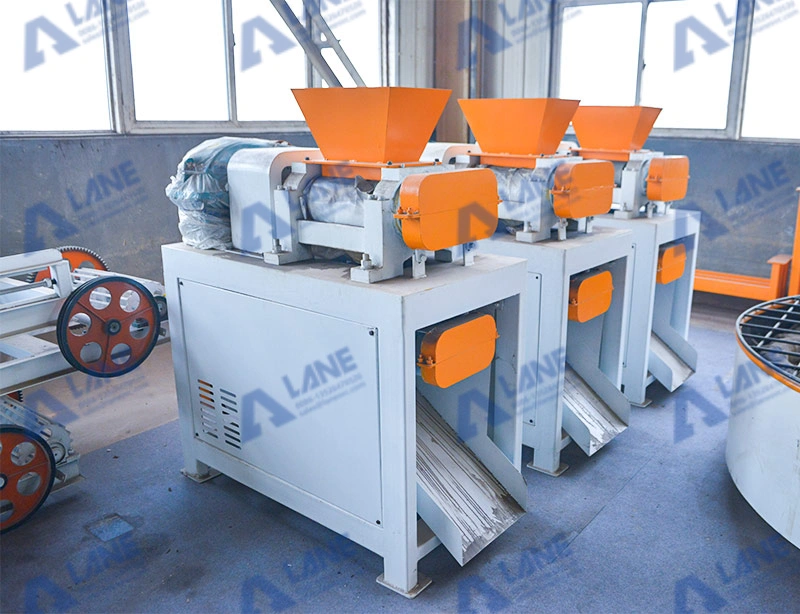
Key Machinery and Engineered Advantages of the LANE System
LANE Heavy Industry’s SOP fertilizer crystallization system and surrounding equipment offer distinct engineering advantages:
| Component | Key Feature | Benefit |
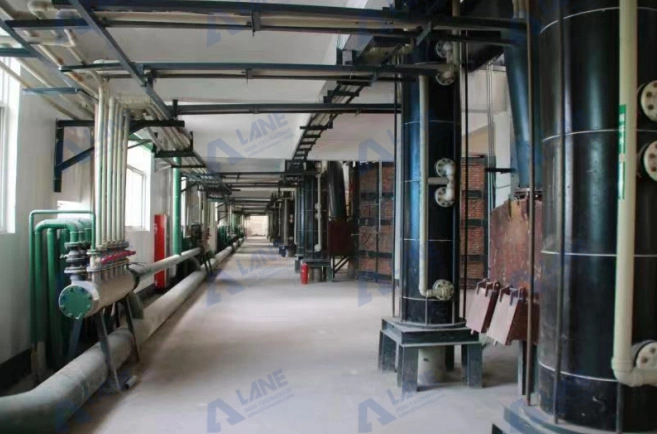
| Corrosion-Resistant Reactors | Fabricated from 316SS and specialty alloys | Extended service life in aggressive chemical environments |
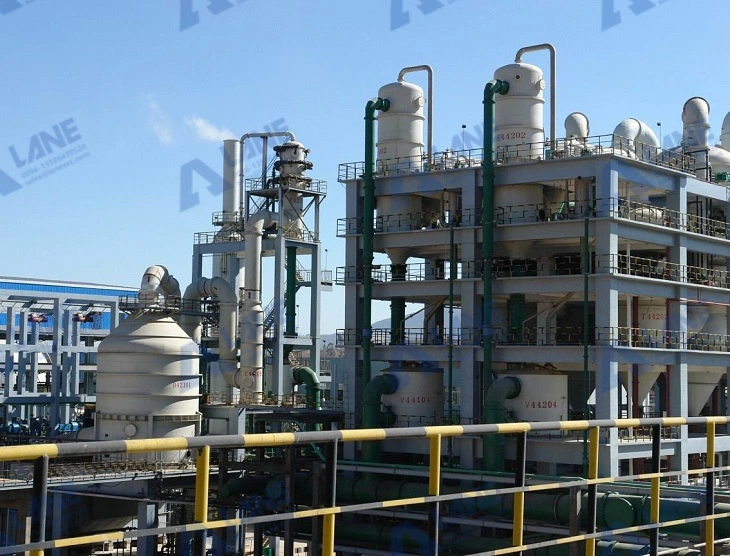
| High-Yield Crystallizers | Precise evaporation rate and supersaturation control | Optimized crystal size and purity |
| Industrial Centrifuges | High G-force separation with cake washing | Low chloride and magnesium content in final product |
| PLC/SCADA Unified Control | Centralized real-time monitoring | Rapid troubleshooting and process optimization |
| Modular Scalability | Lines from 1 to 50 tons per hour | Flexible capacity to match market demand |
Comparing Process Routes: Where the Crystallization System Fits
Different SOP production routes rely on the SOP fertilizer crystallization system in distinct ways:
- Mannheim Process: The reaction of KCl with H₂SO₄ at high temperatures produces molten SOP, which is subsequently cooled and crystallized. The crystallization system here primarily handles purification and crystal recovery from process liquors, ensuring that any unreacted salts are separated and recycled.
- Mineral-Based Route (Langbeinite): Raw ore (langbeinite) is crushed, dissolved in hot water, and the resulting solution is subjected to controlled cooling. This route places the crystallization system at the very center of the purification circuit, as potassium sulfate crystallizes preferentially while magnesium sulfate stays in solution.
- Schoenite/Glaserite Intermediate Routes: These two-step conversion processes use the crystallization system in multiple stages. First, an intermediate double salt (schoenite or glaserite) is crystallized from a mixed sulfate-chloride solution. This intermediate is then decomposed with water and/or KCl, and a second SOP fertilizer crystallization system stage recovers high-purity K₂SO₄ while the mother liquor recycles.
- Brine-Based Route: In operations utilizing natural brines (e.g., salt lakes, Dead Sea, solution mining of potash deposits), solar evaporation ponds first yield a mixed salt rich in schoenite, kainite, or carnallite. This harvested salt is then dissolved and processed through a carefully staged crystallization system. This route combines cooling and vacuum evaporation crystallization to isolate pure potassium sulfate from magnesium, sodium, and chloride impurities.
LANE Heavy Industry engineers its SOP fertilizer crystallization system to accommodate each of these process routes, adapting crystallizer design, thermal profiles, and material handling to suit specific feedstock chemistries.
Frequently Asked Questions (FAQ)
Q1: What is an SOP fertilizer crystallization system?
A1: It is an industrial process unit that separates pure potassium sulfate (K₂SO₄) crystals from dissolved salt solutions through controlled cooling, evaporation, and supersaturation management. It is the key purification step in SOP fertilizer production.
Q2: How does LANE Heavy Industry’s crystallization system differ from standard designs?
A2: LANE’s SOP fertilizer crystallization system incorporates forced-circulation vacuum technology, advanced corrosion-resistant alloys, and PLC-based process control to achieve higher crystal purity, better size uniformity, and lower energy consumption compared to conventional crystallizers.
Q3: What production capacities are available?
A3: LANE engineers production lines with capacities ranging from 1 ton per hour to 50 tons per hour, and custom designs for larger throughput are available.
Of course, we also offer other types of products for your different needs, you can click to view.
For more information, please contact us by sending an inquiry today! We can help you!



Write a Reply or Comment