
Pros and Cons of Double Decomposition for SOP Fertilizer in Modern Potassium Fertilizer Plants
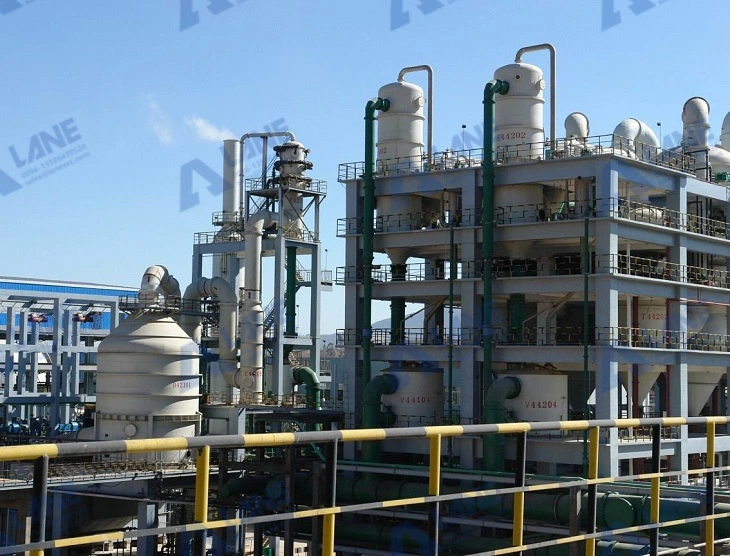
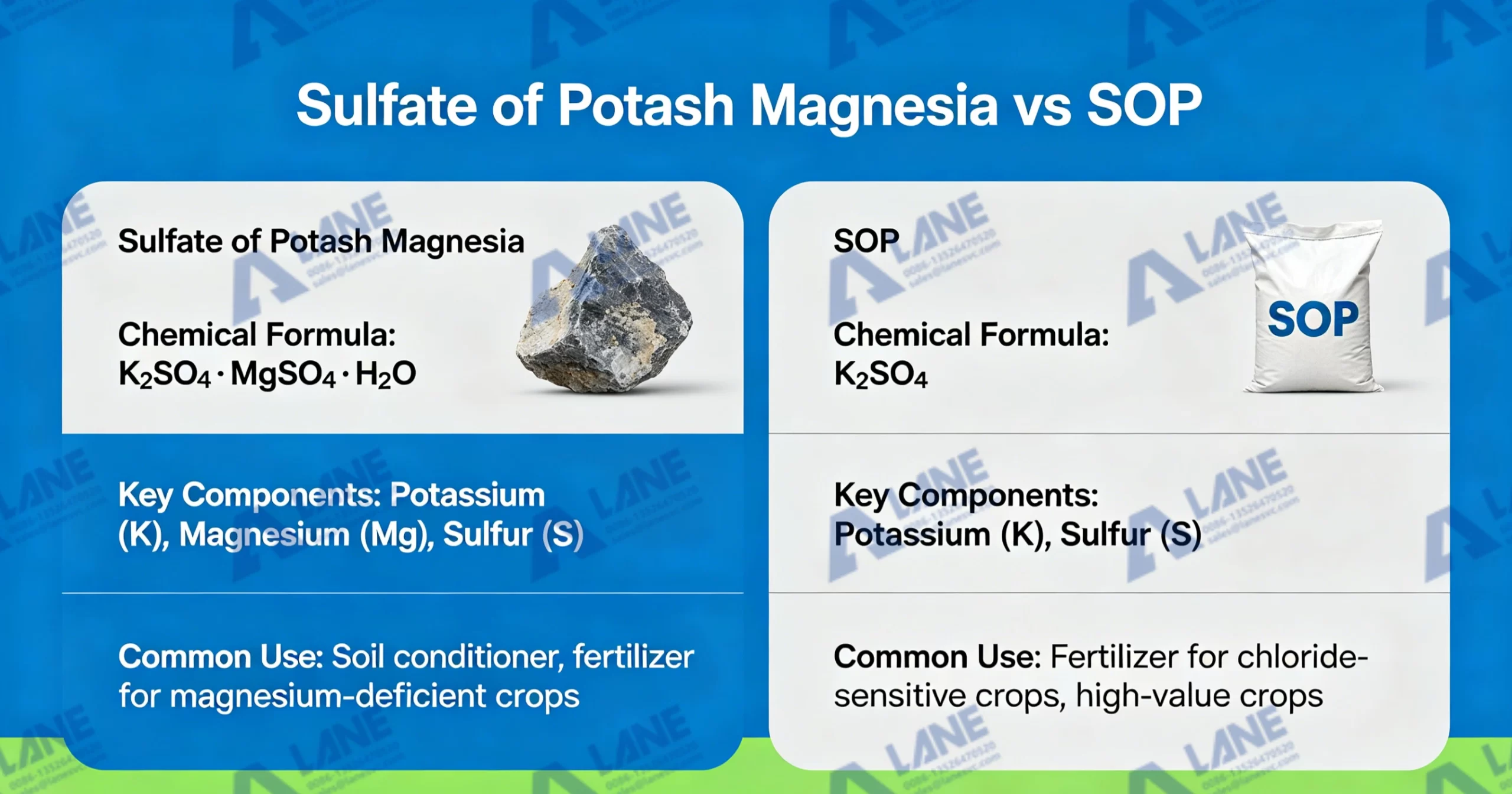
Potassium Sulfate (K2SO4), commonly known as Sulfate of Potash (SOP), is a premium potassium fertilizer which provide Potassium and sulfate without any harmful chloride. This fertilizer is used for cash crops, fruits, vegetables, and chloride-sensitive agricultural products. However, producing SOP fertilizer requires knowledge about the process and machinery. double decomposition is one of the modern and mature production process. This process relies on industrial grade corrosion resistant reactors and other machines to complete chemical conversion, crystallization, and purification. Analyzing the pros and cons of double decomposition for SOP fertilizer will allow producers to decide on this method based on production lines, control costs, and product quality.
The double decomposition process produces stable product and has lower energy requirement. LANE Heavy Industry, a leader in fertilizer equipment design and manufacturing, provides the advanced crystallization, separation, and thermal systems required to run this process profitably. This article discusses the pros and cons of double decomposition for SOP fertilizer based on practical plant operation with LANE Heavy Industry machinery.
What Is Double Decomposition for SOP Fertilizer?
Double decomposition method is a chemical reaction process which produce sulfate of potash by reacting potassium chloride (KCl) with sulfate-containing compounds such as sodium sulfate or ammonium sulfate. The pros and cons of double decomposition for SOP fertilizer starts from its liquid phase reaction:
2KCl + (NH4)2SO4 ➡ K2SO4 + 2NH4Cl
The reaction creates potassium sulfate crystal, and is separated from the mother liquor.
The most used industrial SOP production method is Mannheim process, which relies on dry reaction between MOP and sulfuric acid at temperatures exceeding 500°C. Double decomposition on the other hand, take place in an aqueous solution under mild temperatures (typically 25°C to 60°C). This method uses the solubility differences of the raw material to create SOP. Because of this, the production line requires highly technical crystallization curves, accurate cooling controls, and aggressive solid-liquid separation.
Understanding the Pros and cons of double decomposition for SOP fertilizer begins with analyzing how the process operates in a modern fertilizer factory. Double decomposition is used in regions where sodium sulfate resources are abundant and where energy price is higher.

The Pros of Double Decomposition for SOP Fertilizer
When evaluating the pros and cons of double decomposition for SOP fertilizer, the process is more advantageous toward small to medium-scale enterprises, regional producers, and new market entrants.
- Lower Initial Capital Investment (CAPEX)
The most significant advantage of the double decomposition process is its lower barrier to entry compared to Mannheim process. This production method does not require expensive, high-temperature Mannheim furnaces built from specialized corrosion-resistant materials.
The equipment structure is simpler and easy to control. The plant construction cost is also lower compared to Mannheim method. This is a cornerstone of any discussion about the pros and cons of double decomposition for SOP fertilizer.
- Lower Operating Temperatures and Energy Costs
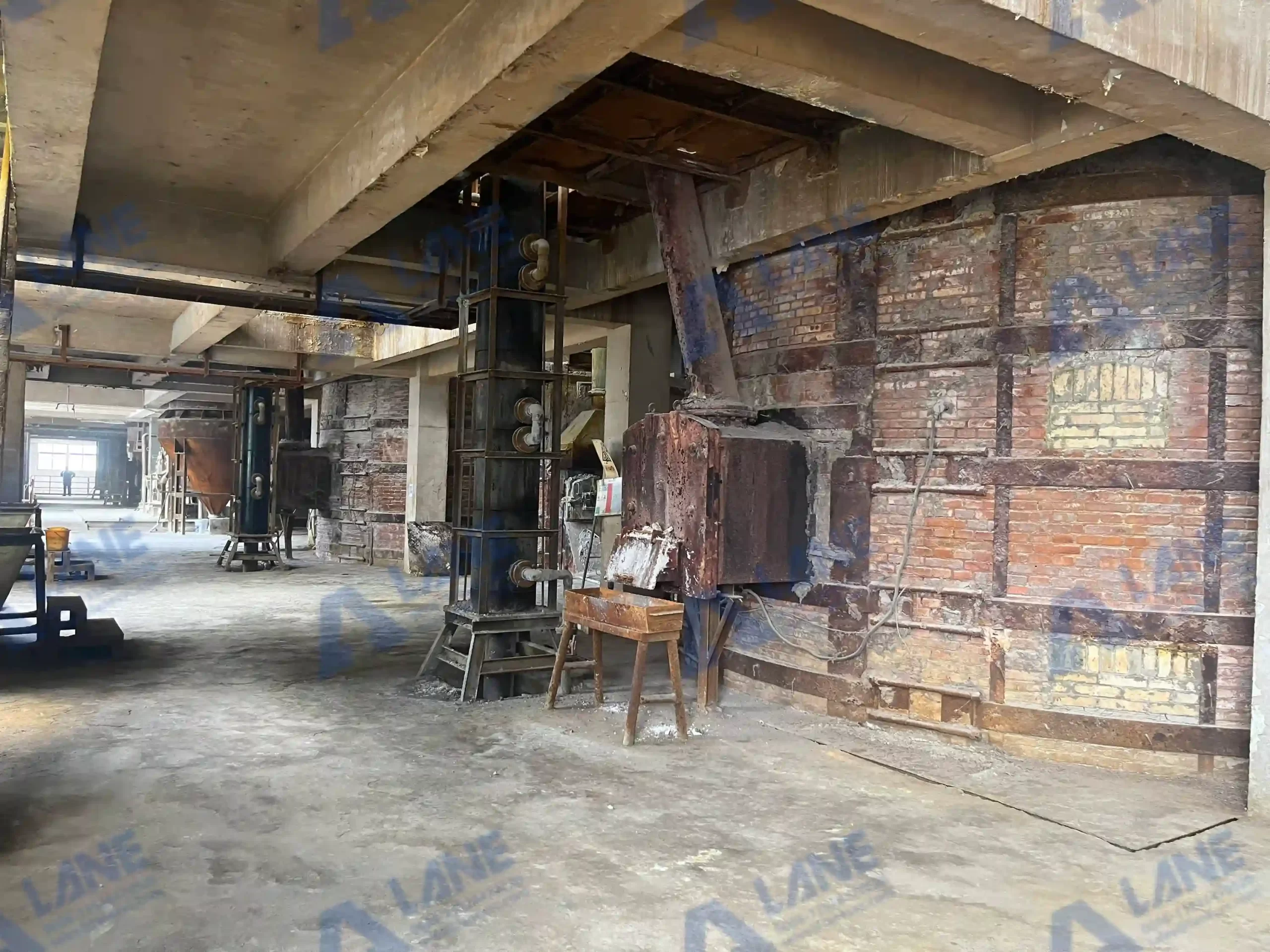
One of the immediate benefits of the process is its low operating temperature. Traditional Mannheim ovens operate at scorching temperatures of 500–600°C and consumes lots of energy. IT also requires specialized, expensive materials to withstand thermal stress. This translates into lower energy consumption during the reaction phase.
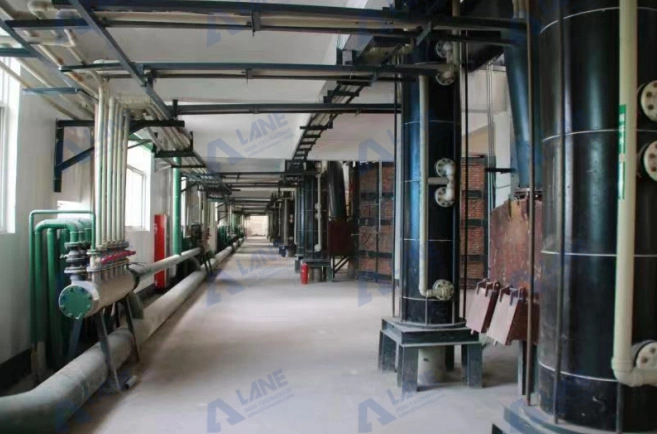
A modern plant Using machines from LANE Heavy Industry, benefit from the high-quality machinery that can handle the thermal load. Our production line minimizes carbon emissions and creates the production line that align with global environmental regulations.
- Flexibility in Raw Materials
double decomposition is a flexible production process. It can utilize a variety of sulfate sources, including ammonium sulfate, sodium sulfate, and phosphogypsum. This allows the producers to optimize the plants based on the locally available raw material, which increase import dependency and improve the profitability.
- Simpler Process Flow
The process flow of the double decomposition is simple and fast. This hydrochemistry-based route has short process flow with simple, specialized equipment. This production line doesn’t require gas recovery system to handle corrosive gas. This reduces the operational complexity.
- High-Value Multi-Nutrient Co-Products
If the raw material is Ammonium sulfate, then this production line creates the Ammonium Chloride as by product. This can be crystalized and dried into a nitrogen chloride fertilizer with 25% nitrogen or can be used in NPK compound fertilizer. This byproduct stream transforms into an additional revenue line, ensuring a zero-waste loop.
The Cons of Double Decomposition for SOP Fertilizer
Despite these clear operational benefits, the producers must manage chemical and economic drawbacks.
- Lower Product Purity and Quality Control
This is the most cited disadvantage of the Double decomposition process. Compare to Mannheim process, which directly yields high-purity SOP, the double decomposition process produces lower K₂O content. This requires additional purification and separation steps, which adds to process complexity.
LANE Heavy Industry provides dual stage reaction production line for high purity SOP. Our fully automatic production line reduce the operational complexity.
- Complex Separation and Purification
The co-production of ammonium chloride (NH₄Cl) creates an energy-intensive separation stage and requires large amount of energy. Managing the mother liquor and achieving a final product that meets premium-grade specifications (over 50% K₂O and less than 1% chloride) is an engineering challenge.
- Lower Production Efficiency and Scalability
Double decomposition is less efficient compared to the continuous, high-throughput Mannheim process. Its industrial scalability is lower compared to Mannheim process; this makes it ideal for small to medium projects but not suitable for large-scale export operations.
- Challenging Solid-Liquid Separation Needs
SOP crystals grown via wet decomposition are fragile and are in different in size. Separating these crystals from a dense, viscous mother liquor requires high-efficiency mechanical filtration. This process demands industrial-grade centrifuges that can separate the crystals without fracturing them, preventing the formation of excessive fines that complicate downstream granulators.
How LANE Heavy Industry Equipment Addresses the Pros and Cons of Double Decomposition for SOP Fertilizer
LANE Heavy Industry offers fully integrated SOP fertilizer production lines that are engineered to adapted to double decomposition chemistry. Our system include:
- Jackated reactors for controlled double decomposition.
- Crystallizers and classification units optimized for SOP crystal growth.
- Thickeners and highcapacity centrifuges for efficient solid–liquid separation.
- Fluidbed or rotary dryers for uniform SOP granule drying.
- Evaporation and crystallization trains for NH₄Cl or CaCl₂ recovery.
We customized our machine based on the pros and cons of double decomposition for SOP fertilizer. We can help manufacturer to achieve High purity SOP fertilizer with lower chloride content. Our crystallization machine creates dry crystal which is reduce the load of the dryer and granulator. Our two stage reaction system has higher potassium conversion and our closed loop operation reduces material waste.
FAQ
Q1: Is the double decomposition method still suitable for modern SOP fertilizer production?
A1: Yes. After analyzing the pros and cons of double decomposition for SOP fertilizer, it is found that this process has stable quality, wide raw material adaptability and low equipment matching cost. With LANE Heavy Industry machinery optimization, it is still the most cost-effective mainstream process for medium and large-scale SOP fertilizer production.
Q2: What is the biggest advantage of double decomposition SOP production with LANE Heavy Industry equipment?
A2: The core advantage is stable high-purity product quality and low operational failure rate. The equipment optimizes the double decomposition reaction link, effectively avoiding impurity residue, which is the key advantage summarized in the pros and cons of double decomposition for SOP fertilizer.
Q3: How to solve the high energy consumption disadvantage of the double decomposition process?
A3: Equipping with LANE Heavy Industry’s energy-saving evaporation and crystallization equipment can significantly reduce unit energy consumption. At the same time, matching intelligent parameter control systems can improve reaction efficiency and offset the energy consumption defect in the pros and cons of double decomposition for SOP fertilizer.
Of course, we also offer other types of products for your different needs, you can click to view.
For more information, please contact us by sending an inquiry today! We can help you!



Write a Reply or Comment