
The Future of Dipotassium Phosphate Production: Global Market Trends and Forecasts
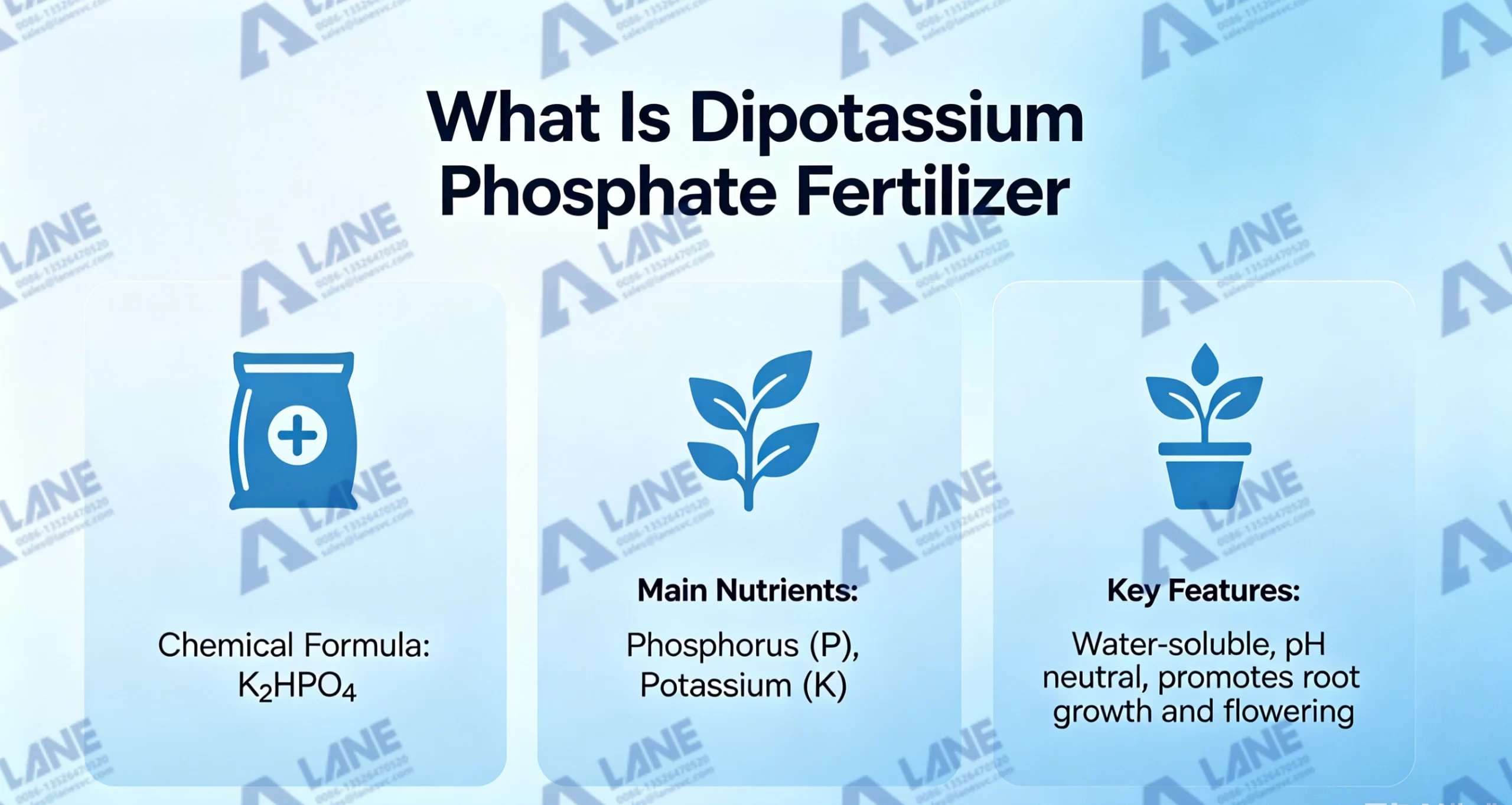
The future of specialty fertilizer market belongs to the producers who can purity fluctuations and slash energy costs together. For protecting the environment, counties around the world have made legislation for chemical runoff from fertilizer application. It has created a race among the producers for high-efficiency fertilizers. Among the specialty fertilizers, Dipotassium Phosphate production has emerged as an important segment due to its high nutrient concentration, excellent solubility, and its application range in agriculture, food processing, pharmaceuticals, and industrial sectors.
On paper, the production for Dipotassium Phosphate production is simple. A straightforward neutralization of phosphoric acid with potassium hydroxide. But in manufacturing, this highly exothermic reaction introduces brutal thermodynamic realities. A slight variation in dosing or heating can ruin entire batch. Standard production line can’t handle those reactions. LANE Heavy Industry has manufactured fully automatic production line that eliminates human error and can manufacture pure quality Dipotassium Phosphate.
In this deep drive, we explore the future of Dipotassium Phosphate production, growth drivers, regional forecasts, technological innovations, and how LANE Heavy Industry’s fertilizer production system help manufacture dominate this billions of dollars emerging market.
Understanding Dipotassium Phosphate Production
Dipotassium Phosphate (K₂HPO₄) is a water-soluble chemical salt which contains both phosphorus and potassium. These two are essential macronutrients required for healthy plant growth. The Dipotassium Phosphate production process involves the neutralization reaction between phosphoric acid and potassium hydroxide or potassium carbonate. The resulting solution undergoes further processing. It went to purification, concentration, crystallization, drying, and packaging to produce commercial-grade DKP.
The key characteristics of a premium grade DKP include Pure phosphorus and potassium content which can easily dissolve in water without leaving any residue or impurities. This fertilizer is suitable for fertigation and modern hydroponic agriculture.
Global Demand Drivers
The demand for Dipotassium Phosphate production is increasing due to its purity and its broad industrial uses. they key demand drivers is:
Growing Demand for Water-Soluble Fertilizers: Advance irrigation system such as drip irrigation and fertigation requires completely dissolvable fertilizer. As a water-soluble fertilizer Dipotassium phosphate meets this requirement. As precision agriculture expands worldwide, growers prefer soluble nutrient formulations, this creates strong demand for Dipotassium Phosphate production facilities.
Expansion of Greenhouse Agriculture: Protected cultivation system like greenhouse systems requires highly efficient nutrient management. Greenhouse vegetables, berries, flowers, and hydroponic crops rely on soluble fertilizers. Greenhouse gives total control to the farmers. This is making this system increasingly popular and the amount of greenhouse around the world is expected to grow.
Rising Global Food Consumption: The world’s population is expected to grow; it is increasing the pressure on agricultural producers to improve crop yields. Phosphorus and potassium are critical nutrients for root development, flowering, fruiting, and quality of the farming product.
Food and Beverage Sector: DKP is used as a replacement for sodium in the food industry. DKP dominates the food sector because it functions as a buffering agent in dairy products, creamers, processed meats, and beverage formulations. Plant-based beverages and dairy alternatives use DKP’s emulsifying and stabilizing properties.
Pharmaceutical and Industrial Use: DKP is used as a mineral supplements and medications in the pharmaceutical industry. Its buffer solutions is used all around the industrial productions.
Regional Market Outlook
Asia-Pacific
Asia-Pacific is the largest fertilizer-consuming region in the world. Countries such as China, India, Vietnam, Indonesia, and Thailand has high demand of specialty fertilizer. Growing demand for advance fertigation systems and high-value agriculture is expected drive expansion of Dipotassium Phosphate production throughout the region.
Middle East and Africa
Water scarcity in the region is accelerating adoption of modern drip irrigation and fertigation systems. Government in these regions investing heavily in agricultural modernization. It has created increased demand for soluble fertilizers.
Europe
European agriculture focuses on nutrient efficiency and environmental sustainability. Specialty fertilizers are relacing conventional bulk fertilizers in many applications, supporting steady growth in Dipotassium Phosphate production demand.
North America
Precision farming technologies are used across the United States and Canada. This market demand higher quality soluble fertilizer. This makes Dipotassium Phosphate production an attractive investment opportunity for fertilizer manufacturers.
Technical Challenges in Traditional Production
Synthesizing high-purity dipotassium phosphate requires neutralization of phosphoric acid with potassium hydroxide. The chemical formulation seems straightforward. But in large-scale manufacturing, executing this reacting consistently introduces several major engineering challenges:
- Exothermic Reaction Control:The neutralization reaction releases a massive amount of heat. This requires an advance thermal control system to make the chemical safe from overheat which can degrade the product quality.
- Molar Ratio Precision:Marinating 1:2 phosphorus-to-potassium molar ratio is critical. Any slight deviations can result in the unwanted co-production of monopotassium phosphate or tripotassium phosphate. This spoils the purity of the batch.
- Corrosion and Material Fatigue:Working with concentrated hot acids and strong heat accelerates the equipment wear. Standard steel vessels fail quickly. This leads to costly downtime and batch contamination.
LANE’s DKP-Relevant Technologies
LANE heavy industry has over two decades of experience in manufacturing heavy and chemical machinery for fertilizer industry. our equipment portfolio supports Dipotassium Phosphate production:
Automated Chemical Fertilizer Reactors: At the heart of the production system engineered by LANE is the reaction system. LANE Heavy Industry’s state-of-the-art Chemical Fertilizer Reactor is engineered precisely to handle the rigorous thermodynamic demands of exothermic chemical synthesis.
The reactor is made with durable corrosion-resistant alloy linings and multi-zone cooling jackets. The Automatic dosing system along with the crystallization system allows operators to maintain complete control over the chemical synthesis environment.
Every part of the production line is implemented with sensors. This helps automated pH monitoring which communicate directly with variable-speed feed pumps.
This ensures that the potassium hydroxide stream neutralizes the phosphoric acid at a perfectly modulated rate, securing the exact chemical equilibrium needed for high-purity dipotassium phosphate batches.
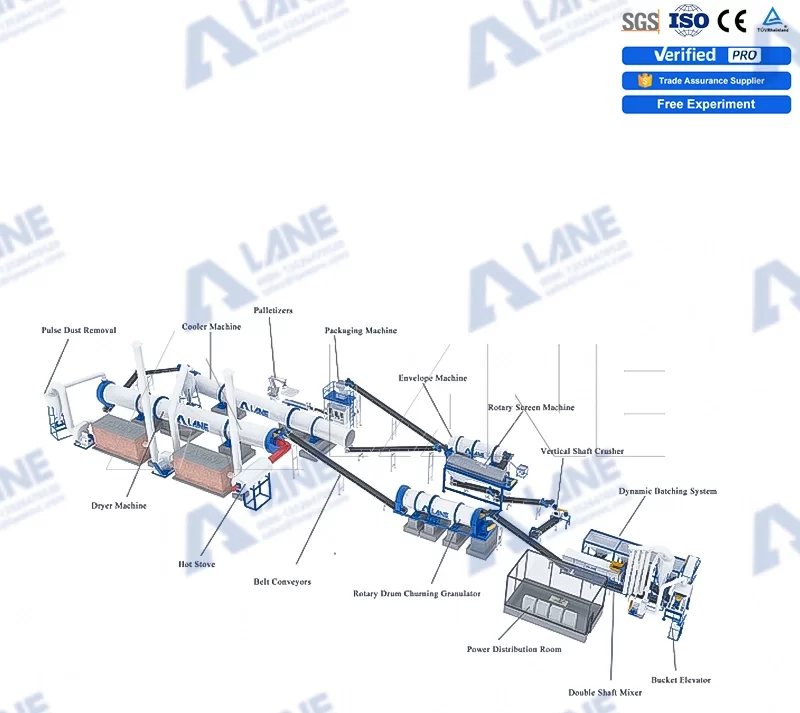
Precision Granulation Technology: Our systems also include precision granulation technology ensuring uniform particle size for DKP products
Advanced Drying and Cooling Systems: LANE’s rotary drum dryers and smart PLC-controlled automatic fertilizer dryers provide efficient temperature control critical for DKP crystallization
Uniform Coating Mechanisms: Uniform coating mechanisms ensure consistent product quality
Mixing Equipment: Rotary drum mixers and dynamic batching machines accurately mix different fertilizer raw materials in precise proportions
Frequently Asked Questions (FAQ)
What is dipotassium phosphate (DKP)?
Dipotassium phosphate (DKP), also known as potassium phosphate dibasic, is a multifunctional compound used as a buffering agent, emulsifier, stabilizer, and nutrient source in food processing, agriculture, and industrial applications.
What are the main drivers of DKP demand?
Key drivers include growing food processing industry, expansion of pharmaceutical sector, increasing need for efficient fertilizers, sodium reduction trends, plant-based beverage expansion, and clean-label fortification.
Which region is the fastest-growing DKP market?
Asia-Pacific is expected to maintain its position as the fastest-growing market, supported by large population, increasing disposable income, and rapid development of food-processing infrastructure.
Of course, we also offer other types of products for your different needs, you can click to view.
For more information, please contact us by sending an inquiry today! We can help you!



Write a Reply or Comment