
Bio-organic Compound NPK Fertilizer Manufacturing: Bridging the Gap Between Organic Matter and Chemical Precision
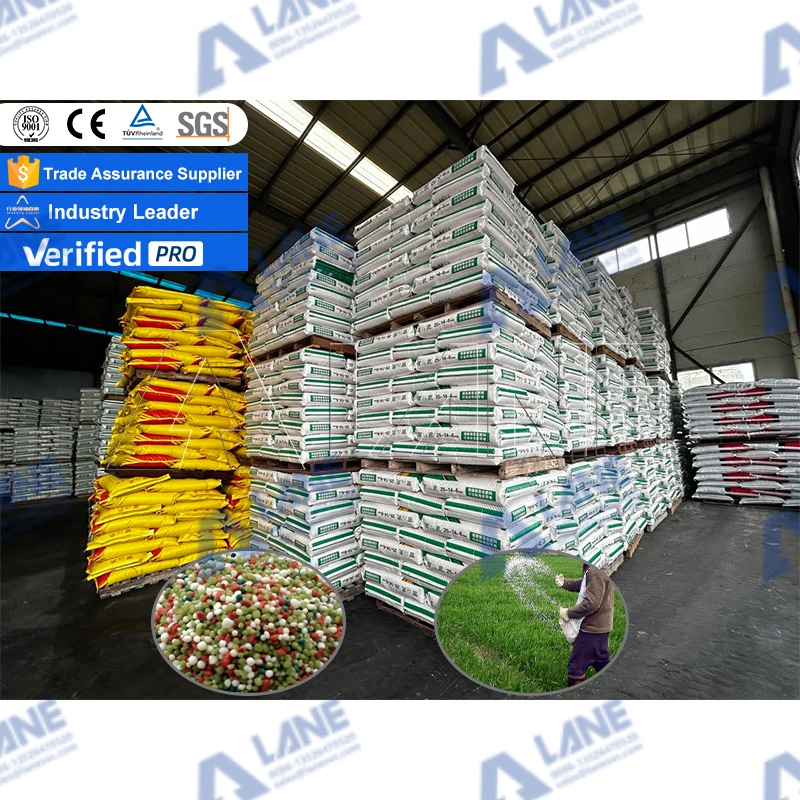
For decades, the agriculture industry solely relied on pure chemical fertilizers to maximize yields at the expense of soil structure and long-term fertility. This led to the increased use of organic fertilizers. While organic farming restores the earth, it often struggles to meet the nutrient demands of modern commercial crops. This led farmers and agronomists to look for a solution that combines the rich benefits of organic matter with the nutrients of chemical fertilizers. This led to the sophisticated hybrid bio-organic compound NPK fertilizer manufacturing. This production line combines the soil-enriching properties of organic matter with nitrogen, phosphorus, and potassium (NPK).
LANE Heavy Industry, a leader in fertilizer machinery manufacturing, has engineered bio-organic compound NPK fertilizer manufacturing techniques that can handle the complex physical and biological requirements of this hybrid product.
The Science Behind NPK Ratios
Chemical fertilizers are highly soluble and provide nutrients but do nothing for the microbial life in the soil. Organic matter provides a home for microbes and improves water retention in low nutrient density. In bio-organic compound NPK fertilizer manufacturing, achieving the correct NPK ratio is crucial.
- Nitrogen (N)supports leafy growth and overall plant vigor.
- Phosphorus (P)enhances root development, flowering, and fruiting.
- Potassium (K)strengthens plant immunity and improves water retention.
By combining these nutrients with organic matter, manufacturers create a product that maximizes efficiency while minimizing environmental impact. LANE Heavy Industry’s machinery ensures all granules contain the exact NPK ratio required for targeted crops.

The Step-by-Step Bio-Organic Compound NPK Fertilizer Manufacturing Process
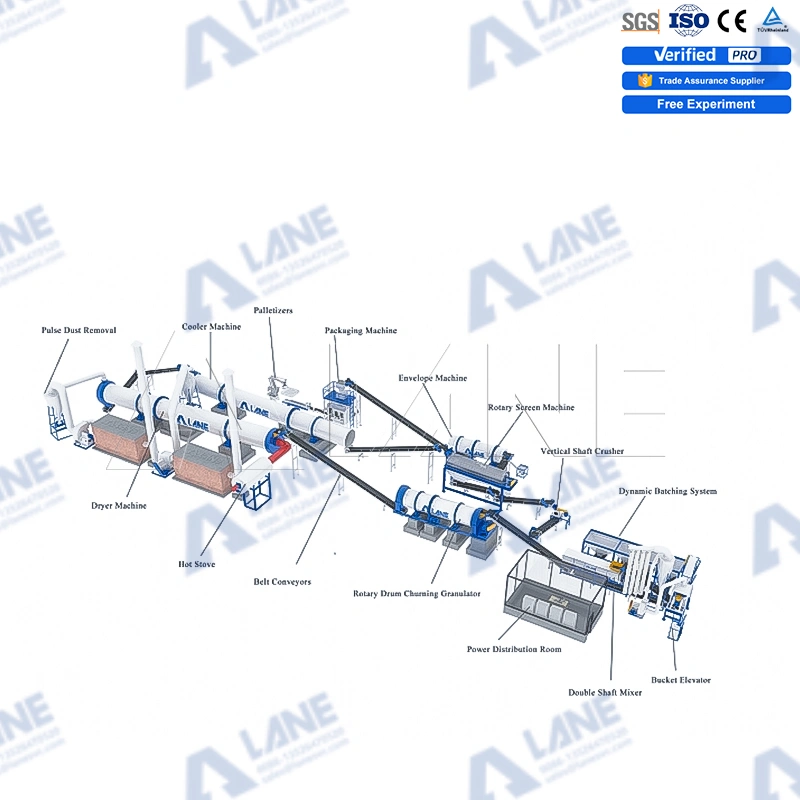
Achieving premium fertilizer requires a seamless integration of biological stabilization and mechanical precision. LANE Heavy Industry’s machinery is designed to manage these distinct phases without compromising the viability of the biological components.
- Raw Material Pretreatment and Fermentation
The foundation of bio-organic compound NPK fertilizer manufacturing begins with organic waste such as animal manure, crop straws, or industrial organic byproducts. These materials undergo aerobic fermentation to eliminate pathogens and weed seeds. The raw materials are first mixed according to the proper C:N ratio. Then they go to the fermentation process.
LANE Heavy Industry’s hydraulic crawler compost turners or groove-type turning machines ensure optimal aeration. During this phase, moisture, oxygen levels, and temperatures are controlled and monitored to ensure the organic base is fully “matured” before it meets the chemical components. After that, the fermented compost goes through a 2-week curing period for stabilization.
Once fermented, the organic matter is often clumpy. To ensure a uniform mix with chemical NPK, it must be pulverized. LANE employs crushers that can crush high-moisture material. This step is vital because the consistency of the base material dictates the success of the subsequent bio-organic compound NPK fertilizer manufacturing stages.
- The Precision Dosing and Mixing Phase
In this stage of bio-organic compound NPK fertilizer manufacturing, the organic base is moved to a dynamic batching system. This system precisely calculates the amount of Urea, MAP/DAP, and SOP/MOP to be added.
LANE Heavy Industry utilizes horizontal mixers with stainless steel liners to prevent corrosion from the chemical salts. The goal of this stage is a homogenous blend where every granule of the final product will contain an identical ratio of organic carbon and mineral nutrients.
- Advanced Granulation: The Heart of the Line
Granulation is the most challenging part of the production. This process creates a hard, round granule that includes microbes, organic matter, and chemicals. LANE provides two types of granulators for this process:
- Rotary Drum Granulator: The rotary drum granulator is the industry standard. This robust machine converts mixed materials into uniform, high-strength granules through continuous rotation and controlled moisture addition. LANE’s rotary drum granulators achieve balling rates exceeding 90%, producing spherical particles with diameters ranging from 1 mm to 5 mm. The drum is lined with corrosion-resistant materials.
- Two in One Rotary Stirring Granulator: This is the most advanced granulator for bio-organic compound NPK fertilizer manufacturing. This hybrid machine combines the advantages of traditional drum granulation with internal stirring teeth, resulting in a higher “granulation rate” and more uniform granules than the rotary drum granulator.
Traditional chemical fertilizer drying uses extreme heat. However, in bio-organic compound NPK fertilizer manufacturing, the heat must be carefully regulated. If the internal temperature of the granule exceeds certain limits, the beneficial microbes within the granule will die.
LANE Heavy Industry’s rotary dryer utilizes a “low-temperature, high-air-volume” strategy. Following the dryer, a rotary cooler quickly brings the temperature down to ambient levels. This process locks in the nutrients and ensures the microbes remain in a dormant, viable state.
To ensure a professional-grade product, the granules pass through a rotary screening machine. Oversized granules and fines are returned to the crusher. The “on-spec” granules then move to the coating machine. In bio-organic compound NPK fertilizer manufacturing, coating is often used to add additional microbial spores or to apply a thin layer of oil/wax to prevent caking and dust.
Finally, the product is bagged using automated quantitative packaging scales. This ensures that the NPK ratios promised on the label are exactly what the farmer receives.
Why LANE Heavy Industry Machinery?
Successful bio-organic compound NPK fertilizer manufacturing is not just about having the machines; it is about the durability and efficiency of those machines.
- Corrosion Resistance: The presence of chemical salts (like ammonium sulfate) in the mix is highly corrosive. LANE Heavy Industry uses specialized alloys and internal coatings to extend the lifespan of the mixers and granulators.
- Energy Efficiency: The integrated systems are designed to recycle heat where possible. This reduces the carbon footprint of the bio-organic compound NPK fertilizer manufacturing process itself.
- Customization: No two organic sources are the same. Whether you are processing chicken manure in Southeast Asia or sheep manure in Africa, the machinery can be calibrated to handle different moisture levels and fiber contents.
The Economic and Environmental Impact
The shift toward bio-organic compound NPK fertilizer manufacturing is driven by both policy and profit. Governments worldwide are subsidizing organic-based fertilizers to combat soil degradation. For the manufacturer, this hybrid bio-organic compound NPK fertilizer commands a higher price than simple organic compost and offers better profit margins than commodity chemical NPK.
Bio-organic compound NPK fertilizer manufacturing also reduces nutrient runoff. The organic matter acts as a sponge. It holds chemical NPK in the root zone longer. This means the farmer can often use less total fertilizer to achieve the same or better yields, a win-win for the economy and the environment.
FAQ
Q1: What is the main benefit of bio-organic compound NPK fertilizer manufacturing over traditional NPK?
A: The main benefit is the improvement of soil structure. While traditional NPK only feeds the plant, the product from bio-organic compound NPK fertilizer manufacturing feeds the soil’s microbial life and increases organic carbon levels, leading to long-term fertility.
Q2: Can I use any organic waste for this process?
A: Most organic wastes can be used, but they must be fermented first. The quality of your bio-organic compound NPK fertilizer manufacturing depends heavily on the stability of the organic base used in the mixing phase.
Q3: How do the microbes survive the heat of the drying process?
A: LANE Heavy Industry uses a specialized low-temperature drying technique. By increasing the airflow and extending the drum length, we can remove moisture without raising the internal granule temperature to levels that would kill the beneficial bacteria.
Of course, we also offer other types of products for your different needs, you can click to view.
For more information, please contact us by sending an inquiry today! We can help you!



Write a Reply or Comment