
10-20 Tons per Hour: NPK Compound Potassium Fertilizer Production Capacity Guide for Large Factories
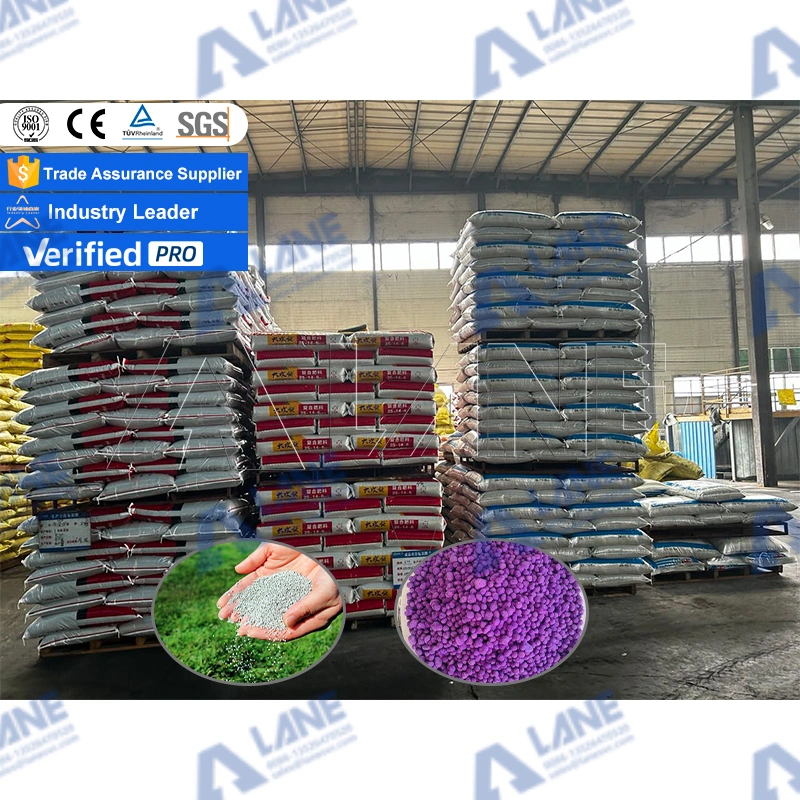
NPK fertilizer is a compound fertilizer containing three primary nutrients that plants need to grow: Nitrogen (N), Phosphorus (P), and Potassium (K). These nutrients are often called macronutrients because plants consume them in large quantities compared to other nutrients. A large-scale farming operation demands more nutrients, which makes the role of industrial-scale fertilizer plants important. For a large factory, maintaining a consistent NPK compound potassium fertilizer production capacity of 10 to 20 tons per hour (TPH) is the difference between leading the market and falling behind.
NPK compound potassium fertilizer production capacity is one of the most critical considerations in plant design. To achieve 10 to 20 TPH output while maintaining quality, the integration of advanced machinery is non-negotiable. LANE Heavy Industry has established itself as a frontrunner in providing turnkey solutions for high-capacity granulation. This guide explores how to design, optimize, and scale a production line within this capacity range using advanced solutions from LANE Heavy Industry Machinery.
The Strategic Importance of 10-20 TPH Capacity
NPK compound potassium fertilizer production capacity refers to the hourly output of finished NPK fertilizer that includes potassium (K) as a key nutrient component. For large factories, a 10–20 TPH system typically translates to 80,000–150,000 tons annually, depending on operating hours.
Operating at a 10 TPH or 20 TPH scale puts your factory in the “large-scale” bracket. This capacity is ideal for regional distributors and international exporters. However, hitting these numbers consistently requires a synchronized system where every component is calibrated for high-volume throughput.
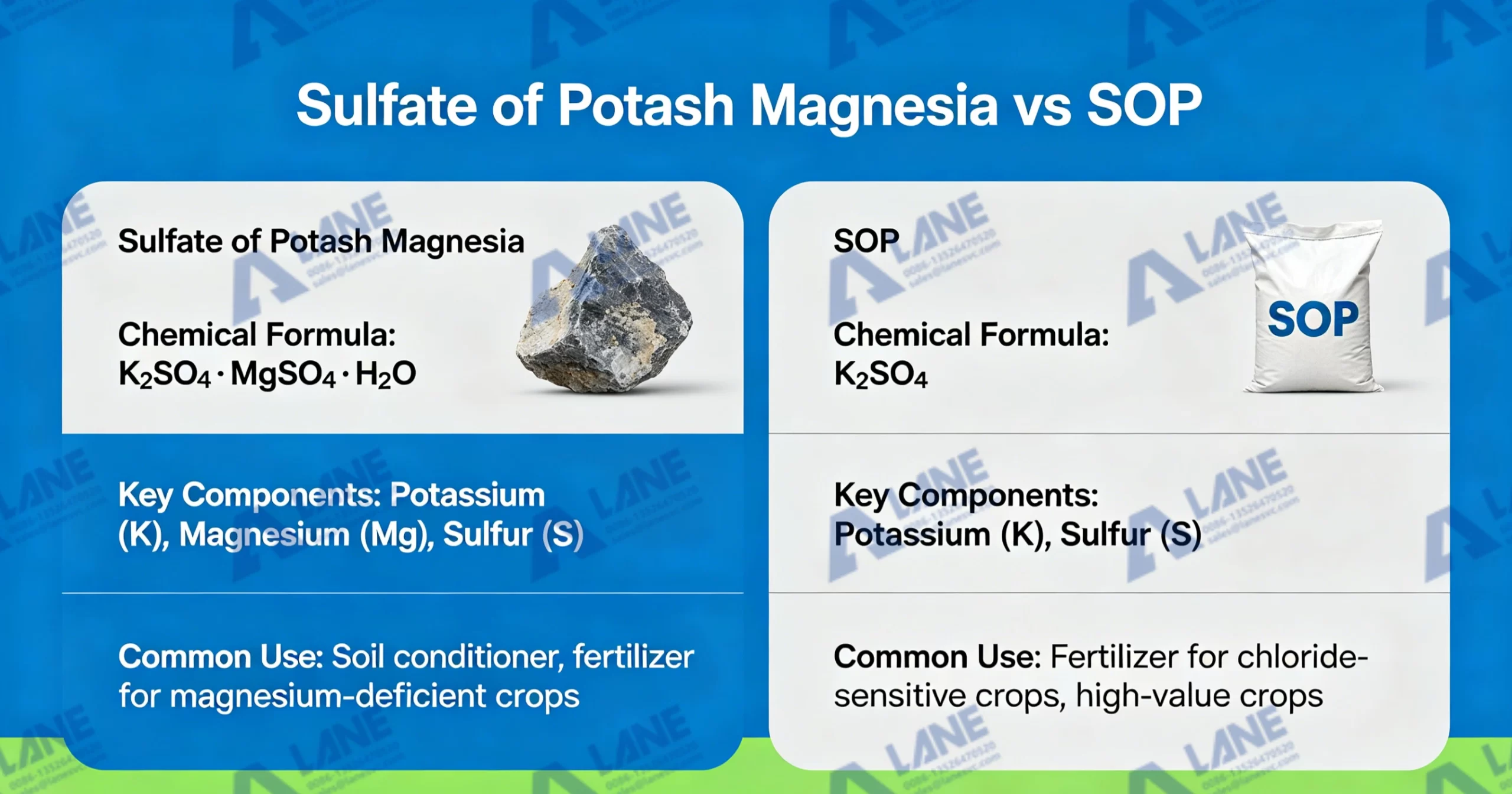
When we discuss NPK compound potassium fertilizer production capacity, we are looking at the efficiency of chemical bonding and physical granulation. Potassium is added as Potassium Chloride (MOP) or Potassium Sulfate (SOP), both of which have different chemical compounds. This requires machines that can handle the raw materials’ specific physical properties.
This capacity range is ideal for:
- Regional fertilizer distributors
- Export-oriented production facilities
- Large agricultural supply chains
- Government-supported fertilizer plants
Achieving stable NPK compound fertilizer at this scale requires precise engineering, automation, and efficient raw material handling.
Key Components of a 10–20 TPH Production Line
A 10-20 TPH fertilizer production line from LANE Heavy Industry includes several integrated machines and systems designed to maintain consistent NPK compound potassium fertilizer production capacity:
- Raw Material Batching System
This machine consists of automatic weighing, scaling, and discharge systems. It provides accurate dosing of nitrogen (N), phosphorus (P), and potassium (K) sources and ensures nutrient balance. Automated batching systems reduce human error and improve consistency.
The raw materials are first sent to the crushing machine to be crushed into uniform powder. Uniform powders are easy to mix and create consistent granules. Advanced vertical crushers or cage crushers are used to crush, and horizontal mixers ensure homogeneity before granulation. Producers can add micronutrients in this stage to create their own custom formula according to regional soil and crops.
For NPK fertilizer granulation, LANE provides:
- Disk granulator
- Rotary drum granulator
- Double roller extrusion granulator
For large-scale production lines, the rotary drum granulator is provided. The rotary drum granulator is a wet granulator. As the sticky raw materials mix, they tumble and collide in the rotating drum, they begin to “snowball.” This is called agglomeration. Smaller particles stick to each other, forming larger, spherical granules. The continuous rolling action compacts these spheres, making them dense and smooth.
After granulation, the wet granules are conveyed to rotary dryers and coolers to remove excess moisture. This improves storage stability and supports 10-20 TPH NPK compound potassium fertilizer production capacity.
The screening machine ensures uniform granule size by separating qualified and unqualified particles. Recycling systems feed oversized or undersized materials back into production.
Final coating improves product controlled-release effect and reduces caking. Automated packing systems handle large volumes efficiently, sustaining overall NPK compound potassium fertilizer production capacity.
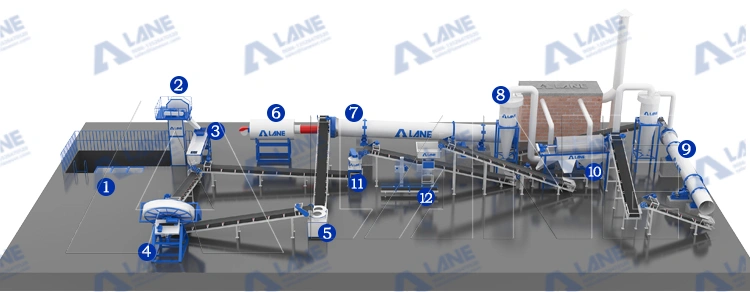
Process Flow for High-Capacity Production
An optimal workflow for 10-20 TPH NPK compound potassium fertilizer production capacity includes:
- Raw material preparation
- Precise batching
- Crushing and mixing
- Granulation
- Drying
- Cooling
- Screening
- Coating
- Packaging
Each stage must be synchronized to avoid bottlenecks that could reduce overall NPK compound potassium fertilizer production capacity.
Factors Affecting Production Capacity
Maintaining stable NPK compound potassium fertilizer production capacity at 10–20 TPH depends on several key variables:
- Raw Material Quality: Moisture content, particle size, and chemical composition directly influence granulation efficiency.
- Equipment Selection: Choosing the right granulator and dryer will help producers achieve desired NPK compound potassium fertilizer production capacity.
- Automation Level: LANE provides PLC and SCADA systems to help maintain consistent throughput and reduce downtime.
- Operator Expertise: Skilled technicians are required to ensure optimal machine settings and quick troubleshooting. LANE trains your technicians so that they can operate the machine effectively.
- Environmental Conditions: Humidity and temperature can affect drying efficiency and overall NPK compound potassium fertilizer production capacity.
Why Choose 10–20 TPH Capacity?
This capacity range strikes a balance between scalability and investment cost. Advantages include:
- High output with manageable capital expenditure
- Flexibility for different NPK formulations
- Easier integration with existing infrastructure
- Strong profitability potential
For many regional investors, achieving this level of NPK compound potassium fertilizer production capacity is the ideal entry point into large-scale fertilizer manufacturing.
LANE Heavy Industry Solutions
LANE Heavy Industry Machinery specializes in turnkey fertilizer production lines designed to maximize NPK compound potassium fertilizer production capacity. Key advantages include:
- Customizable plant layouts
- High-efficiency granulation technology
- Energy-saving drying systems
- Intelligent automation controls
- Global installation and support services
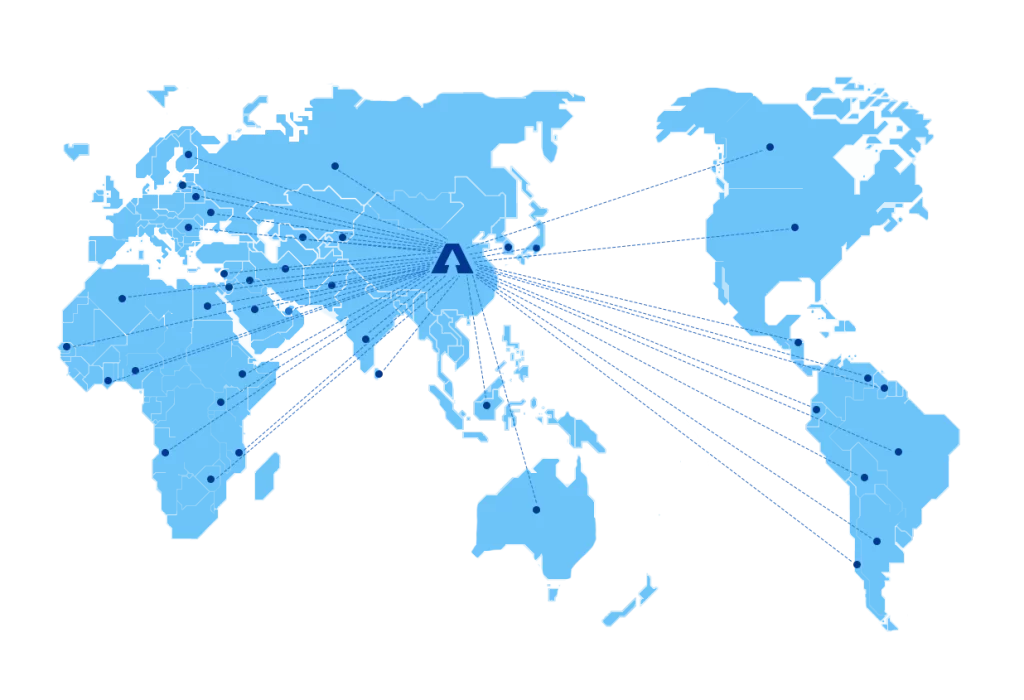
With experience in over 200 countries, LANE ensures reliable and scalable NPK compound potassium fertilizer production capacity for clients worldwide.
Cost Considerations
The investment for a 10–20 TPH production line varies depending on configuration. An NPK production line typically includes:
- Equipment cost
- Installation and commissioning
- Raw material storage systems
- Labor and training
Optimizing NPK compound potassium fertilizer production capacity helps reduce cost per ton and improve overall profitability.
Future Trends in High-Capacity Fertilizer Production
The future of NPK compound potassium fertilizer production capacity is driven by:
- Smart manufacturing (IoT-enabled plants)
- Eco-friendly production technologies
- Precision nutrient formulations
- Automation and AI optimization
Factories that invest in modern systems today will be better positioned to scale their NPK compound potassium fertilizer production capacity in the future.
FAQ
- What is the ideal capacity for a large NPK fertilizer plant?
A 10–20 TPH system is ideal for large-scale operations, offering a strong balance between output and investment while ensuring stable NPK compound potassium fertilizer production capacity.
- How can I increase my production capacity?
Upgrading granulation equipment, improving automation, and optimizing raw material quality can significantly enhance NPK compound potassium fertilizer production capacity.
- What type of granulator is best for potassium-rich NPK fertilizers?
Rotary drum granulators are commonly used for high-capacity production, but double roller extrusion granulators are also suitable depending on formulation and desired NPK compound potassium fertilizer production capacity.
- How much space is required for a 10–20 TPH plant?
Typically, 5,000–10,000 square meters are needed, depending on layout and storage requirements for maintaining efficient NPK compound potassium fertilizer production capacity.
Of course, we also offer other types of products for your different needs, you can click to view.
For more information, please contact us by sending an inquiry today! We can help you!



Write a Reply or Comment