
How to Produce SOP Fertilizer from Brine? Step-by-Step Process
How to Produce SOP Fertilizer from Brine? Step-by-Step Process
In modern agriculture, Potassium Sulfate (Sulfate of Potash, or SOP) is known for its low chloride and dual nutrient value. This fertilizer provides both potassium and sulfur in sulfate ion form. There are many potassium manufacturing methods, and extracting potassium from brine is the cheapest and environmentally friendly method. Many fertilizer manufacturers are now exploring how to produce SOP fertilizer from brine because brine resources are abundant, cost-effective, and suitable for large-scale industrial production.
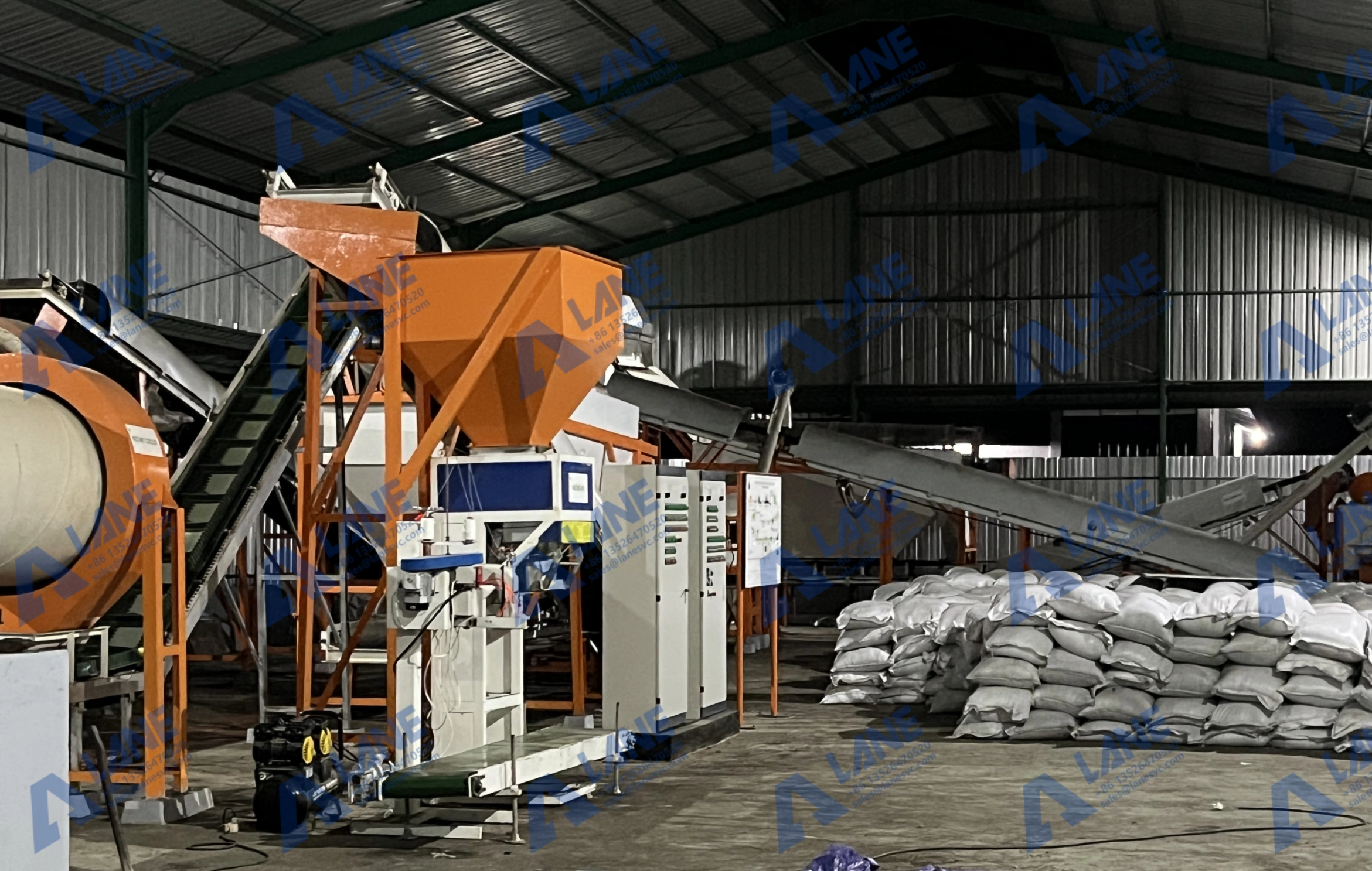
The answer to how to produce SOP fertilizer from brine starts with a clear understanding of brine chemistry and the conversion-crystallization route used in modern plants. Traditionally, SOP is synthesized via the energy-intensive Mannheim process by reacting potassium chloride with sulfuric acid. This method is energy intensive and faces many environmental regulations which increase operational costs. With advanced equipment and automated fertilizer production systems from LANE Heavy Industry, companies can efficiently convert brine into premium SOP fertilizer while reducing energy consumption and improving product quality.
This article explains how to produce SOP fertilizer from brine through a complete industrial process, including raw material preparation, evaporation, chemical reaction, crystallization, drying, granulation, and packaging.
What Is SOP Fertilizer?
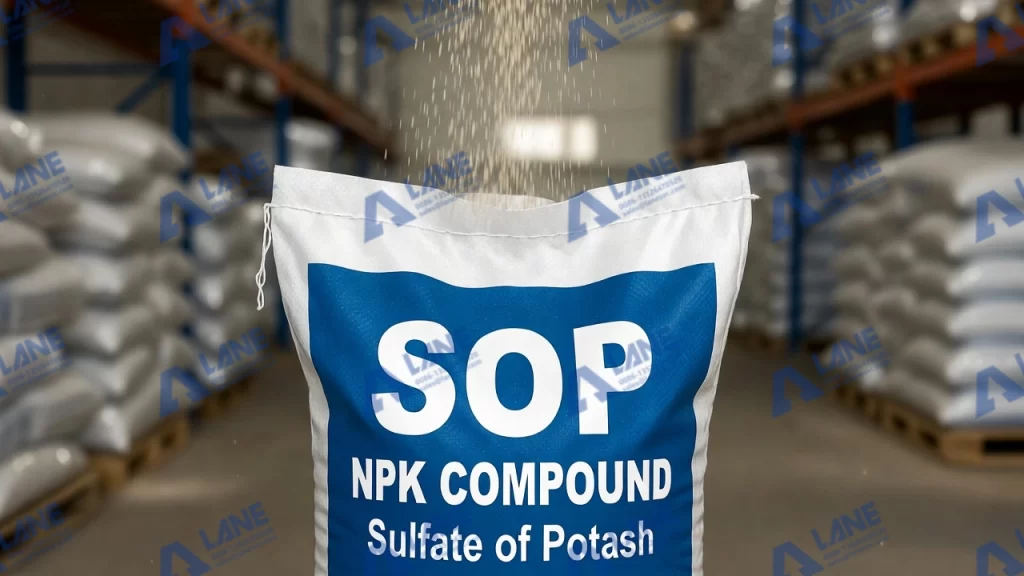
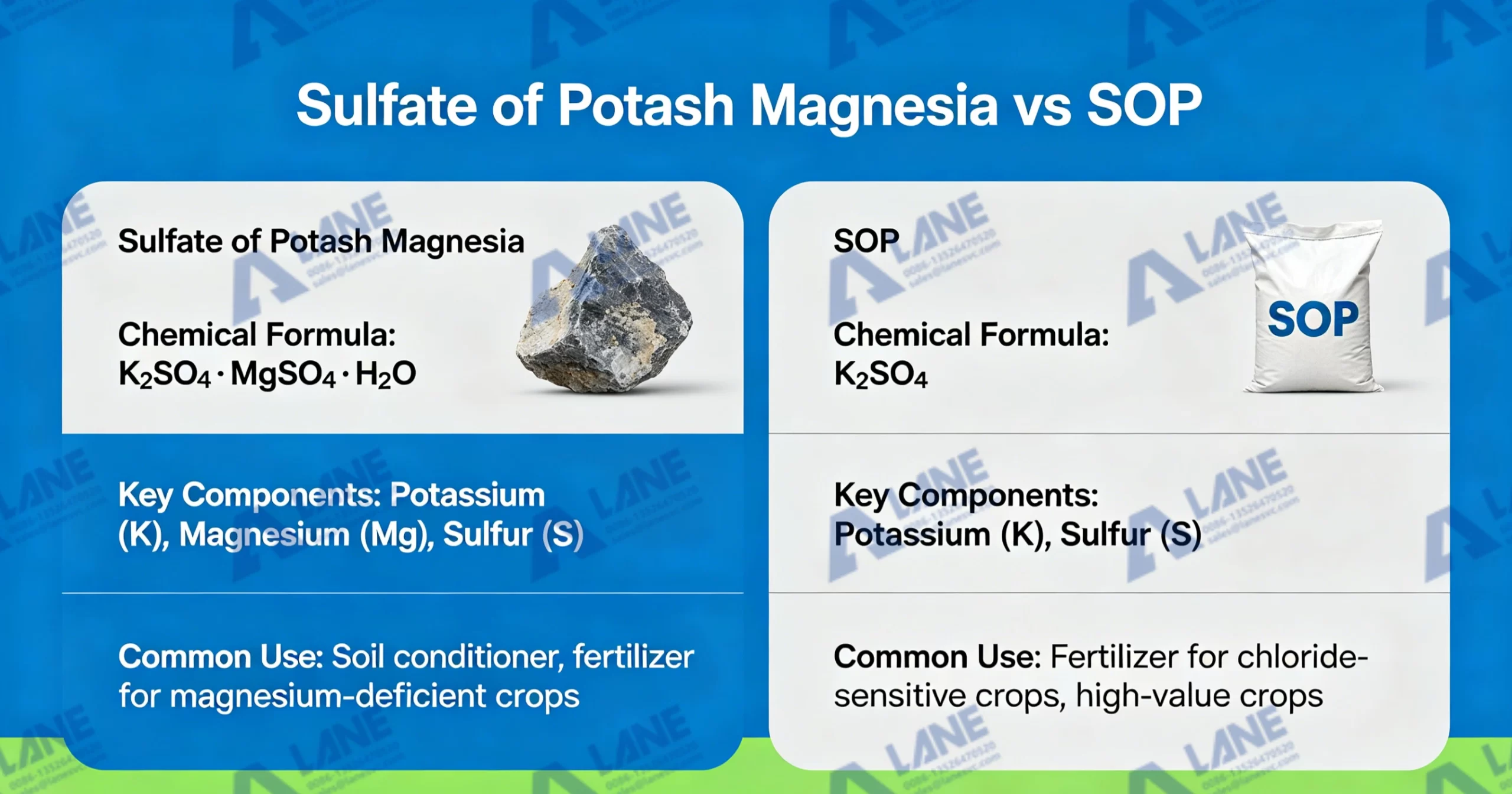
SOP fertilizer (Potassium Sulfate, K₂SO₄) is a premium fertilizer which contains both potassium and sulfur nutrients. SOP contains low amounts of chlorides, making it ideal for chloride-sensitive crops like Tobacco, Fruits, Vegetables, Tea, Coffee, and Greenhouse crops. Because of its high agricultural value, understanding how to produce SOP fertilizer from brine and its step-by-step process has become important for fertilizer manufacturers.
Phase 1: Chemical Extraction and Harvester Raw Material Preparation
The journey of understanding how to produce SOP fertilizer from brine starts at the solar evaporation ponds. Raw brine derived from deep-well extraction or salt lakes contains a complex mixture of sodium, potassium, magnesium, chloride, and sulfate ions. To isolate the essential potassium and sulfate ions, the brine must undergo a multi-stage fractional crystallization sequence.
- Solar Evaporation and Fractional Crystallization
- Raw brine is channeled through a sequence of massive solar evaporation ponds.
- As solar energy drives off water, different salts precipitate out at predictable concentration thresholds.
- First, Halite (NaCl) crystallizes and settles out of the solution.
- As evaporation continues, the concentrated liquor moves to the carnallite or schoenite ponds, where complex potassium-magnesium salts (such as Schoenite, K₂SO₄·MgSO₄·6H₂O, or 4KCl·4MgSO₄·11H₂O) begin to precipitate.
- This crude harvest of mixed potassium-bearing salts forms the solid feedstock for the mechanical processing plant.
- Mechanical Harvesting and Slurry Preparation
Once the specialized minerals precipitate to a target thickness, mechanical harvesters collect the solid crystals. This material is then transported to the processing plant’s intake hoppers. In here the material is mixed with a recycled process liquor to form a thick, manageable slurry. This slurry is used for intense scrubbing and chemical conversion. A slight mistake in this stage can cause lower quality produce. This highlights the critical importance of liquid handling in learning how to produce SOP fertilizer from brine.
Phase 2: Decomposition, Conversion, and Flotation Purification
To convert complex potassium-magnesium salts into pure potassium sulfate, the harvested solids must undergo a series of chemical conversions based on phase equilibrium dynamics.
- Schoenite Conversion Stage
If the primary harvested phase is kainite or a mixed harvest, it must first be converted into schoenite (K₂SO₄·MgSO₄·6H₂O). This is achieved by adding water or a specific lean solution to the slurry in agitation tanks at controlled temperatures, dissolving highly soluble magnesium chloride impurities while leaving behind the less soluble solid schoenite crystals.
- Final SOP Crystallization
To achieve final conversion, the schoenite crystals are introduced to a metered volume of water or a potassium chloride (KCl) solution in a series of heated, heavily agitated conversion reactors. The reaction follows a strict thermodynamic pathway:
K₂SO₄·MgSO₄·6H₂O (S) + 2KCl (aq) ➝ 2K₂SO₄ (s) + MgCl₂ (aq) + 6H₂O
Because Potassium Sulfate (K₂SO₄) has a significantly lower solubility at these temperatures compared to Magnesium Chloride (MgCl₂), it selectively precipitates out as high-purity crystalline solids. This specific crystallization step is the chemical answer to how to produce SOP fertilizer from brine.
Centrifugation and Dewatering
The resulting slurry, rich in crystallized Potassium Sulfate, is pumped into an industrial centrifuge. The centrifuge isolates the solid SOP crystals from the magnesium-rich mother liquor. The crystal undergoes a freshwater wash cycle to remove any residual surface chlorides, producing a damp SOP filter cake with a moisture content fluctuating between 4% and 7%.
Phase 3: The Mechanical Granulation Line from LANE Heavy Industry
While the chemical extraction yields pure crystalline powder, the agriculture market favors granular fertilizers. Powdered SOP is prone to caking during storage, creates excessive dust hazards during handling, and cannot be evenly distributed using modern mechanical field spreaders. Therefore, transforming this damp filter cake into uniform, durable granules is a foundational requirement. This is where the advanced LANE Heavy Industry machinery line is fully integrated into the process of how to produce SOP fertilizer from brine.
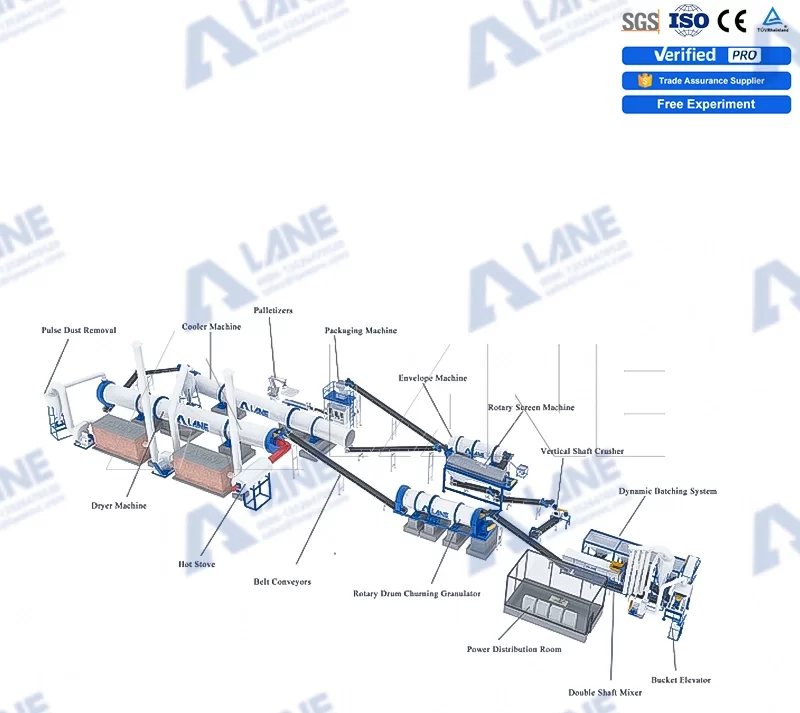
| Production Phase | LANE Heavy Industry Machinery Used | Operational Objective |
| 1. Feeding & Blending | LANE Automatic Batching System & Twin-Shaft Horizontal Mixer | Homogenizes crystal cake with nutrient additions and recycled fines. |
| 2. Core Granulation | LANE Heavy-Duty Rotary Drum Granulator / Rotary Drum Agglomerator | Agglomerates fine particles into high-strength spherical SOP granules. |
| 3. Thermal Moisture Removal | LANE Industrial Rotary Drum Dryer | Reduces internal moisture content from ~5% down to under 1.0%. |
| 4. Thermal Stabilization | LANE Industrial Rotary Drum Cooler | Lowers product temperature to ambient levels to prevent storage caking. |
| 5. Particle Classification | LANE High-Capacity Rotary Screening Machine (Double-deck) | Separates product into oversized, on size (market ready), and fines. |
| 6. Refining & Polishing | LANE Fertilizer Coating Machine & Rotary Anti-Caking Drum | Applies a protective, micro-thin anti-caking oil or conditioning agent. |
Step-by-Step Mechanical Process
- Feed Blending and Conditioning: The dewatered SOP filter cake is transferred into the LANE Automatic Batching System and mixed with other macro and micronutrients and recycled fines in the LANE Twin-Shaft Horizontal Mixer. Achieving a perfectly homogenous profile here is a prerequisite for successful agglomeration when executing how to produce SOP fertilizer from brine.
- Agglomeration: The conditioned blend enters the LANE Rotary Drum Granulator, which uses a non-stick liner and rolling action to coalesce fine crystals into spherical granules.
- Moisture Removal: Granules are conveyed to the LANE Industrial Rotary Drum Dryer, where they cascade through co-current heated air to harden crystalline bonds.
- Thermal Stabilization: Granules move to the LANE Industrial Rotary Drum Cooler to lower temperatures with the help of ambient air. This stage locks the structure and boosts crush strength.
- Classification: The LANE High-Capacity Rotary Screening Machine separates product into streams: oversized and undersized (crushed and recycled), and on-size (finished product).
- Finishing: Finally, the LANE Fertilizer Coating Machine applies a hydrophobic barrier to prevent caking, completing the mechanical sequence of how to produce SOP fertilizer from brine.
FAQ
Q: What is SOP and why produce it from brine?
A: SOP is Sulfate of Potash (K₂SO₄), a chloride-free potassium fertilizer beneficial for chloride-sensitive crops; producing SOP from brine uses saltwork bitterns and can convert waste streams into valuable fertilizer.
Q: Which intermediate is formed during the brine route?
A: Depending on Mg/Na balance, cohenite or laterite are common intermediates used to convert brine into SOP.
Q: Is granulation required?
A: Not required, but granulation improves handling and application; many LANE lines include optional granulation modules.
Q: How to ensure product purity?
A: Tight control of conversion chemistry, efficient washing, and precise crystallization (vacuum cooling or hot evaporation) secure fertilizer-grade SOP.

Of course, we also offer other types of products for your different needs, you can click to view.
For more information, please contact us by sending an inquiry today! We can help you!



Write a Reply or Comment