
Potassium Nitrate in NPK Production: Benefits, Uses, and Best Practices
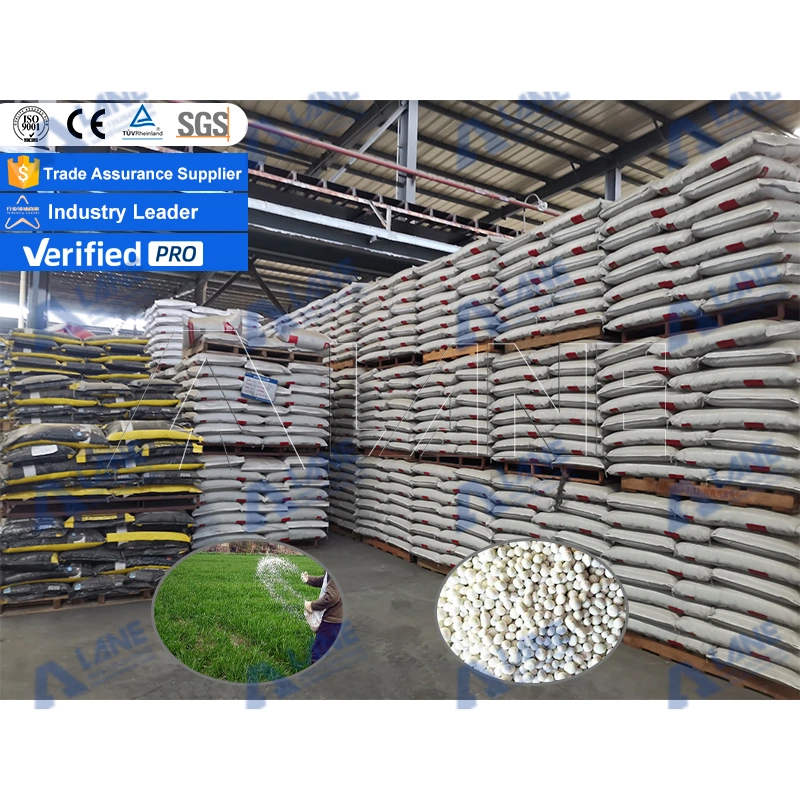
The use of potassium nitrate in NPK production has become important as fertilizer manufacturers wants to improve nutrient efficiency, product quality, and crop performance. Potassium sulfate is a dual nutrient material which contains both nitrogen and potassium, both of which is necessary macro nutrient for premium NPK fertilizers. Because potassium nitrate is water-soluble, it can be used as raw material for water soluble NPK fertilizer. This fertilizer solves one of the biggest problems of the premium NPK fertilizer, balancing nutrition while maintaining excellent physical quality.
Potassium nitrate is a chloride free fertilizer. Its excellent solubility and nutrient efficiency make it attractive for specialty fertilizers, greenhouse crops, and fertigation applications. Investing in a potassium nitrate in NPK production provides advantages in agronomic value, compound chemical stability, and physical grain quality. LANE Heavy Industry has designed advance turnkey NPK production line, optimized for processing premium potassium compound. With our advance production equipment, fertilizer plants can efficiently process potassium nitrate in NPK production.

Value of Potassium Nitrate in NPK Formulations
Potassium (K) and nitrate nitrogen (N) is two of the most essential nutrients required for plants optimal growth. Traditional NPK fertilizers uses potassium chloride and ammonium-based nitrogen sources as the main raw material. However, utilizing potassium nitrate in NPK production delivers unmatched agricultural advantages that satisfy the demand of modern cash-crop farming.
Dual-Nutrient Efficiency and Fast Absorption
Potassium nitrate delivers a combination of 13% nitrate nitrogen and 46% potassium oxide. Ammonium ion requires biochemical transformations within the soil before plant can uptake the nutrient, nitrate nitrogen on the other hand, delivers readily available nitrate which plant can easily devour without any biochemical transformations. The nitrate ion is a negative charged ion which increases the absorption of positively charged potassium ions, along with other essential secondary micronutrient like calcium and magnesium.
Chloride-Free Formulations for Premium Cash Crops
Modern premium crop farms are looking for chloride free solution as many high-value crops such as tobacco, grapes, citrus fruits, potatoes, avocados, and greenhouse vegetables are sensitive to chloride. Excessive chloride from potassium induces soil salinity, stunt root development, and diminish crop quality. Integrating potassium nitrate in NPK production helps producers make premium chloride-free or low-chloride NPK fertilizers that protect crop health, increases yields, and allow higher profit margin in the market.
Exceptional Solubility for Fertigation and Foliar Blends
Modern agriculture relies on automated drip irrigation (fertigation) and foliar spraying systems. Potassium nitrate possesses superb water solubility, using this fertilizer in NPK production will result in granules that dissolves rapidly and cleanly without leaving any solid reside behind to clog irrigation lines.
Production Challenges of High-Nitrate Formulations
While the agronomic advantages of potassium nitrate in NPK production are clear, manufacturer must address several technical challenges during production process.
- Hygroscopicity & Caking:Potassium nitrate has high critical relative humidity (CRH). This can drop if it is mixed with materials such as urea or ammonium phosphates. This can make the material prone to absorbing moisture. Excess moisture can cause the granules to become sticky, promote agglomeration, and leads to caking during storage and transportation.
- Thermal Sensitivity:Nitrates are powerful oxidizers. Exposure to excessive temperatures during drying can compromise chemical integrity or create safety hazards. It is necessary to regulate the temperature to avoid safety hazard.
- Granule Hardness Control:High-nitrate NPK formulations sometimes produce granules that breaks down if the agglomeration processes are not properly regulated. This leads to excessive dust generation, product loss, and reduced customer satisfaction.
Successfully overcoming these challenges requires advance production control and dependable production equipment. LANE Heavy Industry provides customized machinery for implementing potassium nitrate in NPK production.
Primary Uses of Potassium Nitrate in NPK Production
Fertigation and Drip Irrigation: The solubility of potassium nitrate makes it a preferred source in fertigation system. Potassium nitrate in NPK production ensures nitrate are distributed uniformly without causing clogging. This supports precise nutrient management throughout the growing season.
Greenhouse and Hydroponic Cultivation: In controlled farming environments, potassium nitrate in NPK production provides reliable, fast-acting nutrition for tomatoes, cucumbers, peppers, strawberries, and ornamental crops. Because of advance chemical manufacturing of potassium nitrate, it is a stable fertilizer which doesn’t cause pH fluctuations like ammonium. This helps maintaining stable nutrient in the greenhouse cultivation.
High-Value Field Crops: Farmers growing fruits, vegetables, nuts, vine crops, and tobacco rely on potassium nitrate in NPK production to avoid chloride toxicity while maximizing potassium nutrition. Potassium nitrate itself is popular during flowering and fruiting stages.
Premium Blended Fertilizers: Fertilizer manufacturers incorporate potassium nitrate in NPK production to create premium grade blends that has higher market prices due to the superior performance, solubility, and lower salt index.
Best Practices for Processing Potassium Nitrate in NPK Production
To optimize the production, workforce safety, and achieve top-tier quality, potassium nitrate in NPK production facilities should implement some best practices:
- Maintain Strict Thermal Controls:Producers must ensure that the gas temperature inside the LANE Rotary Drum Dryer do not exceed the specified safe thresholds. LANE Heavy industry provides automated burner control that helps producers mitigate this problem.
- Optimize Low-Humidity Plant Environments:Incorporating potassium nitrate in NPK production increases the moistier sensitivity of the granules. enclosed processing area with industrial dehumidification will help keeping the humidity below 60%.
- Configure Correct Roller Pressures:When using LANE double roller granulator, operators must adjust the pressure according to the moisture profile. Correct pressure minimizes internal particle shearing and increases crush strength.
- Incorporate Rigorous Preventive Maintenance:NPK raw materials are highly corrosive. all materials contacting with the surface of the machinery are constructed with high-grade 304 or 316 stainless steel or specialized alloy.
- Follow Safe Chemical Segregation Protocols:Potassium nitrate is a powerful oxidizer. The raw material warehouse must maintain separate area for each raw material.
LANE Heavy Industry Machinery for Potassium Nitrate NPK Lines
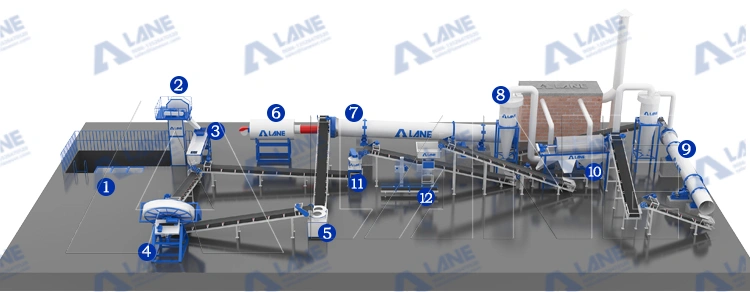
LANE Heavy Industry provides has over two decades of experience in complete turnkey solution for NPK production lines incorporating potassium nitrate in NPK production. Our equipment’s includes:
- Raw Material Batching Systems: Automated weighting and feeding system ensures precise transfer of raw materials into the production to maintain the proper ratio.
- Mixing Equipment: High-efficiency mixers ensure uniform distribution of potassium nitrate. LANE horizontal mixers use dynamic rotation to mix the raw materials according to formulation.
- Granulation Units: LANE manufactures multiple type of granulators like roller press, drum, disk granulators which is adapted for potassium nitrate in NPK production
- Drying and Cooling Systems: Our Rotary dryers/coolers gently dry and cool the granules without damaging the integrity of the granules and nutrients.
- Screening and recycling Systems: The screening machine separates oversized/undersized particles and recycle them by sending them back to the granulation system.
- Automatic Packaging Lines: LANE automatic packaging line weights, fills, and seals the granules efficiently. They are implemented with dust control so that the package doesn’t contain any dust.
These systems are engineered to handle the unique properties of potassium nitrate in NPK production, delivering high-capacity, energy-efficient, and reliable operation for fertilizer manufacturers.
FAQ: Potassium Nitrate in NPK Production
- What is potassium nitrate in NPK production?
Potassium nitrate in NPK production refers to using KNO₃ (13% N, 46% K₂O) as a key ingredient in NPK fertilizer blends to provide chloride-free potassium and readily available nitrate nitrogen.
- Why is potassium nitrate preferred over potassium chloride in NPK?
Potassium nitrate in NPK production avoids chloride, which can damage salt-sensitive crops, and provides both nitrogen and potassium in one highly soluble compound.
- What crops benefit most from potassium nitrate in NPK production?
Fruits, vegetables, grapes, tobacco, berries, greenhouse crops, and salt-sensitive plants benefit most from potassium nitrate in NPK production due to its chloride-free, high-solubility profile.
- Can potassium nitrate be mixed with other NPK components?
Yes, potassium nitrate in NPK production is compatible with all water-soluble fertilizers and does not form insoluble precipitates that clog irrigation systems.
Of course, we also offer other types of products for your different needs, you can click to view.
For more information, please contact us by sending an inquiry today! We can help you!



Write a Reply or Comment