
Choosing the Right Potassium: Why Low Salt Index Potassium Fertilizers Outperform Traditional Potash

For high yield farmers use fertilizers as nutrient for crops but your choice of fertilizer might harm your soil and your plant without you knowing. Potassium is one of the most foundational nutrients for crop growth, but not all potassium fertilizer is made the same. traditional potassium chloride provides potassium along with chloride which is toxic to sensitive plant. It also has high salt index. It limits seed germination, destroying beneficial soil microbes, and reduces the quality of premium cash crop. The solution for this problem is low salt index potassium fertilizers.
The salt index of fertilizer measures its potential to increase soil solution salinity. Low salt index potassium fertilizers are the premium, crop safe fertilizer designed for the modern, sustainable agriculture. As the demand for these crop safe fertilizers are growing, investing in this production technologies can bring profit to the investors. LANE Heavy Industry provides complete fertilizer production lines designed to manufacture these low salt index potassium fertilizers with consistent quality, high efficiency, and excellent granule characteristics.
Understanding the Hazard: What is a Salt Index?
Salt index (SI) is a metric used to measure how much a fertilizer increases the osmotic pressure of the soil solution. It is compared with sodium nitrate which has a reference standard of 100. It is measured against the same weight or molecule.
When traditional potassium sources dissolves in the soil, it increases the salt concentration in its surrounding area. This area draws moisture away from plant roots and send them back to the soil. This phenomenon is known as crop burn or physiological drought.
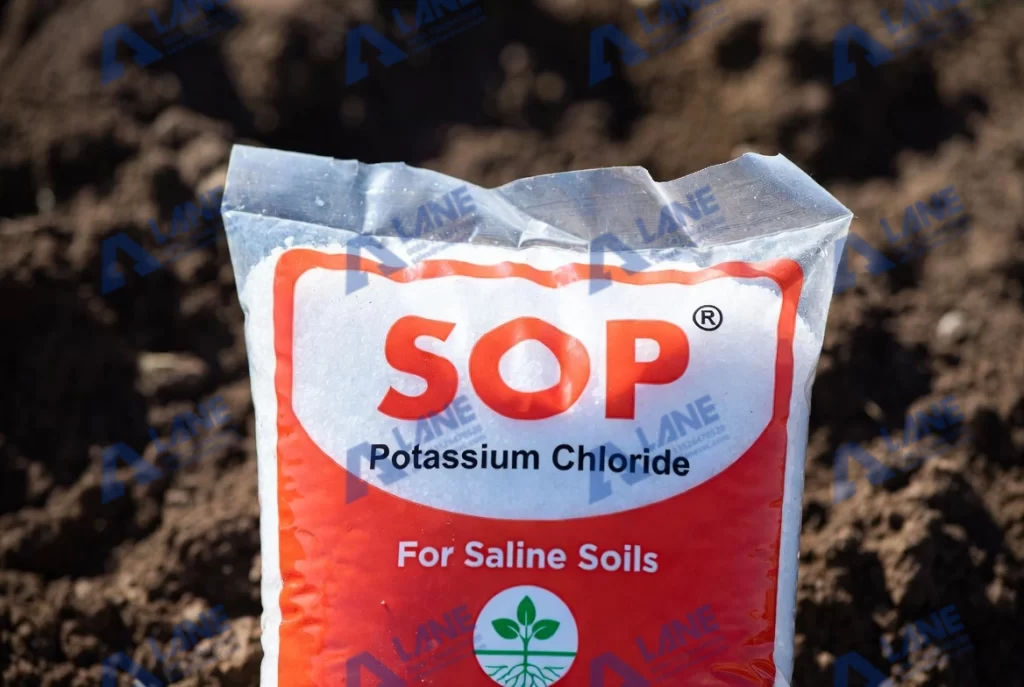
Potassium chloride has a high salt index around 116, which can:
- Cause root burn in sensitive crops
- Reduce germination rates
- Increase soil salinity over time
- Limit application flexibility, especially in fertigation systems
Low salt index fertilizers such as potassium sulfate (SOP), potassium nitrate (KNO₃), and potassium thiosulfate offer lower osmotic stress. This makes them more suitable for precision agriculture and high-value crops.
Traditional Potash vs. Low Salt Index Alternatives
To see the differences in potential root toxicity, consider the salt indices of standard potassium sources compared in agricultural studies:
| Fertilizer Material | Chemical Formula | Salt Index (Relative Value) | Risk Assessment |
| Potash / Muriate of Potash (MOP) | KCl | 116.2 | High risk of root burn and chloride toxicity. |
| Potassium Nitrate | KNO3 | 69.5 | Moderate risk, contains dual macronutrients. |
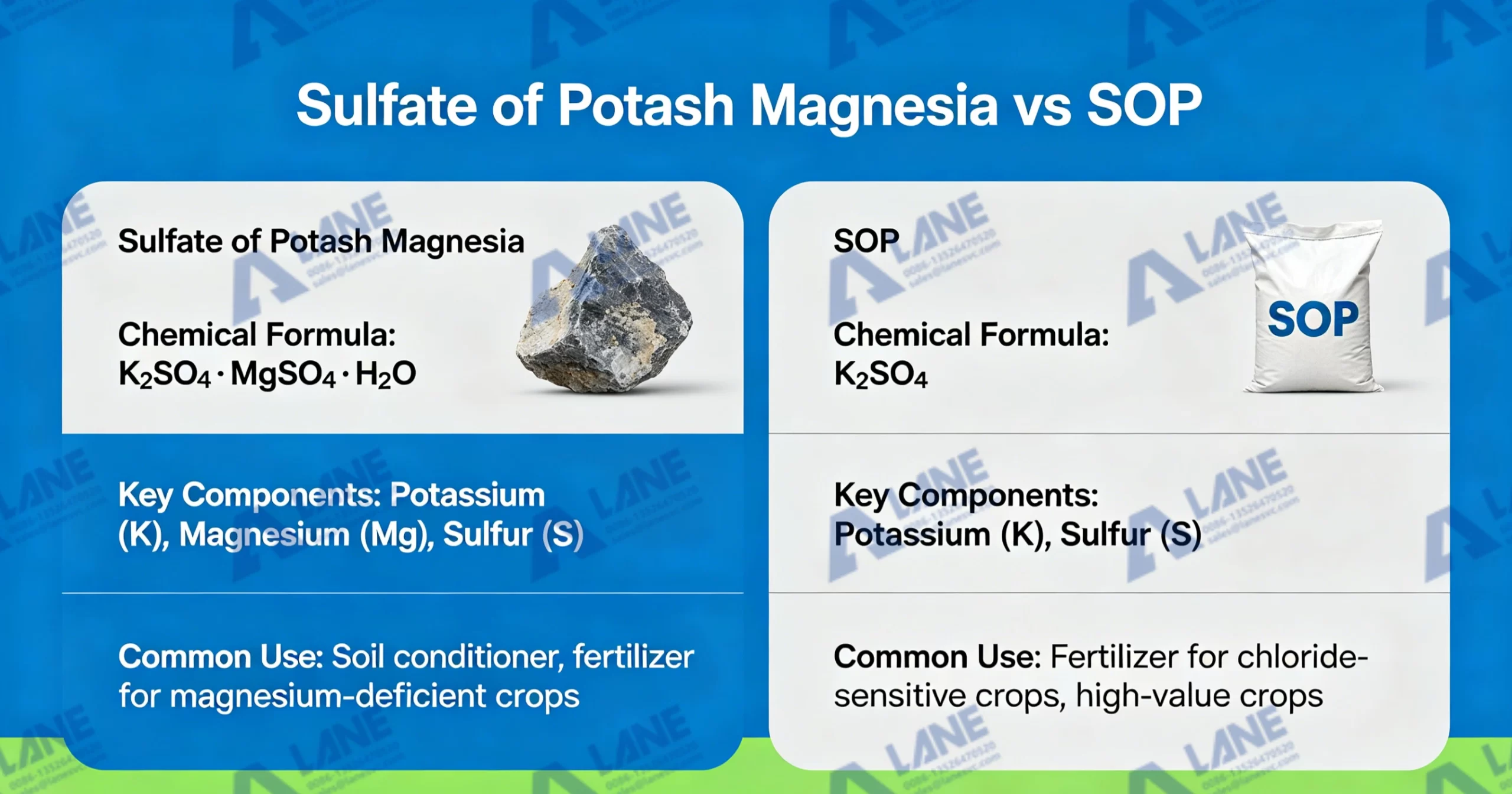
| Potassium Sulfate (SOP) | K2SO4 | 42.6 | Low risk, excellent for chloride-sensitive crops. |
| Potassium Magnesium Sulfate | K2Mg2(SO4)3 | 43.4 | Low risk, provides essential secondary nutrients. |
| Potassium Carbonate / Polyphosphates | Varies | Very Low | Ultra-safe, widely used in specialized starter solutions. |
Why Low Salt Index Potassium Fertilizers Outperform Traditional Potash
Improved Root Health: Healthy roots are essential for healthy crop growth. When too much salt builds up around plant root, it becomes harder for plants to absorb water from the soil. This causes slow growth and sometimes it isolates plant roots from water which causes crop burn. Low salt index potassium fertilizers contain less salt, which helps create a healthier root environment. As a result, plant absorb water more easily, develop stronger roots, and grow healthier.
Better Seed Germination: Young seedings and seeds are salt sensitive. Traditional potassium chloride sometimes damages emerging roots or reduces germination rates. Low salt index potassium fertilizers contain less salt which can be easily absorbed by the plant seeds. This helps seeds germinate more successfully and establish stronger root systems.
Higher Nutrient Use Efficiency: Plant grow as they absorb nutrients. Excessive soil salinity interferes with nutrient absorption and reduces the effect of fertilizer. Low salt index potassium fertilizers create less salt stress, which doesn’t interfere with plant nutrient absorption. This reduces nutrient loss, increases utilization and helps growers get better result from every fertilizer application.
Enhanced Crop Quality: Many fruits, vegetables, and specialty crops perform better when supplied with low-salt index potassium sources. Low salt index potassium fertilizers utilize more nutrient to plants without salt stress and provide better color, flavor, sugar content, and overall appearance. Grower gets better market value and longer shelf life. This makes these fertilizers a popular choice for high-value agricultural production.
Better Performance in Sensitive Crops: Certain crops, such as potatoes, tobacco, grapes, strawberries, and greenhouse-grown vegetables are sensitive to high salt levels and chloride. Low salt index potassium fertilizers have low chloride level, which means sensitive crop get batter nutrient efficiency from the fertilizer. They maintain healthy growth and support higher yields.
LANE Heavy Industry Potassium Fertilizer Production Solutions
As global demand for specialty potassium fertilizers is rising, investor and manufacturer need reliable production system capable of delivering consistent quality efficiently. LANE Heavy Industry has over two decades of experience designing and engineering production line for manufacturing Low salt index potassium fertilizers and other specialty fertilizer. These integrated solution help producers achieve stable operations, improved product quality, and greater competitiveness in the fertilizer market.
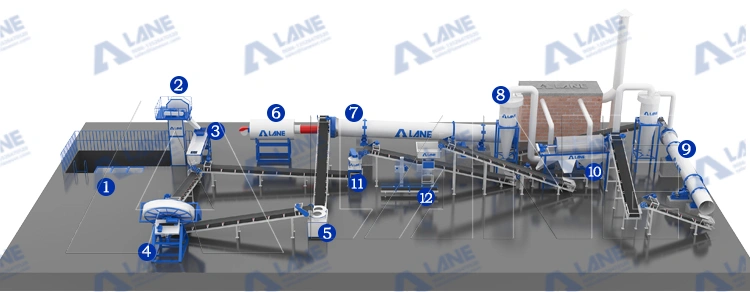
Advanced Granulation Systems: Granulation is one of the most critical stages in fertilizer production. It affects particle strength, uniformity, and market acceptance. Our system works seamlessly together to deliver uniform particle size, granulation efficiency, excellent strength, and stable nutrient performance. The result is a high-quality fertilizer product that meets the demands of modern agriculture and commercial distribution.
Intelligent Mixing Equipment: Achieving a homogeneous nutrient blend is essential for producing premium Low salt index potassium fertilizers. LANE Heavy Industry utilizes precision mixing technology to ensure that all raw materials are evenly distributed throughout the production process.
Drying and Cooling Systems: To maintain the quality of the fertilizer during storage and packing, it is necessary to control the moisture of the granules. LANE Heavy Industry’s drying and cooling equipment is designed to efficiently reduce moisture content while minimizing energy consumption. Our system improves granule hardness, prevent caking during storage, and extend shelf life. By optimizing the drying and cooling process, manufacturers can produce fertilizers that remain stable throughout transportation and long-term storage.
Automated Packaging Solutions: LANE Heavy Industry manufactures automatic packaging solution for the manufacturers. This helps improve operation efficiency and reduces labor requirements. This solution performs accurate weighing, bag filling, sealing, and stacking. This increases overall plant productivity and throughput.
FAQ
What are low salt index potassium fertilizers?
Low salt index potassium fertilizers are potassium sources that exert minimal osmotic stress on plants. Examples include potassium sulfate, potassium nitrate, and potassium thiosulfate.
Why are they better than potassium chloride?
They reduce the risk of root damage, improve nutrient uptake, and avoid chloride toxicity, making them ideal for sensitive crops and high-value agriculture.
Which crops benefit the most?
Fruits, vegetables, tobacco, and greenhouse crops benefit significantly due to their sensitivity to chloride and salinity.
Is production more complex than MOP?
Yes, producing low salt index potassium fertilizers requires more advanced chemical processes and equipment, such as those provided by LANE Heavy Industry Machinery.
Of course, we also offer other types of products for your different needs, you can click to view.
For more information, please contact us by sending an inquiry today! We can help you!



Write a Reply or Comment