
NPK Compound Fertilizer Potassium Production Process: Complete Technical Flowchart & Key Steps
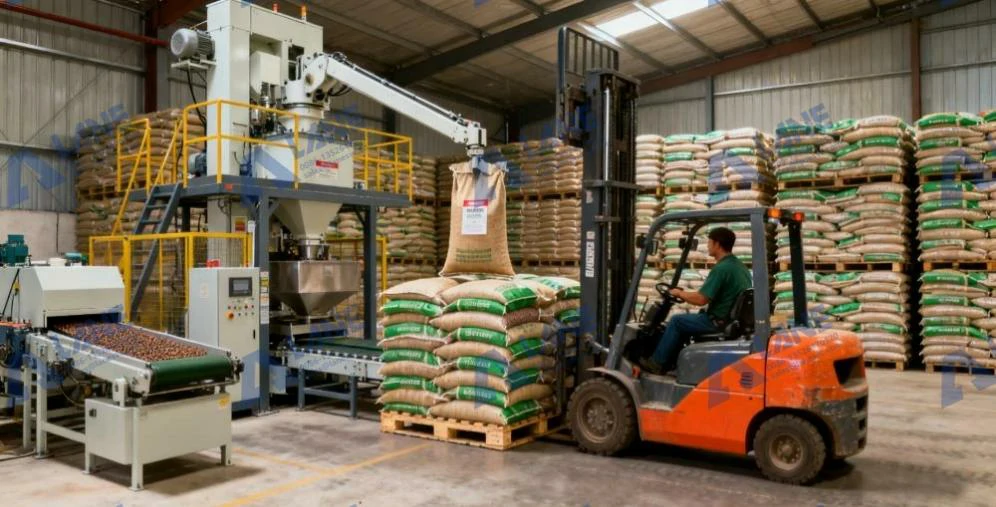
NPK fertilizer is one of the most popular fertilizers worldwide. This fertilizer processes the three most critical nutrient essential for crops, nitrogen (N), phosphorus (P), and potassium (K). The NPK compound fertilizer potassium production process stands out as the core technology for producing efficient, high-yield NPK fertilizer. the growing demand of this high-efficiency fertilizer requires advance machinery that can produce and meet the quality requirement while keeping up with the quantity.
As a leader in fertilizer industry, LANE Heavy Industry offers a complete production line, that optimizes every stage of the NPK compound fertilizer potassium production process, ensuring stable potassium content, uniform nutrient distribution, and large-scale output. This article breaks down the complete NPK compound fertilizer potassium production process with LANE’s industrial equipment, detailing each technical step and operational advantage.
Understanding NPK Compound Fertilizer
NPK compound fertilizers are blends of three primary nutrients:
Nitrogen (N): The Growth Engine
Nitrogen is the most critical micronutrient for vegetative growth. It is a primary component of chlorophyll, the compound plants use to photosynthesize sunlight into energy.
Role: Helps create lush, green leaf and sturdy stems.
Sources in Production: Urea, Ammonium Nitrate, or Ammonium Sulfate.
Phosphorus (P): The Energy Transfer
Phosphorus is one of the most important nutrients for plant development. It develops the infrastructure of the plant. It helps transfer energy within the plant cells and is a building block DNA.
Role: Stimulates root development, improves flower/seed production, and helps the plant mature early, enhance the plants’ ability to absorb water.
Sources in Production: Diammonium Phosphate (DAP) or Monoammonium Phosphate (MAP).
Potassium (K): The Regulator
Potassium is often referred to as the quality nutrient. This nutrient by itself doesn’t become the part of the plant’s physical structure. It acts as a catalyst for many biological functions. While Nitrogen and Phosphorus are essential for building plant tissue, Potassium (K) acts as the plant’s “internal manager,” overseeing almost every chemical reaction and fluid movement within the organism.
Role: Regulates water movement (stomata opening), activates enzymes, and improves disease resistance and fruit quality (taste and shelf life).
Sources in Production: Muriate of Potash (MOP/Potassium Chloride) or Sulfate of Potash (SOP/Potassium Sulfate).
Among these, potassium dissolved in the plant’s cellular fluid (ionic form) to perform water movement, activates enzymes add transport sugar and starch. The NPK compound fertilizer potassium production process focuses on integrating potassium-rich raw materials with nitrogen and phosphorus compounds to create a granular, balanced fertilizer suitable for various crops.
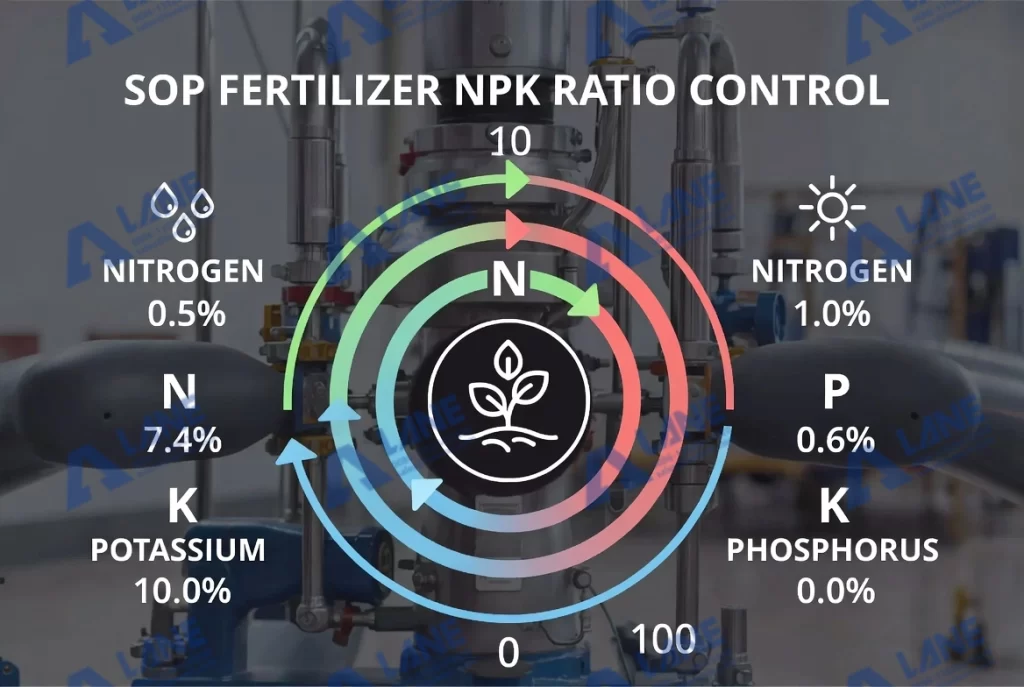
Overview of the NPK Compound Fertilizer Potassium Production Process
The NPK compound fertilizer potassium production process involves several interconnected stages that work together to create premium quality granules. LANE Heavy Industry provides an integrated solution to optimize production efficiency and ensure product quality. Below is a step-by-step guide to the process:
1.Raw Material Preparation
The first stage in the NPK compound fertilizer potassium production process is the preparation of raw materials. This includes:
Potassium sources: Potassium chloride (KCl) or potassium sulfate (K₂SO₄).
Nitrogen sources: Urea, Ammonium Nitrate, or Ammonium Sulfate.
Phosphorus sources: Superphosphate, ammonium phosphate.
Raw materials are stored in safe containers to avoid contamination. Then they are conveyed to the dynamic batching machine, where the product is measured and released into the production line is measured quantity according to the formula. Dynamic batching systems from LANE Heavy Industry ensure consistent proportions of N, P, and K.
2. Crushing and Mixing
The raw materials are sent to the crushing machine where they are crushed into fine powder for uniform mixing and granulating. accurate nutrient ratios directly impact the final product quality. Following crushing, raw materials undergo thorough mixing to form a homogeneous blend. High-speed mixers ensure that each particles contains a balanced nutrient composition. This is essential for high-quality granulation.
3. Granulation
Granulation is the core of NPK compound fertilizer potassium production process. LANE Heavy Industry provides two popular granulation methods:
Rotary drum granulation: It is Suitable for large-scale production. The mixed powder enters a tilted rotary drum (3–5° inclination, 18–22 rpm(controlled)). water or binder solution (2–3% bentonite) is sprayed, making powder agglomerate into 2–4 mm granules. This method boosts granulation efficiency to ≥95%, ideal for high-yield NPK compound fertilizer potassium production process.
New type organic-inorganic compound fertilizer granulator: It Work as the same principles as the Rotary drum granulator but it also has stirring pins inside which provides high granulation efficiency with minimal dust and high product strength. This is best used for NPK compound fertilizer that incorporate both organic and chemical fertilizer.
The granulation step shapes the fertilizer and enhances the nutrient stability and reduces losses during storage and transportation.
After granulation, rotary drum dryers reduce moisture to 3–5% with even heat distribution to protect granules. The hot granules are then cooled using counter-flow coolers to stabilize structure and prevent breakage, ensuring consistent quality.
After cooling, granules are screened to separate fine powders and oversized granules from standard-sized particles. The separated particles are crushed and recycled back to the granulator while the standard sized granules are sent to the coating machine. This recycling process ensures uniform granule size, which is crucial for packaging and application
6. Coating
To prevent moisture absorption and improve storage stability, fertilizers granules undergo coating. Coating materials like anti-caking agents or clay are applied in a rotating drum to form a protective layer. This step is important in the NPK compound fertilizer potassium production process, as potassium salts are prone to absorbing moisture.
Finally, the finished NPK compound fertilizer is weighted and packaged with LANE fully automatic packaging machine. This machine automatically does accurate weight control and efficient sealing. Manufacture can customize it into fully automatic packaging line by adding full automation along with robotics arm and pelleting machines.
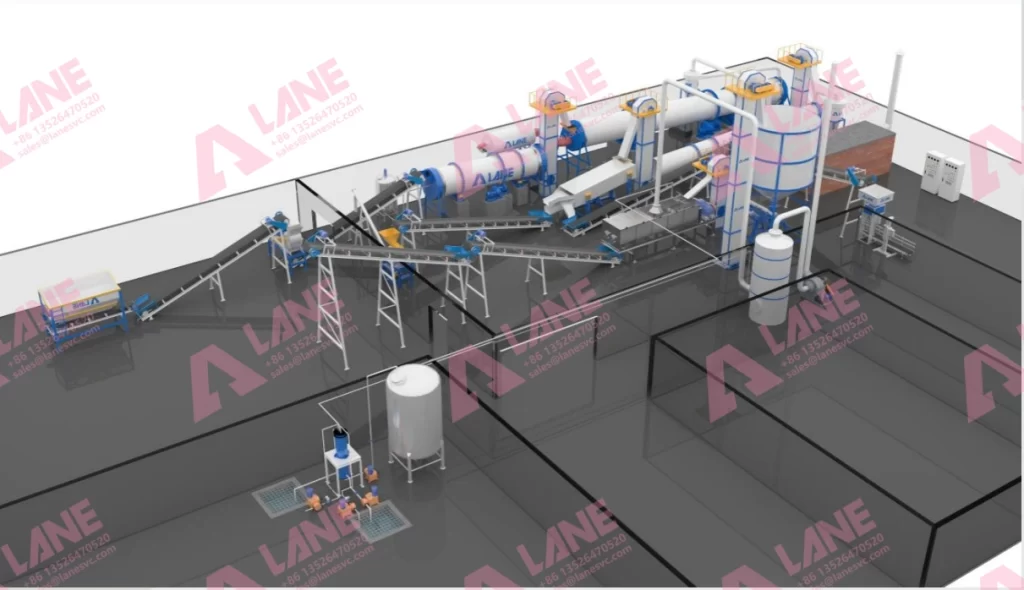
Complete Technical Flowchart of the NPK Compound Fertilizer Potassium Production Process
Raw Material Batching & Weighing→ Crushing→ Mixing → Granulation → Drying → Cooling → Screening & Recycling → Coating → Packaging & Storage
This flowchart highlights the key steps of an advanced NPK compound fertilizer production line where quality control and process optimization is implemented. LANE Heavy Industry’s integrated production line ensures smooth transitions between each stage, reducing labor costs and maximizing production efficiency.
Key Advantages of LANE Heavy Industry’s Production Line
- High automation: LANE machines can be controlled from central area, which minimizes manual intervention and ensures accurate nutrient ratios.
- Energy efficiency: Optimized dryers and granulators reduce energy consumption.
- High granule strength: Produces durable granules suitable for long-term storage and transport.
- Scalability: Flexible designs accommodate both medium and large-scale production.
- Low environmental impact: Dust collectors and eco-friendly processes reduce pollution.
By leveraging these advantages, fertilizer manufacturers can achieve consistent product quality while meeting market demands.
Tips for Optimizing the NPK Compound Fertilizer Potassium Production Process
- Regular equipment maintenance: Ensures consistent granule size and nutrient distribution.
- Precision in raw material proportioning: Critical to avoid nutrient imbalance.
- Temperature control during drying: Prevents granule cracking or caking.
- Monitoring moisture content: Ensures long shelf life and reduces storage issues.
LANE Heavy Industry provides advanced monitoring systems to help operators maintain optimal conditions throughout the production line.
Conclusion
The NPK compound fertilizer potassium production process is a complex yet highly rewarding procedure in modern agriculture. By integrating advanced machinery from LANE Heavy Industry, manufacturers can produce high-quality, nutrient-balanced fertilizers efficiently and reliably. From raw material preparation to granulation, drying, cooling, and packaging, each step is crucial in ensuring the final product meets market standards.
Implementing a well-designed production line not only boosts productivity but also enhances fertilizer quality, ultimately supporting sustainable and profitable farming practices.
FAQ: NPK Compound Fertilizer Potassium Production Process
Q1: What raw materials are required for the NPK compound fertilizer potassium production process?
A: The process primarily uses potassium sources (KCl, K₂SO₄), nitrogen sources (urea, ammonium nitrate), and phosphorus sources (superphosphate, ammonium phosphate).
Q2: What granulation methods are suitable for potassium NPK fertilizers?
A: Rotary drum granulation and new type organic-inorganic granulators are widely used.
Q3: How does LANE Heavy Industry improve production efficiency?
A: Through automation, precise batching, and integrated granulation, drying, and packaging systems.
Q4: Why is coating necessary in the NPK compound fertilizer potassium production process?
A: Coating prevents moisture absorption, reduces caking, and improves storage stability.

Of course, we also offer other types of products for your different needs, you can click to view.
For more information, please contact us by sending an inquiry today! We can help you!



Write a Reply or Comment