
Industrial NPK Fertilizer Granulation Plant: Why Wet Granulation Still Beats Dry Compaction for High-Nutrient Formulas
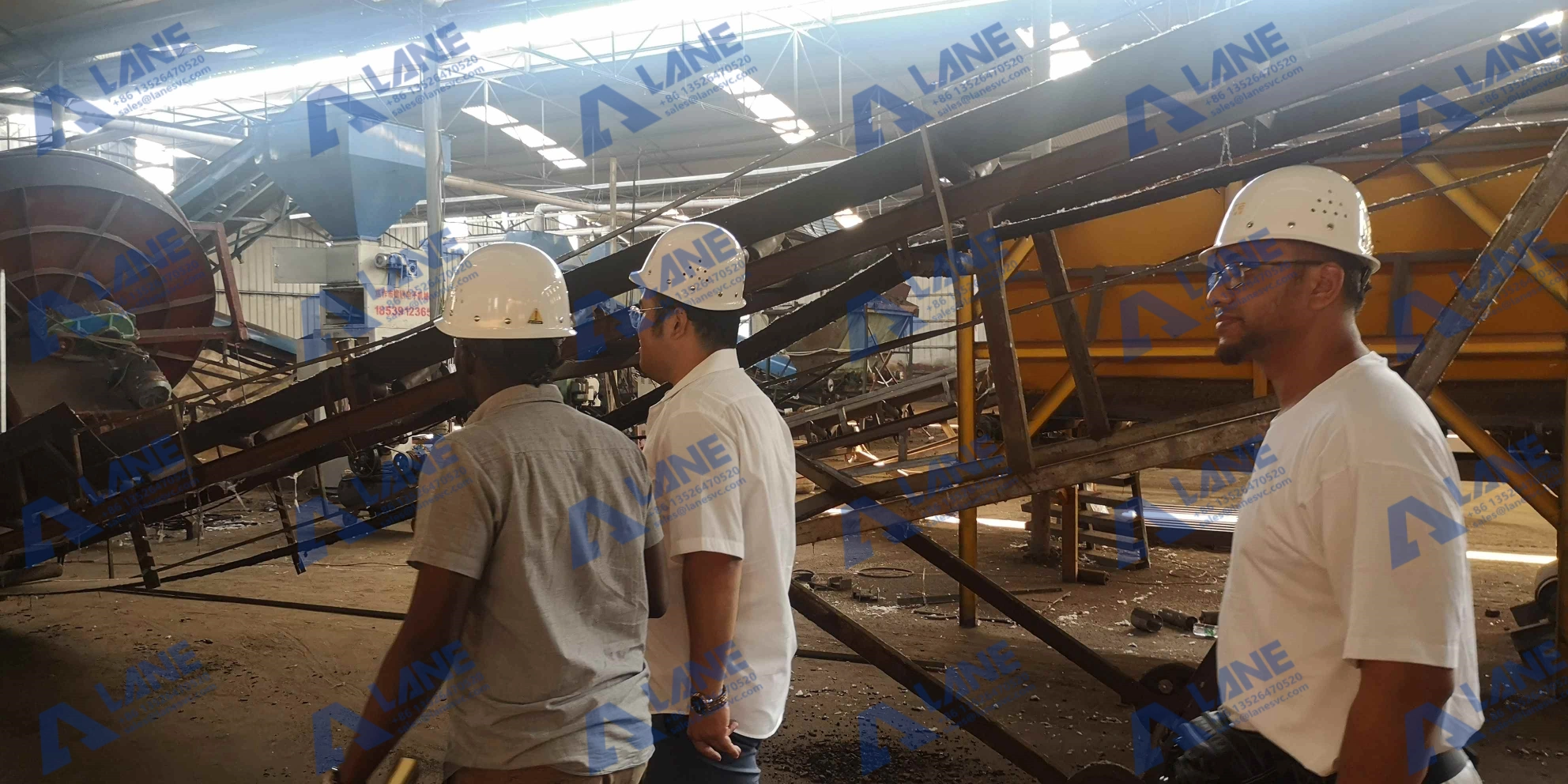
NPK fertilizer is one of the most sought-after fertilizers in the world. This makes the design and operation of industrial NPK fertilizer granulation plants a critical topic for investors. For creating premium quality NPK fertilizer, the manufacturing machines must be consistent and high quality. When establishing a modern industrial NPK fertilizer granulation plant, one of the most consequential decisions is selecting the appropriate granulation method. The choice between wet granulation and dry compaction fundamentally shapes product quality, operational costs, and long-term profitability.
NPK fertilizers contain essential nitrogen (N), phosphorus (P), and potassium (K), and are among the most used fertilizers in the world. They supply the full essential nutrient package to the plants. LANE Heavy Industry Machinery, an industrial leader in fertilizer machinery manufacturing, has built its reputation on delivering turnkey industrial NPK fertilizer granulation plant solutions.
Understanding Industrial NPK Fertilizer Granulation
An industrial NPK fertilizer granulation plant is a production line designed to convert raw nutrient materials containing nitrogen (N), phosphorus (P), and potassium (K), and optional micronutrients into uniform, high-quality granules. This process involves multiple stages, including mixing, granulation, drying, cooling, and screening.
This plant handles large-scale production and focuses on creating NPK granules with precise nutrient ratios. The granules are easy to store, transport, and apply, which makes them the preferred choice over other types of fertilizers. LANE Heavy Industry’s production lines incorporate advanced granulation technology to ensure consistent product quality and operational efficiency.
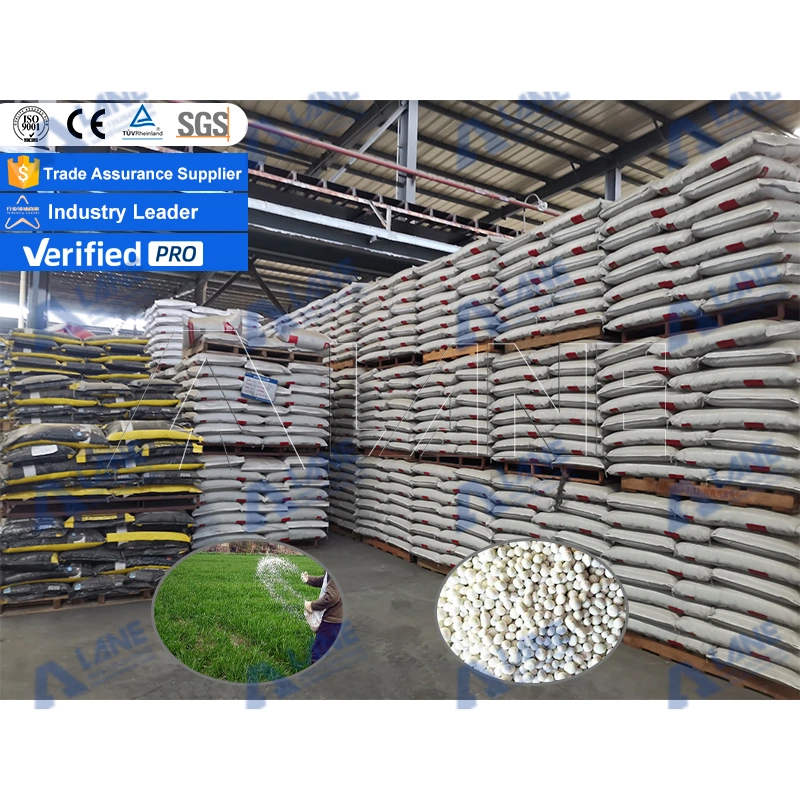
Wet Granulation vs. Dry Compaction: What’s the Difference?
Granulation transforms fine powders into granules. This process improves handling and nutrient delivery. There are two main methods of granulation.
Dry Compaction
Dry granulation involves compressing the fertilizer powder into flakes or granules without adding any liquids. This method is energy-efficient and simpler to operate. However, for high-nutrient NPK fertilizers, dry compaction is not suitable and has limitations:
- Lower nutrient uniformity: The granules might not be uniform and mix properly. This might lead to inconsistent nutrient content.
- Poor granule strength: Dry-compacted granules are prone to breakage during handling and transportation.
- Limited flexibility: Certain nutrient combinations, especially high nitrogen content, are challenging to process without dusting issues.
Wet Granulation
Wet granulation uses a liquid binder to agglomerate raw materials into granules. This method addresses many shortcomings of dry compaction granulation:
- Superior granule quality: The liquid binder improves the structural integrity of granules, reducing breakage and improving dust control.
- Uniform nutrient distribution: Wet granulation ensures consistent nutrient ratios in each granule and enhances fertilizer efficiency.
- Higher nutrient content: It can accommodate many types of nutrient formulas that dry compaction cannot handle.
In premium customized NPK formulas, these advantages make wet granulation the method of choice for industrial-scale production.
Key Components of LANE Heavy Industry’s Industrial NPK Fertilizer Granulation Plant
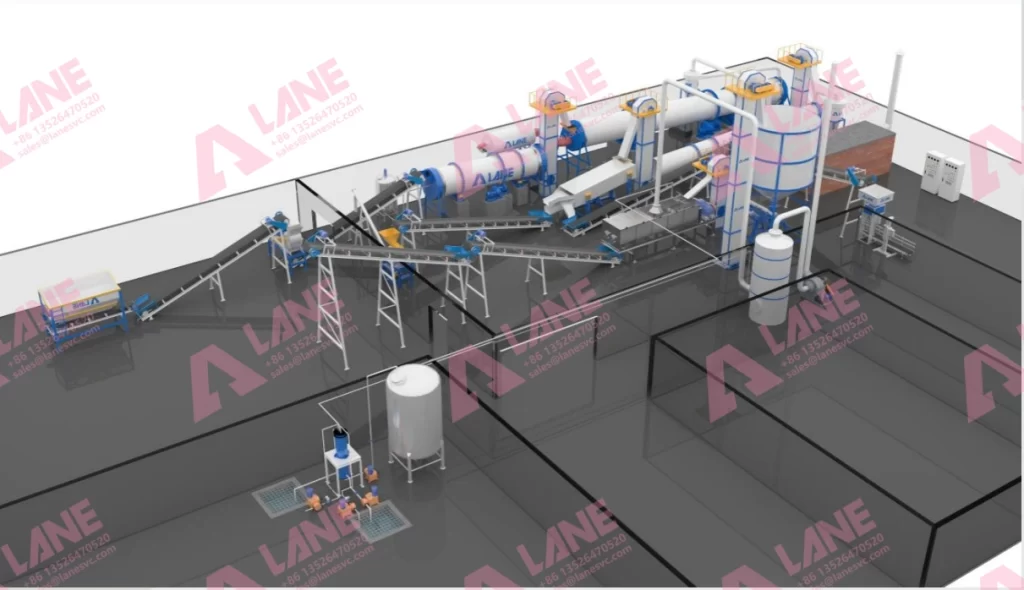
LANE Heavy Industry has developed an advanced industrial NPK fertilizer granulation plant designed to maximize efficiency, quality, and flexibility. The main components of our production line include:
- Raw Material Batching System: This machine performs accurate dosing of nitrogen, phosphorus, and potassium raw materials and ensures that every granule contains the precise nutrient ratio required by the end-user.
- Crushing and Mixing: The raw materials sometimes contain chunks, which can affect granulation efficiency and nutrient distribution. They are pulverized with LANE crushers. The powdered raw material is then sent to the mixing machine which mixes the raw materials and blends them properly.
- Granulator : LANE’s rotary drum or pan granulators use liquid binders to form uniform granules. The granulator is engineered for high output and consistent granule size.
- Drying and Cooling Units: After granulation, granules contain around 15-25% moisture. They are dried to reduce moisture and cooled to prevent caking and dusting. LANE Heavy Industry’s drying method dries the granules without harming the raw material.
- Screening and Coating Systems: The screening machine separates oversized and undersized granules from on-spec granules and sends them back to the crusher for recycling. Then the coating machine applies coating to enhance granule stability and prevent nutrient loss.
- Packaging Line: Automated packaging ensures that the fertilizer is weighed properly and ready for transport or storage in bags, minimizing handling labor.
The integration of these machines allows the industrial NPK fertilizer granulation plant to deliver high-quality granules at scale.
Advantages of Using LANE Heavy Industry’s Industrial Wet NPK Fertilizer Granulation Plant
- High Nutrient Retention: The wet granulation process reduces nutrient loss during production and ensures that the final NPK fertilizer delivers maximum value to crops.
- Operational Efficiency: LANE’s plants feature energy-saving designs and automated systems. This reduces labor costs and production downtime.
- Versatility: The NPK fertilizer plant can handle a wide range of NPK formulations, including potassium sulfate and potassium chloride blends. It can also handle high-nitrogen blends that are difficult to process with dry compaction.
- Enhanced Product Marketability: Uniform, spherical granules are preferred by farmers for easy application as they can be used with modern spreading technologies. Wet granulation produces less dust and gives producers a competitive edge.
- Environmentally Friendly: Users can create many granulation formulations in wet granulation technology. Users can use organic additives and support sustainable fertilizer production practices.
Why Wet Granulation Is Still the Industry Standard
Despite the simplicity of dry compaction, wet granulation remains the preferred choice for industrial-scale high-nutrient NPK fertilizer production for several reasons:
- High-strength granules: Wet granulation produces granules that can withstand long-distance transport without breaking.
- Better nutrient homogeneity: Each granule contains a precise mix of N, P, and K, ensuring predictable crop performance.
- Adaptable to high-nutrient ratios: As farmers demand more concentrated fertilizers, wet granulation can handle these formulations without sacrificing quality.
- Lower production loss: Reduced dust and fines translate to less waste and higher profitability.
LANE Heavy Industry’s Commitment to Innovation
LANE Heavy Industry has an experienced R&D team. They dedicate their time to refining industrial NPK fertilizer granulation plants. By leveraging advanced control systems with PLC and SCADA monitoring, optimized granulator designs, and energy-efficient drying technologies, the company ensures that its production lines meet the highest standards for quality and productivity.
Farmers benefit from consistent, high-performing NPK fertilizers and producers enjoy reduced operational costs and increased output. LANE’s engineering expertise positions our plants as industry benchmarks.
Conclusion
For manufacturers who are aiming to produce top-tier agricultural inputs, the granulation technology of an industrial NPK fertilizer granulation plant must prioritize quality over the simplest path. An industrial NPK fertilizer granulation plant using wet granulation offers clear advantages over dry compaction, including higher granule strength, nutrient uniformity, and adaptability to complex formulas. These advantages cannot be matched by dry granulation, especially for potassium-rich blends.
With LANE Heavy Industry’s advanced wet granulation lines, the industrial NPK fertilizer granulation plant achieves peak productivity, quality, and profitability. By integrating advanced machinery, energy-efficient processes, and precise nutrient control, LANE Heavy Industry’s industrial NPK fertilizer granulation plant remains the benchmark for high-quality fertilizer production.
Frequently Asked Questions (FAQs)
Q1: What is an industrial NPK fertilizer granulation plant?
A: It’s a production line that converts raw nutrient powders into uniform NPK granules through processes like mixing, granulation, drying, cooling, and screening.
Q2: Why is wet granulation preferred over dry compaction for high-nutrient fertilizers?
A: Wet granulation produces stronger, more uniform granules, accommodates high nutrient ratios, and reduces nutrient loss during production.
Q3: Can LANE Heavy Industry’s plant handle custom NPK ratios?
A: Yes, the plant is versatile and can produce a wide range of NPK formulations, including high-nitrogen blends.
Q4: What is the typical production capacity of an industrial NPK fertilizer granulation plant?
A: Depending on the configuration, LANE’s plants can produce several tons per hour, making them suitable for large-scale operations.
Of course, we also offer other types of products for your different needs, you can click to view.
For more information, please contact us by sending an inquiry today! We can help you!



Write a Reply or Comment