
Potassium Fertilizers Salt Index: A Complete Comparison Chart
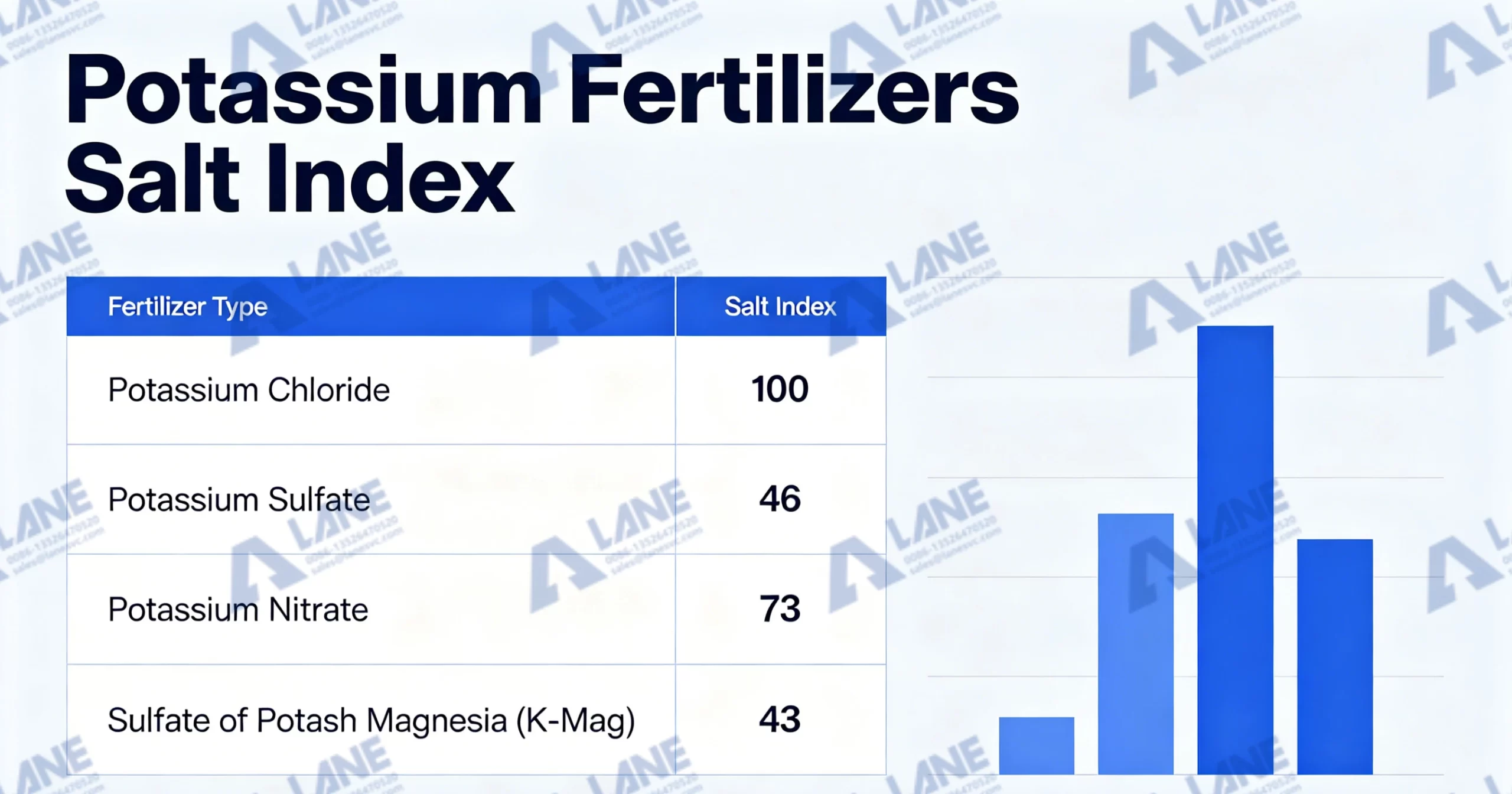
When a crop fails the farmers expectation while growing, they check for pests, seeding depth, or moisture issues. But sometimes the real culprit is the invisible chemical barrier beneath the soil: osmotic shock. Every time farmers use chemical fertilizer in the soil, it changes the salinity of the soil. Potassium is one of the three primary nutrient crop requires for healthy growth. It regulates water, help enzyme activation, disease resistance, and fruit quality. Every potassium fertilizer has their own strength and weakness and affect the soil salinity in different way. On of the important factor growers and fertilizer manufacturer must understand is Potassium fertilizers salt index.
The Potassium fertilizers salt index measure the tendency of a potassium fertilizers to increase the osmotic pressure of the soil solution compared to sodium nitrate. Sodium nitrate has a reference value of 100. Fertilizer with higher salt index puts greater salt stress around plant roots, which reduces seed germination. In this article we will discuss about the Potassium fertilizers salt index, and how machinery from LANE Heavy Industry help manufacturer control this.
What Is Fertilizer Salt Index?
Fertilizer salt index is a numeric ratio measuring the increase in osmotic pressure of the soil solution compared to the same weight of sodium nitrate (NaNO₃). Sodium nitrate has been assigned an arbitrary salt index value of 100. Sodium nitrate is 100 water soluble and available when the salt index was developed.
When we measure the potassium fertilizers salt index, we look at two major values:
- Salt Index per Material:we compare osmotic effect of the potassium source vs sodium nitrate for a fixed weight of the material.
- Salt Index per Unit of Nutrient:It is a practical metric for agronomists that measures the salt index relative to every 1% (or unit) of actual Potassium Oxide applied to the crop.
It was developed to describe the relative safety of both liquid and dry fertilizer. Salt injury occurs when fertilizer salt is near germinating seeds or growing plant tissue. This creates osmotic imbalance that causes water to flow from plant tissue to the fertilizer location. Understanding the potassium fertilizers salt index will allow growers to choose the fertilizer based on the crops.
Complete Potassium Fertilizers Salt Index Comparison Chart
The following table presents relative salt index values for common potassium fertilizers and related materials:
| Fertilizer Material | Chemical Formula | Grade (N-P-K) | Relative Salt Index | Water Solubility |
| Potassium Chloride (Muriate of Potash) | KCl | 0-0-60 | 116.2 | 100% |
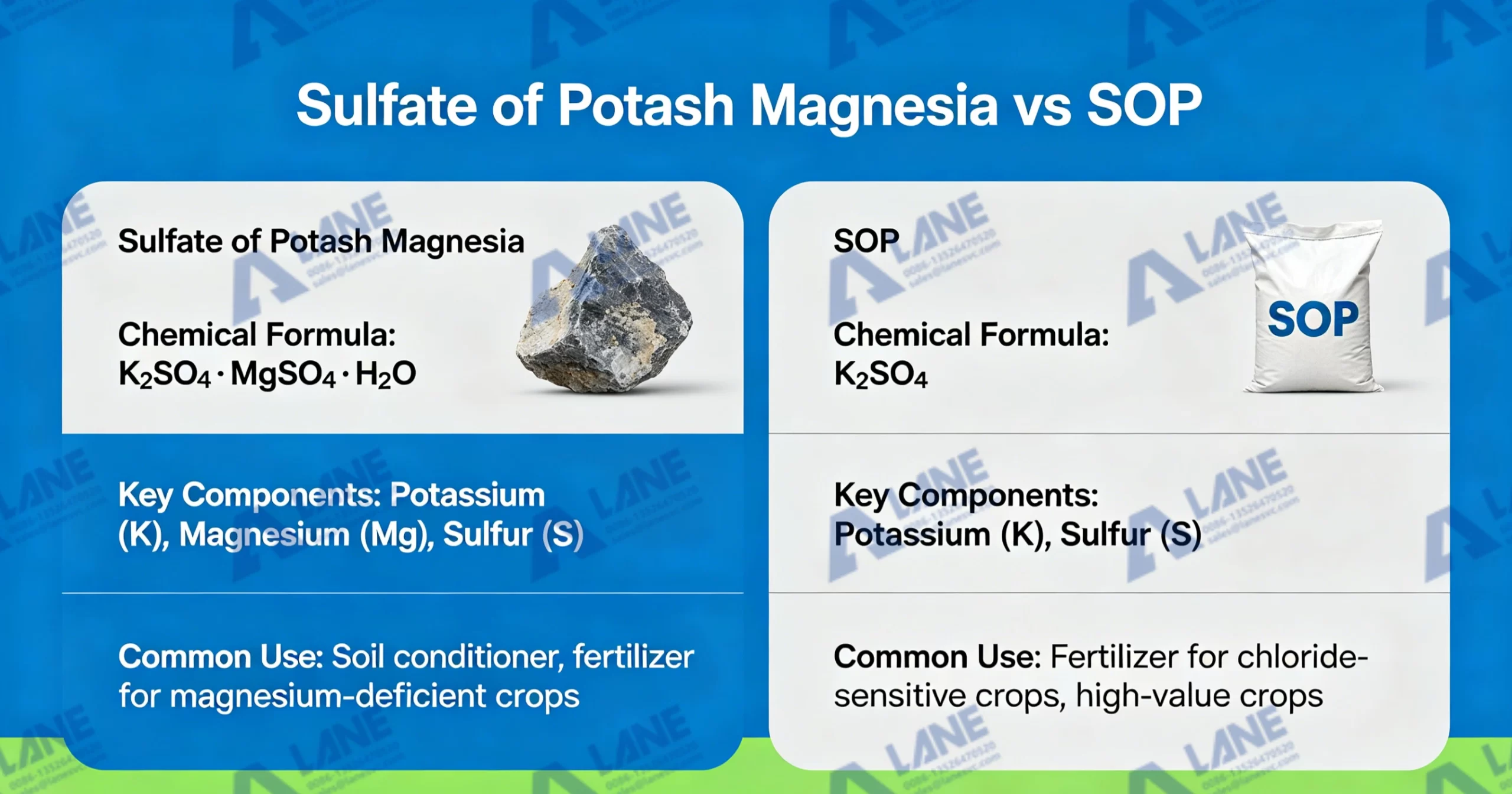
| Potassium Sulfate (Sulphate of Potash) | K₂SO₄ | 0-0-50 | 46.0 | 100% |
| K-Mag (Sulpo-mag) | K₂SO₄·MgSO₄ | 0-0-22-11-22 | 43.2 | 100% |
| Potassium Nitrate | KNO₃ | 13-0-44 | 73.8 | 100% |
| Monopotassium Phosphate (MKP) | KH₂PO₄ | 0-52-34 | 8.4 | 100% |
| Magnesium Sulfate (Langbeinite) | K₂SO₄·2MgSO₄ | 0-0-22-17 | 44 | 100% |
| Potassium Thiosulfate | K₂S₂O₃ | 0-0-25-17 | 64 | Soluble fluid |
Data sourced from agricultural extension research
Key observations from this potassium fertilizers salt index comparison:
- Potassium chloride (Muriate of Potash)has the highest salt index at 116.2. This makes it the most likely plant to cause fertilizer burn. It is not suitable for sensitive crops.
- Monopotassium Phosphate (MKP)has the lowest salt index at 8.4 and is the most safer potassium option for sensitive crops. It has high purity and suitable for modern fertigation.
- Potassium sulfate (Sulphate of Potash)has a significantly lower salt index of 46.0, making it safer for sensitive crops and in-furrow applications
- K-Magoffers an excellent low-salt alternative at 43.2 while providing additional magnesium and sulfur nutrients.
- Potassium nitratefalls in the middle range at 73.8, offering both nitrogen and potassium with moderate salt risk
The Role of Fertilizer Machinery in Managing Salt Risk
Selecting the right fertilizer based on the potassium fertilizers salt index is only effective when your fertilizer is manufactured with capable machinery. The physical form, uniformity, and chemical consistency of the finished fertilizer also determine the safety of the crops from the dissolved salts.
If a fertilizer bag contains uneven granules size, dust, or mismatched chemical composition, then it will harm the soils. A hotspot occurs when high concentration of dust or small granules dissolves in one spot and burns nearby roots.
Fertilizer produced with the machinery from the LANE Heavy Industry solves these problems with customizable design and machines engineered for protection against pitting corrosion.
- Advanced Blending in Bulk Blending (BB) Production Lines
In a BB production line engineered by LANE Heavy Industry, we use loss-in-weight scale system utilizing high-precision HMB load cells which measures material flow rates in real time. Our Rotary drum mixer can be tilted and the rotation can be controlled for mixing effectively.
- Why it matters for salt indices:If MOP, SOP, or other fertilizers are blended without proper control over the ratio, it will create uneven nutrient distribution. Our precise mixing system blends the nutrient precisely to avoid this problem.
- Precise Granulation to Regulate Nutrient Release
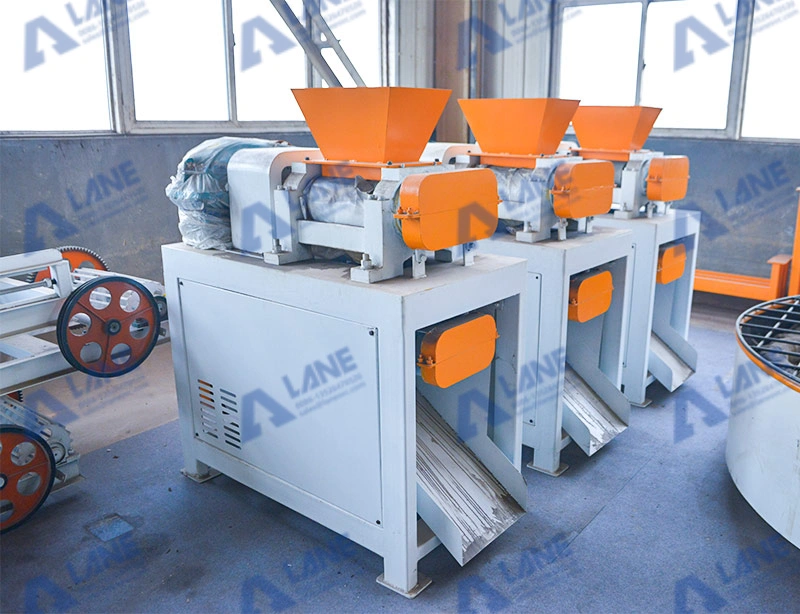
LANE Heavy Industry’s NPK Fertilizer Double Roller Granulator and Rotary Drum Granulator for Potassium fertilizer transform raw potassium powders into uniform granules. These machines are made for heavy use and has high granulation rate. By controlling the density and size of the granules (typically between 2.0 to 4.0 mm), we prevent chemical dissolution.
- Dust Elimination through Rotary Screen Technology
Fertilizer dust dissolves instantly upon contact with soil moisture. This causes sudden osmotic shocks. LANE Heavy Industry integrates Heavy-duty Rotary Screen Machines and Rotary Coating Machines into the compound fertilizer production lines. Unqualified particles receive a uniform anti-caking surface coating. This minimizes dust generation during transportation and application.
Summary and Best Agronomic Practices
Managing the potassium fertilizers salt index requires careful agronomic planning with industrial-grade manufacturing.
- Match Product to Placement:Farmers must keep the high-salt index fertilizers like MOP away from direct seed contact. Use low-salt index alternatives like SOP or MKP for band, or starter applications.
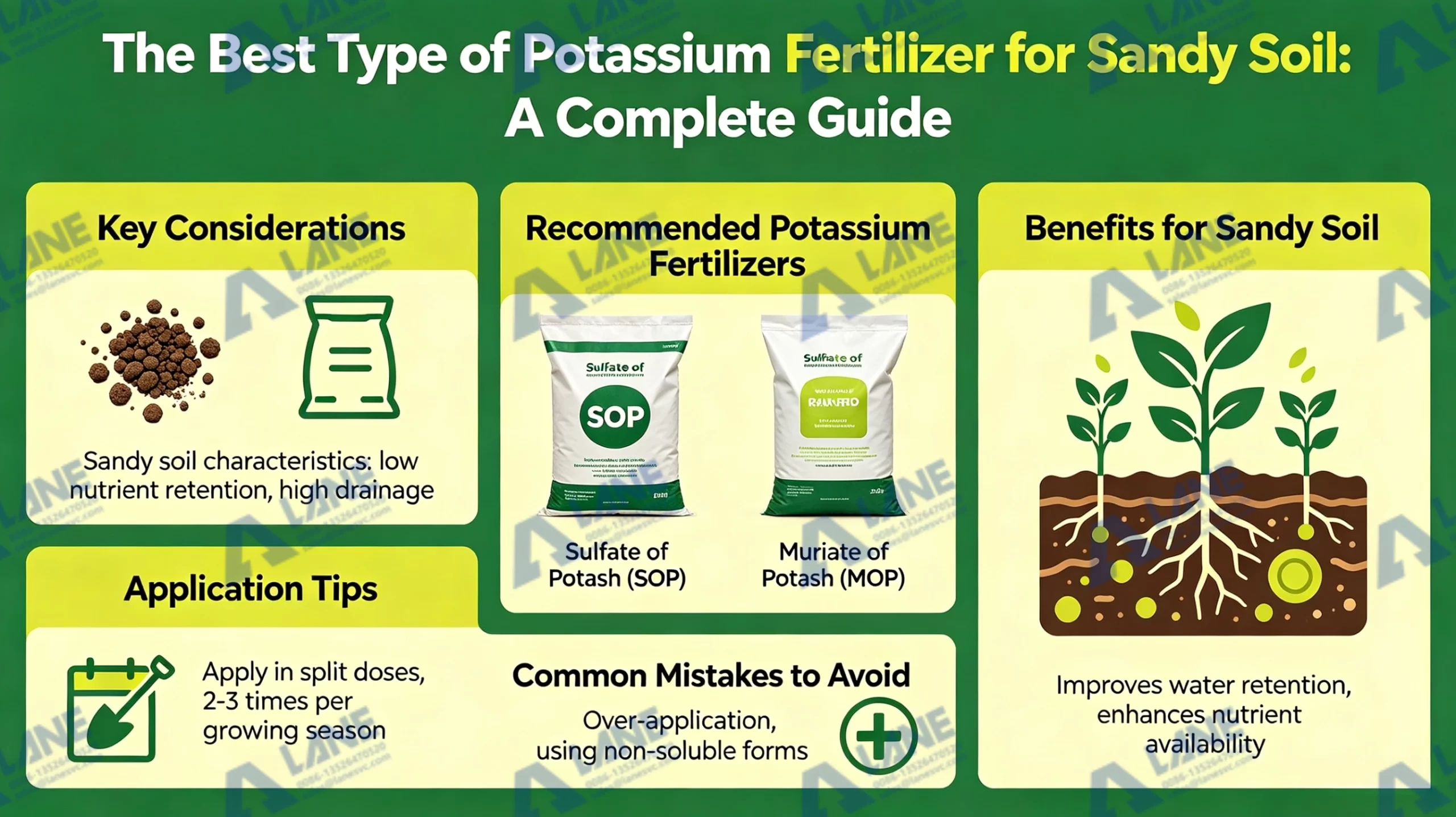
- Consider Soil Characteristics:Sandy soils have lower water-holding capacities. Reduce application rates or split applications in sandy, arid conditions.
- Insist on Quality Manufacturing:Manufacturing high-quality granules will increase the reputation and marketability of your product. Utilizing infrastructure designed by LANE Heavy Industry ensures that the structural integrity of your fertilizer.
FAQ
What is the salt index of potassium fertilizers?
The salt index measures a fertilizer’s tendency to increase soil solution concentration and create osmotic stress. Different potassium fertilizers have different salt index values, affecting crop safety and application methods.
Which potassium fertilizer has the highest salt index?
Potassium chloride (MOP) generally has one of the highest values among common potassium fertilizers, with a salt index of approximately 116.
Which potassium fertilizer has the lowest salt index?
Monopotassium phosphate (MKP) has one of the lowest salt index values among commonly used potassium fertilizers, making it suitable for sensitive crops and fertigation systems.
Why is the Potassium fertilizers salt index important?
The Potassium fertilizers salt index helps growers avoid seed injury, reduce root stress, improve nutrient management, and select the most suitable fertilizer source for specific crops.
Of course, we also offer other types of products for your different needs, you can click to view.
For more information, please contact us by sending an inquiry today! We can help you!




Write a Reply or Comment